“My figures do not fit the journal’s required dimensions.”
Existing artwork needs single- or double-column sizing while keeping labels and data readable.

Prepare existing research figures for your target journal with consistent dimensions, panel alignment, labels, typography, line weights, resolution checks and required submission formats—without changing the underlying research evidence.
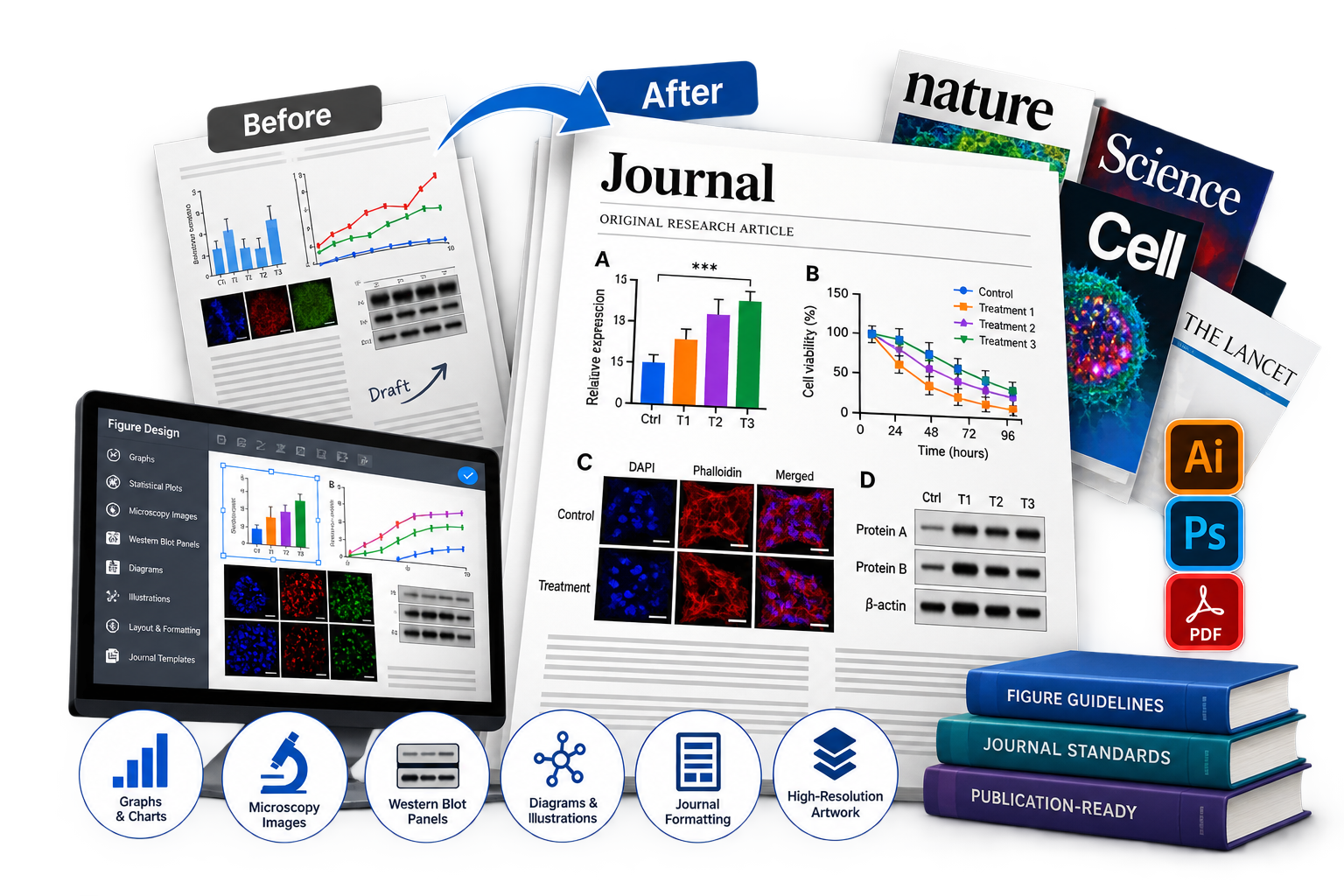
For a standard journal-artwork requirement, Journal Figure Formatting & Artwork Preparation Service starts from ₹7,500 per figure-formatting project. The included scope centres on target-journal specification review, figure sizing, typography and panel consistency, artwork preparation and final submission-ready export, with additional requirements quoted against the number and condition of the supplied figures.
Large figure sets, extensive reconstruction, low-resolution source material, missing editable files, major redraws, materially changed figures, new journal specifications, additional output formats, or accelerated deadlines require a custom quotation. A shorter deadline can be assessed after the source artwork and requested scope are reviewed; accelerated delivery is confirmed only when feasible for that assignment.
Typical reasons authors request artwork preparation before first submission, revision or resubmission.
Existing artwork needs single- or double-column sizing while keeping labels and data readable.
You need a technical check and correction or reconstruction only where the available source material supports it.
Typography, label placement and visual hierarchy need standardisation across the manuscript artwork.
Panels need consistent spacing, alignment, labelling and assembly into one submission-ready figure.
Your source artwork needs preparation into the permitted TIFF, EPS or PDF format specified by the target journal.
Visual treatment needs to be made consistent while preserving the actual research information.
Existing figures need targeted artwork corrections based on the supplied editorial or journal instructions.
The content is final, but sizing, labels, spacing, file naming and technical artwork preparation still need attention.
Artwork preparation focuses on the technical and visual consistency of figures you already have.
Resize artwork to supplied journal dimensions, including single- or double-column layouts where required.
Review output quality and correct or reconstruct where technically possible. DPI changes alone are not treated as restored image detail.
Standardise figure typography, label size, placement, case and visual consistency across the agreed artwork set.
Combine supplied panels into a clean layout with consistent gaps, edges and A/B/C labelling.
Standardise line weights and colour treatment, including grayscale preparation when required by supplied specifications.
Place or standardise scale bars and annotations only from researcher-supplied verified information.
Prepare TIFF, EPS or PDF artwork according to the current target-journal instructions you provide.
Review figure numbering, typography, panel labels, spacing and presentation consistency before delivery.
For authors and research teams who already have figure content and need technical journal artwork preparation.
Figure formatting is applied to researcher-supplied artwork across disciplines, using the target journal’s current technical requirements.
Good source files and current journal instructions make technical formatting faster and more reliable.
Please provide the materials that define the artwork and submission target.
These are useful when they apply to your figure set.
Final artwork is prepared from the source material and the current journal requirements supplied for the project.
Final figure files prepared for the agreed target-journal artwork requirements.
Artwork sized according to supplied journal dimensions, including column format where applicable.
Standardised fonts, labels, panel treatment, spacing and alignment across the agreed figure set.
TIFF, EPS or PDF preparation as required; editable files only where the original source format permits.
Demonstration concepts showing the types of artwork preparation this service can handle. These are not presented as client publications.
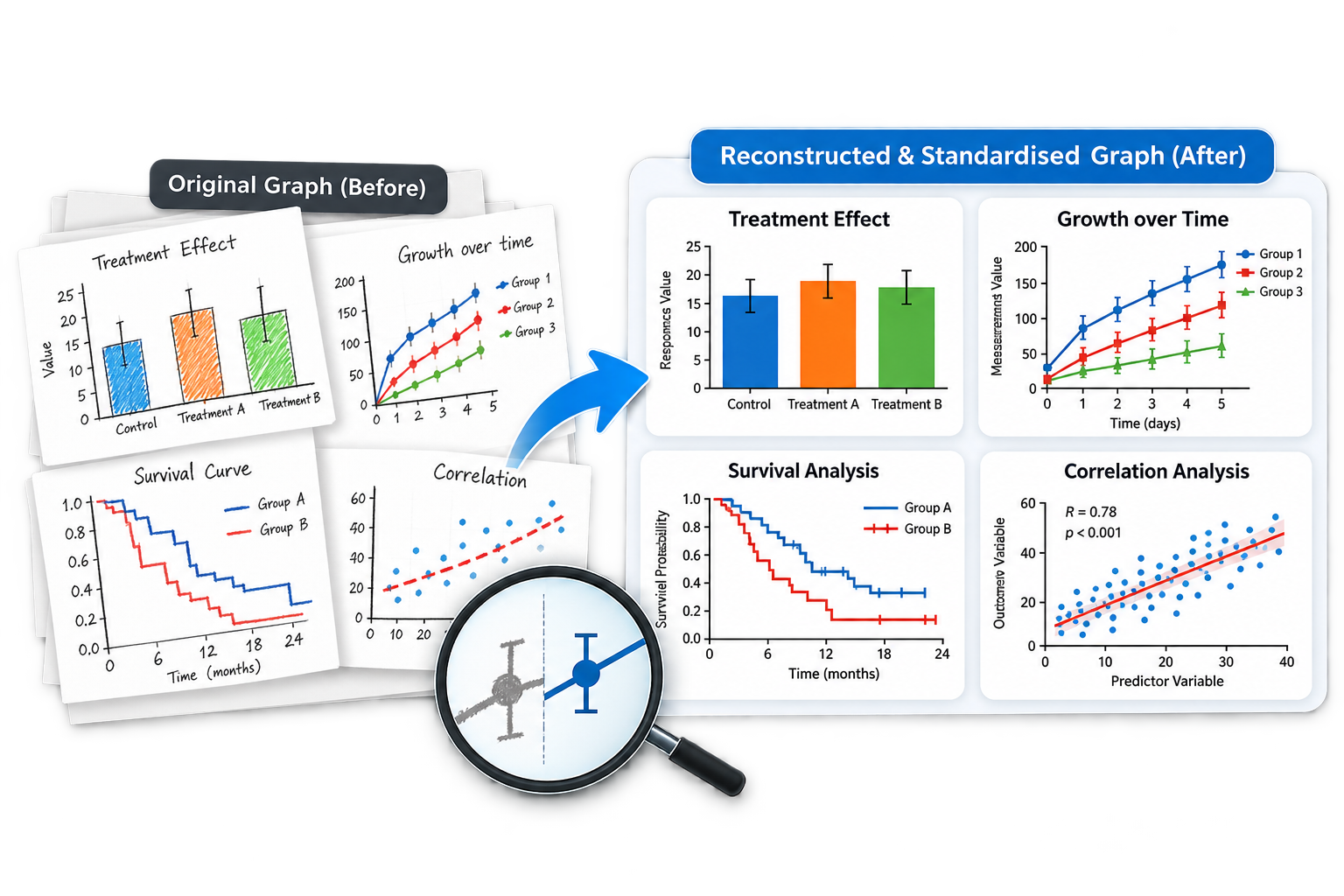
Rebuild or clean a graph where technically appropriate, then standardise text and line weights.
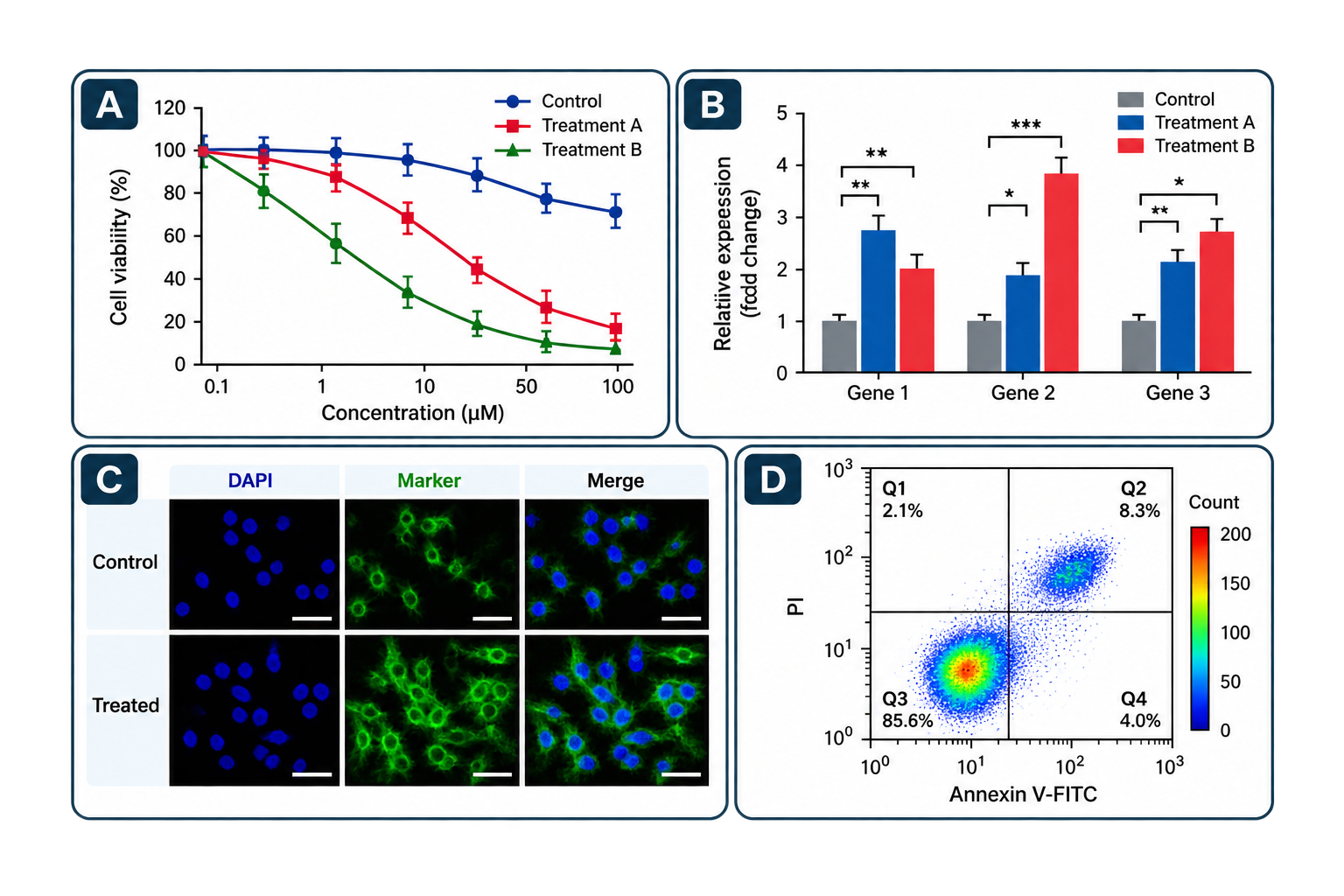
Align supplied panels, standardise spacing and apply consistent A/B/C/D labels.
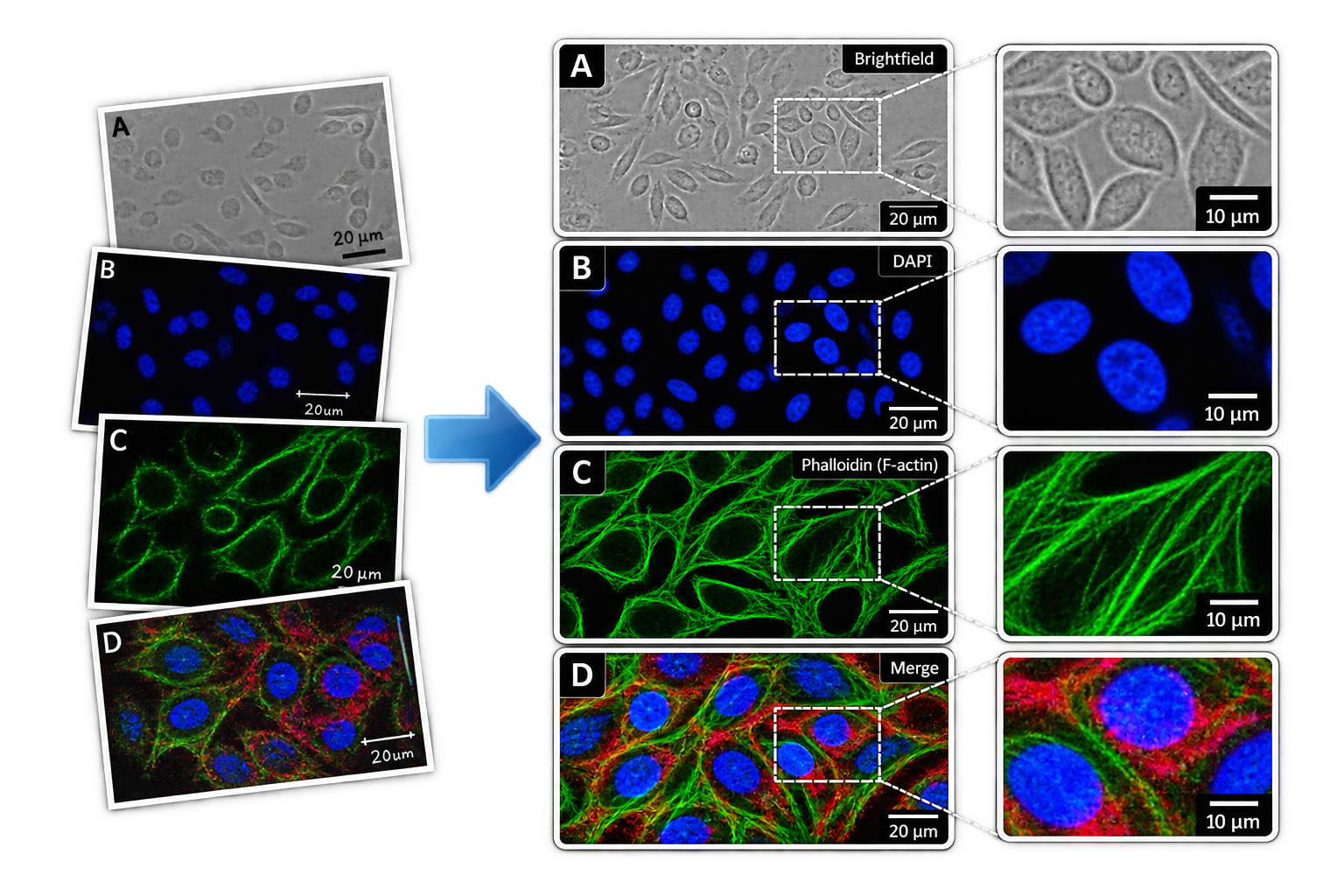
Prepare existing microscopy panels with verified scale information and consistent labelling.
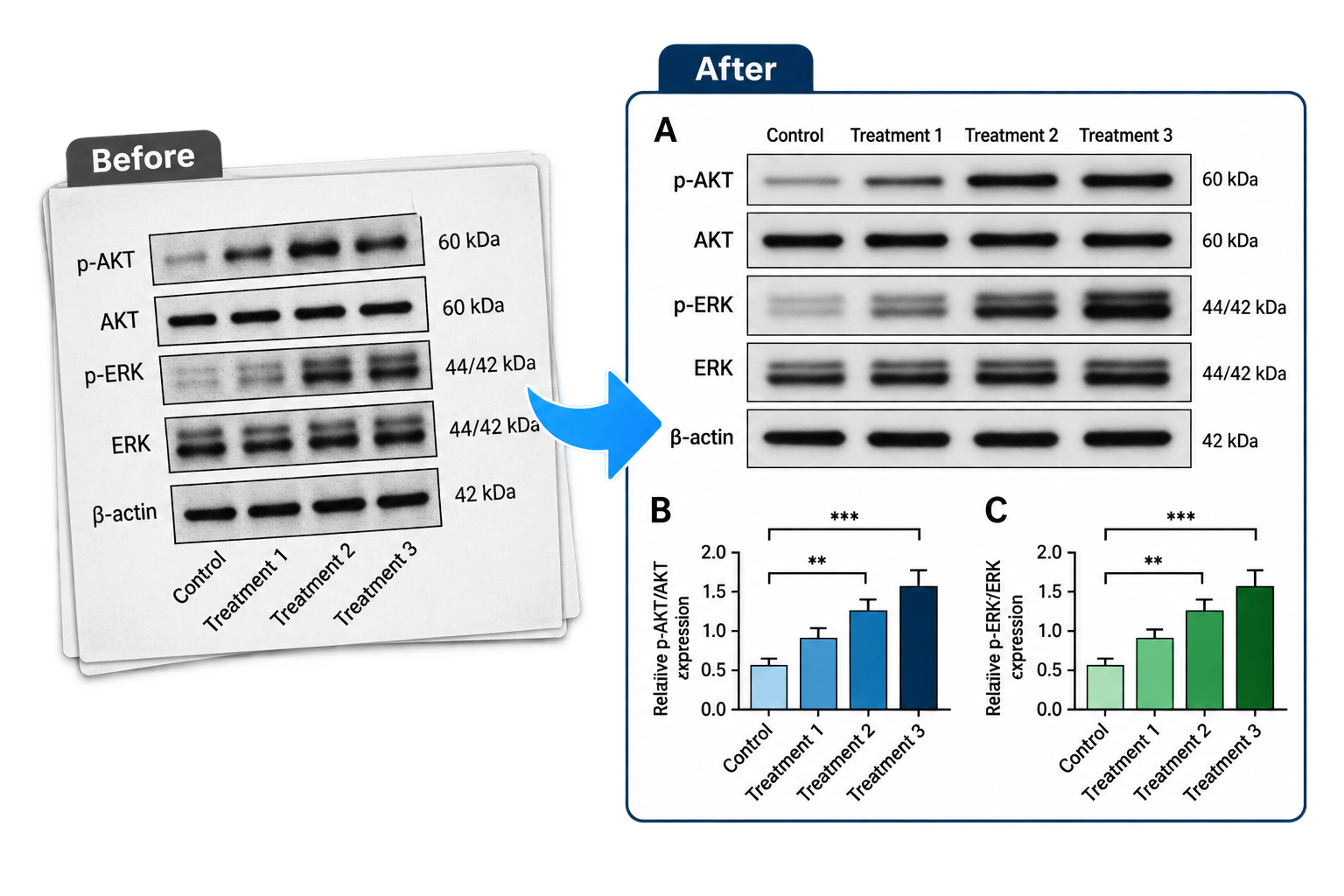
Standardise panel spacing, labels and figure arrangement without altering experimental evidence.
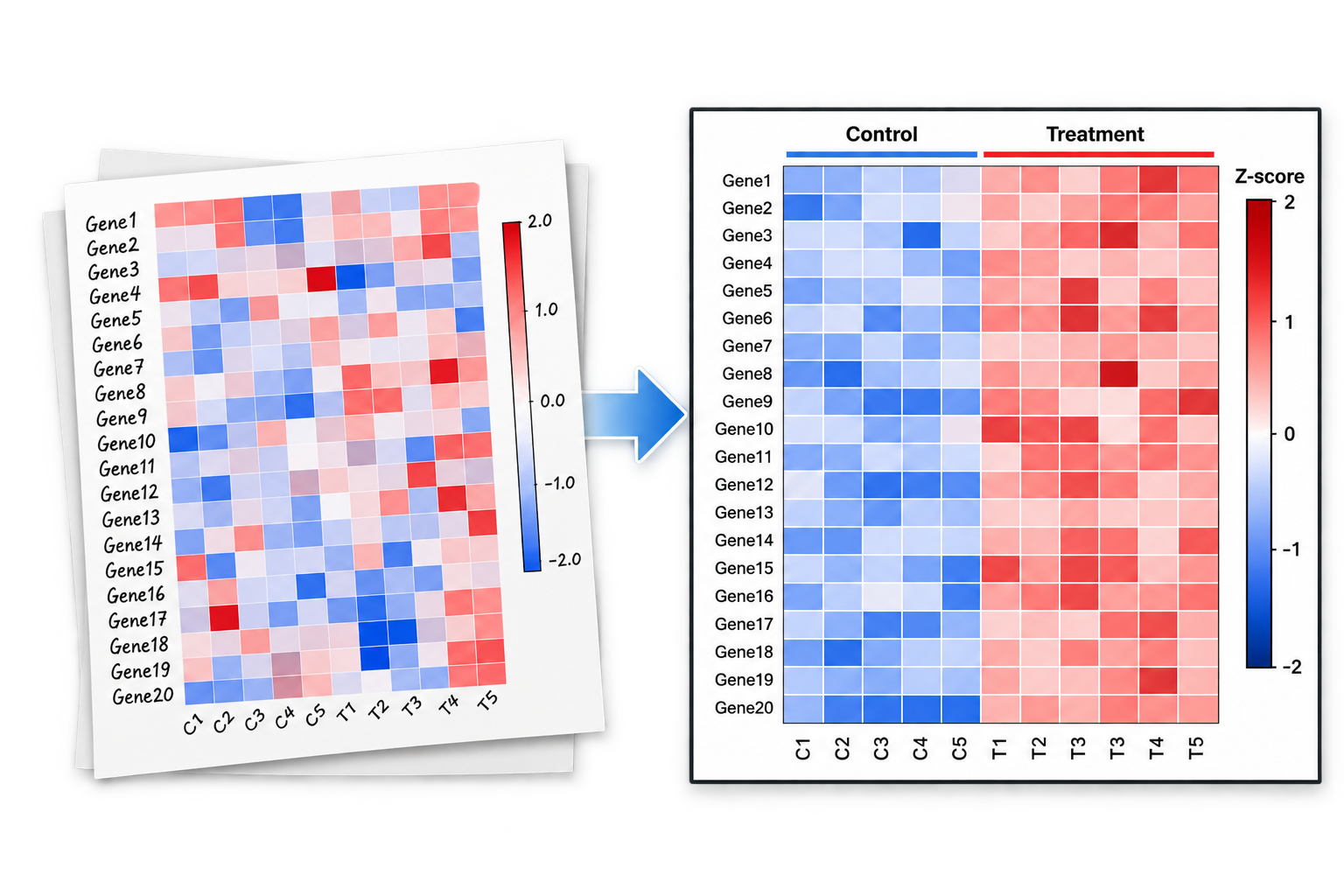
Standardise labels, sizing, margins and export settings around a supplied heatmap.
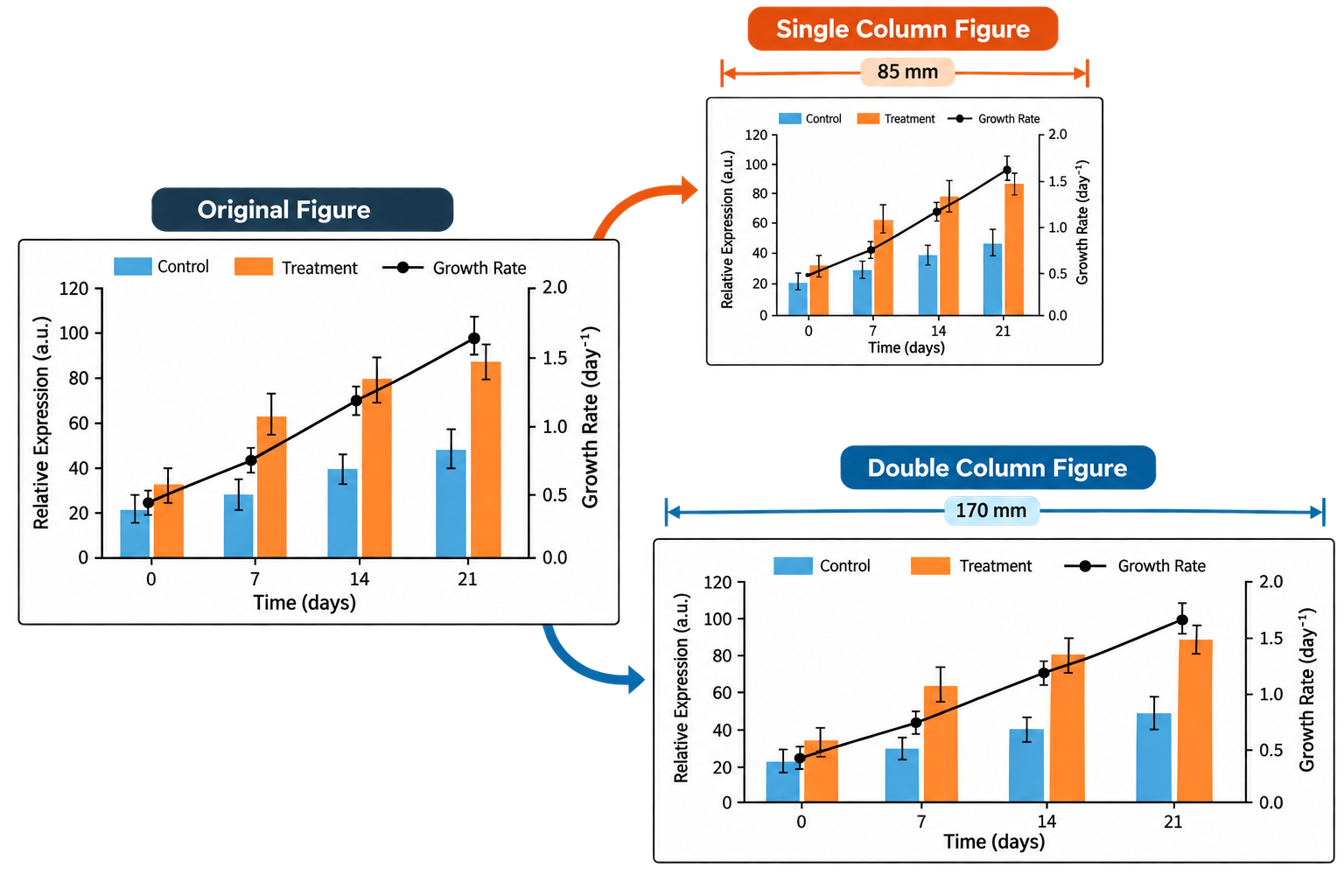
Prepare the same figure for the dimensions supplied for different journal column layouts.
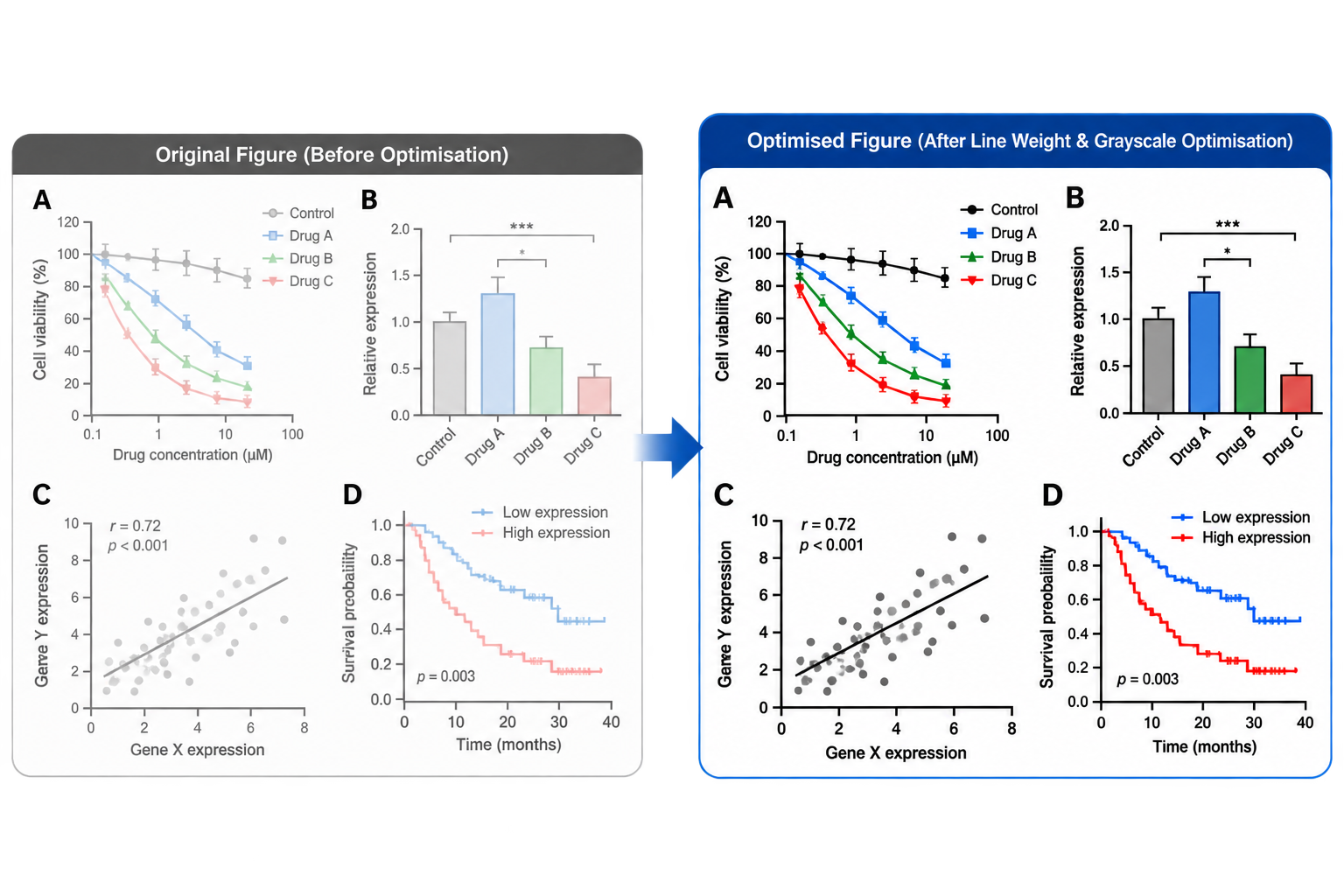
Improve print readability while keeping the original plotted information unchanged.
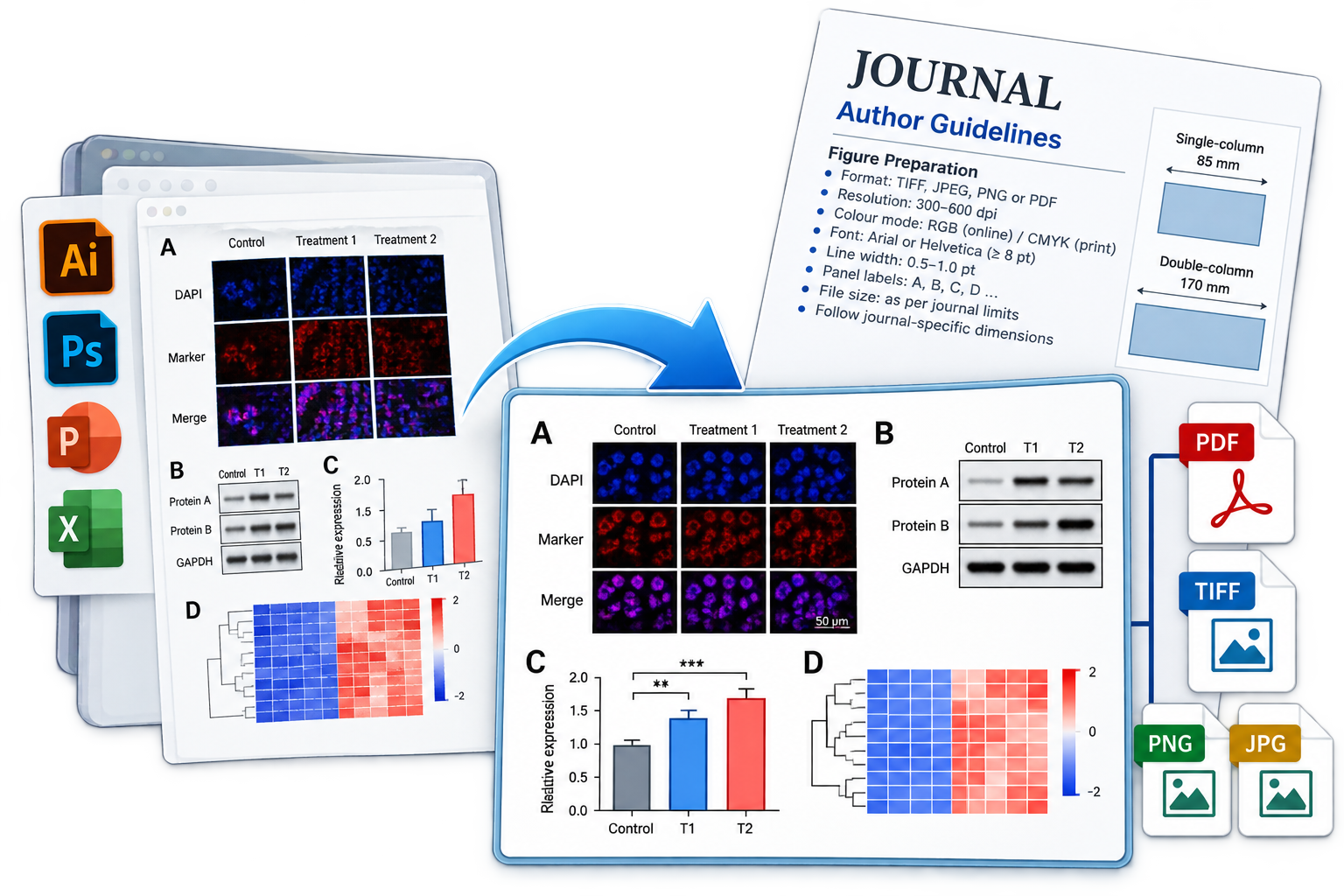
Prepare the permitted final file type from compatible source artwork and supplied journal instructions.
See how the same research evidence can be presented with clearer hierarchy, consistent styling and journal-ready visual structure.
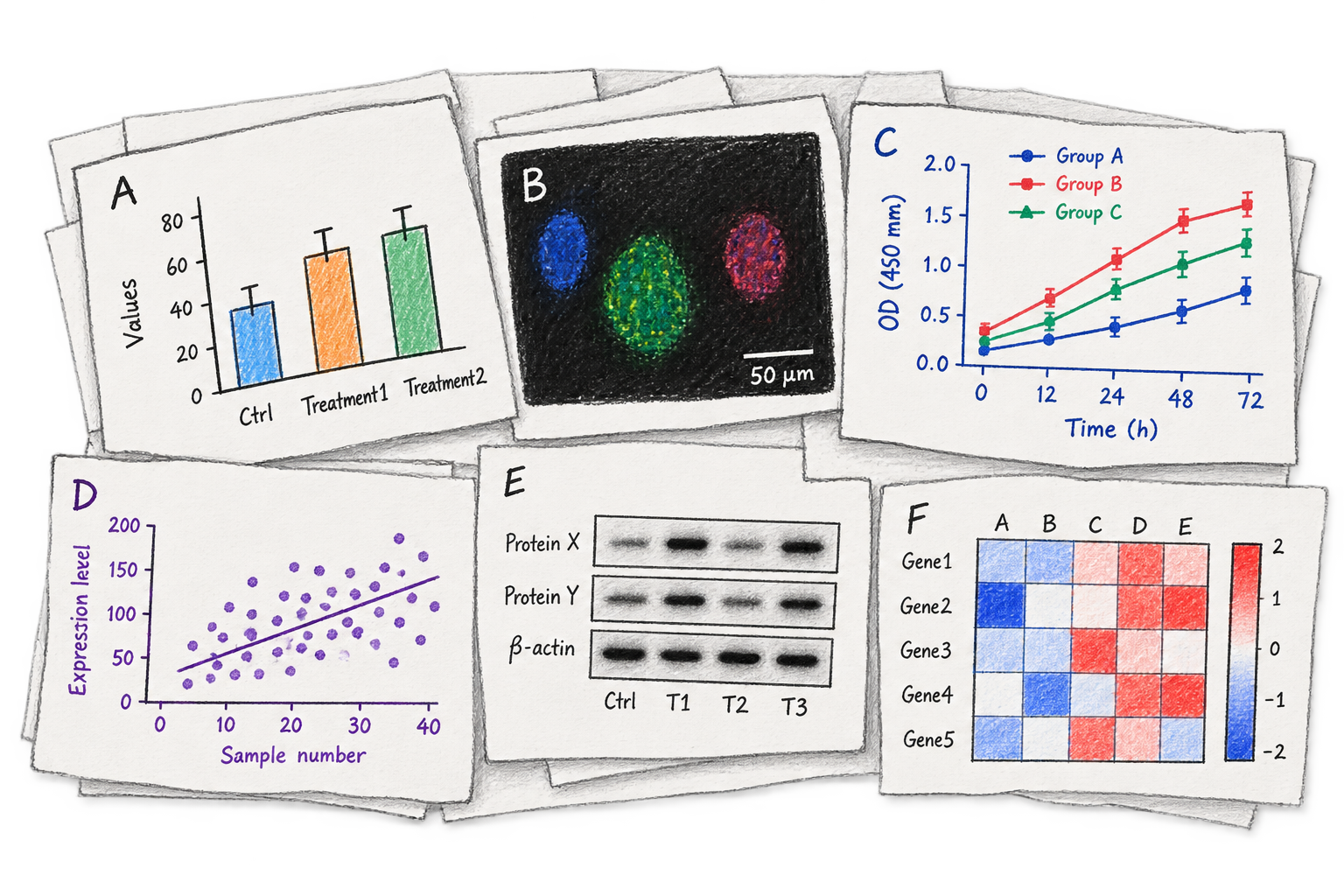
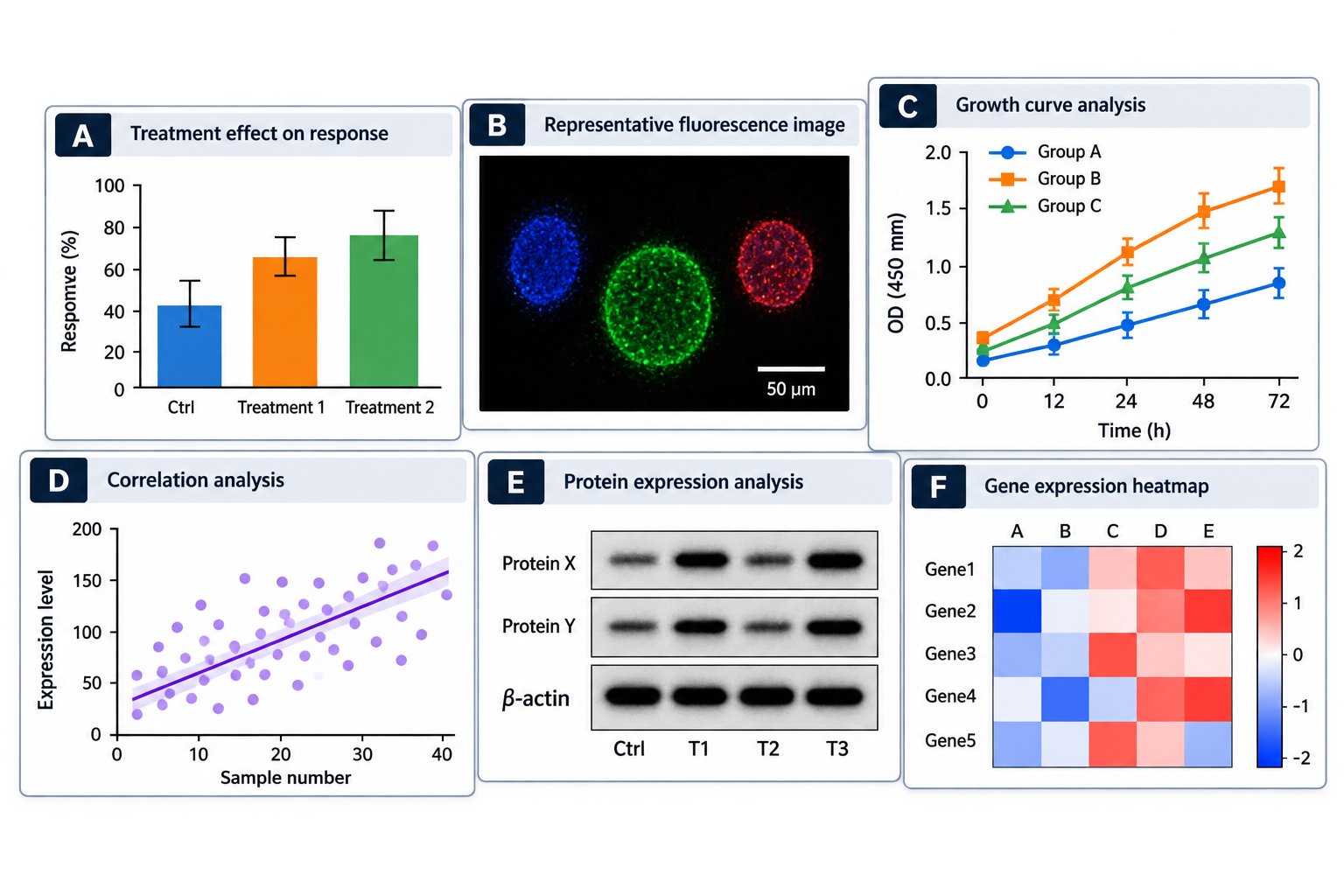
A practical workflow from supplied figures and journal guidance to final submission-ready files.
Send the current figures/source files, figure numbers, target journal and current artwork guidance.
Check source quality, resolution, dimensions, editability and any obvious technical constraints.
Map the supplied journal instructions to figure sizing, file format, labels and applicable presentation rules.
Resize, align, assemble panels and standardise fonts, labels, line weights and spacing.
Review the agreed figure set for consistent panel style, typography, file naming and technical preparation.
Provide the prepared submission files and editable versions where the source format permits.
Standard delivery depends on the number of figures and the amount of technical preparation required.
| Project Size | Standard Turnaround |
|---|---|
| 1–5 figures | 1–2 working days |
| 6–15 figures | 2–4 working days |
| Larger manuscript | 4–6 working days |
We format against the current official instructions you supply rather than assuming one universal journal specification.
Single-/double-column or other required dimensions from the supplied journal guidance.
Prepare TIFF, EPS or PDF artwork where requested by the current journal instructions.
Check and prepare resolution using the actual journal specification and the technical limits of the supplied source.
Standardise figure text according to supplied requirements and maintain legibility at final size.
Apply consistent A/B/C-style labels and panel arrangement where required.
Prepare consistent lines, colours or grayscale treatment from the provided instructions.
Place verified researcher-supplied scale information without inventing scientific measurements.
Keep file names and figure identifiers aligned with the manuscript where part of the agreed preparation scope.
Revision rounds and scope are confirmed before work begins so figure refinements and new artwork requests are separated clearly.
Examples include agreed corrections to alignment, spacing, label placement, font consistency, line weights, export settings or other formatting details already within the confirmed figure set and target-journal brief.
An additional figure, materially changed source content, changed analysis, a new reconstruction requirement or new journal specifications introduced after completion may require the scope and delivery schedule to be reconfirmed.
Journal artwork preparation should improve technical presentation without turning visual editing into evidence manipulation.
We can improve sizing, panel assembly, readability, label consistency, line weights, spacing, file preparation and other presentation details supported by the source material and supplied journal guidance.
We do not fabricate data, change p-values or statistical significance, selectively remove inconvenient evidence, invent scale information, misrepresent authorship or alter research conclusions merely to make a figure look more persuasive.
Practical answers about source files, resolution, formats, turnaround, revisions, journal requirements and research integrity.
The service includes figure resizing, resolution correction where technically possible, font standardisation, panel alignment, A/B/C labelling, line-weight correction, single- or double-column sizing, figure assembly, TIFF/EPS/PDF preparation and journal-specific artwork formatting.
Send the figures or source files, the target journal, the current official artwork guidelines or link, and the manuscript figure numbers. Higher-resolution or editable originals are helpful when available.
Not always. Resolution can be corrected only where technically possible. Changing the DPI metadata does not recreate genuinely missing image detail, so the best available original or editable source should be supplied.
The service includes preparation of TIFF, EPS and PDF files as required by the supplied journal guidance. Compatible source artwork may also be retained or exported in a suitable vector format when the source permits and the requirement calls for it.
Editable files are provided only where the original source format and agreed workflow permit them. A flattened raster figure cannot always be converted into a genuinely editable source file.
Typical turnaround is 1–2 working days for 1–5 figures, 2–4 working days for 6–15 figures, and 4–6 working days for a larger manuscript. Unusually large, incomplete or materially changed projects may need a confirmed final schedule after review.
Yes, when you provide the current official target-journal artwork requirements or link. We use those supplied requirements for dimensions, file types, typography, panel labelling and other applicable artwork specifications rather than inventing missing requirements.
Yes. Figure assembly, panel alignment and A/B/C labelling are within scope. The supplied panels are organised into a consistent layout without changing the underlying research evidence.
The service can format existing journal artwork such as graphs and charts, schematics, microscopy images, photographs, multi-panel figures, heatmaps, western-blot panels and author-supplied illustrations when suitable source material is available.
Revision rounds and scope are confirmed before work begins. Refinements within the approved brief are distinguished from new scope such as an additional figure, materially changed source content, changed analysis or new journal specifications introduced after completion.
Tell us about any institution-specific confidentiality, NDA or file-handling requirement before sharing sensitive or unpublished material so the handling requirement can be confirmed before the project starts.
No. Formatting improves presentation and technical compliance; it does not fabricate data, change p-values or statistical significance, remove inconvenient evidence, alter verified scale information, misrepresent authorship or change conclusions merely to improve appearance. Journal acceptance is not guaranteed.
Tell us how many figures you have, the target journal and the main artwork issues. Detailed figure/source files and the current journal guidance can be shared through the agreed project channel after the enquiry is reviewed.
Share your contact details and figure-formatting requirements so we can review the scope and respond with the next steps.
This form collects enquiry details only and does not upload files. Keep your figures/source files, target-journal guidance, manuscript figure numbers and any reviewer comments ready to share through the agreed project channel after review.