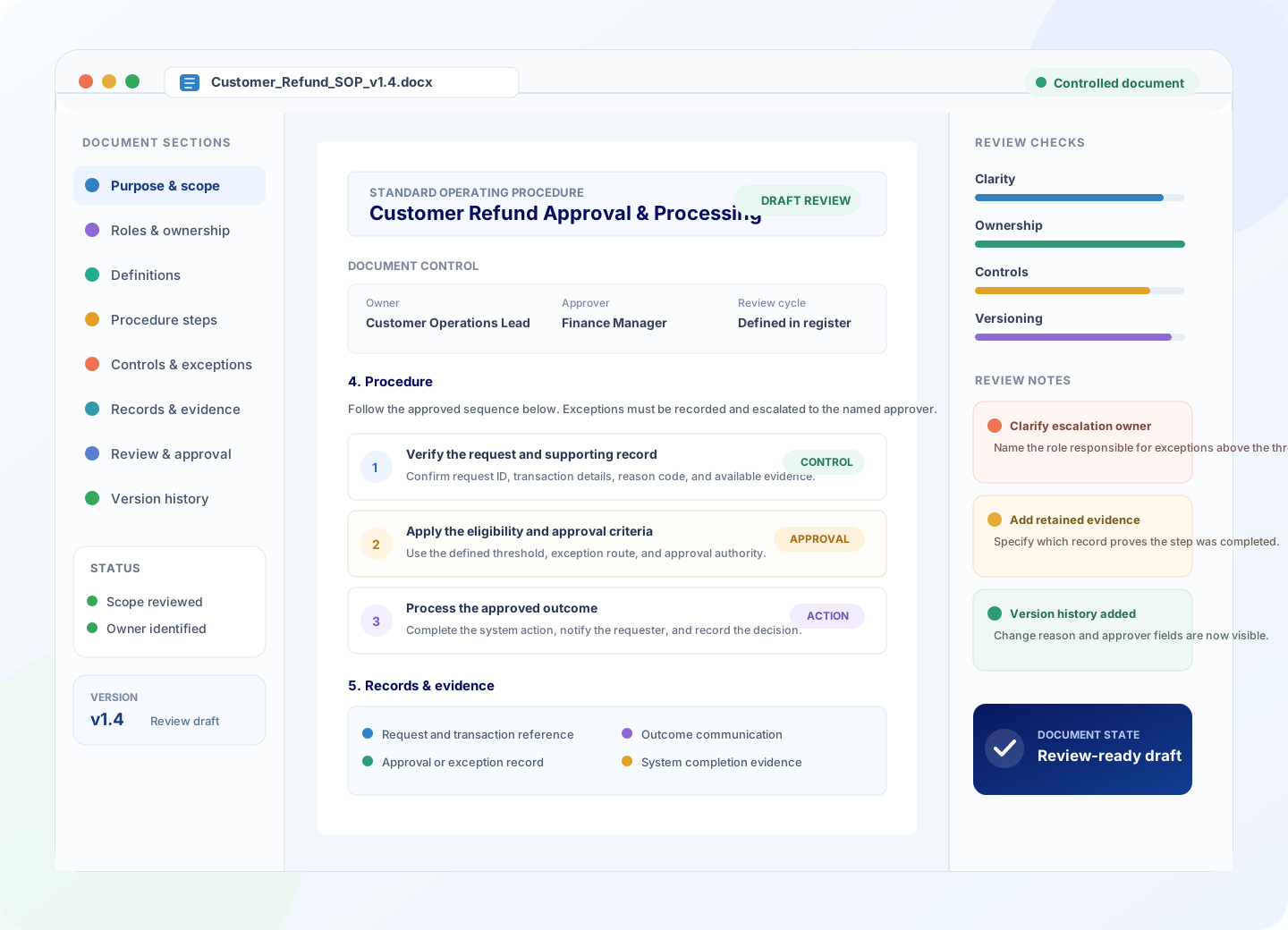
Business Policy Service for Clear, Consistent Business Governance
★★★★★4.8 rating from Researchers, Authors, Students, and Scholars
Turn process knowledge, existing documents, stakeholder inputs, and operational requirements into structured policies and standard operating procedures that define responsibilities, steps, controls, approvals, exceptions, and document governance.
Clear policy purpose, scope, ownership, and decision boundaries
Step-by-step SOPs with roles, control points, records, and exceptions
Review-ready drafts with comments, version fields, and approval structure
Supporting checklists, process maps, or templates where the agreed scope needs them
Work is shaped around the process, document set, and requirements you provide.
Confidential handling
Controlled processes are used for confidential client information and working documents.
Structured review
Roles, sequence, controls, exceptions, records, and cross-references are reviewed together.
Clear deliverables
Draft and final outputs are defined before work begins, with supporting items where agreed.
Project pricing · scope · delivery
Business Policies Service Project Pricing
The workload behind Business Policies Service depends on the material supplied and the agreed outputs, so the most useful public price is a project minimum for this use case: A defined documentation project covering creation, refinement or organisation of a small policy and procedure set.
Initial Project Scope
Projects from ₹15,000
for a defined initial engagement
Suitable for: A defined documentation project covering creation, refinement or organisation of a small policy and procedure set.
Scope, users and document inventory review
Priority policy/SOP architecture
Writing or refinement of the agreed documents
Terminology, ownership and cross-reference consistency
Final controlled-document pack after review
Typical deliveryTypical focused project: 8–12 business days
A document can look complete and still be hard to use. These are common documentation weaknesses that create ambiguity, inconsistent execution, slow approvals, or avoidable rework.
Unclear Purpose or Scope
The document does not define what it covers, who it applies to, or where responsibility begins and ends.
Weak Role Ownership
Actions, approvals, handoffs, and escalation points are described without naming the responsible role.
Vague Procedure Steps
Instructions use broad language but omit sequence, inputs, decision points, records, or expected outputs.
Missing Controls & Exceptions
Normal steps are documented, but checks, thresholds, exceptions, or escalation rules are not made visible.
Poor Approval & Versioning
Users cannot easily tell which version is current, who approved it, what changed, or when it should be reviewed.
Disconnected Supporting Tools
Forms, checklists, systems, references, and related policies are not linked clearly to the procedure that uses them.
2
What This Business Policies Service Covers
The documentation journey can start from a rough process, an existing document set, or a defined requirement. Coverage is selected to match the project rather than forcing every document through the same template.
1
Discovery & Scope
→
2
Existing Document Review
→
3
Process Mapping
→
4
Roles & Ownership
→
5
Policy Principles
→
6
SOP Step Design
→
7
Controls & Exceptions
→
8
Records & Evidence
→
9
Forms & Templates
→
10
Cross-References
→
11
Draft Development
→
12
Stakeholder Review
→
13
Version Control
→
14
Approval Structure
→
15
Final Documentation
→
3
See the Transformation
A strong SOP turns informal know-how into a controlled, repeatable instruction. This example shows the difference between a rough operating note and a structured procedure.
Before — Rough Process Note
“Handle refunds when a customer requests one.”
“Check the order, ask a manager if needed, issue the refund, and tell the customer. Keep a note somewhere for future reference.”
⊗No defined eligibility criteria
⊗No role or approval threshold
⊗No exception or escalation path
⊗No required evidence or record
→
During — Structured Draft & Review
The service agent verifies the request ID, transaction record, reason code, and supporting evidence before applying the defined eligibility criteria.
Review note: Define the role that approves requests above the normal threshold.
Approved outcomes are processed in the designated system and recorded against the request reference.
Control point: Add the evidence that must be retained for the completed action.
A structured SOP defines the purpose, applicability, responsible roles, normal sequence, decision criteria, approval path, exceptions, records, and document-control information.
✓Clear scope and responsible roles
✓Repeatable step sequence and decision points
✓Visible controls, records, and exception handling
✓Review-ready document governance
Ready to move forward with Business Policies Service?Purchase the service and continue with your project brief, files, and delivery requirements.
How Full Business Policies Support Differs From Simple Formatting or Editing
Formatting and language refinement can improve presentation, but policy and SOP development also needs process logic, ownership, controls, exceptions, records, and document governance.
Support Dimension
Document Formatting Review Layout & consistency
Language Editing Clarity & wording
Full Business Policies Support End-to-end documentation
Purpose, scope & applicability
×
Limited
✓
Roles, ownership & approvals
×
×
✓
Process sequencing & decision points
×
Limited
✓
Controls, exceptions & escalation logic
×
×
✓
Records, evidence & linked tools
×
×
✓
Clarity, grammar & terminology
Basic
✓
✓
Document-control fields & versioning
Basic
Basic
✓
Review comments & action points
×
Sometimes
✓
Best for
Presentation cleanup
Language refinement
Complete policy & procedure development
5
Policy & SOP Types Supported
The structure is adapted to the business function, audience, process complexity, and source requirements you provide.
HR & People Policies
Operations SOPs
Finance & Approval Procedures
Procurement & Vendor SOPs
IT, Access & Security Procedures
Sales & Customer Support SOPs
Quality & Administrative Procedures
Cross-Functional Process Manuals
Ready to move forward with Business Policies Service?Purchase the service and continue with your project brief, files, and delivery requirements.
The workflow moves from source understanding to structured drafting, review, and handoff. The exact number of review rounds and deliverables is confirmed in the project scope.
1
Share Brief & Materials
Provide existing documents, process notes, standards, roles, systems, and priorities.
2
Scope Review
Identify document purpose, audience, coverage, gaps, dependencies, and clarification needs.
3
Process Mapping
Translate the working process into steps, decisions, roles, handoffs, controls, and records.
4
Policy / SOP Drafting
Develop the structured document using the agreed content, hierarchy, terminology, and control fields.
5
Structure & Control Review
Check sequence, ownership, approvals, exceptions, records, cross-references, and version fields.
6
Stakeholder Review
Incorporate supplied feedback and resolve clarified actions within the agreed review scope.
7
Formatting & Governance
Apply consistent headings, document-control information, references, and supporting item labels.
8
Final Handoff
Deliver the agreed final documents and supporting materials after completion of the defined review checks.
7
What You Share and What You Receive
Useful source material reduces assumptions and makes review faster. Deliverables are confirmed against the agreed scope before development begins.
What You Need to Share With Us
✓Purpose, audience, and business objective of the policy or SOP
✓Existing policies, procedures, process notes, or working drafts
✓Roles, approvers, escalation points, and key stakeholders
✓Systems, forms, checklists, screenshots, or templates used in the process
✓Internal standards, contractual terms, or regulatory material to align with
✓Known exceptions, risk points, control requirements, or common failure cases
✓Deadline, formatting expectations, and preferred review process
DOC Existing_Policy.docx
XLS Approval_Matrix.xlsx
PDF Process_Requirements.pdf
What You Receive
✓Working draft(s) with structured policy or SOP content
✓Clean final document(s) after the agreed review stage
✓Document-control fields such as owner, approver, version, and review information where required
✓Roles, responsibilities, process steps, controls, records, and exception handling as applicable
✓Supporting process maps, checklists, forms, or templates where included in scope
✓Review comments or change notes where the project requires clarification or stakeholder action
✓
✓
✓
8
Quality Assurance and Review Methodology
The review focuses on whether the document is coherent as an operating instruction: the purpose, roles, sequence, controls, records, cross-references, and version information must work together.
1
Structure Review
Check hierarchy, scope, sections, and overall document logic.
2
Clarity Pass
Improve instructions, terminology, readability, and ambiguity.
3
Role & Approval Check
Verify that key actions, decisions, and approvals have owners.
4
Controls & Exceptions
Review checks, thresholds, evidence, exceptions, and escalation paths.
5
References & Versioning
Check linked tools, related documents, control fields, and consistency.
6
Final Verification
Confirm the agreed scope is reflected in the final handoff.
Final Review Complete
Ready to move forward with Business Policies Service?Purchase the service and continue with your project brief, files, and delivery requirements.
Business Policies often cross departments, systems, approvals, and sensitive operational information. The project brief can define the functions involved and any specific handling requirements.
Business Functions We Can Document
HR & People
Finance
Operations
Sales & Support
Procurement
IT & Security
Quality & Admin
Cross-Functional
Confidentiality & File Handling
✓Contentxprtz uses controlled processes intended to protect confidential client information.
✓You can redact unnecessary sensitive data before sharing source materials.
✓Project-specific handling requirements can be included in the brief before work begins.
✓Only the information needed to understand and document the agreed process should be shared.
✓Legal or regulatory confidentiality obligations should be identified by the responsible client team.
Your operational knowledge remains the source of truth; drafting does not replace internal approval or specialist compliance review.
10
Turnaround, Custom Quote, and Quick Questions
Policies and SOP projects vary widely in document count, source quality, stakeholder involvement, and process complexity. Scope is reviewed before a price or turnaround is confirmed.
Turnaround Planning
Turnaround is confirmed after scope and deadline review. Scheduling is based on document volume, complexity, review needs, and the deadline you provide.
Scope-drivenTimeline follows the agreed document set.
Milestone-basedLarge sets can be organised into review stages.
Deadline reviewUrgent requests are assessed for feasibility.
Custom Scope Factors
The published pricing above covers the stated entry scope; larger requirements are quoted after reviewing the actual workload.
◉Number and length of policies / SOPs
◉Condition and completeness of source material
◉Process complexity, roles, approvals, and exceptions
◉Required review depth and stakeholder inputs
◉Formatting, templates, maps, checklists, or supporting tools
◉Requested delivery schedule and handoff requirements
What does your Business Policies Service include?+
Scope can include policy structure, SOP steps, roles, controls, approvals, exceptions, records, versioning, review notes, and supporting tools. The exact coverage is agreed from your requirements.
Can you develop documents from process notes?+
Yes. Existing documents, notes, stakeholder inputs, screenshots, forms, and standards can be used as source material, with gaps identified for clarification.
Can you improve existing Business Policies?+
Yes. Existing documents can be reviewed for structure, clarity, ownership, process sequence, controls, exceptions, cross-references, and document governance.
How are price and turnaround decided?+
Contentxprtz Business Policies Service projects start from ₹15,000 for a defined initial engagement. They are confirmed after document count, complexity, source quality, review depth, supporting deliverables, and deadline are assessed.
Ready to move forward with Business Policies Service?Purchase the service and continue with your project brief, files, and delivery requirements.
Answers to practical questions about scope, source material, review, deliverables, pricing, scheduling, confidentiality, and compliance boundaries.
What is the difference between a policy and an SOP?+
A policy defines the rule, intent, principles, responsibilities, and boundaries for a topic. An SOP turns an operational requirement into a repeatable sequence of steps, decision points, controls, records, and responsible roles.
Can you develop Business Policies from process notes or interviews?+
Yes. A project can begin from existing documents, process notes, stakeholder inputs, screenshots, forms, or a structured brief. The source material is reviewed so gaps and clarification needs can be identified before drafting.
Can you revise existing documents instead of starting from scratch?+
Yes. Existing documents can be reviewed for structure, clarity, role ownership, process sequence, control points, exceptions, cross-references, version information, and consistency with supplied requirements.
Can you align documents to our internal standards or regulatory requirements?+
Documents can be aligned to internal standards, templates, contracts, or regulatory material that you supply. The service supports documentation and alignment; it does not replace legal, regulatory, or compliance advice.
Can the service include process maps, checklists, or templates?+
Where useful to the agreed scope, supporting process maps, checklists, forms, templates, responsibility notes, or approval aids can be included in the documentation package.
How are roles, approvals, and exceptions handled in an SOP?+
The drafting process identifies the role responsible for each key action, approval or decision point, escalation path, exception condition, and required evidence or record, then reflects those elements in the SOP structure.
What do you need from us before drafting starts?+
Useful inputs include the document purpose, current process notes, existing policies or SOPs, roles and approvers, systems used, forms or templates, relevant standards, known exceptions, target users, and deadline or formatting requirements.
What deliverables can be included?+
Depending on scope, deliverables may include working drafts, clean final policies or SOPs, process-flow material, checklists, forms or templates, review comments, a change summary, and document-control fields. Deliverables are confirmed before work begins.
How much does a Business Policies project cost?+
The published Business Policies Service project minimum above is ₹15,000 for a defined initial engagement; larger or more complex requirements are confirmed after scope review. Larger policy and SOP requirements are quoted from document volume, process complexity, source-material condition, review depth, stakeholder inputs, formatting needs and supporting deliverables.
What is the turnaround time?+
A turnaround is confirmed after scope, document volume, complexity, review requirements, and deadline are assessed. Turnaround is confirmed after scope and deadline review.
How is confidential information handled?+
Contentxprtz uses controlled processes intended to protect confidential client information. You can also redact unnecessary sensitive data before sharing material and specify project-specific handling requirements in your brief.
Do you guarantee that a policy or SOP will make us legally compliant?+
No. This is a policy and procedure documentation service. It can align documents to requirements you provide, but legal, regulatory, tax, safety, employment, privacy, or industry-specific compliance decisions should be reviewed by the appropriate qualified adviser or responsible internal function.
Can we update or expand the document set later?+
Yes. A later phase can be scoped for additional policies, SOPs, linked tools, or revisions. A clear version and change structure makes future updates easier to track and review.
12
Discuss Your Business Policies Requirement
Share enough detail for the scope to be reviewed: what you need documented, what source material exists, who uses the process, the main roles and approvals, and any deadline or standards that matter.
Document set
Tell us whether you need one policy, one SOP, a linked set, or an existing document library reviewed.
Process & roles
Describe the users, responsible roles, approvers, systems, handoffs, decisions, and known exceptions.
Source materials
List existing documents, process notes, forms, screenshots, templates, standards, or requirements available.
Deadline & review needs
Share the target date, stakeholder review expectations, and whether documents need to be delivered in phases.
Standards & controls
Identify internal templates, contractual requirements, risk controls, or regulatory material that should be considered.
Business Policies Enquiry
Request a Scope Review
Provide your contact details and a short project brief. We will use the information to understand scope, feasibility, and the documentation approach required.
Ready to Strengthen Your Business Policies?
Share your current documents, process notes, or requirements. We can help shape them into clearer, more structured, review-ready operational documentation.