Incomplete Endpoint Detail
Required fields, response behaviour, limits, or prerequisites may be missing or scattered.

Turn fragmented endpoint notes, specifications, schemas, examples, and engineering inputs into structured API documentation that helps developers understand what an API does, how to call it, what to send, what to expect, and how to recover from errors.
A small, well-scoped API can begin at a clear project minimum; larger references are estimated from operation count, source readiness, and developer-guide requirements.
Suitable for: Best for a new or fragmented API that needs a coherent reference structure and a usable developer entry point.
for a small API documentation foundation covering up to 10 operations with a getting-started path
API Documentation Service starts at ₹25,000 for a small API documentation foundation covering up to 10 operations with a getting-started path.
Buy Service NowSDK examples, multiple code languages, interactive portal setup, extensive webhook coverage, more than ten operations, or incomplete source material require a wider quotation.
Integration friction often begins when important technical context is scattered across tickets, schemas, code comments, chat threads, and incomplete reference pages. The service focuses on turning that material into one coherent developer experience.
Required fields, response behaviour, limits, or prerequisites may be missing or scattered.
Developers need to know credentials, scopes, headers, token flows, and failure conditions.
Names for fields, objects, actions, and statuses should remain consistent across pages and examples.
A schema alone may not explain a realistic request, response, edge case, or recovery path.
Reference content can become unreliable when implementation changes are not reflected in descriptions and examples.
The scope is adapted to the API materials and target audience. A documentation project can move from raw technical inputs through structured reference content, developer guidance, examples, and final consistency checks.
Specs, notes, existing docs
Resources, groups, hierarchy
Credentials, scopes, flows
Methods, paths, parameters
Requests and responses
Practical payloads
Codes and recovery notes
Sequence and events
Developer journey
Consistency and final checks
The examples below illustrate the kind of documentation improvement the service is designed to make. They are representative examples, not claims about a specific client project.
POST /orders — creates order. Need token. Send customer and items. Returns order.
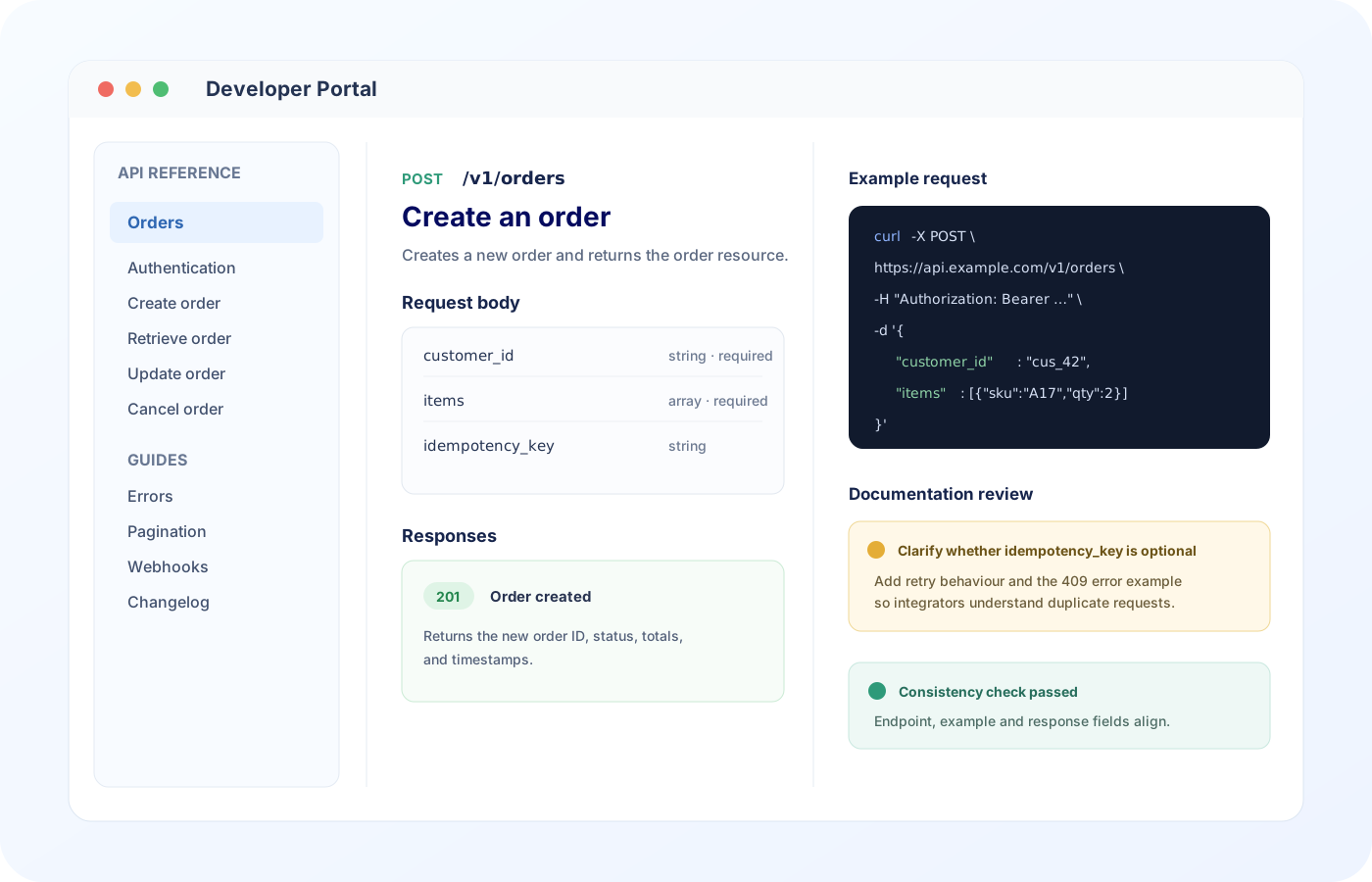
Creates a new order for an authenticated customer. Requires a bearer token and a valid item list.
Explains purpose, authentication, body fields, a complete example, success response, error states, and related next steps.
Not every API needs the same documentation depth. This comparison helps distinguish informal internal notes from a structured documentation engagement and a broader cross-product documentation program.
| Focus | Basic Developer Notes | API Documentation Service Core Service | Broader Documentation Program |
|---|---|---|---|
| Primary Goal | Capture essential internal knowledge. | Create clear, structured, developer-facing API documentation. | Coordinate documentation across multiple products, APIs, and audiences. |
| Endpoint Reference | May be partial or implementation-led. | Organised endpoint, parameter, schema, response, and error content based on supplied sources. | Includes reference plus governance across wider documentation sets. |
| Examples | Ad hoc snippets. | Examples can be developed or refined when supported by the API contract and project scope. | May include broader sample libraries, SDK guidance, or reusable standards. |
| Information Architecture | Limited. | Navigation and page structure can be improved for the intended developer journey. | Cross-product taxonomy, portal strategy, and documentation governance. |
| Quality Review | Self-review. | Language, terminology, linkages, examples, and source consistency reviewed as part of the agreed scope. | Program-level standards, workflows, and maintenance models. |
| Best For | Fast internal knowledge capture. | Teams preparing or improving a usable API reference and supporting guides. | Organisations managing a large documentation ecosystem. |
A coherent developer experience depends on more than endpoint descriptions. The review can extend across the full path from first authentication through requests, responses, errors, event flows, and follow-up guidance.
Purpose, audience, base URL
Credentials, headers, scopes
Methods, paths, operations
Path, query, header fields
Bodies, objects, constraints
Schemas, statuses, fields
Failure states and recovery
Payloads, webhooks, flows
The workflow keeps source material, developer needs, documentation structure, examples, and final quality review connected instead of treating each page as an isolated writing task.
Specs and source docs
Audience and depth
Inputs to doc sections
Hierarchy and navigation
Reference and guides
Requests and responses
Terms and patterns
Cross-check content
Agreed working format
Updates if in scope
Final deliverables are set by the project scope. Depending on your source material and required output, the documentation package can include the following components.
API documentation needs language quality and technical consistency. The review pipeline checks how the content reads, how examples align, and whether related documentation elements agree with one another.
Clarity, completeness, audience fit, and task orientation.
Names, terms, field descriptions, statuses, and cross-page patterns.
Example payloads reviewed against the source details supplied.
Headings, code blocks, tables, references, and navigation cues.
Cross-check the documentation package before final delivery.
Share your API style, audience, existing source material, and publishing environment. The documentation approach can then be shaped around the actual integration context rather than a generic template.
Resource and endpoint reference documentation.
Schema-led queries, mutations, and object guidance.
Event payloads, delivery, retries, and handling guidance.
Documentation for engineering and operational consumers.
Integration guidance for controlled external audiences.
Developer-facing reference and onboarding content.
Usage guidance linked to API concepts and examples.
Service-level ownership, interfaces, and dependency context.
API documentation may contain unpublished technical details. Contentxprtz's existing service architecture describes controlled handling of client information; API projects should also minimise exposure of secrets and provide only the materials needed for documentation.
The reference service architecture states that client information is handled through controlled processes intended to protect confidential material.
Redact live API keys, passwords, private tokens, and other credentials that are not needed to document behaviour.
Provide specifications, examples, screenshots, notes, or sanitized payloads that are necessary for the agreed documentation scope.
The existing Contentxprtz service page references ISO/IEC 27001:2022 within its wider information-security controls.
Turnaround is confirmed after scope and deadline review. The schedule should be confirmed only after the API scope and source condition are reviewed.
The delivery plan is shaped by the volume and condition of the source material and by how much technical clarification is needed.
Share the target deadline, release date, API size, current documentation, and required deliverables. Feasibility can then be assessed against the actual project scope.
Discuss Your TimelineGood documentation reduces the amount of interpretation a developer has to do. The service is designed to connect technical source material with a clearer, more consistent reading and integration path.
Practical answers about scope, source material, API styles, examples, technical validation, pricing, delivery planning, confidentiality, and project outputs.
The scope can cover endpoint references, authentication, parameters, request and response schemas, error handling, examples, webhooks, versioning notes, navigation, and supporting developer guides. The exact coverage is confirmed from the API materials you provide.
Yes. Existing documentation can be reviewed for clarity, completeness, terminology, structure, consistency, and alignment with the source materials supplied for the project.
OpenAPI or Swagger definitions can be used as source material when you provide them. They can help establish endpoints, parameters, schemas, and response structures, while narrative guidance and examples still need to be checked against the intended developer experience.
The service can be scoped around different API styles and documentation contexts. Share the API type, existing source material, audience, and required output so the documentation approach can be assessed before work begins.
Documentation review is not automatically the same as functional API testing. If live verification, request execution, sandbox checks, or other technical validation is required, include that requirement in your enquiry so it can be considered in the project scope.
Useful inputs include API specifications, existing docs, endpoint lists, authentication details, schemas, sample requests and responses, error codes, changelogs, SDK or repository references, style guidance, and notes from engineers or product teams.
Examples can be included when the project scope and source information support them. Any example should be based on the API contract and technical details you provide rather than invented behaviour.
Yes, where included in scope. This may involve reorganising endpoint groups, guide hierarchy, cross-links, terminology, page structure, and the sequence in which developers encounter concepts.
The documentation can explain the authentication flow, required headers or credentials, common failure states, error objects, status codes, and recovery guidance when those details are available in the supplied API materials.
API Documentation Service starts at ₹25,000 for a small API documentation foundation covering up to 10 operations with a getting-started path. SDK examples, multiple code languages, interactive portal setup, extensive webhook coverage, more than ten operations, or incomplete source material require a wider quotation.
The existing Contentxprtz service architecture describes controlled processes for client information and data confidentiality. For API projects, you should still avoid sharing production secrets or live credentials and provide only the technical material needed for documentation.
Final deliverables depend on the agreed scope. They can include clean documentation content, structured endpoint reference material, examples, consistency corrections, information-architecture recommendations, and a review summary in the agreed working format.
Tell us what you have today and what developers need at the end. Include the API type, approximate scope, source materials, target format, deadline or release date, and any documentation priorities.
REST, GraphQL, webhooks, internal, partner, public, SDK, or another documentation context.
OpenAPI/Swagger, schemas, existing docs, code/repository references, examples, screenshots, or engineering notes.
Approximate endpoint count, guides required, examples, information architecture, and preferred working or publishing format.
Share the required date and time zone so feasibility can be assessed against the actual scope.
Share your contact details and project requirements so the scope, source quality, timeline feasibility, and quote can be reviewed.