Unclear Purpose & Scope
The report does not define the problem, audience, assumptions, exclusions, or decision the document is meant to support.

Turn complex technical material into a report that is easier to review, navigate, and use. We support structure, technical language, data presentation, figures and tables, references, formatting, revision tracking, and final quality checks around the scope you provide.
A technical report combines synthesis, structure, technical communication, and review, so the entry price is tied to a complete short-form report rather than a generic per-word rate.
Suitable for: Best for a defined technical finding, assessment, project outcome, or internal/external report with usable source inputs.
for a concise technical report of up to about 2,500 words built from organised source material
Technical Report Service starts at ₹15,000 for a concise technical report of up to about 2,500 words built from organised source material.
Buy Service NowOriginal data analysis, extensive primary research, compliance reporting, large appendices, complex visual production, or substantially longer reports require a broader quote.
A technically sound project can still be difficult to approve or act on when the report does not connect its purpose, evidence, findings, and conclusions clearly. These are common presentation and documentation problems that the service is designed to address.
The report does not define the problem, audience, assumptions, exclusions, or decision the document is meant to support.
Background, methods, findings, interpretation, and recommendations appear in the wrong order or repeat the same material without a clear hierarchy.
Claims, calculations, assumptions, figures, or conclusions are not clearly linked to the source data or the section where supporting evidence is presented.
Captions, numbering, units, symbols, axis labels, terminology, or table formatting vary across the report and make comparison harder.
In-text citations, reference lists, figure callouts, section links, annex references, or document numbering do not align consistently.
Required templates, heading styles, page elements, numbering, appendices, or final file conventions are incomplete or inconsistently applied.
The service can be configured around the condition of your report—whether you need an existing draft refined, source material organised into a clearer report, or a near-final document checked before delivery. The exact work is confirmed from your files and instructions.
Grammar, wording, concision, technical tone
Hierarchy, flow, headings, section purpose
Findings, comparisons, limitations, interpretation
Captions, units, labels, numbering, callouts
Citation consistency and cross-references
Styles, numbering, pagination, template alignment
Purpose, findings, implications, recommendations
Consistency, completeness, final cross-checks
Clean report plus review outputs in scope
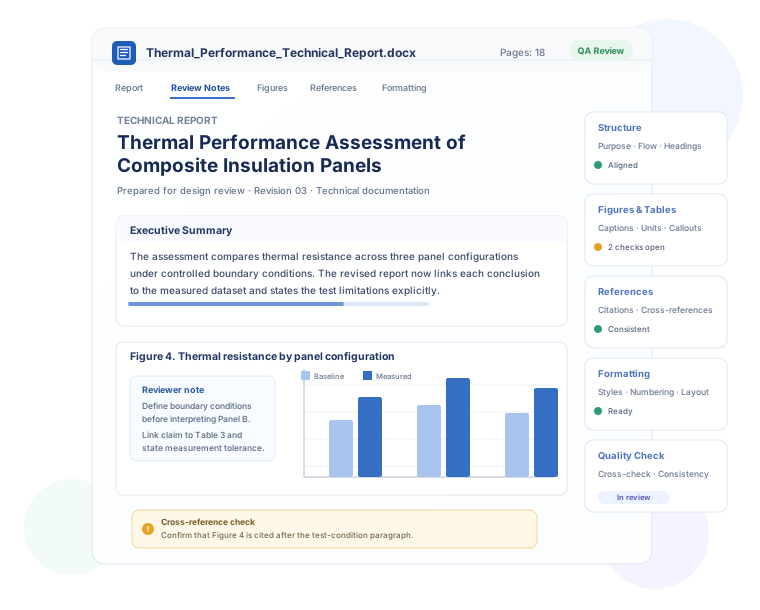
A technical report review should improve more than surface grammar. The example below shows how wording, evidence links, figure presentation, and reviewer guidance can become clearer while keeping the underlying technical meaning with the author and project team.
The panel results was better and it shows the design is good. The readings changed between tests and the values are shown below. This means the insulation is suitable.
Figure 4: test result.
Under the stated boundary conditions, Panel B showed higher measured thermal resistance than the baseline configuration. The difference should be interpreted alongside the measurement tolerance and repeat-test variation.
Figure 4. Measured and baseline thermal resistance by panel configuration.
Under the stated boundary conditions, Panel B showed higher measured thermal resistance than the baseline configuration. This difference is interpreted with the measurement tolerance and repeat-test variation reported in the test data.
Figure 4. Measured and baseline thermal resistance by panel configuration.
These activities solve different problems. Technical Report Service focuses on communication, document structure, presentation, consistency, and review traceability; it does not automatically replace independent professional validation of engineering, scientific, financial, regulatory, or safety conclusions.
| Focus | Proofreading | Technical Report Service | Independent Technical Validation |
|---|---|---|---|
| Language correctness | Yes — grammar, spelling, punctuation | Yes — clarity, concision, technical tone, terminology | Not the primary purpose |
| Report structure | Limited | Yes — hierarchy, section purpose, flow, repetition | May comment where it affects technical validity |
| Figures & tables | Surface presentation only | Yes — captions, units, labels, callouts, numbering, consistency | May validate underlying calculations or methods |
| References & cross-references | Basic consistency | Yes — presentation and internal alignment within scope | May assess technical adequacy of evidence |
| Technical accuracy | No independent validation | Client/qualified reviewer validation required | Core purpose when separately commissioned |
| Best for | Near-final documents needing surface correction | Reports needing clearer structure, language, evidence presentation, formatting, and QA | Projects requiring formal subject-matter sign-off or verification |
The exact report structure varies by organisation and technical field. Where these sections are present, we review how each one communicates its purpose and connects to the rest of the document.
Purpose, key findings, implications
Context, scope, objectives, constraints
Approach, inputs, assumptions, conditions
Measurements, calculations, outputs
Interpretation, comparison, limitations
Evidence-linked closing statements
Actions, priorities, next steps
Citations, standards, source material
Tables, figures, calculations, supporting detail
The workflow keeps the original technical source material visible while separating document improvement from technical approval. Review comments are used where the report needs author or project-team confirmation rather than silent rewriting.
Draft, source files, template, instructions
ReceivedLength, condition, depth, deliverables
AssessmentMatch report needs to editorial expertise
AssignedFlow, clarity, tone, terminology
In ReviewFigures, tables, units, captions, callouts
CheckedCitations, numbering, styles, template
CheckedCross-check revisions and consistency
QAReviewed files and scope outputs
DeliveredClarify editorial changes and action points
SupportDeliverables are confirmed with the quote because report formats and project requirements vary. The items below show the typical outputs this workflow is designed to support when they are applicable to your file type and agreed scope.
The page separates language and document-quality review from technical sign-off. Each stage checks a different layer so the final report is internally consistent and easy to review without implying independent validation that has not been commissioned.
Clarity, flow, hierarchy, terminology, repetition, and tone.
Names, units, symbols, figure/table wording, and internal consistency.
Styles, numbering, citations, cross-references, captions, and template alignment.
Cross-check edits, unresolved comments, layout, and final consistency.
Final files and agreed review outputs prepared for handoff.
Technical reports vary by field, audience, and level of subject-matter complexity. These categories illustrate the types of documentation that can be assessed for editorial and presentation support; the exact fit is confirmed after reviewing your report and instructions.
Design, testing, process, materials, maintenance, operations
Systems, architecture, implementation, testing, security documentation
Models, metrics, data methods, dashboards, analysis outputs
Energy systems, environmental studies, sustainability, field assessments
Laboratory, biotechnology, methods, validation, research documentation
Clinical, health, protocol, study, and technical research reports
Operational, risk, analytical, audit, feasibility, and management reports
Applied studies, policy, programme, mixed-method, and cross-domain reports
Technical reports may contain unpublished research, internal data, project findings, commercial information, or draft decisions. The service workflow is designed around controlled handling and limited access to the materials required for the work.
Turnaround is confirmed after scope and deadline review. Delivery timing is therefore confirmed only after the report length, complexity, source quality, required checks, file format, and deadline have been reviewed.
For reports with a normal review window and a clearly defined scope.
For nearer deadlines where the report scope can be completed without reducing the agreed review depth.
For urgent requirements subject to report length, complexity, file condition, and reviewer availability.
Share the exact deadline and time zone in your enquiry. A delivery commitment should be confirmed only after the report and required outputs have been assessed.
The value of a technical report lies in how effectively it communicates evidence, constraints, findings, and decisions. This service is designed to make the document easier to review while preserving the project team's responsibility for technical accuracy and approval.
These answers explain the scope and boundaries of Technical Report Service alongside the published starting project price; final timing and technical-validation requirements still depend on the confirmed scope.
The service can be scoped around report structure, language clarity, technical consistency, tables and figures, references, formatting, review comments, and final quality checks. The confirmed scope depends on the report and materials supplied.
Yes. Existing drafts can be reviewed for structure, clarity, consistency, presentation, references, figures, tables, and formatting according to the agreed scope.
Report-development support can be assessed when you provide the available source material, required structure, audience, purpose, and technical inputs. The exact writing scope is confirmed before work begins.
The service can improve presentation, consistency, traceability, and clarity, but it does not replace independent engineering, scientific, legal, regulatory, or professional validation. The client remains responsible for technical accuracy and approvals unless a separate qualified review is expressly agreed.
Figures and tables can be checked for numbering, captions, units, labels, callouts, cross-references, visual consistency, and alignment with the surrounding report text within the agreed scope.
Yes, when the applicable template, style guide, or submission instructions are provided. The report can be aligned to those requirements within the confirmed service scope.
When the working format supports tracked revisions, the review workflow can provide a version showing changes along with a cleaner version for final reading and handoff.
References can be checked for presentation consistency, in-text and list alignment, obvious missing cross-references, and conformity with supplied style requirements. Source verification is not implied unless separately agreed.
Share the report type, approximate length, current draft or source material, required deliverable, audience, template or style requirements, figures and tables, reference requirements, and deadline.
Turnaround is confirmed after scope and deadline review. Delivery timing is confirmed after the report length, technical complexity, source quality, required checks, and deadline have been reviewed.
Technical Report Service starts at ₹15,000 for a concise technical report of up to about 2,500 words built from organised source material. Original data analysis, extensive primary research, compliance reporting, large appendices, complex visual production, or substantially longer reports require a broader quote.
The service page uses controlled file-handling practices for unpublished material, including secure transfer and storage, limited team access, confidentiality-focused handling, and project-based file controls.
Tell us what the report is for, what stage it is at, what materials are available, the required output, and your deadline. A quote and delivery plan can then be based on the actual scope rather than an invented fixed package.
Share the latest draft, data summaries, source notes, appendices, templates, or other materials needed to understand the report.
Explain who will read the report and whether it supports a client review, internal decision, assessment, submission, or another purpose.
Tell us whether the report contains charts, calculations, tables, references, cross-references, standards, or appendices that need consistency checks.
Provide the exact deadline so the scope and delivery feasibility can be assessed before work is confirmed.
Share your contact details and report requirements below. The information is used to assess scope, quote requirements, and delivery feasibility.