“My framework looks crowded.”
You already know the relationships, but too many arrows, constructs or labels are competing for attention.

Turn your researcher-defined constructs, theory, hypotheses and structural relationships into a clean conceptual framework or research model that is easier to explain in a thesis, research proposal or manuscript.
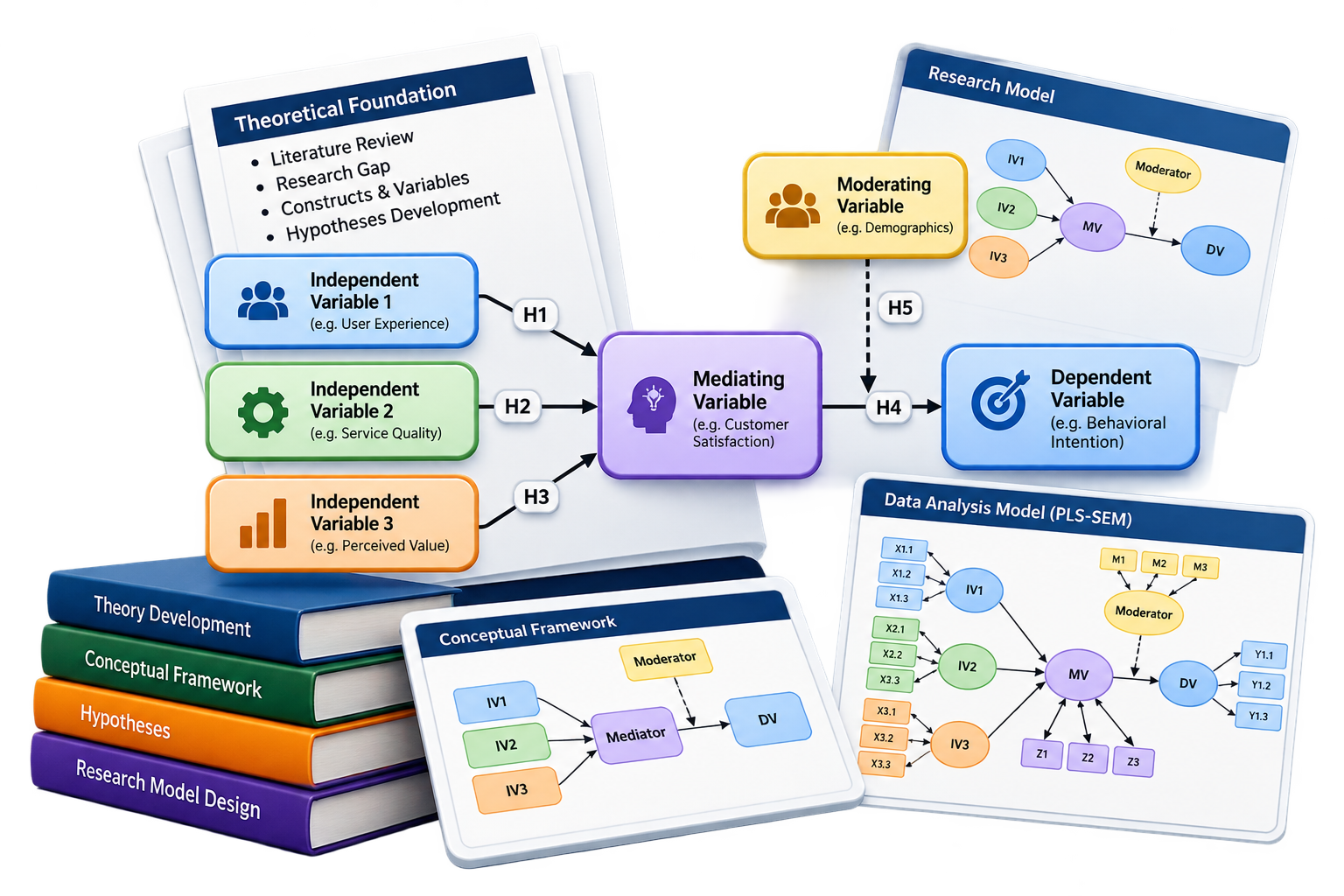
For a standard research-model requirement, Conceptual Framework & Research Model Design Service starts from ₹7,500 per research model. The included scope centres on researcher-supplied theory, constructs and hypotheses, relationship mapping, visual hierarchy, model labelling and final thesis- or publication-ready design, with additional requirements quoted against the actual model complexity.
Large SEM structures, unusually dense models, multiple framework versions, changed hypotheses or constructs, materially revised relationships, missing source information, new journal or university specifications, extra output formats, or accelerated deadlines require a custom quotation. A shorter deadline can be assessed after the model inputs and requested scope are reviewed; accelerated delivery is confirmed only when feasible for that assignment.
Typical reasons researchers ask for a conceptual framework or research model redesign.
You already know the relationships, but too many arrows, constructs or labels are competing for attention.
You have a sketch or annotated draft and need it redrawn as a clean academic model without changing the intended structure.
Your H1, H2 and later hypotheses need to be positioned clearly alongside the correct directional paths.
You need mediator, moderator and direct relationships presented so the model can be understood at a glance.
You have analysed relationships and want a publication/thesis version that presents the supplied model more clearly.
You need those researcher-defined elements translated into a coherent visual framework for a proposal, thesis or paper.
Latent constructs, indicators and structural paths need more consistent grouping, spacing and labelling.
Your model needs cleaner hierarchy, alignment and presentation to fit the formatting context you provide.
The service covers research frameworks and models defined in the selected service catalogue, without expanding into unrelated research graphics.
Structured diagrams that connect researcher-defined constructs to the conceptual or theoretical relationships underpinning the study.
Clear independent/dependent-variable models and hypothesis-labelled relationships designed for direct academic communication.
Visual models showing how a mediator sits between researcher-specified predictor and outcome constructs.
Models that show a researcher-specified moderator acting on a defined relationship, with labels placed for clarity.
Cleaner visual presentation of structural models, including multi-construct PLS-SEM relationships supplied by the researcher.
CFA/measurement-model layouts, path models, logic models and theory-of-change diagrams based on the structure you provide.
For researchers who already have the academic logic or analysed model and need clearer visual presentation.
Disciplines are limited to the fields listed for this service in the supplied catalogue.
A precise starting brief helps us preserve your research logic rather than guessing at relationships.
Provide the academic content that defines the model.
These items can reduce back-and-forth when your project already has a draft or analysed model.
Deliverables follow the service catalogue and the agreed scope for your specific model.
A structured conceptual framework or research model with improved alignment and hierarchy.
Relationship paths labelled with your supplied hypothesis identifiers where required.
A final layout prepared for the academic context and requirements you provide.
An editable source can be part of the agreed scope for future label or layout updates.
Colour and/or monochrome versions can be supplied where your project requires them.
Demonstration layouts only. These examples do not represent named client work, publications or university relationships.
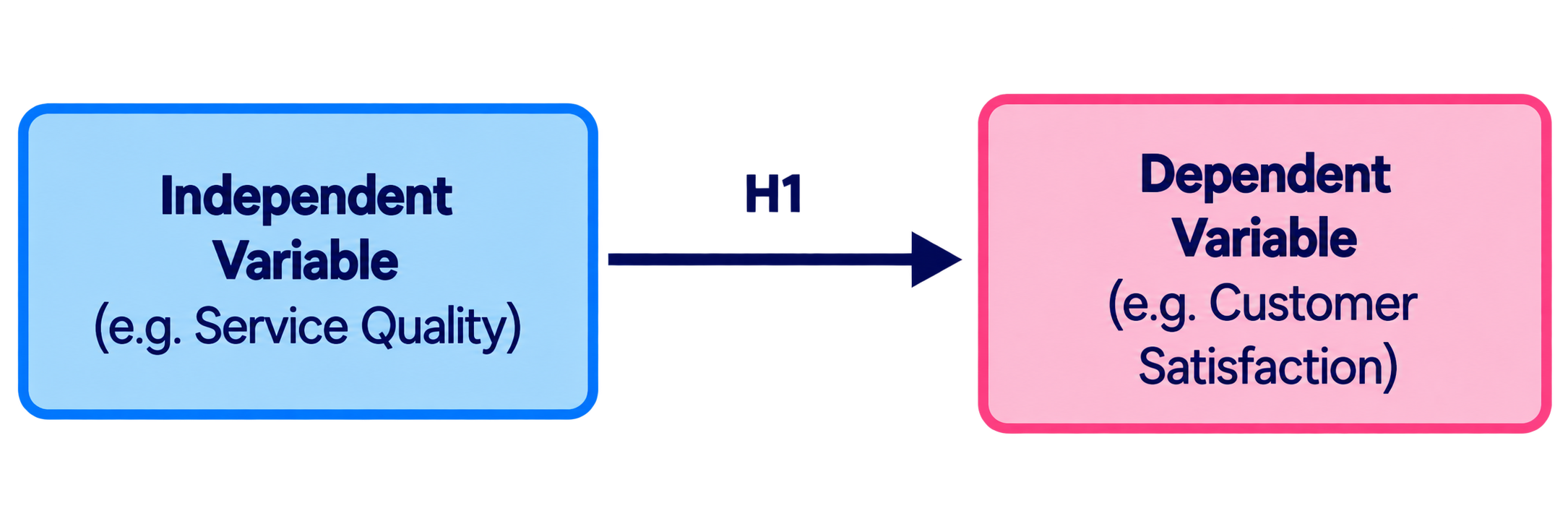
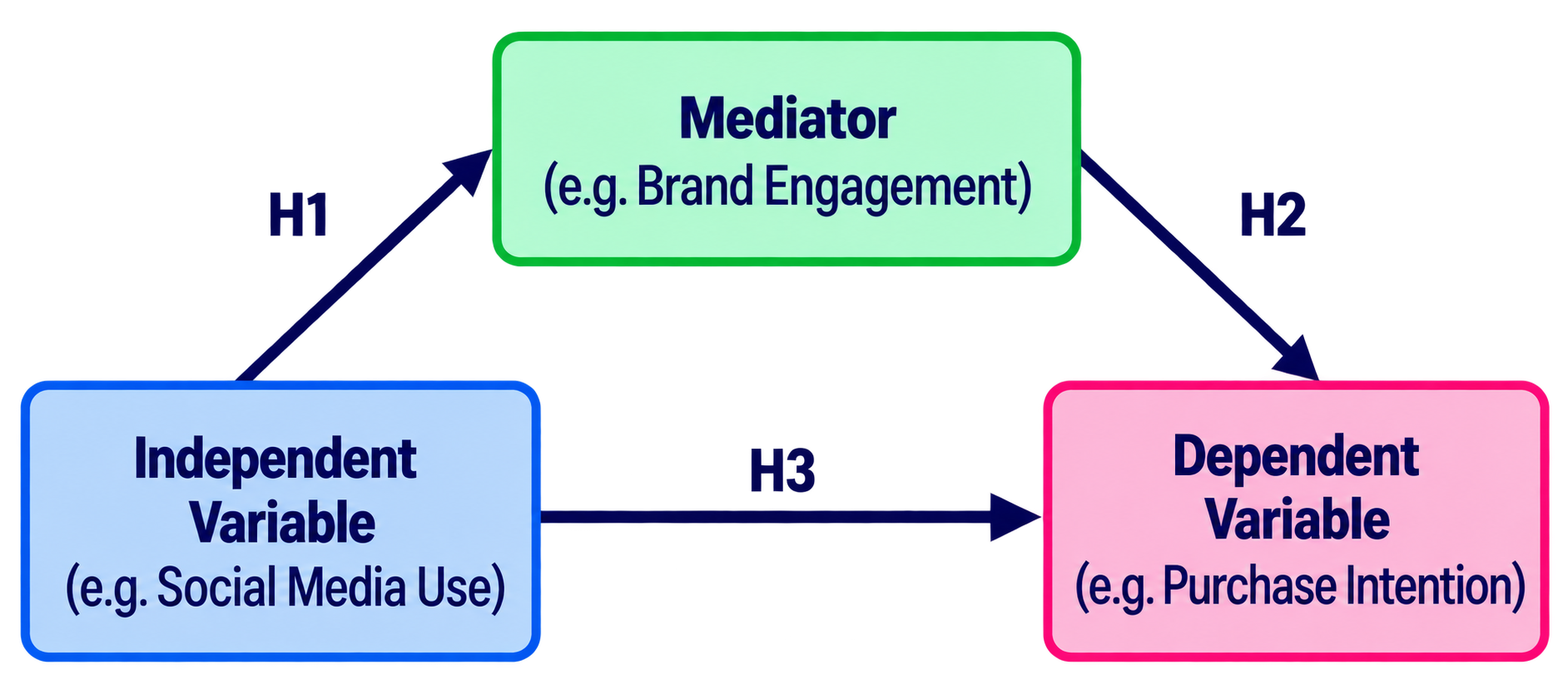
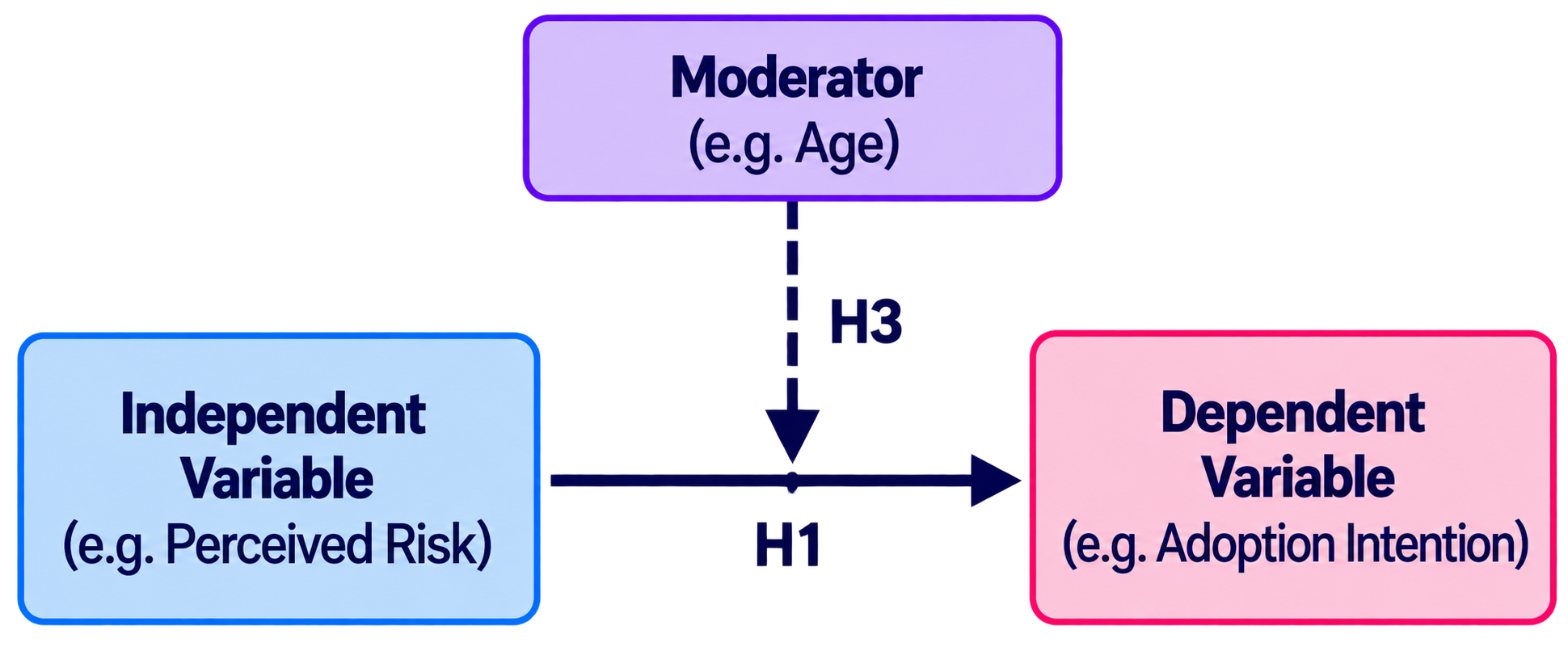
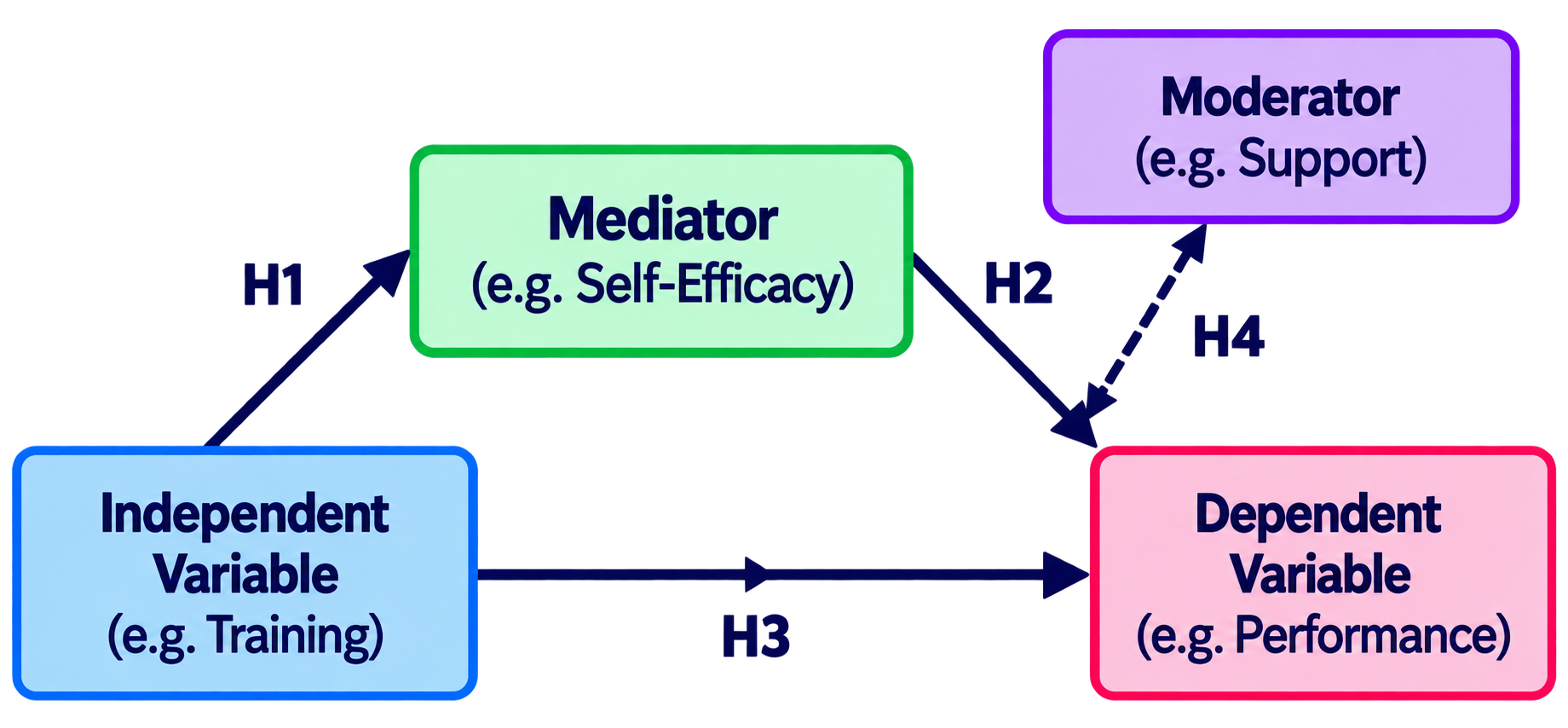
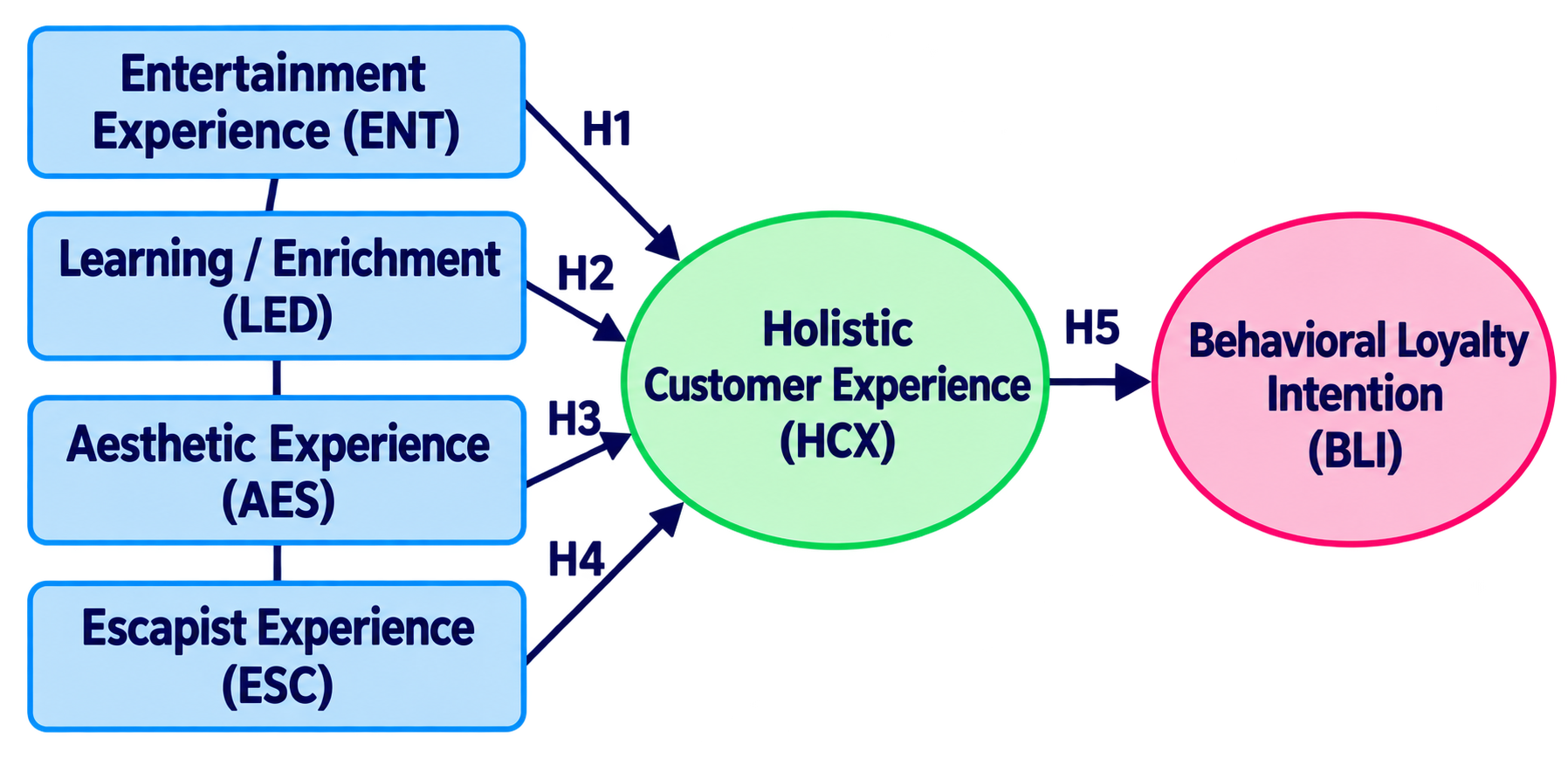
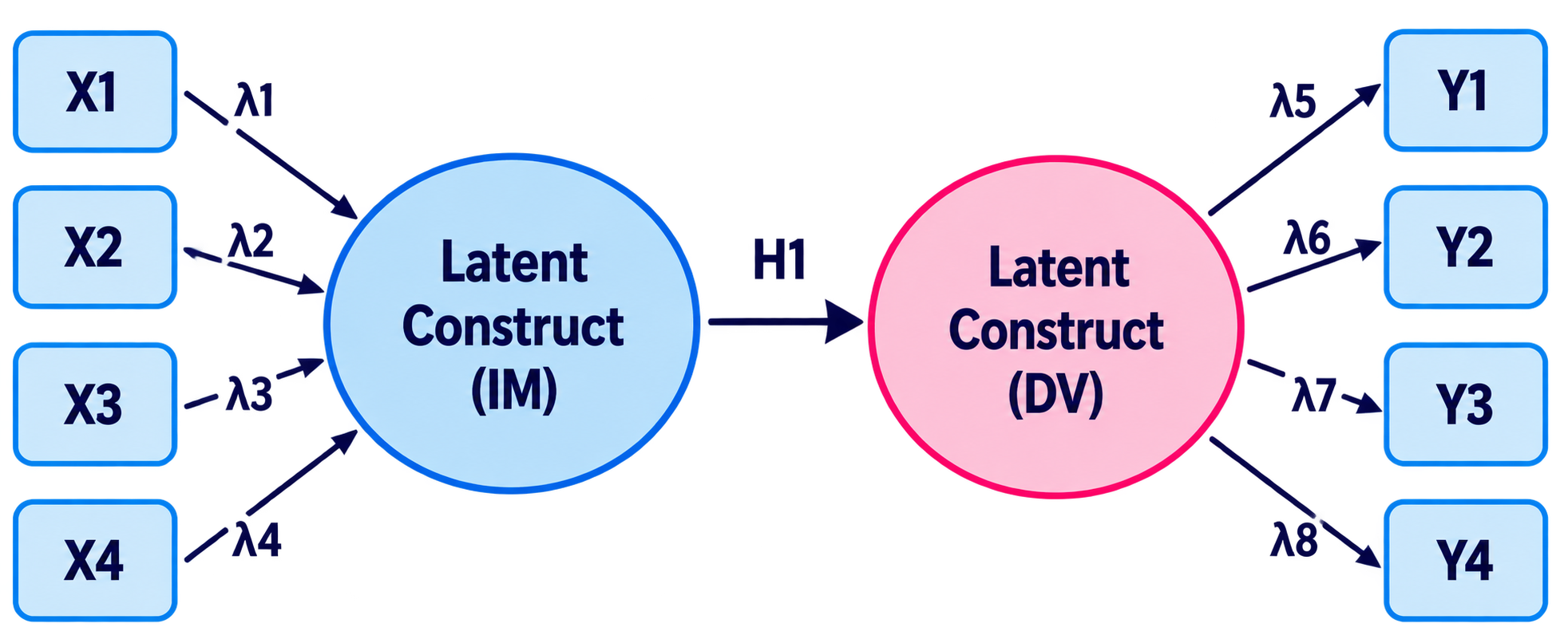
The visual is improved for hierarchy and readability while the research relationships remain researcher-defined.
A rough model may contain uneven spacing, crossed arrows and handwritten relationship notes.
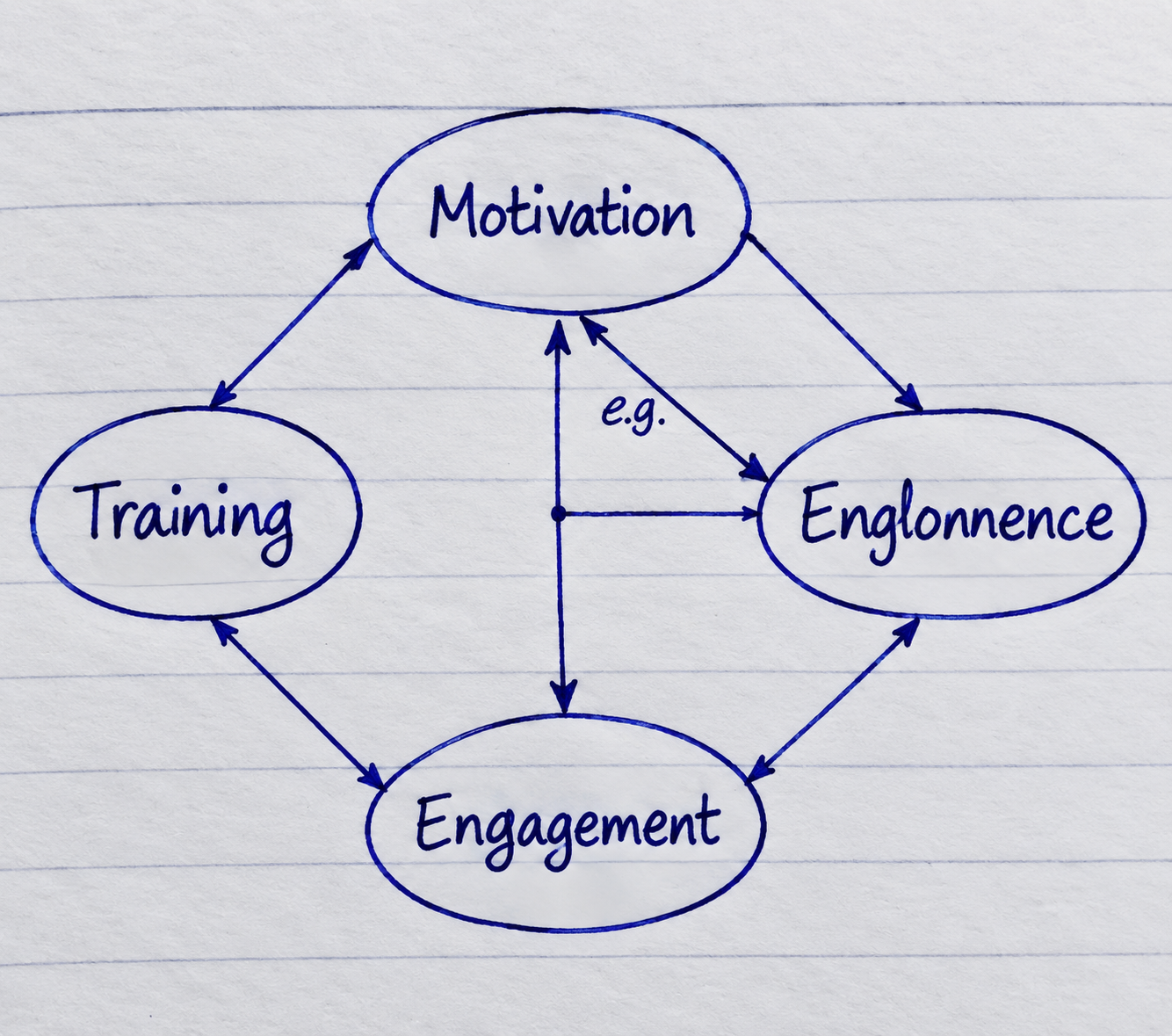
Constructs, hypothesis labels and directional paths are aligned into a clearer visual hierarchy.
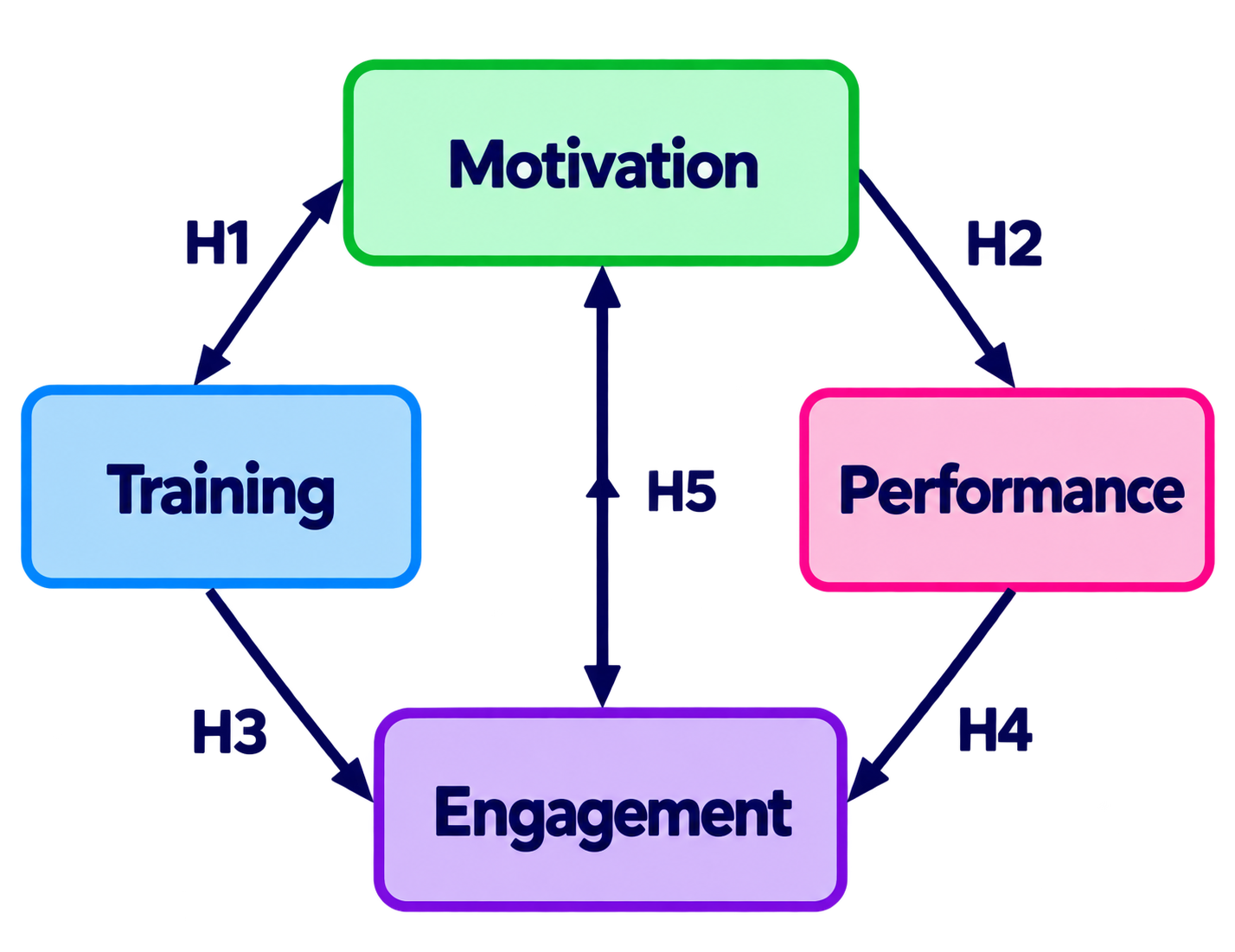
A transparent workflow centred on the theory, variables and relationships you supply.
Send constructs, hypotheses, theory and structural relationships, plus any sketch or analysed output that is relevant.
We organise the supplied variable roles, path directions and labels so the intended model structure is explicit before visual refinement.
The framework is arranged using spacing, hierarchy and grouping suited to the number and type of constructs.
Hypothesis identifiers, construct names and presentation treatment are applied to the supplied research logic.
Agreed refinements are incorporated and the final publication/thesis version and any included editable source are prepared.
Timelines use the exact complexity levels defined for this service in the supplied catalogue.
Suitable for a straightforward conceptual or IV→DV research model with a limited number of relationships.
For models involving mediator or moderator relationships that require more careful path placement and labelling.
For larger SEM or PLS-SEM structures with multiple constructs, indicators or interconnected paths.
Share the current official requirements when your model must follow a specific submission or thesis format.
Provide any current size, orientation or layout instruction that affects how the model should be arranged.
Share applicable conventions for construct labels, figure numbering, captions or related presentation details.
Tell us when a journal, thesis or institutional context requires monochrome or a particular restrained presentation treatment.
State whether the model is for a proposal, thesis chapter, manuscript or another defined academic document.
Revision rounds and scope are confirmed before work begins rather than using an invented fixed revision count.
Examples include correcting supplied labels, improving spacing, refining hierarchy, adjusting path placement, changing approved colour treatment or making other presentation refinements that keep the same constructs, hypotheses and model logic.
A new framework concept, changed hypotheses, additional constructs, materially changed structural relationships, a different analysed model or new requirements introduced after completion may require the scope and schedule to be reconfirmed.
Visual improvement should make the research logic easier to understand, not change the academic evidence or invent unsupported relationships.
We organise and visualise the constructs, theory, hypotheses and structural relationships you provide. We can recreate an analysed model from supplied output and improve hierarchy, spacing, alignment, labels and overall readability.
We do not fabricate data, invent research results, create unsupported hypotheses, change p-values or statistical significance, selectively remove inconvenient evidence, misrepresent authorship, alter conclusions merely for presentation, or guarantee supervisor approval or journal acceptance.
Practical answers about scope, required inputs, model types, editable files, timelines, revisions and academic integrity.
The service includes conceptual and theoretical frameworks, hypothesis models, independent/dependent-variable models, mediator and moderator diagrams, SEM and PLS-SEM diagrams, CFA or measurement models, path models, logic models and theory-of-change diagrams.
Send your constructs or variables, hypotheses, underlying theory and the structural relationships that should appear in the model. A supervisor sketch is helpful when available, and analysis output is useful when an analysed final model is being recreated.
Yes. A supervisor-supplied sketch can be used as a visual starting point when you also provide the constructs, hypotheses and intended relationships that the final framework must preserve.
Yes. Mediator and moderator diagrams are within the service scope, including models where direct, indirect or conditional relationships need to be presented clearly from the researcher's supplied hypotheses.
Yes, when you provide the relevant analysed output and confirm the relationships that must be shown. The service recreates the model visually; it does not change statistical results or invent missing analysis.
An editable source can be included where it is part of the agreed project scope. The agreed deliverables may also include a clean publication or thesis version and monochrome and/or colour versions where required.
A basic framework typically takes 1–2 working days, a complex mediation or moderation model takes 2–3 working days, and a large SEM model takes 2–4 working days after the required project material is available.
Revision rounds and scope are confirmed before work begins. Refinements within the approved brief are treated differently from new scope such as a new model concept, changed hypotheses, new constructs or materially changed structural relationships.
Yes, when you provide the current official requirements. These may affect layout, figure size, colour or monochrome treatment, labels, captions or other presentation details. Numeric requirements are not invented when they are unavailable.
No. The relationships in the framework must come from the researcher's theory, hypotheses or verified analysis. The service improves the presentation and communication of the supplied research structure rather than inventing unsupported academic content.
No. The service prepares the agreed framework or model for clearer academic presentation and supplied formatting requirements, but it does not guarantee supervisor approval or journal acceptance.
Tell us about any institution-specific confidentiality, NDA or file-handling requirement before sharing sensitive or unpublished material so the project-handling requirement can be confirmed.
Share your contact details and a short description of the framework or model you need. Keep the following research material ready to share after the enquiry is reviewed.
This enquiry form does not upload files. Detailed sketches, analysis output and formatting guidance can be shared after the initial review.
This form collects enquiry details only and does not upload files. Keep your constructs, hypotheses, underlying theory, relationship map, supervisor sketch and relevant analysed output ready to share through the agreed project channel after review.