Dense Page Structure
Long paragraphs and weak hierarchy make key findings hard to scan, compare, or revisit.

Turn dense technical material into a polished white paper with structured page hierarchy, readable data visuals, consistent diagrams, professional tables, branded typography, and a cohesive publication-ready layout.
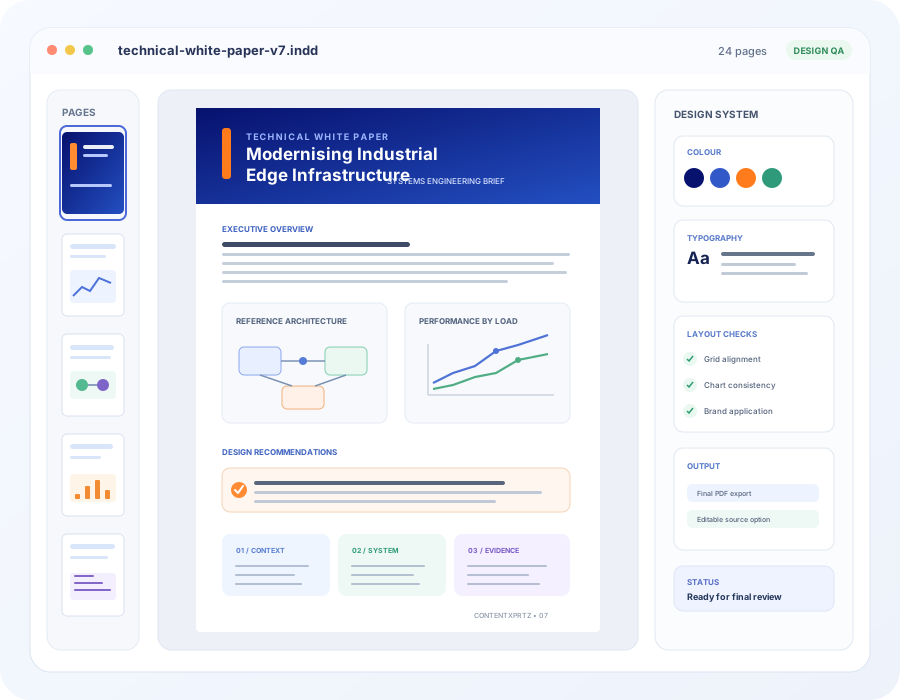
Dense content organised for scanning and depth.
Charts, tables, and diagrams styled consistently.
Visual system matched to supplied brand assets.
Final pass for consistency and presentation quality.
The entry project sits at the lower end of professional white-paper design for a compact, content-ready document while leaving advanced data visualization and illustration as add-ons.
Suitable for: Best for a finished technical white paper that needs a credible visual system, clear hierarchy, and polished digital presentation.
for design and layout of a technical white paper up to 10 pages using final supplied copy and brand assets
Technical White Paper Design Service starts at ₹18,000 for design and layout of a technical white paper up to 10 pages using final supplied copy and brand assets.
Buy Service NowCustom illustration, complex data visualization, more than ten pages, extensive diagram redraws, interactive output, print-production specifications, or unstable copy are quoted separately.
Strong technical content can still feel difficult to trust or navigate when the page structure, diagrams, figures, and visual hierarchy do not work together.
Long paragraphs and weak hierarchy make key findings hard to scan, compare, or revisit.
Charts and figures may use mismatched styles, labels, scales, spacing, or visual emphasis.
Readers cannot quickly distinguish the problem, evidence, architecture, findings, and recommendations.
Default office formatting can make specialised technical material feel unfinished or visually disconnected from the brand.
Late-stage issues can appear in pagination, captions, spacing, visual consistency, or PDF presentation.
The design process connects document architecture, visual storytelling, technical clarity, and consistent page production rather than treating each page as an isolated layout.
Page count, hierarchy, sections, and asset inventory.
Grids, headers, footers, margins, and typography.
Readable visual treatment for supplied data and labels.
Architectures, workflows, frameworks, and relationships.
Structured technical comparisons and data presentation.
Key findings, metrics, definitions, and recommendations.
Colours, type, logo, imagery, and visual language.
Consistency, alignment, captions, and export review.
The objective is not decoration. It is to make the same technical material easier to navigate, compare, understand, and present consistently.
Long text blocks, default tables, raw screenshots, and inconsistent figure treatment compete for attention.
Content is mapped into a page system with clear levels, consistent chart styling, aligned diagrams, and controlled spacing.
The final document carries a coherent visual language from cover to references, with a quality-controlled PDF presentation.
Use the comparison below to separate basic document formatting from a design-led technical publication workflow.
| Focus | DIY / Basic Formatting | Technical White Paper Design | Broader Campaign Design |
|---|---|---|---|
| Primary goal | Make the document presentable | Build a clear, coherent technical publication | Extend visuals across multiple campaign assets |
| Page system | Existing template or manual formatting | Purpose-built hierarchy, grid, typography, and section system | White paper plus wider campaign applications |
| Charts & diagrams | Mostly as supplied | Integrated and visually aligned to the document system | May be adapted for multiple channels |
| Brand application | Basic colours and logo placement | Consistent application of supplied brand rules across the publication | Campaign-wide visual direction |
| Technical readability | Depends on original formatting | Hierarchy, labels, callouts, figures, and tables designed for technical reading | Varies by asset and channel |
| Best fit | Short internal documents or simple formatting needs | Technical, research, engineering, product, policy, or B2B white papers | Teams needing a larger set of launch or marketing creative |
This page describes the design and layout service. Copywriting, research, or campaign production should be scoped separately when required.
The layout system is carried through the complete technical narrative so readers can move from context to evidence and recommendations without losing visual continuity.
Title, subtitle, authorship, brand cues.
Key message and high-level takeaways.
Background, market, challenge, or rationale.
Process, system, architecture, or model.
Charts, tables, findings, benchmarks.
Interpretation, implications, trade-offs.
Actions, implementation, decision points.
Sources, notes, specifications, extras.
A staged workflow keeps technical content, visual systems, feedback, and output quality aligned from source-file review through final delivery.
Draft, brief, and source assets.
Pages, visuals, brand, outputs.
Hierarchy and page architecture.
Grid, type, colour, figure style.
Charts, diagrams, tables, callouts.
Full-document production.
Consistency and output checks.
Agreed files and handoff.
Final deliverables are confirmed during scoping. A typical technical white paper design handoff can include the following output components when requested.
Complete page layout using the approved visual direction and supplied content.
Charts, diagrams, tables, and technical callouts styled consistently where included in scope.
Final PDF prepared for the agreed digital or distribution use case.
Editable production files can be included when agreed in the project scope and handoff requirements.
Any final clarifications, replacement requests, or production notes can be surfaced before handoff.
Additional approved formats or page variants can be scoped where the publication will be used across multiple contexts.
The final review checks the publication as a system, not only as individual pages.
Confirm headings, figures, captions, callouts, and page elements match the supplied content structure.
Review typography, spacing, labels, colours, line weights, table styles, and figure conventions.
Check technical labels, chart annotations, body copy, contrast, and visual density at realistic reading sizes.
Review pagination, export quality, linked content where relevant, and the agreed final file presentation.
Multi-stage design control helps keep typography, graphics, structure, and final output visually consistent across the complete white paper.
The same design principles can be applied across different technical and professional publication contexts, with the visual system adjusted to the content and audience.
Platforms, systems, cloud, AI, cybersecurity, and architecture.
Systems, manufacturing, infrastructure, processes, and operations.
Technical evidence, product information, research, and professional education.
Market, risk, policy, operating-model, and solution-led publications.
Technology pathways, systems, metrics, transition, and environmental topics.
Capabilities, architectures, use cases, comparisons, and implementation stories.
Methods, findings, literature, results, and technical recommendations.
Frameworks, requirements, controls, guidance, and structured recommendations.
Technical white papers can contain unpublished research, product information, proprietary diagrams, and commercially sensitive material. Share any project-specific handling requirements during scoping.
Turnaround is confirmed after scope and deadline review. Delivery is planned after the actual page scope and visual complexity are reviewed.
The delivery plan should reflect the work required rather than an unsupported standard number of days.
If the white paper is tied to a launch, conference, review meeting, sales cycle, or publication date, include that date in the enquiry.
The design process is built around technical reading behaviour: understanding systems, comparing evidence, locating decisions, and moving between narrative and visuals.
Questions to clarify scope, source content, technical figures, brand application, pricing, turnaround, and final delivery.
The design scope can include page architecture, cover and section styling, typography, charts, diagrams, table formatting, callouts, visual hierarchy, brand application, and final layout quality review. The exact scope is confirmed from the source content and required output.
A stable or near-final content file is the most efficient starting point because page count and visual hierarchy depend on the text. If content is still changing, identify the sections that are fixed and the sections that may change so the design workflow can be planned accordingly.
Technical charts, process flows, architecture diagrams, comparison graphics, and other information visuals can be incorporated when the underlying data, labels, relationships, and source material are supplied clearly enough to design them accurately.
Yes. Provide the applicable brand guide, approved logo files, colours, type specifications, imagery rules, and examples of existing branded documents so the white paper can be aligned to the required visual system.
Yes. An existing publication can be reviewed for hierarchy, page consistency, technical visuals, branding, and overall presentation. The redesign scope depends on the condition of the source file and how much of the existing structure needs to change.
This page describes a design and layout service. Copywriting, technical editing, or research support should be identified separately if required so the appropriate scope can be confirmed before production begins.
Provide the latest content file, brand guide, logo files, fonts where applicable, raw chart data, tables, diagrams, images, captions, references, and examples of any visual style that must be followed.
Yes, when they are included in the agreed scope. Consistent table rules, chart colours, labels, line weights, captions, and diagram conventions can make a long technical document feel more coherent.
Editable source-file delivery can be included when it is part of the agreed project scope. State the required source format and handoff expectations in the enquiry so they can be confirmed before work starts.
Technical White Paper Design Service starts at ₹18,000 for design and layout of a technical white paper up to 10 pages using final supplied copy and brand assets. Custom illustration, complex data visualization, more than ten pages, extensive diagram redraws, interactive output, print-production specifications, or unstable copy are quoted separately.
The schedule is confirmed after the content, page count, visual complexity, source assets, review process, and required deliverables are assessed. Share the desired delivery date with the enquiry so feasibility can be reviewed.
Share any confidentiality, embargo, access, or file-handling requirements before work begins. Also identify restricted figures, unreleased product details, unpublished findings, or content that should not appear in working previews.
Screen and print requirements can affect page size, margins, contrast, image resolution, export settings, and interactive elements. State the intended distribution method so the appropriate output can be scoped.
Minor corrections are different from structural content changes. Large additions, deletions, new diagrams, or revised page architecture can affect the layout effort, so identify expected content changes early and include them in the review plan.
Share the current content, approximate page count, technical visuals, brand requirements, target date, and desired deliverables so the design scope can be assessed accurately.
Send the latest document and, if known, the expected final page range.
Note which visuals already exist and which require design or restyling.
Include brand guidelines, logo files, fonts, colours, and example collateral.
Share the target date, time zone, output formats, and source-file expectations.
Use the form below to describe the white paper and the design work required. The submitted details are used to assess scope and quote requirements.