
Postgraduate Researchers
Final checks for research papers, theses, and dissertation manuscripts.
A final-stage proofreading service for scientific and technical manuscripts that are already well developed and need precise language, terminology, notation, caption, reference, and presentation checks before submission.
Scientific manuscripts often reach the final submission stage with the research, argument, structure, and analysis already complete. At that point, the remaining risks are smaller but visible: punctuation errors, inconsistent terminology, changing capitalization, mismatched abbreviations, unit formatting, caption wording, reference presentation, and subtle language issues that interrupt a professional reading experience.
Our scientific manuscript proofreading service is positioned as a final language and presentation check. It corrects surface-level errors and strengthens document-wide consistency without turning proofreading into substantive rewriting or developmental editing.
When journal or publisher instructions are supplied, the proofreading pass can also align spelling and presentation with those requirements within the agreed scope.
Final-stage scientific proofreading supports authors who have completed the core research and manuscript development and now need a precise pre-submission check.
Final checks for research papers, theses, and dissertation manuscripts.
Researchers preparing an already developed manuscript for journal submission.
Multi-author manuscripts that need consistent terminology and presentation.
Academic authors preparing scientific papers, reports, and publication materials.
Authors who want an external final check before submitting their work.
Manuscripts that combine terminology, notation, and conventions across fields.
A manuscript can be scientifically sound yet still look unfinished when small language and consistency problems remain visible across the document.
Small mistakes remain after repeated author revisions.
The same scientific concept is named differently across sections.
Minor wording problems interrupt an otherwise polished manuscript.
Notation, unit style, symbols, or abbreviations are inconsistent.
Figures, tables, callouts, labels, or numbering do not align cleanly.
Citations and reference-list formatting show final-stage inconsistencies.
The service concentrates on final accuracy and consistency. Deeper rewriting, argument development, and substantive restructuring belong to editing rather than proofreading.
Final correction of grammatical, spelling, punctuation, and typographical issues.
Consistency of technical terms and discipline-specific wording across the manuscript.
Consistency checks for units, symbols, abbreviations, acronyms, and capitalization.
Caption language, labels, callouts, and numbering consistency where relevant.
Final presentation checks for headings, numbering, labels, and document hierarchy consistency.
Formal language, spelling convention, capitalization, and document-wide usage consistency.
Checks for obvious citation and reference-format inconsistencies within the proofreading scope.
Alignment of terminology, labels, headings, captions, and presentation across manuscript components.
Spelling and presentation alignment when relevant journal or publisher guidance is supplied.
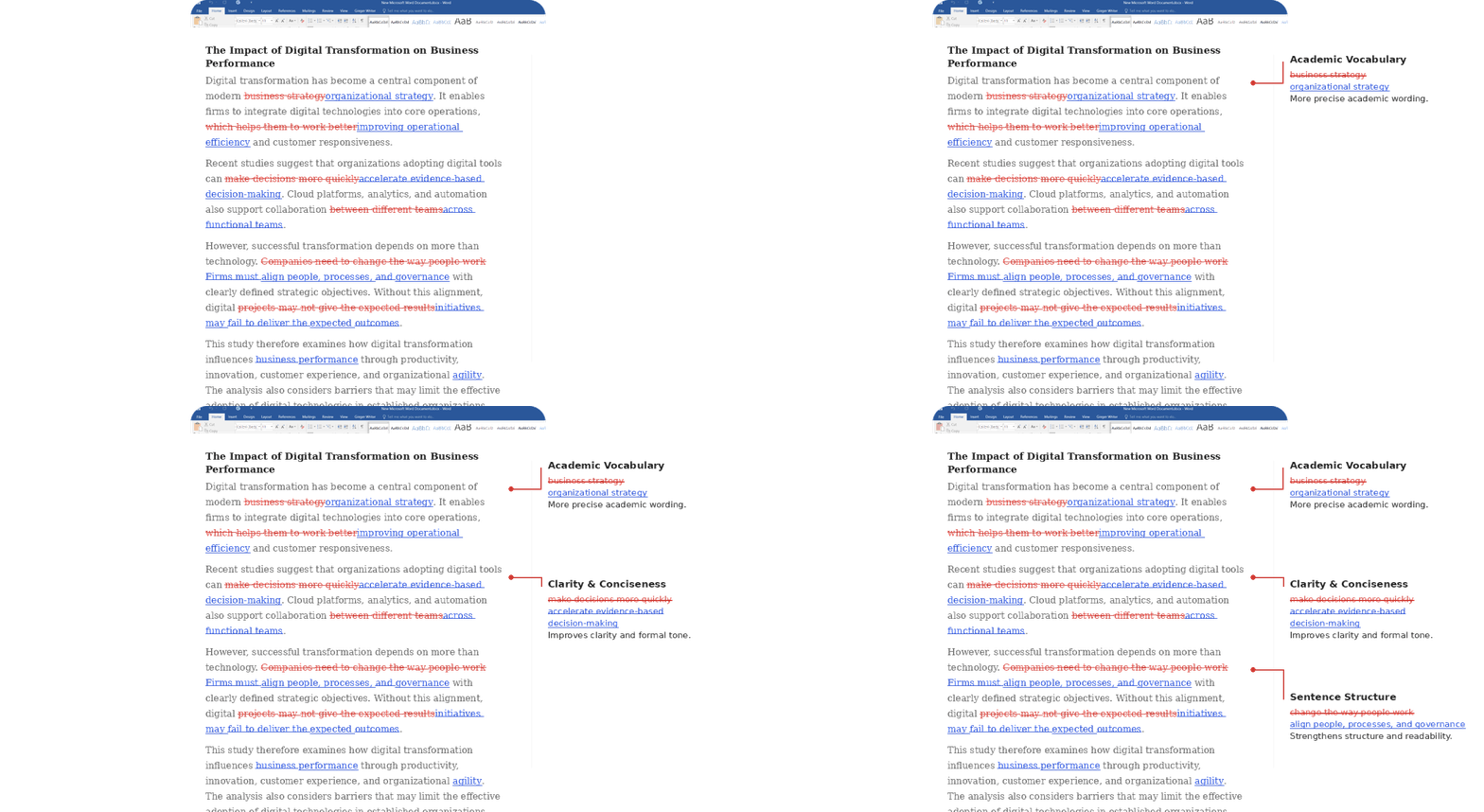
Transparent corrections in a tracked version plus a clean proofread copy for final review.
The goal is not to rewrite your research. It is to remove residual language and presentation issues so the finished manuscript reads consistently and professionally.
A clear workflow keeps the final pass focused on your manuscript, submission requirements, and agreed proofreading scope.
Share the latest editable version you intend to submit.
Provide word count, deadline, journal guidance, and priority concerns.
The request is aligned to the appropriate proofreading depth and plan.
Language, terminology, notation, captions, and consistency are checked.
Corrections and presentation are reviewed for final document consistency.
Receive tracked corrections and a clean proofread manuscript.
The exact package depends on the agreed scope, but the proofreading plans are designed around transparent correction and a clean final version.
See language and consistency corrections directly in the reviewed file.
A clean version for your final author review and submission preparation.
Where needed, concise notes can flag items that require author confirmation.
Document-wide attention to terminology, abbreviations, units, labels, and presentation.
When instructions are supplied, relevant spelling and presentation requirements can be checked.
Choose the proofreading level that matches your manuscript length and final-stage scope. Each ContentXprtz proofreading plan below is designed for an already developed document that needs a careful language and presentation check before submission.
Best for short academic papers, conference submissions, essays, and concise research documents that need a dependable final language check.
Suggested priceBest for journal articles and standard research manuscripts that need a full language check plus stronger document-wide consistency before submission.
Suggested priceBest for full journal manuscripts approaching submission and requiring a detailed final pass across language, presentation, captions, references, and journal-facing consistency.
Suggested priceBest for long manuscripts, multi-section research papers, thesis chapters, reports, or combined submission packages requiring a consistent final proofreading pass.
Suggested priceThe service is designed to make a final-stage document cleaner and more consistent while keeping the author's scientific content, claims, and intended meaning intact.
Attention to the language and consistency patterns common in research manuscripts.
Proofreading stays focused on correction rather than unnecessary rewriting.
Terminology, abbreviations, symbols, units, and capitalization are reviewed together.
Appropriate for unpublished scientific and academic material.
Corrections remain transparent so authors can review the final pass.
Relevant guideline checks are applied when publisher instructions are supplied.
Proofreading improves correctness without changing the research argument.
A structured final-stage workflow checks corrections in context and then reviews consistency before the files are prepared for delivery.
Different scientific fields place different demands on terminology, notation, units, captions, and reference presentation. Subject-aware proofreading keeps those discipline-specific consistency needs in view.
Terminology + units + captions
Useful where medical terminology, abbreviations, measurements, figure captions, and reference presentation must remain consistent across sections.
Symbols + notation + cross-references
Suitable for manuscripts with technical symbols, units, equations, figure or table references, abbreviations, and discipline-specific terminology.
Taxonomy + terminology + style
Helpful where species names, technical terminology, abbreviations, capitalization, units, and caption conventions require careful consistency.
The final proofing priorities vary by field, but consistency, language accuracy, notation, captions, and references remain central across scientific and technical manuscripts.
Authors know their research best, but repeated familiarity with the manuscript can make small inconsistencies less visible. An external proofing pass provides a fresh final-stage review.
Clear inputs help match the scientific manuscript to the appropriate proofreading plan and keep the final-stage review aligned with your submission needs.
Send the editable version you actually intend to submit.
Word count helps identify the relevant proofreading level.
Share the exact submission deadline and time zone.
Provide publisher instructions when spelling or presentation rules matter.
Tell us where terminology, captions, references, or notation need extra attention.
Answers to common questions about proofreading scope, manuscript readiness, technical consistency, deliverables, and plan selection.
Scientific manuscript proofreading is a final-stage language and consistency check for a manuscript that is already well developed. It focuses on grammar, spelling, punctuation, typographical issues, terminology consistency, abbreviations, units, captions, references, and presentation rather than substantive rewriting or developmental restructuring.
Proofreading is intended for a nearly finished manuscript and concentrates on final language and presentation accuracy. Scientific editing is a deeper service that may refine scientific phrasing, research presentation, section-level expression, and submission readiness more extensively.
Yes. The proofreading scope can include consistency checks for technical terminology, capitalization, abbreviations, acronyms, symbols, and units across the manuscript.
For the appropriate proofreading scope, figure and table caption language, labels, numbering, callouts, and consistency with the main text can be reviewed.
Yes. When journal or publisher guidelines are supplied, spelling and presentation can be aligned with those instructions within the proofreading scope.
Proofreading can include citation and reference-format consistency checks and identification of obvious presentation inconsistencies. It does not replace source verification or a full bibliographic audit unless separately agreed.
Yes. The supplied proofreading plans include tracked changes and a clean proofread version so authors can review corrections and retain a final clean copy.
The appropriate plan depends on manuscript length and final-stage scope. Standard Proofreading is positioned for typical research manuscripts, Journal-Ready Proofreading for full journal manuscripts approaching submission, and Extended Proofreading for long or multi-part documents.
No. The supplied proofreading service is for papers that are already well written and need a final language and presentation check. Substantive rewriting, restructuring, and developmental editing are outside the proofreading scope.
Yes. Scientific manuscript proofreading is designed for final-stage checks before submission, especially when the manuscript content and structure are already developed.
Send the latest editable manuscript, approximate word count, deadline and time zone, target journal or publisher guidelines when available, required spelling convention, and any areas where consistency is especially important.
Turnaround depends on the selected proofreading plan. ContentXprtz proofreading plans list 2 business days for Essential, 3 business days for Standard, 4 business days for Journal-Ready, and 6 business days for Extended Proofreading.
Share the manuscript length, submission deadline, target journal guidance, and the areas that need final-stage attention. The request can then be matched to the appropriate proofreading scope.
Share the manuscript type and approximate length so the relevant proofreading plan can be identified.
Provide the exact submission deadline and time zone.
Include relevant spelling, presentation, caption, reference, or formatting instructions when available.
Note any issues with terminology, abbreviations, units, captions, references, spelling convention, or final language accuracy.
Provide enough detail for the manuscript to be matched to the appropriate final-stage proofreading scope and deadline.
Share your scientific manuscript, word count, deadline, and journal requirements so the final-stage proofreading scope can be matched to the right ContentXprtz plan.