
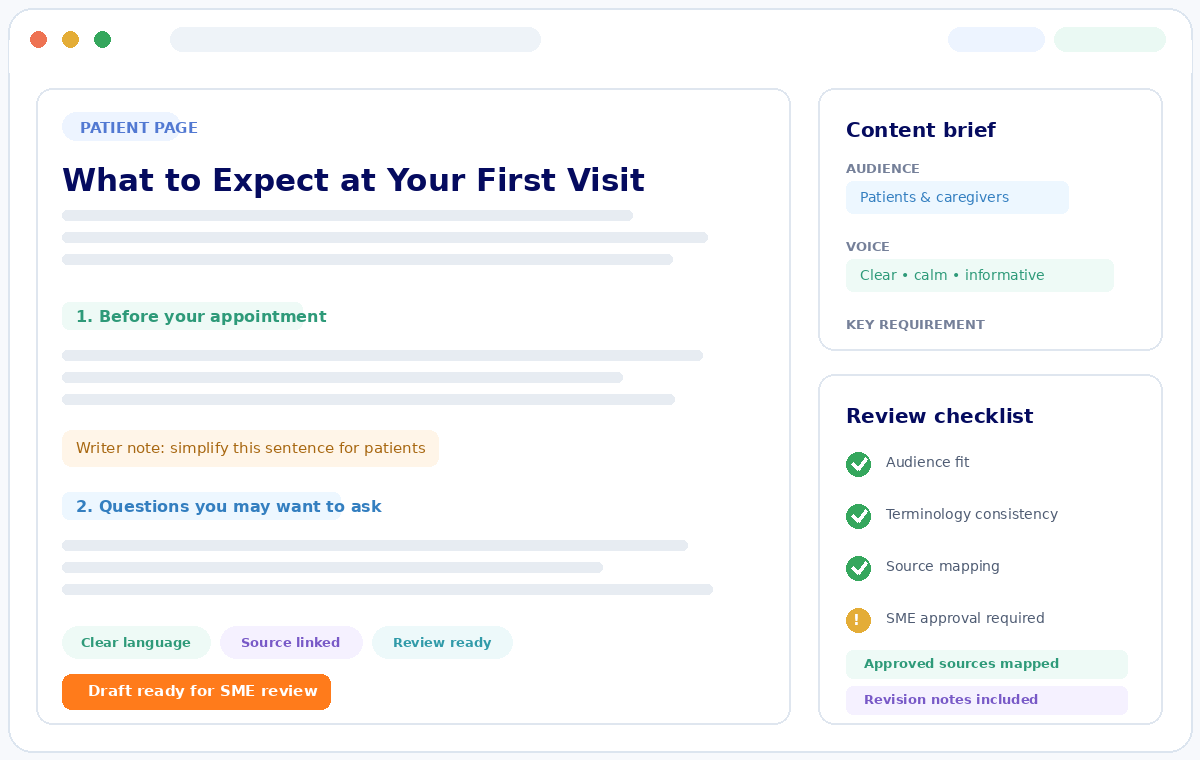
Dense Medical Language
Technical information needs clearer structure and reader-appropriate wording without losing approved terminology.
Turn approved source material, service information, research notes, and subject-matter input into structured healthcare content for patients, professionals, stakeholders, and digital audiences. The writing process focuses on clarity, audience fit, consistent terminology, and review-ready presentation.
Purpose, audience and scope captured first
Patient, professional or stakeholder focused
Approved inputs stay connected to the copy
Drafts prepared for SME and stakeholder feedback
Project details shared through the service workflow
Healthcare content often has to balance specialist terminology, reader confidence, source integrity, brand voice, and review requirements. A clear brief and structured writing process help keep those priorities visible from the first draft.
Technical information needs clearer structure and reader-appropriate wording without losing approved terminology.
Content can drift when the reader is not defined as a patient, clinician, buyer, partner, or general audience.
Notes, links, PDFs, internal inputs and stakeholder comments need to be organised into one coherent content flow.
Service names, clinical terms, capitalisation and preferred language can become inconsistent across long or multi-page projects.
Important messages can be buried when headings, sequencing, calls to action, and supporting detail are not prioritised.
Stakeholders need drafts that make source use, open questions, required approvals, and revision points easy to identify.
The final scope is tailored to the project. These are the core writing and editorial components that can be combined around your audience, content format, source material, and review process.
Clarify the reader, purpose, channel, desired action, tone, boundaries and approval path before drafting.
Plan headings, message order, supporting sections, questions, proof points and calls to action around reader needs.
Use the source pack and approved inputs supplied for the project, with traceable notes where reviewer verification is needed.
Develop structured copy from your brief, source material, service information, notes, interviews or subject-matter input.
Keep preferred service names, healthcare terms, abbreviations, capitalisation and wording consistent across the draft.
Improve sentence clarity, scanability, transitions, emphasis and tone for the intended healthcare audience and channel.
Organise supplied reference links or source notes in the agreed format so important statements are easier to review.
Prepare a clean draft with clear revision notes, open questions or reviewer flags where additional approval is required.
The same healthcare topic may need very different language depending on who is reading it and why. The writing brief can be shaped around the audience, channel, review team, and intended action.
Service pages, patient information, FAQs, department content and healthcare website copy.
Professional profiles, service explanations, educational articles and patient-facing resources.
Product education, onboarding copy, feature explainers, help content and stakeholder communication.
Awareness resources, programme information, educational copy and audience-focused explainers.
Research-informed summaries, educational material and structured drafts for internal review.
Campaign copy, landing pages, thought leadership, newsletters and multi-format content programmes.
Choose one deliverable or build a coordinated set of pages and assets around a shared brief. Content can be planned for different readers while keeping terminology and core messages consistent.
Clear page structures that explain services, audience needs, next steps, supporting information and calls to action.
Reader-focused information pages, preparation guides, FAQs and service explanations based on approved inputs.
Structured summaries that help non-specialist or professional readers navigate supplied research and source material.
Profile copy that organises professional background, areas of focus, service context and reader-relevant information.
Audience-led long-form content developed around a defined topic, point of view, source pack and editorial goal.
Question-led content that makes complex services, processes, preparation steps and common concerns easier to navigate.
Structured healthcare communication for updates, education, engagement, service information or stakeholder outreach.
Focused digital content that connects the audience problem, service message, supporting information and next action.
The aim is not to decorate technical language. It is to reorganise the message around the intended reader, keep approved meaning visible, and make the next step easier to understand.
“Our multidisciplinary cardiology department provides a comprehensive range of assessment services delivered through an integrated care model for patients presenting with a variety of cardiovascular concerns.”
“Explain your cardiology services in clear language, show patients what to expect, and organise the page around the questions they are most likely to have before contacting the clinic.”
A healthcare writing project works best when audience, approved sources, terminology, review responsibilities, and deadline are clear before drafting starts.
Send the content type, audience, goal, source material, brand guidance, review requirements and deadline.
Map the information hierarchy, source use, terminology, page sections and open questions before full drafting.
Write the content around the agreed audience and purpose using the approved information and source pack.
Address editorial checks and stakeholder feedback while keeping approvals, source questions and revision notes visible.
Receive the agreed content files and review notes ready for your internal, clinical, legal or regulatory approval process.
Deliverables are confirmed in the project scope. The handoff can be organised to make stakeholder review, revisions, source checks, and publishing preparation easier.
Working copy suitable for stakeholder review and revisions.
Polished version after the agreed review cycle is complete.
Source or claim notes where traceability is part of the scope.
Questions or editorial notes that need client or SME input.
Consistent headings, lists, labels and content hierarchy.
Scope-specific notes for the next review or publishing step.
Use the brief to define your subject area, reader, content format, required sources, organisational terminology, and any review restrictions. The writing approach can then be tailored to the project rather than forcing the same template onto every healthcare topic.
Healthcare content is easier to review when the writing process separates audience decisions, source use, editorial work, and formal approval responsibilities instead of treating them as one opaque step.
Headings, explanation depth, terminology and calls to action are planned around who will read the content and what they need to understand.
Approved source material, internal information and reviewer questions can remain visible through drafting so important statements are easier to trace.
Open questions, source gaps and requested approvals can be flagged instead of being silently filled with unsupported assumptions.
Preferred healthcare terms, service names, abbreviations, voice rules and restricted wording can be applied consistently across the content set.
Stakeholder comments can be incorporated against the agreed brief while keeping the message, audience and source boundaries clear.
Writing support does not replace medical, legal, regulatory or organisational approval. Final publication remains with your authorised reviewers.
The writing workflow is designed to make the content easier to review without blurring the line between editorial support and professional medical, legal, regulatory, or organisational approval.
Provide the source material and rules your project must follow. ContentXprtz writing and editorial support can organise, draft and refine the material, but it does not provide diagnosis, treatment advice, legal advice, regulatory clearance, or formal clinical approval. Claims, contraindications, product statements, safety information, regulated language, and other high-stakes content should be reviewed by your qualified subject-matter, legal, compliance, or regulatory team before publication.
Questions about healthcare writing scope, audiences, source material, brand voice, references, review responsibilities, pricing, turnaround, and what to send before work begins.
The scope can include brief review, audience and purpose mapping, content outlining, source-aware drafting, terminology consistency, structural editing, readability refinement, and a review-ready final handoff. The exact scope is confirmed before work begins.
Projects can be scoped for patient education pages, healthcare websites, service-line pages, clinician or expert profiles, research summaries, FAQs, thought-leadership articles, newsletters, campaign copy, and other healthcare communication formats.
Yes. The audience, reading level, terminology, tone, and information hierarchy can be adjusted to the intended reader when the target audience is clearly defined in the brief.
The writing process is designed to work from the client brief, approved source material, and supplied subject-matter input. Claims that require clinical, legal, regulatory, or organisational approval should be reviewed by your qualified reviewers before publication.
Source materials can be used as inputs when you have the right to provide them. The brief should identify which sources are approved, which statements must remain unchanged, and how references should be presented.
Yes. Brand guidance, sample pages, preferred terminology, prohibited wording, and tone examples can be included in the brief so the draft can be aligned to an established voice.
Content can be restructured for clearer headings, shorter sentences, stronger information hierarchy, more direct explanations, and better audience fit while preserving approved terminology and source meaning.
The requested referencing approach should be stated in the brief. Supplied links, papers, guidelines, or internal sources can be mapped to the relevant content so reviewers can trace important statements during approval.
A custom quote is prepared after the scope is reviewed. Useful details include content type, approximate length, audience, source material, research depth, review requirements, number of deliverables, and deadline.
Turnaround is confirmed after the content volume, source material, research and review requirements, and deadline are assessed. If the deadline is fixed, include the exact date and time zone in your enquiry.
No. Writing and editorial support do not replace clinical review, legal advice, regulatory review, or formal organisational approval. Final publication decisions remain with your authorised reviewers.
Send the content type, audience, communication goal, approximate word count, deadline, source material, brand or style guidance, required references, and any clinical, legal, or regulatory review instructions relevant to the project.
Tell us what you need written, who will read it, what source material is available, which reviewers will approve it, and when you need the draft. That information helps define the scope without inventing unsupported pricing or turnaround.
Tell us whether you need website copy, patient education, an article, campaign content, a research summary, or another format.
Specify patients, caregivers, clinicians, healthcare buyers, internal stakeholders, general readers, or another defined audience.
List approved links, papers, internal documents, service information, interviews, notes, or subject-matter inputs available for the project.
Share the approximate word count or number of pages plus the exact delivery date and time zone if the deadline is fixed.
Include preferred terminology, tone samples, prohibited wording, required approvals, and any legal or regulatory review instructions.
Share enough detail for the content scope, source requirements, review path and deadline to be assessed before a quote is prepared.
Share the audience, source pack, content format, approval requirements and deadline. We’ll use those inputs to assess the writing scope and prepare the next-step recommendation.