
Professional Academic & Clinical Writing Support

Clinical Research Writing Service for Clear, Evidence-Led Manuscripts

Turn protocols, study notes, analysis outputs, tables, references, and draft sections into a coherent clinical research manuscript. ContentXprtz supports structured scientific writing while keeping every claim anchored to the study information you provide.

  • Clinical study framing, methods, results, discussion, abstract, and conclusion support
  • Results narrative developed from author-supplied analyses, tables, and figures
  • Clinical terminology, citations, references, captions, and cross-reference consistency
  • Revision-ready files with questions clearly flagged for author or study-team confirmation
No publication, acceptance, or outcome guarantee is implied; scientific and authorship responsibility remains with the research team.
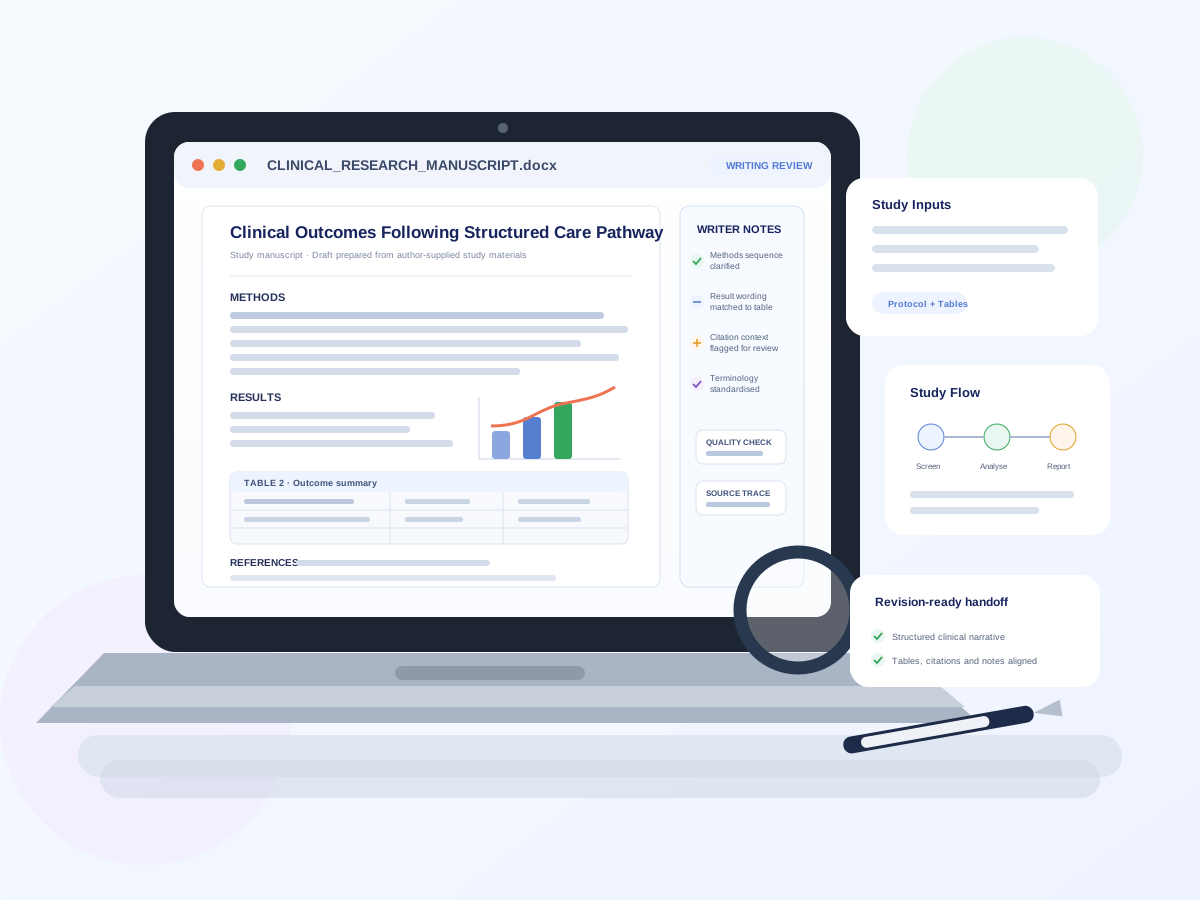
Clinical research manuscript writing workspace showing methods, results, study data, references, tables and structured writer notes
Clinical Study ContextWriting aligned to supplied study materials
Evidence-Led DraftingClaims tied to supplied data and sources
Editable DeliveryRevision-ready manuscript files
Deadline PlanningFeasibility confirmed after scope review
Author QueriesQuestions surfaced instead of guessed
Confidential HandlingPrivacy-conscious project workflow
Human Writing ReviewClinical and scientific context considered
Data-Linked NarrativeText checked against supplied outputs
Source AwarenessReferences integrated where in scope
Transparent RevisionsAuthor-action points remain visible
Final Consistency CheckLanguage and presentation reviewed

Clinical Research Writing That Makes Study Evidence Easier to Follow

Clinical manuscripts often begin as a collection of protocols, tables, statistical outputs, literature notes, author comments, and partially developed sections. A writing service is most useful when those inputs need to become one disciplined research narrative without overstating the evidence.

ContentXprtz can support the writing and organisation of clinical research documents from the study context through methods, results, discussion, abstract, tables, references, and final revision. The writing process is based on the information supplied by the research team, with gaps and scientific decisions returned for author confirmation.

Whether the need is a focused section, a full manuscript, or revision of an existing clinical paper, the project scope is defined around the material available and the submission objective.

1

Who This Clinical Research Writing Service Is For

Choose professional writing support when the study exists, but the research communication still needs stronger structure, clearer scientific language, or a more manageable manuscript-development workflow.

Postgraduate & doctoral researchers

Support for clinical research papers, thesis-derived manuscripts, and publication drafts.

Principal investigators & study teams

Structured writing support for study rationale, methods, results, and discussion materials.

Clinical faculty & academic authors

Clearer presentation of study evidence for academic and journal-facing documents.

Independent researchers

A guided route from notes, tables, and source materials to a coherent clinical research draft.

University research groups

Writing support for collaborative clinical and biomedical research projects.

Healthcare & biomedical professionals

Scientific writing support where clinical terminology and evidence presentation need careful control.

2

Are These Clinical Writing Challenges Slowing the Manuscript Down?

The difficulty is often not the study itself, but converting complex clinical inputs into a document that is precise, connected, readable, and easy for reviewers to follow.

Complex study inputs

Protocols, notes, analyses, tables, and references can be difficult to turn into one coherent narrative.

Methods lack clarity

Study design, participant flow, variables, and procedures may be technically correct but hard to follow.

Results feel disconnected

Numbers and tables may not yet form a concise, logically ordered results narrative.

Clinical terminology varies

Inconsistent wording, abbreviations, and labels can weaken precision across the manuscript.

References are hard to integrate

Evidence needs to support the text without interrupting the logic of the clinical argument.

Submission requirements are unclear

Journal, institution, or supervisor instructions can add another layer of formatting and presentation work.

3

What’s Included in Our Clinical Research Writing Service

The exact scope is confirmed before work begins. Depending on the project, writing support can cover the full manuscript or selected components that need clinical, scientific, structural, or publication-focused development.

Study framing & outline

Clarify the manuscript purpose, section plan, and logical route through the clinical research story.

Background & evidence synthesis

Organise supplied literature and source material into a focused clinical research context.

Methods & protocol presentation

Develop clear descriptions of study design, procedures, variables, populations, and analysis context from supplied information.

Results narrative

Turn author-supplied analyses, outputs, and tables into a concise, non-duplicative results section.

Data-interpretation support

Help connect reported findings to a careful discussion without inventing, altering, or overstating results.

Tables, figures & captions

Improve labels, captions, callouts, and narrative links so visual evidence works with the manuscript text.

Clinical terminology consistency

Maintain consistent terms, abbreviations, units, and labels throughout the document.

Citation & reference integration

Place and present supplied sources consistently within the manuscript narrative and reference list.

Manuscript structure & flow

Strengthen transitions and section-to-section coherence across the clinical research document.

Abstract & conclusion development

Create concise summary sections that reflect the supplied methods, findings, limitations, and takeaways.

4

From Complex Clinical Inputs to a Structured Research Manuscript

The service is designed to reduce the writing burden while keeping scientific decisions, data accuracy, and authorship responsibility with the research team.

Before

Study materials are difficult to connect

  • Methods notes are scattered across files
  • Results repeat tables without a clear narrative
  • Terminology or labels vary by section
  • References interrupt rather than support the logic
  • Submission instructions are not yet reflected
Our Service

Evidence is shaped into a coherent draft

  • Inputs are reviewed against the agreed scope
  • Sections are organised around study logic
  • Results wording is checked against supplied outputs
  • Clinical terminology and references are harmonised
  • Questions are flagged where author confirmation is needed
After

A revision-ready clinical manuscript

  • Clearer structure from rationale to conclusion
  • Methods and results are easier to follow
  • Tables, captions, citations, and text work together
  • Author-action points remain visible
  • Editable files are ready for scientific review and finalisation
5

How Our Clinical Research Writing Process Works

A defined workflow keeps the project anchored to your study materials, deadline, scientific requirements, and author decisions from initial review through final handoff.

01

Submit study materials

Share your brief, manuscript stage, protocol or methods details, tables, analysis outputs, source list, and submission instructions.

02

Scope review

We review the document type, available evidence, writing depth, deadline, and any journal or institutional requirements.

03

Writer assignment

The project is matched to a suitable clinical/scientific writing workflow based on the confirmed scope.

04

Research & drafting

The draft is developed from the supplied study materials with structured sections, source-aware wording, and disciplined claims.

05

Quality review & revision

Language, logic, terminology, tables, references, and consistency are reviewed before revisions are incorporated.

06

Final handoff

You receive the agreed manuscript files and review notes in the confirmed format for your own final scientific and authorship review.

6

What You’ll Receive

Deliverables depend on the confirmed engagement, but the working files are designed to make author review, revision, scientific verification, and submission preparation easier.

Structured clinical manuscript

A coherent draft or revised manuscript aligned to the agreed clinical research scope.

Reference organisation

A consistently presented source list and citation integration based on the materials supplied.

Formatted manuscript file

A clean, editable document prepared around the supplied submission or institutional instructions.

Quality review notes

Clear comments where scientific clarification, missing information, or author confirmation is required.

Revision-ready working file

An editable handoff designed to make author review, revision, and final approval straightforward.

7

Choose the Right Clinical Research Writing Scope

Clinical Research Writing Service is not an exact priced plan in the supplied ContentXprtz writing catalogue, so this page does not copy pricing, turnaround, or word-count limits from a different service. Your quotation is based on the actual manuscript scope.

Scope Option

Focused Section Support

For researchers who need help with selected sections such as methods, results, discussion, abstract, tables, or references.

QuotationConfirmed after review
DeliveryScope-dependent
  • One or more agreed manuscript sections
  • Writing from supplied study materials
  • Terminology and consistency review
  • Author queries where clarification is needed
Request Scope Review
Scope Option

Full Manuscript Development

For clinical research projects that need a complete, connected manuscript developed from a defined study brief and source set.

QuotationConfirmed after review
DeliveryScope-dependent
  • Manuscript structure and section planning
  • Methods and results narrative development
  • Discussion and conclusion support
  • Tables, citations, and internal consistency review
Request Scope Review
Scope Option

Publication Preparation Support

For an existing clinical manuscript that needs writing refinement around supplied submission requirements and author feedback.

QuotationConfirmed after review
DeliveryScope-dependent
  • Journal/institution instruction alignment
  • Revision of supplied draft content
  • Response to author or reviewer comments where in scope
  • Final consistency and presentation review
Request Scope Review

Why no fixed public price here? The supplied service data contains fixed pricing for specific named writing plans such as Scientific Writing, but not for a separate Clinical Research Writing Service. To avoid misrepresenting another plan’s price, word count, or delivery time, this page uses a project-specific quotation after reviewing the manuscript stage, study materials, required sections, and deadline.

8

Flexible Delivery Planning

Delivery is planned around the real writing depth required. No fixed turnaround is stated until the available material, section scope, revision level, and deadline are reviewed.

Standard Project Planning

Best when the full study inputs are available and the project can follow a normal drafting and review cycle.

Priority Deadline Review

Share the target date early so feasibility and an appropriate writing scope can be assessed before work begins.

Critical-Deadline Assessment

For urgent requirements, the team first checks what can responsibly be completed without inventing missing study information.

9

Why Choose ContentXprtz for Clinical Research Writing?

The service combines scientific writing structure with clear workflow controls so the manuscript stays grounded in the study, transparent about unanswered questions, and practical for author review.

Evidence-led writing

The manuscript is built around the study information, data, and sources you provide—not invented findings.

Clinical context awareness

Language and structure are handled with attention to scientific precision and the logic of clinical research.

Human review

Writing decisions are reviewed for clarity, coherence, terminology, and fit with the confirmed brief.

Transparent workflow

Questions, assumptions, and areas needing author confirmation are surfaced instead of being silently guessed.

Confidential handling

Project information is handled within the same privacy-conscious service workflow used across ContentXprtz.

Structured references

Sources, citations, tables, and cross-references are organised as part of the manuscript workflow where included.

Revision support

Agreed revisions can be incorporated so the working file remains practical for author review and finalisation.

Scope control

Pricing and delivery are confirmed only after the actual document, evidence, and deadline requirements are understood.

10

Quality You Can Rely On

A manuscript is checked not only for polished language, but also for consistency between sections, alignment with supplied evidence, visible author-action points, and presentation quality.

Clinical/scientific writing review

Checks whether each section communicates the supplied study information clearly and in the right sequence.

Independent consistency review

Checks terminology, internal logic, tables, references, and repeated claims across the manuscript.

Corrections implemented

Resolves language and presentation issues and flags questions that require author or study-team confirmation.

Final verification

Confirms the agreed files, notes, and visible manuscript elements are ready for client review.

11

Work With a Clinical Research Writing Workflow Built Around Specialist Roles

No fictional writer identities or endorsements are used on this page. Instead, the workflow explains the distinct roles that can contribute to a clinical manuscript when they are required by the confirmed project scope.

Project Role

Clinical Research Writer

Develops or revises the manuscript narrative from the confirmed brief, study materials, and author-supplied evidence.

Project Role

Evidence & Data Reviewer

Checks alignment between the written narrative and supplied tables, analyses, source materials, terminology, and references.

Project Role

Editorial Quality Reviewer

Reviews clarity, consistency, flow, formatting presentation, and outstanding author-action points before handoff.

12

Clinical Research Writing Across Document Types

The same writing workflow can be adapted to different clinical and biomedical research formats, provided the study materials and required scientific information are available.

Clinical trial manuscripts
Observational study papers
Study protocols & methods papers
Retrospective research reports
Case-based clinical research
Evidence-synthesis manuscripts
Clinical thesis manuscripts
Conference & abstract materials
Biomedical research papers
Revision & response documents
13

Professional Clinical Research Writing vs Managing the Entire Draft In-House

Professional support does not replace the researcher. It creates a structured writing workflow so the study team can spend more time on scientific verification, interpretation, author decisions, and final approval.

Common In-House Writing Pressures

  • Research time competes with manuscript-development time.
  • Multiple authors can produce inconsistent terminology and section style.
  • Results may repeat tables instead of building a concise narrative.
  • References, captions, abbreviations, and cross-references can become fragmented.
  • Late-stage revisions may expose structural issues that were difficult to see earlier.

Professional Service Benefits

  • A defined manuscript structure is agreed before deep drafting begins.
  • Clinical language, labels, and terminology are handled consistently.
  • Results and discussion are connected to supplied evidence without unsupported claims.
  • Tables, figures, references, and narrative can be reviewed as one document.
  • Author questions remain visible so scientific decisions stay with the research team.
14

A Clearer Path From Study Evidence to a Revision-Ready Draft

Instead of unsupported percentage claims or invented success statistics, this page focuses on practical outcomes the writing workflow is designed to produce.

Clearer Workflow

Inputs, sections, author questions, and revisions move through a defined sequence.

Stronger Structure

Clinical context, methods, results, and discussion connect more logically.

Consistent Presentation

Terminology, tables, figures, citations, and internal labels are easier to review.

Revision-Ready Handoff

The researcher receives an editable manuscript designed for scientific review and final approval.

Example Workflow Improvement — Without Invented Client Claims

A clinical manuscript may begin with technically sound study materials but uneven section development. The writing workflow first organises the evidence, then develops each agreed section, cross-checks terminology and visible data relationships, and returns a clean working file with author-action points. The improvement is in the manuscript process and presentation—not a guaranteed publication outcome.

Fragmented draft
Structured draft
15

Clinical Research Writing Service FAQs

These answers explain scope, inputs, data integrity, deliverables, revisions, pricing, and author responsibility before you request a quotation.

What is a Clinical Research Writing Service?

It is professional writing support for clinical and biomedical research documents. The work can include structuring a manuscript, developing sections from author-supplied study materials, improving scientific clarity, integrating tables and references, and preparing an editable draft for the researcher’s final review.

What types of clinical research documents can you support?

Support can be scoped for clinical trial manuscripts, observational research papers, study protocols, methods-focused papers, retrospective studies, thesis-derived manuscripts, abstracts, revision documents, and other clinical or biomedical research materials when the required source information is available.

Can you write from raw study data?

We can work from author-supplied analysis outputs, tables, figures, summaries, and study documentation. We do not fabricate data, generate unsupported results, or change the meaning of the supplied findings. Statistical interpretation that requires specialist scientific judgement should be confirmed by the study team.

Can you help with Methods, Results, Discussion, and Abstract sections?

Yes, those sections can be included when they are part of the confirmed scope and the necessary study information is supplied. The writing depth depends on the material available and the level of development already present in the manuscript.

Will you follow my journal or institution requirements?

Yes. Share the relevant author instructions, formatting requirements, template, supervisor guidance, or other submission rules. The writing and presentation can then be aligned to those supplied requirements where they are part of the agreed scope.

Do you handle citations and references?

Citation placement, reference-list consistency, and source integration can be included. The service works from the sources you provide or sources explicitly included in the confirmed research scope; unsupported references are not invented.

Can you guarantee publication or journal acceptance?

No. Publication decisions depend on the study, scientific contribution, journal fit, peer review, editorial policy, and many factors outside a writing service. The service focuses on clear, coherent, professionally prepared research communication.

How do you handle confidentiality?

Clinical research materials are handled through the same confidential service workflow used for ContentXprtz academic and professional documents. Avoid sending information that should not be shared under your institutional, contractual, ethics, or privacy obligations.

What will I receive at the end of the project?

The exact deliverables are confirmed in the project scope. Depending on the engagement, they can include an editable manuscript, revised sections, a formatted working file, reference organisation, quality-review notes, and revision-ready files.

How are revisions handled?

Revisions are based on the confirmed service scope and the feedback supplied after delivery. Questions that require scientific or authorship decisions are returned to the researcher or study team rather than resolved through unsupported assumptions.

What do you need from me to start?

Share the document type, current draft or outline, study objective, relevant protocol or methods information, analysis outputs, tables or figures, source materials, target deadline, and any journal or institutional instructions. The more complete the inputs, the more accurately the scope can be assessed.

How much does Clinical Research Writing cost and how long does it take?

This page does not publish a fixed price or fixed turnaround because the supplied service catalogue does not contain an exact Clinical Research Writing plan. Pricing and delivery are confirmed after the manuscript stage, word count, evidence set, required sections, revision depth, and deadline have been reviewed.

Who is responsible for the final scientific accuracy and authorship?

The researcher and study team remain responsible for the accuracy of the study information, interpretation of findings, ethical and institutional compliance, authorship decisions, required disclosures, and final approval of the manuscript. The writing service supports research communication; it does not replace author responsibility.

16

Request a Clinical Research Writing Scope Review

Tell us what you are writing, what study materials are available, which sections need support, and when you need the work. The team can then assess scope, delivery feasibility, and quotation without borrowing unsupported pricing from another plan.

Document & current stage

Share whether you have notes, an outline, a partial manuscript, or a complete draft that needs redevelopment.

Study inputs

List the protocol or methods information, analyses, tables, figures, source materials, and author notes available.

Writing scope

Identify the sections or document type you want developed, revised, or prepared for submission review.

Deadline

Provide the exact target date and time zone so feasibility can be assessed against the requested scope.

Submission requirements

Include relevant journal, institution, supervisor, formatting, citation, or reporting instructions you already have.

Helpful to include: approximate word count, study design, manuscript stage, sections needed, available tables/figures, reference material, target deadline, and any specific journal or institutional instructions.
Clinical Research Writing Enquiry

Discuss Your Requirement

Share enough information for a realistic assessment of writing depth, available evidence, deadline feasibility, and the files required to begin.

Security check *Loading question…

Do not include identifiable patient information, confidential study data, or material you are not permitted to share. Supporting files can be provided through the appropriate project workflow after initial contact.

Ready to Turn Your Clinical Research Materials Into a Clearer Manuscript?

Share your study stage, available evidence, required sections, submission requirements, and deadline. We’ll use that information to define a realistic writing scope before work begins.