
Professional Academic & Clinical Editing Support

Medical Case Report Editing Service for Clear, Journal-Ready Clinical Narratives

Strengthen the language, chronology, structure, terminology, and presentation of your medical case report while keeping clinical interpretation and final author decisions in your control. Editing is shown transparently through tracked changes and comments where clarification is needed.

  • Language and sentence refinement without intentionally changing clinical meaning
  • Clearer chronology across presentation, investigation, diagnosis, intervention, and follow-up
  • Journal-aware structure and presentation when author instructions or a CARE checklist are supplied
  • Consistency checks for terminology, abbreviations, references, tables, figures, captions, and cross-references
DOCX-friendly tracked-change workflow Author-led clinical decisions Quote-based scope review
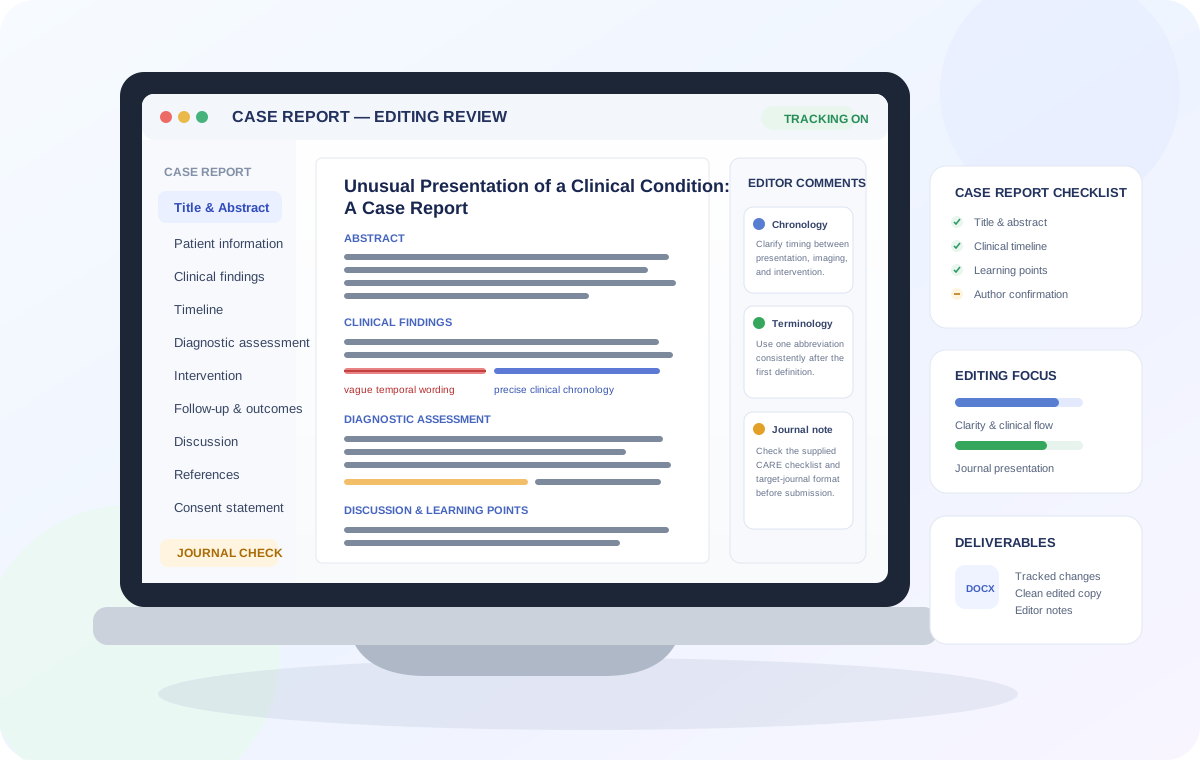
Medical case report manuscript with tracked changes, clinical chronology edits, terminology notes and journal-review comments
Tracked Editing Visible revisions plus a clean edited copy
Journal-Aware Review Guidelines checked when supplied
Clinical Meaning Preserved Ambiguities flagged for author confirmation
Reference & Caption Checks Presentation and consistency review
Confidential Manuscript Handling Work focused on the material needed for editing
1

Medical Case Report Editing That Improves Clarity Without Replacing Clinical Judgment

A case report must communicate the clinical story clearly enough for readers to follow what happened, why it mattered, and what can be learned—while remaining faithful to the author’s facts and interpretation.

Medical case report editing focuses on the presentation of the manuscript: precise language, logical sequence, consistent terminology, readable sentences, clear transitions, and a coherent relationship between clinical findings, diagnostic reasoning, intervention, outcomes, and discussion.

Where a target journal’s author instructions or a CARE checklist are supplied, the editorial review can also check visible structure and presentation against those materials. The service does not substitute for clinical verification, patient-consent responsibilities, ethics review, or final author approval.

Edits are designed to be transparent. When a sentence is ambiguous, a timeline is unclear, terminology is inconsistent, or an editorial change could affect meaning, the safer editorial action is to flag the point for author confirmation instead of inventing a clinical interpretation.

Best for

Drafted medical case reports, case series narratives, conference-to-journal case manuscripts, and revised submissions that need editorial refinement.

Primary editorial outcome

A clearer, more coherent manuscript that is easier for the author, co-authors, and journal readers to review.

Scope is assessed first

Word count, editorial depth, target-journal requirements, figures, tables, references, and deadline determine the confirmed quote and delivery estimate.

Preferred working format

An editable manuscript is best for tracked changes; journal instructions, tables, figures, and checklists can be supplied alongside it.

2

Who This Service Is For

The service is suitable when the clinical content is yours and the manuscript needs a more polished, structured, and journal-ready presentation.

Clinicians

For case reports that need clearer language, chronology, and journal-facing presentation.

Residents & Fellows

For training-stage authors preparing a case for academic presentation or submission.

Medical Researchers

For research-linked case reports where clinical narrative must connect clearly with literature and discussion.

Academic Authors

For manuscripts that are clinically complete but need editorial polish before co-author or journal review.

Case Series Teams

For multi-author case narratives requiring terminology and formatting consistency across sections.

Students & Trainees

For supervised academic work where the author wants clearer professional medical writing and transparent edits.

3

Common Case Report Editing Challenges

Even clinically interesting cases can be difficult to follow when the narrative, chronology, terminology, or submission presentation is inconsistent.

Unclear Chronology

Events, investigations, decisions, and outcomes appear out of sequence or without clear timing.

Dense Clinical Language

Long sentences, stacked details, or unexplained abbreviations make the case harder to read.

Inconsistent Terminology

Clinical terms, units, abbreviations, or labels vary across the manuscript.

Journal Structure Gaps

Section order or presentation may not match the supplied journal instructions or checklist.

Reference & Caption Issues

Citations, figures, tables, captions, numbering, or cross-references may be inconsistent.

Privacy & Consent Cues

Authors may need to review anonymization, consent statements, and journal requirements before submission.

4

What’s Included in Medical Case Report Editing

The exact scope is confirmed after review, but a case-report edit may cover the language and presentation of the main manuscript components below.

Title & Abstract

Clarity, concision, terminology, emphasis, and consistency with the manuscript’s clinical focus.

Patient & Clinical Narrative

Readable presentation of relevant history, presentation, findings, and clinical progression.

Timeline & Sequence

Clear transitions between symptoms, investigations, diagnosis, intervention, follow-up, and outcome.

Terminology & Abbreviations

Consistency of clinical terms, abbreviations, units, capitalization, and naming conventions.

Diagnostic & Intervention Wording

Sentence clarity and logical presentation without independently validating clinical decisions.

Discussion & Learning Points

Stronger flow between the case, literature context, significance, limitations, and take-home message.

Journal / CARE Presentation

Visible section and presentation checks when relevant guidelines or checklists are supplied.

Tables, Figures & Captions

Language and consistency review for titles, labels, legends, numbering, units, and callouts.

Citations & References

Presentation and consistency checks for in-text citations and the reference list where included in scope.

Grammar & Final Consistency

Grammar, spelling, punctuation, syntax, style consistency, repetition, and avoidable wordiness.

5

From Difficult-to-Follow Draft to Clearer Clinical Manuscript

The editorial intervention is designed to improve how the case is communicated, not to replace the author’s clinical responsibility.

Before Editing

  • Chronology is implied rather than stated clearly
  • Long sentences combine multiple clinical ideas
  • Abbreviations and terminology are inconsistent
  • Discussion repeats details from the case presentation
  • Tables, captions, citations, or headings use mixed styles
  • Potential ambiguities are difficult for co-authors to spot

Editing Service

  • Sentences refined for clarity, grammar, and professional tone
  • Clinical sequence made explicit where the manuscript supports it
  • Terminology, units, abbreviations, and labels harmonized
  • Repetition reduced and transitions strengthened
  • Journal or checklist presentation reviewed when supplied
  • Ambiguous or meaning-sensitive points flagged for author review

After Editing

  • Clinical story is easier to follow from presentation to outcome
  • Language is clearer, tighter, and more consistent
  • Author can review every substantive wording change
  • Presentation is more consistent with supplied journal instructions
  • Figures, tables, captions, references, and callouts are easier to cross-check
  • Final clinical verification remains with the author and co-authors
6

How the Medical Case Report Editing Process Works

A structured workflow keeps the scope clear and gives the author transparent control over editorial changes.

01

Submit Requirements

Share the draft, word count, deadline, target journal, and any specific concerns.

02

Scope Review

The manuscript requirements are assessed so editorial depth, quote, and delivery timing can be confirmed.

03

Editing Begins

Language, chronology, structure, terminology, and presentation are refined in the agreed scope.

04

Comments & Flags

Meaning-sensitive, unclear, or author-dependent issues are marked for confirmation rather than guessed.

05

Quality Review

Consistency, formatting, references, captions, and final editorial coherence are checked against the scope.

06

Final Files

You receive editable files for review, including visible changes and a clean copy where applicable.

7

What You’ll Receive

Deliverables are designed to make author review straightforward and to keep editorial decisions visible.

Tracked-Changes Manuscript

A version showing editorial revisions so every change can be reviewed.

Clean Edited Copy

A clean version for final author and co-author review after editorial changes are incorporated.

Editor Comments

Notes where wording, chronology, missing context, or author confirmation may be needed.

Journal / Checklist Notes

Visible presentation observations when author instructions or a relevant checklist are supplied.

Consistency Review

Editorial attention to terminology, abbreviations, citations, captions, numbering, and formatting in scope.

8

Pricing & Turnaround Are Confirmed After Scope Review

Case reports vary widely in length, clinical complexity, revision depth, supporting files, and journal requirements, so the service is assessed before an exact quote or delivery estimate is confirmed.

Manuscript Scope

The amount of editorial work depends on what is actually included in the draft.

  • Word count and number of sections
  • Tables, figures, captions, and references
  • Draft maturity and sentence quality

Editorial Depth

A light language polish is different from a report that needs deeper narrative and structural improvement.

  • Grammar and sentence correction
  • Chronology and section flow
  • Terminology and presentation consistency

Deadline & Journal Requirements

Availability and delivery timing depend on the confirmed scope and submission requirements.

  • Exact deadline and time zone
  • Target-journal author instructions
  • CARE checklist or other supplied guidance
Need an exact quote?

Send the current draft or approximate word count, target journal if known, required editorial depth, supporting guidelines, and deadline. The quote and delivery estimate can then be matched to the actual manuscript rather than guessed.

9

Why Choose This Medical Case Report Editing Approach

The page is built around transparent editorial support: strengthen the manuscript while keeping clinical authorship, verification, and final decisions with you.

Meaning-Preserving Edits

Clinical intent is not deliberately rewritten.

Chronology Focus

Sequence and timing are made easier to follow.

Tracked Transparency

Authors can review the editorial changes.

Journal-Aware Presentation

Supplied author instructions guide visible checks.

Terminology Consistency

Terms, units, abbreviations, and labels are harmonized.

Reference & Caption Checks

Editorial consistency across supporting elements.

Confidential Handling

Manuscript information is treated as service material.

Author-Controlled Final Review

You retain responsibility for clinical accuracy and submission.

10

Quality You Can Rely On

A case report needs more than isolated grammar fixes. The final review should check whether the edited manuscript is coherent, consistent, transparent, and ready for author verification.

Editorial Review
Consistency Pass
Final Verification
Client-Ready Files

Editorial Quality Standards

  • Clear language without unsupported clinical reinterpretation
  • Logical chronology and section-to-section continuity
  • Consistent clinical terminology, units, and abbreviations
  • Readable tables, captions, headings, citations, and cross-references
  • Transparent comments where author clarification is needed
  • Final author responsibility clearly preserved
11

Medical Case Report Topics & Clinical Contexts

Case reports can arise across many clinical areas. Share the specialty and manuscript context so the editorial fit and requirements can be assessed appropriately.

Internal Medicine
Surgery
Pediatrics
Obstetrics & Gynecology
Dentistry & Oral Health
Radiology
Pathology
Psychiatry
Nursing & Allied Health
Pharmacy & Public Health
12

Professional Editing vs. Self-Editing a Medical Case Report

Authors know the clinical case best. Professional editing adds a separate language-and-presentation pass that can make issues easier to see before submission.

Self-Editing Challenges

  • Familiarity with the case can make missing transitions hard to notice
  • Clinical detail may crowd out the central narrative
  • Repeated terminology or formatting inconsistencies are easy to overlook
  • Authors may spend time on sentence polishing instead of clinical verification
  • Late-stage journal formatting can become a separate source of pressure

Professional Editing Support

  • Fresh editorial attention to clarity, chronology, and section flow
  • Visible tracked changes that preserve author control
  • Consistent terminology, abbreviations, captions, and references
  • Comments for ambiguous wording or author-dependent decisions
  • Journal-aware presentation checks when guidelines are supplied
13

What a Strong Edited Case Report Should Achieve

Focus on manuscript quality: clearer communication, stronger consistency, transparent revisions, and an easier final author review before submission.

Clearer Chronology

Readers can follow the sequence of presentation, investigation, intervention, and outcome more easily.

Sharper Clinical Language

Sentences are more concise, professional, and consistent without unsupported clinical rewriting.

More Consistent Presentation

Headings, terms, abbreviations, captions, references, and formatting are easier to review together.

Easier Final Author Review

Tracked changes and comments help authors make informed final decisions before submission.

Important Editorial Scope Boundary

Medical case report editing improves language, structure, chronology, consistency, and presentation. It does not verify diagnoses, treatment decisions, patient consent, ethics approval, clinical accuracy, legal compliance, or journal acceptance. Those responsibilities remain with the author and relevant clinical or institutional reviewers.

14

What We Need From You

Clear requirements make it easier to assess the right editorial depth, avoid assumptions, and quote the work accurately.

Current Draft

Share the editable case report or, for an initial enquiry, the approximate word count and current stage of the manuscript.

Journal Instructions

Include target-journal author instructions, template, word limit, checklist, or CARE guidance when these should shape the edit.

Deadline & Time Zone

Provide the exact date and time needed so availability and a realistic delivery estimate can be assessed.

Priority Concerns

Flag chronology, grammar, terminology, discussion flow, references, tables, figures, anonymization cues, or other areas needing attention.

15

Medical Case Report Editing FAQs

Answers to common questions about editorial scope, clinical meaning, journal requirements, deliverables, confidentiality, quotes, and author responsibility.

What is a Medical Case Report Editing Service?

It is an editorial service focused on improving the language, clarity, chronology, structure, consistency, and presentation of a medical case report while preserving the author’s intended clinical meaning. Clinical decisions, factual verification, ethics, and final author approval remain outside the editing role.

Which parts of a medical case report can be edited?

Editing can cover the title, abstract, patient information, clinical findings, timeline, diagnostic assessment, intervention, follow-up, outcomes, discussion, learning points, references, tables, figures, captions, and supporting journal-format requirements when these are part of the agreed scope.

Can you edit a case report to CARE guidelines?

If you provide the relevant CARE checklist or target-journal instructions, they can be used as an editorial reference for structure and presentation. The author remains responsible for clinical completeness, ethics, consent, disclosures, and final compliance.

Will editing change the clinical meaning of my case report?

The editorial goal is to improve readability and presentation without intentionally changing your clinical meaning. Where wording is ambiguous or a proposed change could affect meaning, the safer approach is to flag the issue for your confirmation rather than make a clinical assumption.

Do you verify diagnoses, treatment decisions, or medical accuracy?

No. Editing is not clinical validation. Authors and their clinical or institutional reviewers remain responsible for diagnosis, treatment decisions, factual accuracy, patient consent, ethics, disclosures, and all medical claims.

Can you edit references, tables, figures, and captions?

The editorial scope can include presentation and consistency checks for citations, references, tables, figures, captions, numbering, terminology, units, and cross-references. Exact requirements should be shared with the manuscript.

Do I receive tracked changes?

The workflow is designed around transparent editing, with revisions shown through tracked changes, a clean edited copy where applicable, and editor comments when clarification or author action is needed.

Can you help prepare a case report for a specific journal?

Yes, target-journal author instructions can be supplied so the editorial review can check visible presentation, section order, terminology, citation presentation, tables, figures, captions, and other manuscript requirements within scope. Journal acceptance cannot be guaranteed.

How is patient confidentiality handled during editing?

Authors should remove or appropriately anonymize patient-identifying information before submission wherever required by their institution, journal, or applicable rules. The editing process should use only the manuscript information necessary for the requested editorial work.

Can you shorten a case report to meet a journal word limit?

Conciseness can be improved by tightening language, removing repetition, and simplifying wording. Any substantial deletion of clinically meaningful information should be confirmed by the author rather than removed solely for brevity.

How are price and turnaround determined?

The quote and delivery estimate depend on manuscript length, editorial depth, complexity, figures or tables, reference and formatting requirements, target-journal instructions, deadline, and current availability. Exact pricing and turnaround are confirmed after scope review.

What should I send when requesting a quote?

Share the case report or approximate word count, current draft status, target journal if known, author instructions, CARE checklist if relevant, deadline and time zone, and any specific concerns such as chronology, language, references, tables, figures, or formatting.

Does editing guarantee journal acceptance?

No. Editing can improve language, clarity, organisation, consistency, and presentation, but publication decisions remain with the journal and may depend on clinical significance, ethics, editorial priorities, peer review, and other factors outside the editing service.

Request a Medical Case Report Editing Quote

Share enough information for the manuscript scope to be assessed accurately. If a target journal or checklist applies, include it so the editorial review can be planned around the actual submission requirements.

Document & deadline

Approximate word count, current draft stage, exact deadline, and time zone.

Editing priorities

Language, chronology, clinical flow, discussion, references, tables, figures, or journal formatting.

§
Journal requirements

Target journal, author instructions, word limit, checklist, template, or style requirements.

Author verification

Keep clinical facts, ethics, consent, and final medical decisions under author or institutional review.

Helpful to include: case-report topic, specialty, approximate word count, target journal, required submission date, current draft status, and the areas where you want the editor to focus.
Medical Case Report Editing Enquiry

Request a Scope Assessment

Submit your contact details and manuscript requirements. The service scope, quote, and delivery estimate can then be assessed against the actual document.

Security check * Loading question…

Please avoid sending unnecessary patient-identifying information in the initial enquiry. Clinical accuracy, consent, ethics, and final manuscript approval remain the author’s responsibility.

Ready to Strengthen Your Medical Case Report?

Share your manuscript requirements, target journal, deadline, and editing priorities. We’ll use those details to assess the appropriate editorial scope and confirm a quote and delivery estimate for the actual document.

Get an Editing Quote