Chapter Architecture
Purpose, sequence, hierarchy, and learning flow

Develop textbook manuscripts into coherent, learner-focused chapters with stronger content architecture, concept progression, learning objectives, examples, activities, assessments, terminology, and editorial consistency—without losing the author’s intended subject-matter meaning.
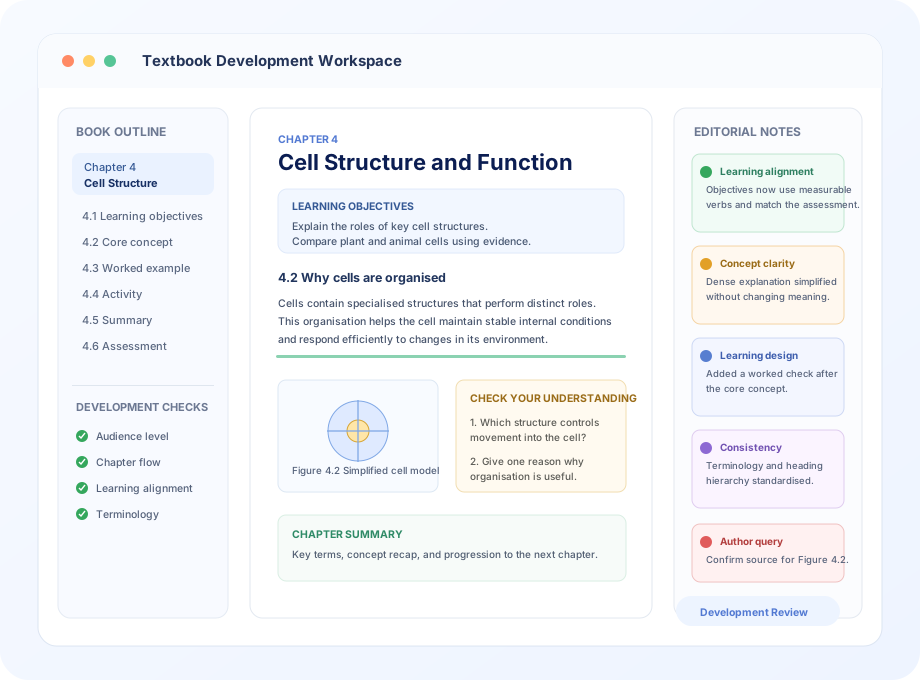
Purpose, sequence, hierarchy, and learning flow
Objectives, content, activities, and assessment
Clearer explanations and reader-focused presentation
Terminology, features, headings, figures, and references
Unpublished textbook material treated as sensitive
Developmental textbook work is priced by learning-design depth, not just by proofreading word count. The entry engagement below covers one substantial chapter or instructional unit and includes the pedagogical structure needed to make the content easier to teach and learn from.
Best suited for: A content-rich but uneven chapter that needs stronger sequencing, explanations, learning objectives, examples, activities, and end-of-section reinforcement.
Scope & inclusions
Textbook development is useful when the core subject matter exists but the manuscript does not yet teach as clearly or consistently as it should.
The scope can be tailored to the manuscript, but textbook development typically focuses on how content is organised, explained, reinforced, and kept consistent for the intended learner.
Chapter purpose, information hierarchy, sequence, and section flow
Clear, measurable objectives appropriate to the intended level
Dense or uneven passages refined for clearer teaching and comprehension
Questions and learning checks reviewed for relevance and alignment
Placement, callouts, labels, captions, and explanatory integration
Key terms, abbreviations, naming conventions, and recurring phrasing
Worked examples and applied material positioned where they best reinforce concepts
End-of-section reinforcement designed to support recall and review
Consistency checks and author queries where reference presentation needs attention
Chapter patterns, voice, terminology, and recurring features harmonised across contributors
Development comments explain why a change improves the learning experience and identify questions that still require author or source confirmation.
The development process can preserve the author’s knowledge while making the chapter easier to teach from, study, review, and standardise across the book.
Photosynthesis is a process plants use. It happens in chloroplasts and light is needed. Carbon dioxide and water are involved. There are light reactions and other reactions. Students need to know the equation. A diagram should be placed somewhere in this section and questions can be added at the end.
Objective: Describe the inputs and outputs of photosynthesis and explain where the process occurs.
Begin with the overall purpose of photosynthesis, then introduce the word equation before describing the chloroplast. Add Figure 6.1 immediately after the equation and use a short question to check whether readers can identify the inputs and outputs.
Learning objective: Describe the inputs and outputs of photosynthesis and explain where the process occurs.
Photosynthesis allows plants to convert light energy into chemical energy. The process uses carbon dioxide and water to produce glucose and oxygen. Figure 6.1 shows these inputs and outputs before the chapter examines where each stage takes place.
Choose textbook development when the manuscript needs instructional and structural work—not only correction of wording, grammar, and style.
| Aspect | Copyediting | Textbook Development |
|---|---|---|
| Primary focus | Correctness, clarity, consistency, and style | Learning architecture, content progression, pedagogy, clarity, and consistency |
| Depth | Sentence and presentation level | Chapter, section, paragraph, and learning-element level |
| Structure | Usually preserves the existing structure | May recommend or implement reordering, regrouping, and stronger hierarchy |
| Learning objectives | Checks wording if present | Reviews clarity, measurability, placement, and alignment with chapter content |
| Examples & activities | Edits language and consistency | Reviews relevance, placement, progression, and connection to the learning goal |
| Assessment | Edits wording and formatting | Reviews whether questions reflect the concepts and objectives presented |
| Author comments | Used for language or consistency queries | Used for developmental decisions, missing context, source questions, and scope-sensitive issues |
| Best fit | Structurally complete manuscript needing polish | Manuscript needing stronger educational design and chapter-level development |
The service can be scoped to selected chapters or to the complete textbook framework, depending on the stage of the project and the materials available.
Title pages, preface, overview, and book-level orientation
Purpose, objectives, prerequisites, and chapter roadmap
Concept sequence, definitions, exposition, and transitions
Callouts, captions, labels, explanatory links, and placement
Applied examples positioned to reinforce new concepts
Practice tasks, reflection prompts, and learning checks
Question wording, progression, relevance, and alignment
Recap, revision cues, terminology, and retention support
Presentation consistency and queries for missing source details
Instructor/student resources, appendices, and supporting content when supplied
A staged workflow keeps scope, learning decisions, author queries, consistency, and review points visible throughout a long-form textbook project.
Deliverables are confirmed during scoping. The final package can be tailored to the way authors, editors, or publishing teams intend to review and continue the project.
Editable chapter or book manuscript reflecting the agreed development scope
Readable clean copy for author or stakeholder review where included
Editorial comments, queries, and author-action points where needed
Book-wide consistency decisions when this is part of the project
Reusable chapter pattern, feature map, or development framework where agreed
Outstanding author decisions, source questions, or publisher-facing checks
Quality is checked from the book’s purpose and learner level down to sentence clarity and final consistency, so local edits remain aligned with the wider educational structure.
Development decisions are made around the stated audience, learning goals, and author intent.
Sections, examples, and questions are reviewed in the order the reader encounters them.
Terminology, recurring features, heading hierarchy, and cross-chapter conventions are harmonised.
Unclear facts, missing sources, permissions, or scope-sensitive points are raised rather than guessed.
The agreed files, notes, and outstanding action points are reviewed before handoff.
Textbook projects vary by terminology, pedagogy, conventions, and learner level. The exact subject fit and editorial expertise required are confirmed during scope review.
Unpublished textbook material can contain original teaching content, figures, assessments, source material, and contributor work. The handling workflow should protect that material throughout the project.
Development is intended to improve how the material is structured and communicated. Ownership, permissions, source responsibility, and final subject-matter decisions remain with the client unless a separate agreement states otherwise.
Turnaround is confirmed after scope and deadline review. A realistic schedule is set after chapter count, word count, development depth, author-review cycles, and project milestones are understood.
For projects with normal review windows and enough time for development, QA, and author feedback.
For shorter project windows where editor availability and manuscript complexity allow a faster plan.
Useful when development decisions need to be reviewed before the same approach is applied to later chapters.
For projects planned around author reviews, internal approvals, curriculum dates, or publisher milestones.
Providing the right context at the start reduces avoidable queries and helps the development approach stay aligned with the intended reader, curriculum, and publishing requirements.
Complete draft, sample chapters, source notes, or the material available at the present stage.
Age group, course level, academic stage, professional audience, or learner profile.
Learning objectives, curriculum framework, course outcomes, or chapter specifications if available.
Template, style guide, series conventions, chapter pattern, or supplied editorial instructions.
Artwork, captions, source notes, permissions information, and placement instructions where available.
Reference list, source files, source notes, or citation requirements relevant to the project.
Instructor resources, student resources, appendices, answer keys, or related files if in scope.
Target dates, author-review windows, internal approvals, or publisher milestones that affect planning.
Textbook projects benefit from a workflow that treats chapter structure, learner needs, author intent, consistency, and review decisions as connected parts of one publishing process.
Development built around long-form educational content
Objectives, explanation, practice, and assessment considered together
Queries and development decisions kept visible for author review
Recurring chapter features and terminology managed book-wide
Unpublished material treated as sensitive project content
Depth, deliverables, and milestones set around the actual manuscript
Use these answers to determine whether your project needs chapter-level development, a lighter editorial service, or a custom combination of support.
A textbook development service helps shape educational content at a deeper level than proofreading or copyediting. It can address chapter architecture, audience level, learning objectives, concept sequence, examples, activities, assessments, terminology, consistency, and the overall teaching-and-learning flow of a book.
It is suitable for authors, educators, academic teams, subject contributors, and publishing projects that have source material, draft chapters, outlines, or existing content but need stronger organisation, instructional flow, consistency, and reader-focused development.
Yes. The project can be scoped around an outline, sample chapters, partial drafts, contributor material, or a complete manuscript. The available material determines how the development plan is structured and what can be completed within the agreed scope.
Copyediting mainly improves correctness, consistency, sentence-level clarity, and style in content that is already structurally complete. Textbook development can go further by reviewing chapter purpose, concept sequence, learning objectives, examples, activities, assessment alignment, content gaps, and the relationship between sections.
The aim is to improve organisation, explanation, learning flow, and presentation while preserving the intended subject-matter meaning. Where a change could alter meaning or requires author confirmation, the issue should be raised as an editorial query rather than silently rewritten.
Yes, when these are part of the agreed scope. Learning objectives can be refined for clarity and measurability, and chapter activities or assessment items can be reviewed for alignment with the concepts and objectives presented in the chapter.
These elements can be reviewed, refined, reorganised, or developed from supplied source material and author guidance when they are included in the confirmed project scope. The required depth should be defined before work begins.
Yes. If you provide publisher instructions, curriculum requirements, templates, style guides, level descriptors, or chapter specifications, they can be incorporated into the development review and consistency checks.
A chapter-by-chapter workflow can be useful for long projects, especially when authors or contributors want to review development decisions before the same approach is applied to later chapters. The exact sequence is confirmed during scope planning.
Send the current manuscript or sample chapters, outline or table of contents, intended audience or academic level, any learning objectives or curriculum framework, publisher or house style, figure and table material, supporting references, and your target schedule or milestones.
Turnaround depends on manuscript length, number of chapters, development depth, subject complexity, figures and tables, reference requirements, author-review cycles, and the requested delivery schedule. A realistic timeline is confirmed after the material and scope are reviewed.
Textbook Development projects start from ₹18,000 for one unit or chapter up to 5,000 words. Full textbooks, multi-author harmonisation, extensive assessment development, or specialist learning-design requirements are quoted separately.
The delivery format is agreed during scoping. A project can include an editable developed manuscript, a clean author-review copy, editorial or development notes, and supporting consistency materials where those deliverables are part of the confirmed scope.
Yes. For multi-author projects, a development plan and style or terminology controls can help standardise chapter structure, voice, terminology, recurring features, learning elements, and presentation across contributors.
The service is designed around confidential handling of unpublished material. Access, working copies, delivery, retention, and any NDA requirement should be confirmed as part of the project workflow before sensitive files are shared.
Share your manuscript stage, intended learner, chapter count or word count, development priorities, and schedule. The project can then be scoped around the material you actually have.
A useful textbook enquiry gives enough context to assess the development depth and recommend a practical workflow.
Share your contact details and a concise project overview. You can provide sensitive files through the agreed project channel after the initial scope discussion.