
Book Development & Reader Feedback

Book Beta Reading Service for Clearer, More Engaging Manuscripts

See your manuscript through a reader's eyes before the next revision. Our book beta reading service focuses on the reading experience—where attention rises or drops, where motivations feel convincing or unclear, where continuity breaks, and which moments create the strongest impact.

  • Reader-response feedback on plot, pacing, characters, clarity, continuity, and engagement
  • Specific observations tied to the places where the reading experience changes
  • Clear separation between recurring concerns, strong moments, and individual reader preference
  • Feedback that supports revision decisions while keeping creative control with the author
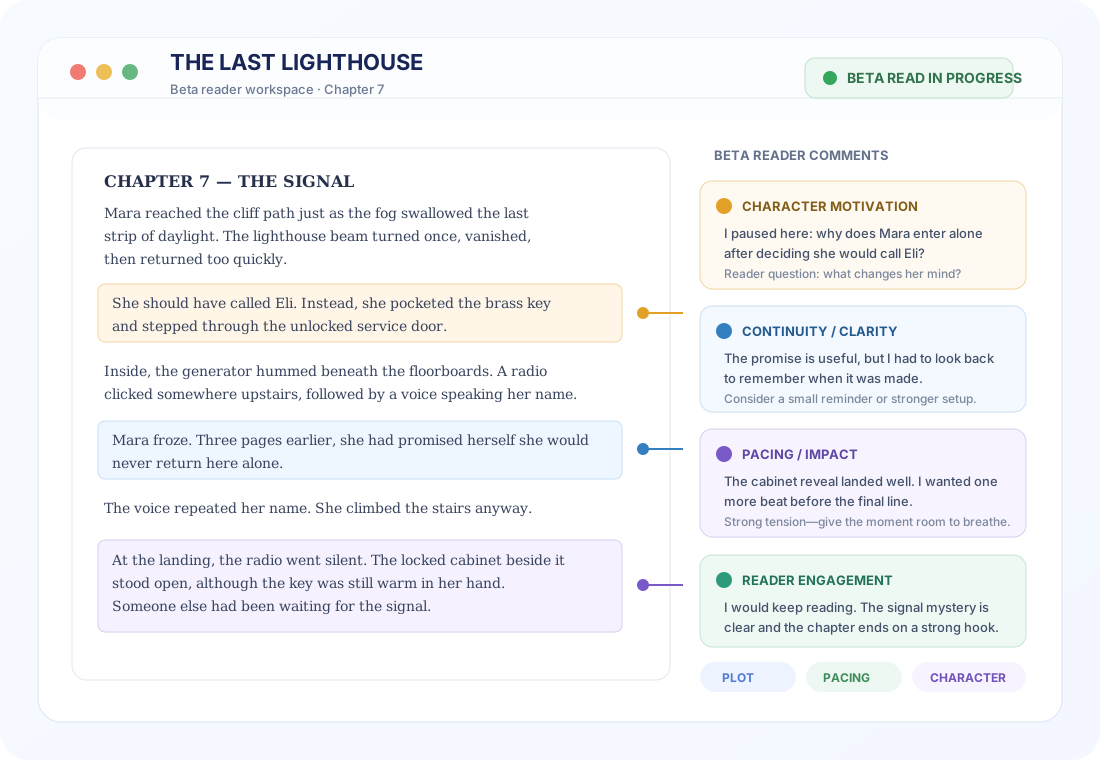
Book manuscript with beta reader comments on character motivation, pacing, continuity, clarity, and reader engagement
Illustrative beta-reader workspace showing the kind of reader-response issues the service examines.
Reader-Response FocusFeedback on how the manuscript is actually experienced
Plot & Pacing InsightWhere tension, momentum, or progression feels uneven
Character ResponseMotivation, credibility, chemistry, and emotional connection
Specific Reader NotesObservations anchored to scenes, chapters, or passages
Confidential HandlingUnpublished material is treated as confidential service content
1

What Problems This Beta Reading Service Solves

A manuscript can be technically complete and still create a different experience from the one the author intends. Beta reading surfaces those gaps from a reader's point of view.

×Scenes that drag or move too quickly
×Character choices that feel unearned or unclear
×Continuity gaps, timeline confusion, or missing context
×World-building or exposition that interrupts momentum
×Openings, reveals, or endings that do not land as intended
×Sections where reader attention or emotional connection drops
Illustrative reader-response excerpt

Rina had spent six chapters avoiding the observatory, yet when the message appeared on her phone she crossed the valley without telling anyone. By midnight she was already inside, searching the desk of the person she trusted least.

The twist itself is clear, but the decision arrives so quickly that the emotional logic is easy to miss. A beta reader does not rewrite the scene; the reader explains where the decision felt abrupt and what question remained unanswered.

Reader response: “I understand why the observatory matters, but I am not yet convinced why Rina would go alone. One extra beat showing what makes the message irresistible could make the choice feel earned.”
2

What Book Beta Reading Covers

The review looks beyond isolated sentences and concentrates on the reader's experience across the whole manuscript.

Plot & Progression

Whether events connect logically, stakes are understandable, reveals feel prepared, and story movement remains easy to follow.

Pacing & Momentum

Where the manuscript feels rushed, repetitive, slow, overly compressed, or well balanced for the intended reading experience.

Characters & Motivation

Whether goals, choices, relationships, conflicts, and emotional reactions feel believable and consistent from the reader's perspective.

Dialogue & Voice

How naturally dialogue carries information and emotion, whether voices feel distinct, and where exchanges feel unclear or overly explanatory.

World, Context & Clarity

Whether readers receive enough context to understand the setting, rules, timeline, background, terminology, or nonfiction framework without overload.

Engagement & Emotional Impact

Where curiosity, tension, empathy, surprise, humour, concern, or interest strengthens—and where the emotional connection becomes weaker.

Structure & Reader Orientation

How chapters, sections, transitions, chronology, and information order help or hinder the reader's understanding and expectations.

Opening & Ending

Whether the beginning establishes enough interest and orientation, and whether the ending delivers a satisfying sense of consequence, resolution, or deliberate openness.

Genre & Audience Expectations

Reader reactions can be interpreted in light of the manuscript's stated genre, audience, tone, and purpose rather than against a generic standard.

3

Service Demonstration: Annotated Beta-Reader Excerpt

This example shows the kind of reader-response observations beta reading can surface without turning the service into line editing or proofreading.

128Jonah closed the map and said the river crossing would be easy.

129None of the others objected, although he had nearly drowned there the previous winter.

130They packed in silence and left before sunrise.

131By noon, the valley was already behind them.

132Three days later, they reached the bridge. The storm had torn away half the decking.

133Mira laughed. “At least it cannot be worse than last time.”

134Jonah looked at her, surprised. No one had told Mira what happened last winter.

135Across the river, a lantern appeared in the abandoned watchtower.

136I would keep reading here—the watchtower creates a strong new question.

Character motivation

If the river nearly killed Jonah before, I expected more resistance—from him or the group—before they accept his plan.

Pacing / transition

The three-day jump is clear, but it removes the consequences of leaving. If something important changes during the journey, the jump may be too large.

Continuity question

Mira's line makes me wonder how she knows about “last time.” If the reveal is intentional, this works as a clue; if not, it may be a continuity issue.

Reader engagement

The abandoned watchtower is the strongest hook in the excerpt. It gives the scene a fresh goal and a clear reason to continue.

4

Before Beta Reading, Reader Feedback, and Author Revision

Beta reading identifies the reader experience. The author then decides what to revise, how deeply to revise it, and which suggestions fit the book's intent.

1) Before Beta Reading

Original Draft

Nadia refused to answer the call. She deleted the message, packed a bag, and drove to the harbour before dawn. When she reached Pier Nine, Theo was already waiting beside the boat.

2) Beta Reader Feedback

Reader Experience

3) Author Revision Example

One Possible Revision

The author might add the missing trigger, clarify how Theo knew, or deliberately preserve the uncertainty if it supports the mystery. Beta feedback informs the decision; it does not replace the author's voice or creative judgment.

5

Beta Reading vs. Editing and Proofreading

Choose beta reading when the main question is “How does this manuscript work for a reader?” Choose editing or proofreading when the main need is direct correction or refinement of the text.

AspectBook Beta ReadingEditingProofreading
Primary focusReader experience, engagement, logic, pacing, characters, clarityLanguage, structure, flow, presentation, and editorial refinementFinal-stage grammar, spelling, punctuation, typos, and consistency
Direct rewritingNo — feedback rather than rewritingMay include editorial changes depending on service depthLimited to correction, not substantive rewriting
Whole-book reactionsCore focusCan be addressed in deeper editingNot the primary purpose
Plot / character responseCore focus where applicableMay be considered in developmental or substantive workOutside normal proofreading scope
Grammar correctionOnly noted when it materially disrupts readingYes, depending on editing levelYes
Best stageAfter a complete or substantially complete draft, before the next major revisionDuring revision and refinementAfter editing, close to final publication or submission

Beta reading is not a substitute for copyediting, proofreading, fact-checking, or a specialist sensitivity review. Those are separate services with different objectives.

6

Manuscript Areas We Review

The review follows the manuscript as a reader would—while also looking back for patterns, contradictions, setup/payoff, and recurring questions.

01

Opening

Orientation, hook, tone, initial expectations, and the reader's reason to continue.

02

Plot or Core Progression

Cause and effect, goals, obstacles, stakes, sequence, logic, and turning points.

03

Characters

Motivation, consistency, relationships, conflict, credibility, growth, and emotional connection.

04

Pacing

Scene length, information density, repetition, momentum, compression, and breathing room.

05

Dialogue & Voice

Naturalness, distinction, subtext, exposition, rhythm, tone, and reader comprehension.

06

World / Context

Rules, setting, timeline, terminology, background, and how much information the reader needs.

07

Continuity & Setup

Details that conflict, disappear, arrive without preparation, or create unintended questions.

08

Ending

Payoff, resolution, unanswered questions, final emotional effect, and expectations for what comes next.

7

Our Beta Reading Workflow

The workflow keeps the reader response connected to your manuscript goals without turning the service into prescriptive rewriting.

STEP 01

Submit Manuscript Details

Tell us the manuscript type, genre, word count, draft stage, and the reader questions you most want answered.

STEP 02

Scope the Read

The review focus is aligned to the manuscript and any stated concerns so the feedback is useful for the next revision.

STEP 03

Reader-Experience Review

The manuscript is read for engagement, logic, pacing, character response, clarity, continuity, and recurring reader questions.

STEP 04

Organise Feedback

Observations are grouped so high-impact patterns, strengths, and smaller reader preferences are easy to distinguish.

STEP 05

Deliver Reader Report

You receive clear, manuscript-specific feedback designed to support your own revision decisions and next editorial step.

8

What You Receive

The output is designed to help you understand both the overall reading experience and the manuscript moments that created the strongest reactions or questions.

PDF
Structured Beta Reader Report

Overall reader response covering strengths, friction points, recurring patterns, and the areas most worth revisiting.

Report
DOC
Manuscript-Specific Reader Notes

Passage, scene, chapter, or section observations tied to the places where reader understanding, pacing, credibility, or engagement changes.

Notes
Priority Revision Considerations

A clear distinction between repeated or high-impact reader concerns, strong moments to preserve, and lower-priority reader preferences.

Priorities
?
Reader Questions & Confusion Points

Questions that arose naturally during the read, useful for identifying missing setup, unclear motivation, continuity gaps, or unintended ambiguity.

Questions
What Is Already Working

Feedback also identifies hooks, scenes, relationships, reveals, explanations, or emotional moments that created a strong reading response.

Strengths
9

Quality Assurance Methodology

The review is checked for usefulness and consistency before delivery so the final feedback remains clear, evidence-linked, and faithful to the beta-reading purpose.

Layer 1 · Reader Brief & Manuscript Context
Layer 2 · First-Pass Reader Experience
Layer 3 · Pattern & Continuity Review
Layer 4 · Feedback Prioritisation
Layer 5 · Final Clarity Check
Reader observations are tied to manuscript evidence rather than vague preference wherever possible.
Recurring issues are separated from one-off reactions so patterns are easier to identify.
Strengths and successful moments are retained alongside concerns, giving a balanced view of the reading experience.
Feedback avoids pretending that one reader reaction is a universal rule for every audience.
The final report preserves author control by explaining the reader response rather than dictating a mandatory rewrite.
10

Manuscript Types Suitable for Beta Reading

Beta reading is most useful for complete or substantially complete manuscripts that are ready to be experienced as a book rather than reviewed sentence by sentence.

Novels
Novellas
Short Story Collections
Memoir & Narrative Nonfiction
Fantasy & Science Fiction
Romance & Relationship Fiction
Mystery & Thriller
Reader-Facing Nonfiction
Historical Fiction
Young Adult Manuscripts
Commercial Fiction
Long-Form Book Projects
11

Confidentiality & File Handling

Unpublished manuscripts can contain commercially and personally sensitive material. The service uses the same controlled document-handling approach reflected in the ContentXprtz reference design.

Secure UploadManuscript files enter the service workflow through controlled submission channels.
Restricted AccessAccess is limited to people involved in the service workflow.
Reader ReviewThe manuscript is handled for the agreed beta-reading purpose.
Controlled DeliveryFeedback is returned through the service process to the client.
Retention ControlsFiles are retained only for the service process and applicable retention requirements.
Your manuscript remains your work.

The beta reading service is designed to give you reader-response insight without transferring authorship or creative decision-making. The author remains responsible for the manuscript, the revision choices, and the final text.

12

Scope & Turnaround

Beta-reading turnaround is confirmed after the manuscript scope is reviewed, so the schedule reflects the length and requested depth of feedback.

Manuscript Length

Word count and overall manuscript size influence the reading workload and the amount of evidence that can be covered in the report.

Requested Review Depth

A focused reader response and a more extensive manuscript-level review require different scopes. The agreed depth is confirmed before the read begins.

Confirmed Delivery Schedule

Your delivery schedule is agreed after the manuscript length, review depth, and any priority reader questions have been considered.

13

Pricing Clarity

Beta reading is scoped separately from ContentXprtz editing, writing, and proofreading plans. Your quote is prepared from the manuscript and the requested depth of reader feedback.

Scope-Based Review

The manuscript type, word count, draft stage, and requested feedback depth are reviewed before a quote is prepared.

Scope Confirmed First

Pricing and delivery terms can be confirmed before work begins so the agreed review depth and expected output are clear.

14

What We Need From You

A small amount of context helps the beta reader respond to the book you intended to write rather than applying generic expectations.

Current Manuscript

Share the draft you want reviewed and an approximate word count.

Genre & Intended Audience

Tell us the genre or manuscript type, target reader, and any relevant expectations you want the reader to keep in mind.

Priority Reader Questions

List any concerns such as pacing, a character arc, a confusing timeline, the ending, a particular chapter, or whether a reveal lands clearly.

15

Why Authors Choose Beta Reading Before the Next Revision

The value of beta reading is not a list of corrections. It is the chance to compare author intent with the actual reader experience before investing in the next round of revision or final editing.

Fresh Reader Perspective

See where a new reader follows easily, hesitates, questions, predicts, or disconnects.

Pattern Recognition

Understand whether the same pacing, clarity, or motivation issue appears repeatedly across the manuscript.

Revision Priorities

Separate high-impact reader concerns from smaller preferences so revision effort can be focused.

Strengths to Preserve

Identify scenes, hooks, relationships, explanations, or emotional moments already working well.

Clear Next Step

Use the reader report to decide what to revise before moving to editing, proofreading, or publication preparation.

FAQ

Book Beta Reading Service FAQs

Practical answers about the purpose, scope, timing, pricing, and limits of beta reading.

What is a book beta reading service?

A beta reading service gives you reader-response feedback on how a manuscript is experienced as a book. The focus is on areas such as plot, pacing, characters, clarity, continuity, engagement, and overall reader experience rather than line-by-line language correction.

Is beta reading the same as editing?

No. Beta reading reports the reader experience and identifies areas that may confuse, slow, disengage, or weaken the manuscript. Editing directly changes or recommends changes to language, structure, or presentation. Authors can use beta feedback to decide what to revise next.

When should I use a beta reader?

Beta reading is most useful when you have a complete or substantially complete draft and want an informed reader response before the next major revision or before moving into final editing and proofreading.

What does the beta reader look for?

The review can examine plot logic, pacing, character motivation, dialogue effectiveness, clarity, continuity, world building or context, reader engagement, emotional impact, genre expectations, and the strength of the opening and ending.

Will the beta reader rewrite my book?

No. The service is designed to provide reader-response feedback and revision considerations. The author remains responsible for deciding which changes to make and for rewriting the manuscript.

Do you correct grammar and punctuation during beta reading?

Beta reading is not a proofreading pass. Obvious language issues may be mentioned when they affect the reading experience, but systematic grammar, punctuation, spelling, and style correction belongs to an editing or proofreading service.

Can beta reading cover fiction and nonfiction?

The same reader-response approach can be applied to narrative fiction and to reader-facing nonfiction. The emphasis changes by manuscript type, but clarity, engagement, structure, progression, reader questions, and overall experience remain central.

What information should I send with my manuscript?

Helpful context includes the manuscript type or genre, approximate word count, intended audience, current draft stage, any specific reader questions you want addressed, and your preferred delivery schedule.

Will feedback tell me what to change first?

The feedback is organised so recurring or high-impact reader concerns can be distinguished from smaller observations and individual reader preferences, helping you decide what to prioritise in the next revision.

Is my unpublished manuscript kept confidential?

The service page follows ContentXprtz confidential file-handling practices, with manuscript access limited to the service workflow and files retained only for the service process and applicable retention requirements.

How is beta reading priced?

A custom quote is prepared from the manuscript scope and requested review depth after the enquiry details are reviewed.

How long does beta reading take?

The delivery schedule is confirmed before work begins after manuscript length, scope, and requested review depth are considered.

16

Ready to See Your Manuscript Through a Reader's Eyes?

Share your manuscript details, intended audience, word count, current draft stage, and the questions you most want a beta reader to answer.

Request a Book Beta Reading Quote

The most useful beta-reading brief tells the reader what kind of book they are reading and where you most need an outside perspective.

01
Manuscript type & genre

Novel, novella, memoir, nonfiction, short story collection, or another long-form book project.

02
Approximate word count

Share the current manuscript length so the reading scope can be assessed.

03
Draft stage

Tell us whether this is an early complete draft, a revised draft, or a manuscript approaching final editing.

04
Priority reader questions

Examples: “Does the opening hook?”, “Is the middle too slow?”, “Does the ending feel earned?”, or “Is the protagonist's motivation clear?”

05
Preferred delivery schedule

Include the date you are working toward. The final turnaround is confirmed after scope review.

Book Beta Reading Enquiry

Send Your Manuscript Details

Provide enough context to assess scope and prepare the right reader-response approach. You do not need to paste the manuscript into this form.

Security check *Loading question…

Do not include confidential payment information in the form. Manuscript files and any additional supporting material can be provided through the service process after the enquiry is reviewed.

Strengthen the Next Revision With Real Reader Perspective

A beta reader can show you where the manuscript's intended effect matches the reading experience—and where readers may need more clarity, motivation, momentum, or emotional connection.

Request Your Beta Reading Quote
Reader-response focusCustom scopeConfidential handlingAuthor retains creative control