Fact-Led
Messages distinguish confirmed information from what is still being established.

When information is moving quickly, every word matters. Contentxprtz helps shape calm, credible crisis messages that separate verified facts from unknowns, align stakeholders around one core position, and adapt approved language across the channels that matter.
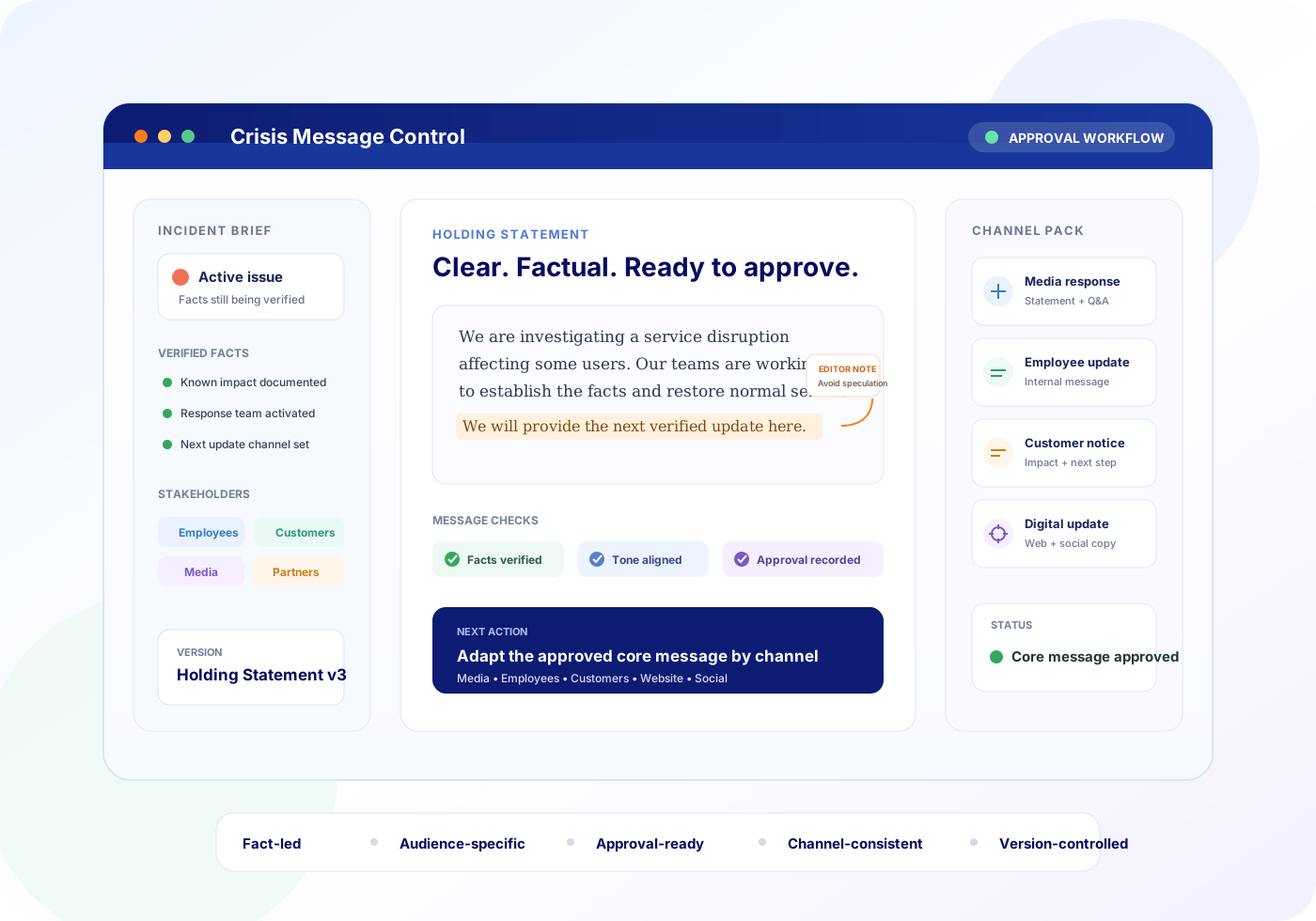
Messages distinguish confirmed information from what is still being established.
Core statements can be prepared for leadership, legal or specialist review before release.
One verified core message can be adapted for the concerns and context of each audience.
Drafts, changes and final approved wording can be kept clear as the situation evolves.
A crisis messaging framework is strategic work: it has to connect verified facts, stakeholder concerns, proof points, response language and escalation logic. Pricing therefore starts at a defined project minimum.
Projects from ₹35,000
Suitable forA business that needs a reusable crisis message framework or coordinated message set for a defined issue or scenario.
Scenario libraries, extensive stakeholder mapping, workshops, regulatory complexity, live-event updates or ongoing crisis counsel can require a larger project scope.
A crisis response needs more than a single statement. The work combines message architecture, audience adaptation, review discipline and coordinated channel copy so stakeholders receive consistent information without avoidable speculation or contradiction.
End-to-end communication copy tailored to the incident, audience and release context.
Initial approved language while facts are still developing.
Employee, customer, partner and community communications.
Statements, media lines, response notes and approved Q&A.
Talking points, leadership notes and spokesperson preparation.
Employee guidance, manager briefs and internal FAQs.
Website notices, social responses and online updates.
Likely questions, approved answers and escalation flags.
Correction, recovery, closure and post-incident messaging.
The exact deliverables depend on what is known, who must be informed and which channels need approved wording.
The sequence helps reduce inconsistency as facts, approvals and stakeholder needs change.
One approved position, adapted to the language and constraints of each communication channel.
The service is designed for situations where communication must be accurate, coordinated and usable by different stakeholders. Scope can be focused on a single statement or expanded into a connected crisis messaging pack.
Practical message assets that can move through your approval process.
Messaging support can be adapted to the communication needs of different issue types.
Messaging can support organisations and teams of different sizes.
The engagement can be structured around a specific incident, ongoing preparedness, embedded communications support or overflow drafting. Approved core messaging can then be adapted across each relevant stakeholder channel.
Choose a working model that fits the communication requirement and internal team structure.
Focused support for a defined crisis message set or incident communication need.
Ongoing access for message templates, scenario preparation and agreed crisis-support needs.
Drafting support that works alongside your communication, leadership and specialist reviewers.
Extra writing capacity when multiple stakeholders or channels need coordinated copy.
The channel changes; the verified core position should not.
Strong crisis messaging is a controlled information flow: stabilise the message, align the audiences, move through the required review, publish the right version, and update only when new verified information changes what stakeholders need to know.
A simple way to structure the communication journey without rushing past verification or approval.
Before release, each message can be reviewed against practical communication controls.
Deliverables are selected to fit the audiences and communication channels in scope.
Core position, message hierarchy, proof points, audience considerations, tone guidance and key language boundaries.
Initial public-facing language designed to acknowledge the issue, communicate what is verified and avoid speculation.
Adapted communications for employees, customers, partners or other relevant stakeholder groups.
Press-facing copy, likely questions, approved answers, bridging language and escalation flags.
Concise leadership lines that connect the verified facts, stakeholder concerns, actions and next-step language.
Website updates and social copy adapted from the approved core message for shorter, channel-appropriate formats.
A clear record of the final wording, version references and material changes to reduce confusion during an evolving response.
Later-stage updates, corrections, recovery messages or closure communications based on the facts available at that point.
The value is in disciplined communication: understand the issue, protect factual accuracy, reduce message drift, write for the audience in front of you, and deliver copy that can move through a real approval process.
Communication priorities before wordsmithing.
Clear distinction between verified facts and unknowns.
Different stakeholders get relevant context without changing the core position.
Language can be routed for specialist review where the subject requires it.
Clear drafts, visible changes and practical approval notes.
Copy built for release channels, not presentation-only strategy.
The wording must match the facts of the specific incident. The examples below show the difference between vague crisis copy and more controlled message structure; they are illustrative and should not be treated as ready-to-publish statements for a real incident.
Two common situations where disciplined wording helps reduce confusion.
Stakeholders need to know what is affected, what is being done, what they should do, and where the next verified update will appear.
The message needs to acknowledge the concern, avoid premature conclusions, state verified facts, and define how the matter is being reviewed.
Communication should be coordinated with the relevant privacy, legal, security and regulatory advisers before release where required.
Practical answers about scope, approvals, specialist review, stakeholder adaptation and starting information.
The service focuses on the words, structure, sequencing and audience adaptation of crisis communications. Depending on the brief, this can include holding statements, media responses, leadership talking points, employee updates, customer or partner notices, website and social copy, Q&A documents, and follow-up messages.
Yes. A holding statement can be drafted to acknowledge the situation, communicate only verified information, explain the immediate response where appropriate, and set expectations for the next update without speculating beyond the facts available.
Yes. We can establish a master message and adapt it for employees, customers, partners, media, leadership, website updates, email and social channels while keeping the verified facts and key position consistent.
No. The service provides communication and messaging support, not legal, regulatory or compliance advice. Where legal, regulatory, privacy, safety or other specialist review is required, the messaging workflow can be structured so the relevant internal or external advisers review the content before release.
Yes, provided the message clearly separates confirmed facts from information that is still being established. The drafting approach can use a controlled holding position, identify what can safely be said now, and prepare update language as facts are verified.
Yes. Talking points can be structured around the core facts, stakeholder concerns, key actions, approved proof points, likely questions and language to avoid, helping spokesperson communications remain consistent with the approved position.
Yes. The service can include anticipated media questions, concise approved responses, bridging language, escalation flags and clear boundaries for questions that require additional verification or specialist review.
Yes. Internal messages can be written to explain what employees need to know, what they should do, where to direct questions, what they should avoid sharing externally, and when they should expect further updates.
Yes. Messaging can be developed to correct inaccuracies using verified facts, avoid amplifying unnecessary detail, and give stakeholders a clear source of truth. The exact response approach depends on the nature and reach of the misinformation.
The workflow can separate the master message from channel adaptations, label versions clearly, record material changes, and identify the final approved copy for release. Your organisation remains responsible for its internal approval authority and release decisions.
Share the verified facts available, what is still unknown, affected audiences, existing public statements, communication channels, internal decision-makers, sensitive points, required reviews, and any deadline or event driving the communication.
Because crisis messaging requirements vary by incident, number of audiences, number of channels, review complexity and the amount of material required, scope, pricing and the proposed delivery schedule are confirmed after the brief is reviewed.
Share the communication context you can safely provide. We can review the messaging need, audiences, channels and required review path, then confirm an appropriate scope, quote and proposed delivery schedule.
Use the form for initial scoping. Share only information that is appropriate to transmit through a web enquiry form.