Source-Led Writing
Draft from the material, claims and terminology you provide.

Turn approved source material, policies, programme details and complex internal information into clear public-facing content that is easier to understand, review and publish across digital and stakeholder channels.
Audience-ready writing starting scope
The starting price buys a complete small public-information deliverable set, making the service easy to budget while larger service journeys can be expanded by channel and content volume.
for up to 1,500 words or three short public-information pages
Best fit: Organisations with approved source material that need clear audience-ready web content, notices, service guidance, policy summaries, FAQs or explainers.
When the quote changes: Additional pages, source-heavy research, multiple channels, specialist policy review, multilingual versions or accelerated delivery are quoted separately.
From service pages and public notices to policy summaries, FAQs and multi-channel adaptations, the writing stays centred on the intended audience and supplied source material.
What We Do
Service pages, programme information, public guidance and website copy built from approved source material and audience needs.
Clear public notices, updates and announcements that explain what changed, who is affected and what readers should do next.
Step-by-step service information covering purpose, audience, requirements, process, documents, actions and contact points.
Audience-friendly summaries of approved policy or programme material without replacing formal policy, legal or subject-matter approval.
Question-and-answer content that addresses common information needs, terminology, process steps and next actions in a scannable format.
Briefing and consultation copy that explains context, participation steps, feedback routes and approved supporting information.
Public-facing summaries, briefings and explainer content that organise complex information into clearer narratives and key takeaways.
Adapt an approved core message into fit-for-channel versions while keeping terminology, factual claims and intended actions aligned.
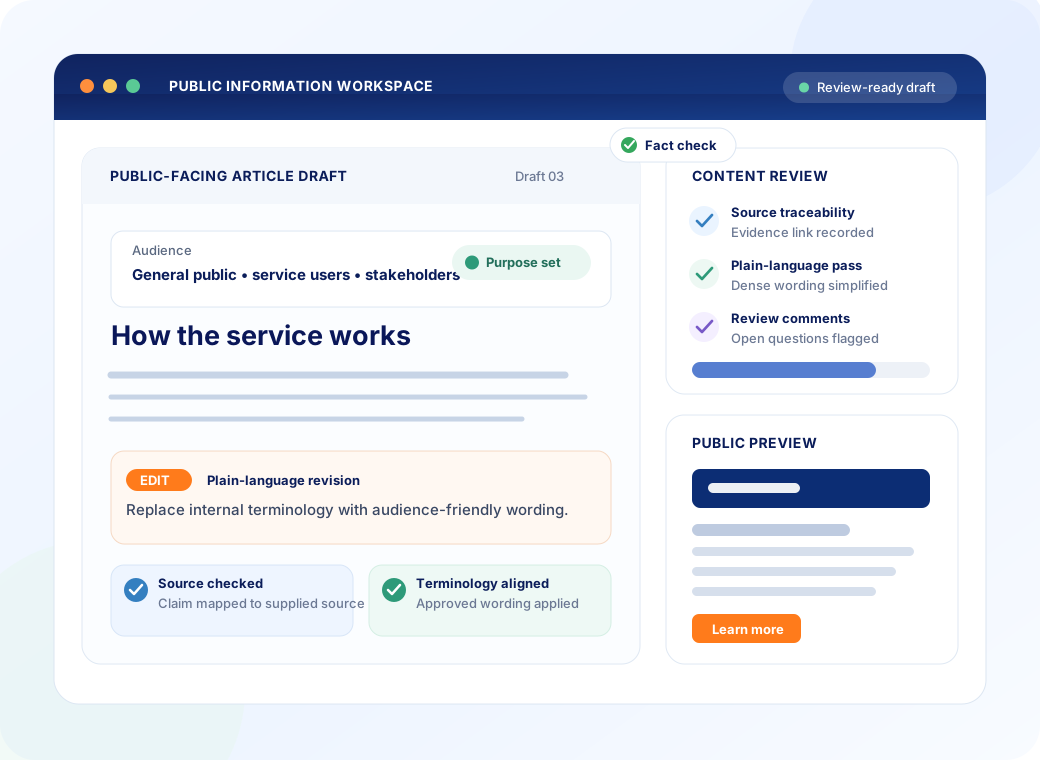
The workflow separates source review, content structure, drafting, validation and final adaptation so approval questions are easier to manage.
Our Process
Confirm audience, purpose, channel, action and review context.
Review approved material, terminology, mandatory wording and gaps.
Build the information hierarchy, headings and reader journey.
Write clear public-facing copy with the intended meaning preserved.
Check language, logic, consistency, source linkage and open questions.
Flag claims, terminology or decisions that need client confirmation.
Apply approved feedback and prepare a clean review-ready version.
Create aligned channel variants when they are part of the agreed scope.
Public-facing content has to bridge internal expertise and external understanding. The writing process should make that translation visible, reviewable and consistent.
The practical content checks below help keep public information clear, consistent and reviewable.
What We Check Before Final Delivery
The writing can be shaped around the information type, the client’s approved source pack and the review controls that apply to the final public-facing copy.
These examples describe common types of assignments rather than customer case studies. Scope, source material and approval requirements vary by project.
Turn programme documentation into a structured set of public-facing pages that explain purpose, eligibility, process, actions and contact information.
Translate approved technical or policy-heavy material into a clear summary that helps affected audiences understand the change and next steps.
Create aligned versions of an approved message for different public channels without allowing wording, actions or factual details to drift.
Explore the wider Contentxprtz service ecosystem, review the editorial team information or move directly to the public information enquiry form.
Share your source material, audience, channel and approval context. We can scope the writing or rewriting work around the information that needs to reach the public clearly.
Start a Public Information EnquiryPractical answers about scope, source material, plain-language rewriting, approvals, multi-channel adaptation and project quoting.
It is professional writing and editorial support for information that an organisation publishes for external audiences. The work can include turning approved source material into clear website pages, notices, service guides, policy or programme summaries, FAQs, explainers and other public-facing content.
Typical assignments can include public website content, service information, programme or policy summaries, public notices, FAQs, consultation information, reports, briefings, stakeholder explainers and adaptations for email, web or other approved channels.
Yes. We can reorganise and rewrite dense source material for a defined public audience while preserving the intended meaning. Ambiguous claims, missing source support or terminology questions can be flagged for your subject-matter reviewer rather than guessed.
We work from the sources you provide, identify the intended audience and purpose, build a content structure, draft or rewrite the copy, and maintain a clear link between important claims and the supplied source material. Questions that require client confirmation are surfaced during review.
Yes. Share your style guide, terminology list, mandatory statements, approved phrases and channel requirements. These can be incorporated into the drafting and quality-review process so the final copy is consistent with your internal standards.
No. The service provides writing, structuring and editorial support. Legal, regulatory, policy and subject-matter approval should remain with the client or the appropriately authorised reviewer.
Yes. Where the brief requires it, one approved source can be adapted into channel-specific versions such as a web page, short notice, FAQ set, email copy or concise stakeholder summary while keeping the core message aligned.
Yes. We can improve heading hierarchy, paragraph length, signposting, definitions, lists, calls to action and FAQ structure so readers can locate key information more easily. Any formal accessibility compliance assessment should be handled under the client’s own accessibility process.
The draft can be prepared for structured client review, with open questions and source-dependent points clearly identified. Agreed feedback can then be incorporated into a revised version so the approval trail is easier to manage.
Send the current source material, intended audience, publishing channel, content objective, required terminology, mandatory wording, relevant style guidance, approver comments and any known deadline. The more complete the source pack, the more precisely the writing can be scoped.
The drafting process is source-led. Important claims can be checked against the material supplied, inconsistent statements can be flagged and unsupported details are not invented. Final factual and subject-matter confirmation remains with the client.
Contentxprtz public information content writing starts from ₹8,000 for up to 1,500 words or three short public-information pages. The starting scope includes source-led drafting, clear action-oriented structure, two revisions and typical delivery in 5–7 business days.
Contentxprtz public information content writing starts from ₹8,000 for up to 1,500 words or three short public-information pages. The starting scope includes source-led drafting, clear action-oriented structure, two revisions and typical delivery in 5–7 business days.
A useful scope starts with the source material and the public outcome you need. Include the information below where available.
Website page, service guide, notice, FAQ set, summary, report, explainer or another public-facing format.
Who needs the information and what should they understand, decide or do after reading it?
Provide the approved documents, links, terminology, statements or client instructions that should govern the draft.
Let us know who will review the draft, what feedback already exists and whether multiple channels need aligned versions.
Provide enough detail for the content type, source complexity, review needs and channel requirements to be assessed.
Our Commitment