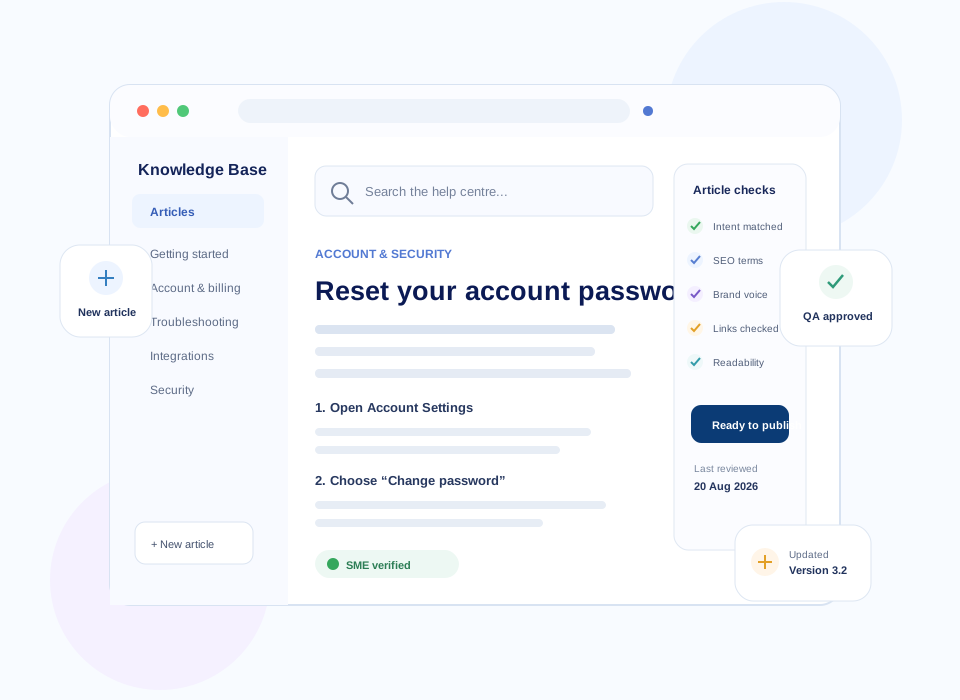
Managed Knowledge Base Content Creation Service for Scalable Support
★★★★★4.8 rating from Researchers, Authors, Students, and Scholars
Plan, write, standardise, optimise, and maintain help-centre content that makes product knowledge easier to find, understand, and act on across customer and internal support channels.
Structure articles around the questions and tasks users need to complete.
Scale production through consistent article templates and approved voice.
Apply editorial, factual, link, and usability quality checks.
Prepare content for your approved publishing and platform workflow.
Knowledge Content SpecialistsWriters and editors aligned to support and documentation needs
Scalable Article OutputFlexible capacity for new content, refreshes, and migrations
Quality-Assured ContentEditorial review, source checks, terminology, links, and structure
Managed DeliveryBriefing, production, review, and handoff in one workflow
Pricing & Delivery
Knowledge Base Article Creation Pricing
The starting scope is built for a practical first batch of support content—not generic blog writing. Articles are planned around user questions, procedures, product language, findability, and future maintenance.
Starting price
₹8,000
for up to 8 standard help articles (about 4,000 words total)
Suitable for: Help centers, FAQs, internal wikis, onboarding libraries, and support teams creating a new article set.
Question / task and audience mapping
Article outline and reusable content pattern
Up to eight standard knowledge-base articles
Step, note, warning, and callout structure where relevant
Internal-link and metadata recommendations
Editorial QA plus publish-ready handoff
DeliveryTypical delivery: 7–10 business days after product inputs, screenshots or source material, and terminology guidance are complete.
Review allowanceTwo revision rounds across the article batch.
Long technical procedures, API or developer docs, screenshot production, localization, platform migration, or larger article libraries require a custom quote.
Human-ledContent Production
ManagedSpecialist Capacity
FlexibleDelivery Models
Multi-channelContent Coverage
StructuredQuality Controls
Scope-ledDelivery Planning
What We Do
Knowledge Base Content for Every Support Need
Help Centre ArticlesSearchable guidance for common customer questionsTroubleshooting GuidesProblem-to-resolution steps with clear decision pathsFAQ LibrariesConcise answers grouped around repeated user intentProduct DocumentationFeature, configuration, integration, and usage contentOnboarding GuidesStep-by-step setup and first-value content journeysInternal SOPsProcess knowledge for teams, operations, and support agentsGap-Fill ContentNew articles built from support gaps and missing topicsContent RefreshesUpdates for changed UI, products, policies, and processesMigration-Ready ContentStandardised structure for new help-centre environments
How We Work
A Proven Process for Accurate, Findable Knowledge
01
UnderstandReview audience, product, support goals, sources, voice, and platform.
02
PlanMap topics, taxonomy, article templates, search intent, and production priorities.
03
CreateDraft task-based, support-focused articles from approved source material.
04
ReviewApply editorial checks and subject-matter review where the workflow requires it.
05
OptimiseImprove titles, headings, links, readability, search terms, and cross-navigation.
06
DeliverProvide publish-ready content, update notes, and agreed handoff documentation.
Better FindabilityClear taxonomy, titles, headings, and search terms.Clearer Self-ServiceTask-based content that helps users move toward resolution.Consistent KnowledgeReusable templates, terminology, and editorial standards.Faster Content UpdatesManaged production queues for refreshes and new articles.
Ready to move forward?A Repeatable Quality Framework for Support Content.
Answers to common questions about scope, accuracy, platforms, maintenance, optimisation, migration, and managed delivery.
What is a managed knowledge base content creation service?+
It is an end-to-end content service for planning, writing, editing, organising, and maintaining knowledge base articles. The workflow can cover taxonomy planning, article briefs, drafting, subject-matter review, editorial quality checks, search optimisation, formatting, and publish-ready delivery.
What types of knowledge base content can Contentxprtz create?+
The service can support help-centre articles, setup guides, troubleshooting content, FAQs, onboarding guides, product and feature documentation, policy or process articles, internal SOPs, release-note support, glossary pages, and other structured support content.
Can you work with an existing help centre or knowledge base?+
Yes. A managed engagement can begin with an existing content set. The team can audit article quality, identify gaps or duplication, standardise templates and terminology, rewrite weak content, and create new articles within the existing information architecture.
How do you keep knowledge base articles accurate?+
Accuracy is managed through source-based drafting, clear article briefs, documented assumptions, subject-matter expert review where required, editorial checks, link and terminology review, and a defined approval process before delivery or publication.
Can you write troubleshooting and how-to articles?+
Yes. Troubleshooting and task-based articles can be structured around user intent, prerequisites, step-by-step actions, expected outcomes, error states, alternative paths, escalation guidance, and related links so readers can move from problem to resolution efficiently.
Can you match our product terminology and brand voice?+
Yes. The workflow can use your style guide, terminology list, product naming conventions, support tone, formatting rules, article templates, and approved examples. These references are incorporated into briefs and quality checks so content remains consistent across authors and batches.
Do you support SEO and knowledge base search optimisation?+
Yes. Where relevant, articles can be shaped around real user questions, searchable titles, clear headings, concise summaries, descriptive anchor text, related topics, and terminology users are likely to search. This supports both external search visibility and internal help-centre findability.
Can you create content directly in our CMS or help-centre platform?+
The engagement can be adapted to your workflow and access model. Content may be delivered in agreed templates or prepared for systems such as Zendesk, Intercom, Confluence, Notion, GitBook, Help Scout, WordPress, or other documentation environments, subject to the access and publishing scope you approve.
How do you handle updates when products or policies change?+
Managed content can include a review cadence, update queue, change-log process, or batch refresh workflow. When product, policy, UI, or process changes are supplied, affected articles can be identified, revised, rechecked, and returned for approval.
Can you migrate or restructure an existing knowledge base?+
Content restructuring can include taxonomy cleanup, duplicate-topic consolidation, article splitting or merging, template standardisation, redirect or mapping recommendations, and migration-ready formatting. The exact scope depends on the source system and destination requirements.
How do you measure knowledge base content performance?+
Useful measures may include article search visibility, successful search terms, article helpfulness signals, content freshness, support-topic coverage, assisted-resolution trends, and support-ticket themes. Measurement depends on the analytics available in your help-centre or support platform.
How do I request a managed knowledge base content project?+
Share your current knowledge base or content samples, target platform, approximate article volume, priority topics, source materials, brand or style guidance, subject-matter contacts, and desired delivery model. The scope can then be assessed around content creation, refresh, migration, or ongoing management.
Knowledge Base Content Plan
Audit existing articles
Map topics & taxonomy
Build article templates
Draft & review content
Optimise search & links
Deliver & maintain
Build a Knowledge Base That Is Easier to Find, Use, and Maintain
From one-time content creation to ongoing managed knowledge operations, align your help content with real customer questions, product workflows, and support processes.
Share what you need to create, refresh, migrate, or maintain. The project scope can be shaped around your content volume, source materials, platform, approval process, and delivery model.
Current knowledge baseShare the existing help centre, wiki, documentation site, or source-content set.
Content volumeEstimate the number of new articles, refreshes, migrations, or monthly updates required.
Sources & SMEsIdentify product docs, tickets, call notes, internal resources, and available reviewers.
Platform & workflowTell us your CMS/help-centre platform, templates, approvals, and publishing expectations.
Managed Knowledge Base Enquiry
Request a Content Assessment
Provide your contact information and the key details of your knowledge base requirement.