₹4,000
for one agreement up to 3,000 words
Best fit: A near-final contract that needs easier sentence structure, clearer obligations and better scanability without changing approved legal intent.

Make dense contractual wording easier for business readers to understand without turning the service into legal advice. The review focuses on clause readability, definitions, obligations, notices, cross-references, structure and plain-language communication.
Scope note: This is a language, readability and document-communication service. It does not provide legal advice, determine enforceability or replace review by qualified legal counsel.
Plain-language review is priced by the amount and density of contractual text because the work is more than proofreading but narrower than substantive legal redrafting. The baseline below is designed for one agreement that already has an approved legal position and needs clearer business-facing language.
Best fit: A near-final contract that needs easier sentence structure, clearer obligations and better scanability without changing approved legal intent.
When the quote changes: Heavy clause commentary, long schedules, multiple versions, cross-document terminology alignment and accelerated review windows require a custom quote. Priority or express scheduling may be available after scope review.
Service boundary: This review improves communication only; it does not determine legal effect or replace qualified legal review.
Plain-language review is most useful when the commercial intent is already known but the wording is difficult to read, navigate or apply consistently.
Long clauses hide the action, owner, condition or consequence.
Readers cannot quickly see who must do what and by when.
Terms shift, repeat or appear before they are clearly defined.
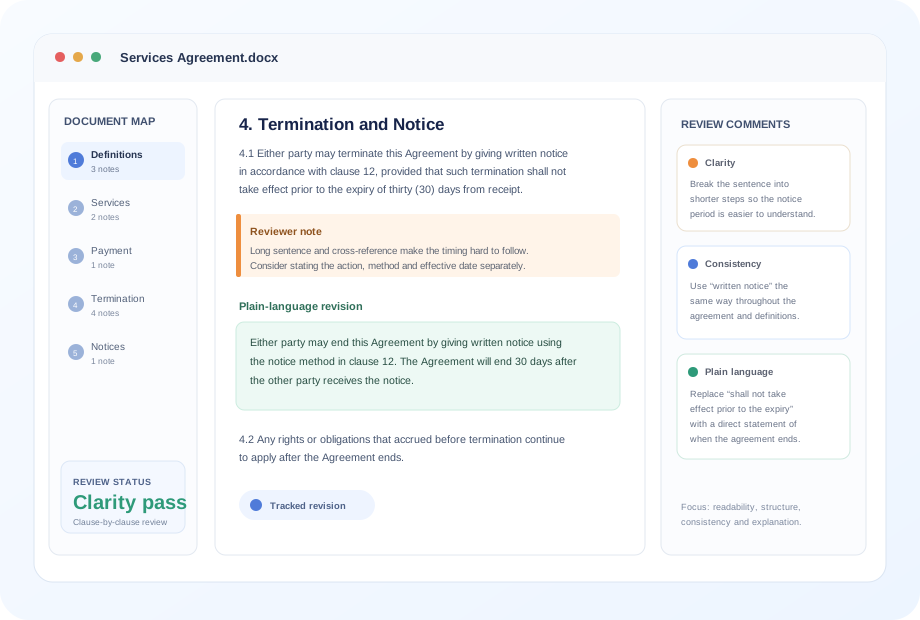
Original: Either party may terminate this Agreement by giving written notice in accordance with clause 12, provided that such termination shall not take effect prior to the expiry of thirty (30) days from receipt.
Readers must jump across sections to understand one operational step.
Wording may suit legal drafting but not managers, vendors or customers.
Headings, numbering and paragraph structure make key terms hard to find.
The exact scope is confirmed from your document, audience and objective. These are the main areas a plain-language contract review can focus on.
Shorter, more direct sentences with clearer sequencing.
Consistency in defined terms, labels and repeated language.
Clearer statements of who acts, what they do and when.
More readable conditions, exceptions, triggers and notice wording.
Navigation checks for clause references, numbering and structure.
Reader-focused explanation of complex passages where useful.
These services can complement each other, but they answer different questions. The distinction below keeps the scope clear.
Recommended use: obtain legal review where legal interpretation or enforceability matters, then use plain-language review to improve how the approved intent is communicated to its readers.
A structured path from document intake to a clearer working copy, with questions surfaced when the reviewer should not infer legal or commercial intent.
Share the agreement, audience and main clarity concerns.
Confirm review depth, outputs, deadline and boundaries.
Track recurring terms, parties, labels and cross-references.
Review sentence structure, logic flow and reader effort.
Flag ambiguity, missing context or intent that needs confirmation.
Rewrite clearly where meaning is sufficiently established.
Re-check terms, headings, numbering and document flow.
Deliver the agreed outputs for your final business or legal review.
The example below shows the difference between the original clause, the reviewer’s reasoning and a plainer version. It is illustrative language, not legal advice.
“Either party may terminate this Agreement by giving written notice in accordance with clause 12, provided that such termination shall not take effect prior to the expiry of thirty (30) days from receipt.”
“Either party may end this Agreement by giving written notice using the notice method in clause 12. The Agreement will end 30 days after the other party receives the notice.”
A simple six-stage engagement keeps the review scoped, traceable and focused on your document’s intended readers.
Share the agreement, audience, objective and clarity concerns.
We review the file and confirm boundaries, outputs and schedule.
The document is assigned for the agreed language and clarity review.
Clause wording, structure, terms and navigation are reviewed.
Comments explain changes and identify questions needing confirmation.
Use the clearer copy for your business owner or legal-counsel review.
These examples show where plain-language review may be useful. Final suitability depends on the document, intended audience and whether legal interpretation is required.
The methodology separates readability improvements from questions that require client or legal-counsel confirmation, helping reduce accidental changes to substantive intent.
Contract documents can contain commercially sensitive information. The service workflow should keep confidentiality, access and review boundaries visible from enquiry through delivery.
Files and instructions are treated as confidential service information through the designated workflow.
Scope should be limited to the people and materials required for the review.
The reviewer focuses on language and communication, not unsupported legal interpretation.
Where meaning is unclear, the safer action is to comment and ask rather than invent substantive intent.
Legal advice, enforceability and jurisdiction-specific legal assessment remain outside the plain-language service.
Published pricing guidance now starts at ₹4,000 for the baseline scope described above. Final pricing is confirmed after the actual document, complexity, requested depth and delivery requirements are reviewed.
Pages, words and number of clauses.
Light clarity pass or clause-level comments.
Required delivery window and reviewer availability.
Definitions, schedules, cross-references and formatting.
Number and depth of explanatory reviewer notes.
Multiple drafts, schedules or supporting files.
For documents that can follow normal review capacity and sequencing.
For tighter deadlines, subject to file length, complexity and availability.
For long agreements or review work split across agreed sections or versions.
Share your exact deadline, time zone, document length and preferred output so feasibility can be confirmed before work begins.
Questions specific to contracts and agreements plain-language review, including the important boundary between language review and legal advice.
It is a readability-focused review that makes clauses easier to understand by improving sentence structure, terminology consistency, headings, definitions, cross-references and explanatory wording while preserving the intended business meaning as far as the supplied text allows.
No. The service focuses on language, readability, structure and communication. It does not provide legal advice, determine enforceability, assess jurisdiction-specific legal risk or replace review by qualified legal counsel.
The service can be scoped for business agreements such as service agreements, vendor or supplier agreements, statements of work, NDAs, terms and conditions, policies with contractual wording and other documents where plain-language clarity is the main requirement.
The review is designed to preserve the intended meaning while improving how the wording is communicated. Where a clause is ambiguous or meaning cannot be safely inferred, the reviewer can flag it for client or legal-counsel confirmation rather than making an unsupported substantive change.
They can be included in the agreed scope. A plain-language review can check whether defined terms are used consistently and whether headings, numbering and cross-references help readers navigate the document.
The review workflow can provide a tracked-revision copy together with reviewer comments and a clean reading copy when that output is included in the confirmed scope.
Yes, where the intended meaning is sufficiently clear from the supplied material. If specialist legal interpretation is required, the wording should be confirmed by qualified legal counsel before or after the plain-language edit.
Pricing is confirmed after reviewing factors such as document length, clause density, number of versions, review depth, formatting complexity, deadline and whether detailed clause-by-clause comments are required.
Turnaround is confirmed after the document and requested scope are reviewed. Length, complexity, number of clauses, revision depth and deadline all affect scheduling.
Yes. Share any terminology list, house style, preferred definitions or audience guidance with the brief so the reviewer can apply it consistently within the agreed scope.
Contract files and instructions should be treated as confidential service information and submitted through the designated enquiry and delivery process.
Send the document type, approximate length, intended audience, main clarity concerns, preferred output, deadline and any legal-counsel notes or style instructions that the reviewer should follow.
Tell us what the agreement is for, who needs to understand it and where the wording is causing difficulty. The enquiry helps define a clear plain-language review scope without assuming legal intent.
Share the agreement type and the readers who need to use it.
Identify dense clauses, confusing definitions, notices, obligations or navigation issues.
Provide the document length, deadline and time zone so scheduling can be checked.
Include business-owner or legal-counsel notes that the reviewer must preserve or follow.
Share your contact details and document requirements so the scope, deadline feasibility and review approach can be assessed.