Course Modules & Lessons
Structured lesson content with clear sequencing, explanations, examples, recaps, and transitions.

Turn briefs, outlines, subject-matter notes, and existing materials into coherent course modules, lessons, learning activities, assessments, scripts, and review-ready training content built around the learner and the intended outcome.
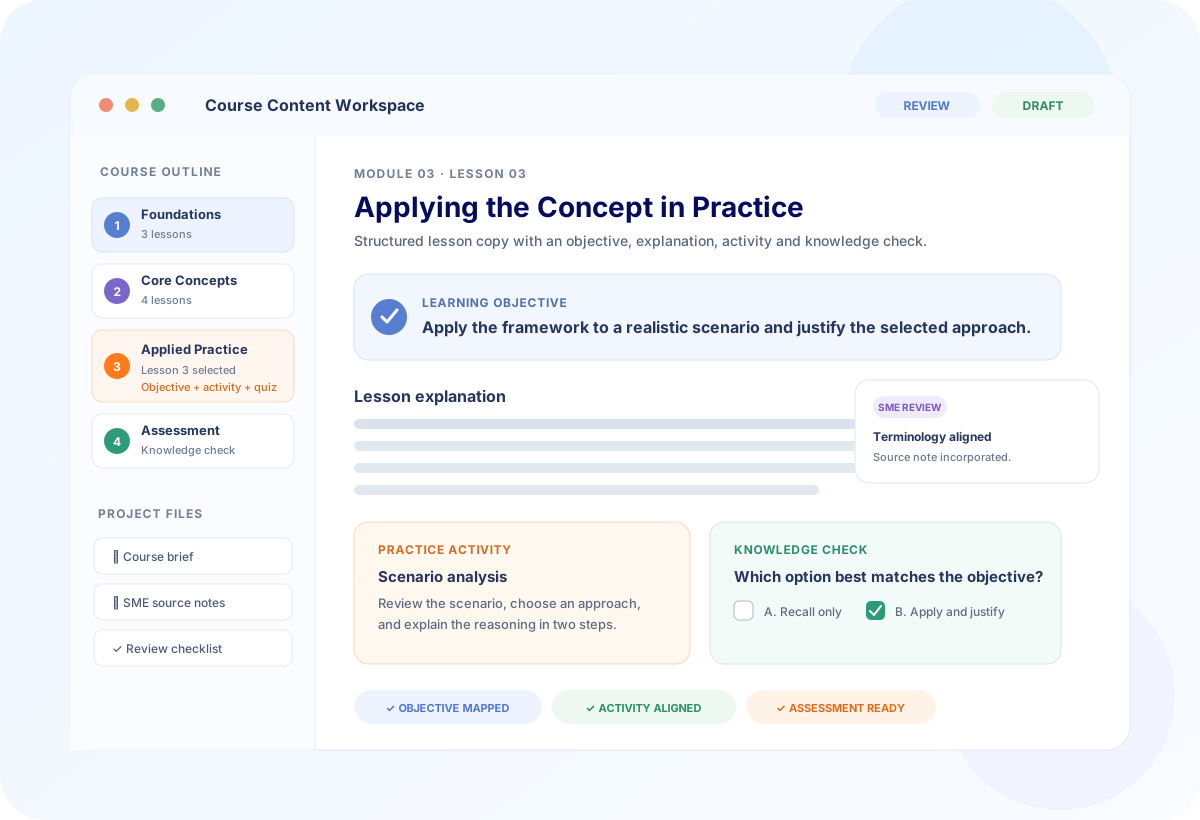
Modules, lessons, activities, and assessment flow
Language and depth shaped around the learner brief
Knowledge checks developed around the intended focus
Editable content organised for stakeholder review
A word-and-module starting scope makes course writing easy to budget while leaving room for deeper research, assessments, facilitator resources, or larger curriculum builds.
Suitable for: A defined module or lesson set built from an approved syllabus, SME notes, source pack, or existing course outline.
Original specialist research, extensive assessment banks, facilitator guides, multimedia scripts, visual design, and LMS authoring are outside the starting scope and can be quoted separately.
Course writing can cover the full learner journey—from outcome definition and lesson copy to activities, assessments, facilitator materials, and e-learning production scripts.
Structured lesson content with clear sequencing, explanations, examples, recaps, and transitions.
Outcome statements that clarify what learners should understand, practise, or demonstrate.
Knowledge checks, quizzes, question banks, scenarios, and assessment prompts aligned to the brief.
Facilitator notes, discussion prompts, activity instructions, workshop guidance, and supporting cues.
Screen-level copy, narration or voiceover scripts, interaction notes, and storyboard-ready content.
Workbooks, job aids, practice activities, summaries, glossaries, worksheets, and supporting resources.
A clear five-stage workflow keeps the course tied to the learner, source material, intended outcomes, and stakeholder review process.
Review the brief, audience, outcomes, source material, delivery format, and required content components.
Map modules, lesson sequence, learning objectives, activities, assessment points, and content depth.
Develop explanations, examples, scripts, activities, learner resources, and assessment content.
Check source alignment, learner clarity, instructional flow, terminology, consistency, and stakeholder notes.
Organise the approved content into editable, review-ready files with a clear handoff structure.
The focus is not simply on producing more text. Each section has a job within the learning journey and should connect logically to the next.
Course content can be shaped around how the learner will actually experience the material—independently, with an instructor, in a blended environment, or through short-format digital learning.
Screen-ready lessons, examples, practice, recap, and checks for independent study.
Facilitator notes, workshop copy, discussion prompts, exercises, and supporting learner material.
Content designed to connect instructor touchpoints with self-study, activities, and digital follow-up.
Narration, lesson scripts, explainer sequences, scene guidance, and visual-support notes.
Short, focused learning units with concise explanations, examples, prompts, and quick checks.
Exercises, reflection prompts, worksheets, scenarios, templates, and session-ready resources.
Course projects vary by audience and subject, but the writing still needs a clear structure, controlled terminology, appropriate examples, and a logical relationship between learning and assessment.
Course content can be scoped across academic, technical, business, and professional learning contexts using the source material supplied for the project.
Well-structured course writing is designed to make the content easier to follow, review, teach, and reuse across the intended learning journey.
The service is suited to organisations and experts who have knowledge to teach but need that knowledge turned into structured, learner-facing course material.
Modules, learner resources, and academic course material
Internal training, capability building, and enablement content
Reusable courseware, workshop content, and learner materials
Digital lessons, scripts, practice content, and assessment material
Expert knowledge organised into teachable learner-facing content
Member learning, professional education, and structured resources
Programme learning materials, guidance, and educational resources
Two common ways to use a Course Content Writing Service are building a course from source material or improving an existing course that needs clearer structure and consistency.
Useful when the knowledge exists but the learner journey, lesson sequence, activities, and assessment structure still need to be developed.
Useful when course material already exists but needs stronger progression, cleaner explanations, consistent terminology, better activities, or revised assessments.
A course content project can involve several specialist functions, with each role focused on a different part of the writing, assessment, review, and quality-control workflow.
Develops learner-facing explanations, examples, lesson flow, activities, and supporting copy.
Creates knowledge checks, scenarios, questions, answer logic, and assessment prompts.
Organises supplied sources and supporting material so drafting stays grounded in the approved content base.
Reviews clarity, tone, grammar, consistency, wording, headings, labels, and learner readability.
Checks final content against scope, objective alignment, assessment fit, terminology, and file completeness.
Drafts can be revised against consolidated SME and stakeholder feedback within the agreed project process.
Before delivery, course content is reviewed across objective alignment, learner clarity, source fidelity, consistency, and handoff readiness.
We check whether the lesson focus, activity, and assessment content reflect the intended outcome in the project brief.
Alignment ReviewWe review explanations, transitions, examples, instructions, and prompts for readability at the intended learner level.
Clarity ReviewSpecialist terms, definitions, and factual wording are checked against the source material and SME input supplied for the project.
Source ReviewHeadings, labels, terminology, tone, formatting patterns, question style, and recurring course elements are checked across modules.
Consistency ReviewFiles are organised so the receiving team can identify modules, lessons, assessments, review notes, and remaining stakeholder actions.
Final QAChoose the engagement shape that best matches the course project. Pricing and the delivery schedule are confirmed after the scope, content depth, review stages, and required deliverables are understood.
For one defined course that needs a complete module-and-lesson content structure.
Discuss Scope →For a larger curriculum or programme with multiple modules, topics, activities, and assessments.
Discuss Programme →For existing training that needs rewriting, reorganisation, stronger activities, or assessment alignment.
Plan a Refresh →For teams that expect recurring course updates, new modules, or continuing content development.
Discuss Support →Answers to common scoping questions about inputs, formats, assessments, specialist topics, revisions, pricing, turnaround, and final delivery.
A Course Content Writing Service develops learner-facing material for a course or training programme. Depending on the brief, the work can include module and lesson copy, learning objectives, explanations, examples, activities, knowledge checks, assessments, scripts, instructor guidance, and supporting learning resources.
Useful inputs include the target audience, course purpose, intended learning outcomes, delivery format, module list or outline, source material, subject-matter-expert notes, brand or style guidance, assessment expectations, and any stakeholder review requirements.
Yes. Course content can be developed from a structured brief, an existing curriculum or outline, subject-matter-expert notes, source documents, draft lessons, or existing training material that needs to be reorganised and rewritten for learners.
Yes. When both are in scope, objectives and assessment items can be developed together so that knowledge checks and questions reflect the intended learning focus rather than being added as unrelated end-of-module content.
Course content can be structured for self-paced digital learning, including concise lesson copy, screen-level scripts, examples, activities, knowledge checks, recap sections, and storyboard-ready content for later LMS or authoring-tool production.
Yes. When required by the project brief, learner-facing material can be accompanied by instructor or facilitator guidance, discussion prompts, activity instructions, workshop exercises, and supporting notes for live delivery.
Yes. Existing material can be reviewed for structure, clarity, repetition, consistency, learner level, terminology, activity fit, and alignment between objectives and assessments, then rewritten or reorganised within the agreed scope.
For specialist subjects, the writing should be grounded in the source material and subject-matter guidance supplied for the project. Technical terminology, definitions, examples, and claims are kept aligned with those approved inputs during drafting and review.
The handoff can be organised as editable, review-ready content such as module documents, lesson files, assessment banks, scripts, storyboards, instructor notes, and consolidated review notes, depending on the agreed project scope.
Pricing is scoped after the number of modules, content depth, source material, assessment requirements, review stages, and required deliverables are understood.
A delivery schedule is confirmed after the course scope, module count, content complexity, review process, and required handoff format are reviewed.
Revision requirements should be defined as part of the project scope. Stakeholder or subject-matter-expert feedback can then be handled against the agreed brief, source material, and review process so changes remain controlled and traceable.
Share the audience, course purpose, module scope, source material, delivery format, assessment needs, review process, and any deadline information so the project can be scoped appropriately.
The clearer the inputs, the easier it is to define the right writing depth, deliverables, and review workflow without making assumptions about your course.
Who the course is for, what they should learn, and where the content will be used.
Number of modules or lessons, approximate content depth, and required content types.
Curriculum, SME notes, references, draft content, policies, product documents, or existing training.
Stakeholder reviewers, SME feedback process, assessment requirements, file format, and delivery needs.
Send the project details below so the course content requirement can be reviewed and scoped around the required deliverables and review process.