D2C Brands
Polish product detail pages and launch catalogs.

Improve existing ecommerce product content so titles, descriptions, features, benefits, attributes, marketplace fields, and SEO metadata are easier to understand, consistent with your brand, and ready for structured catalog use.
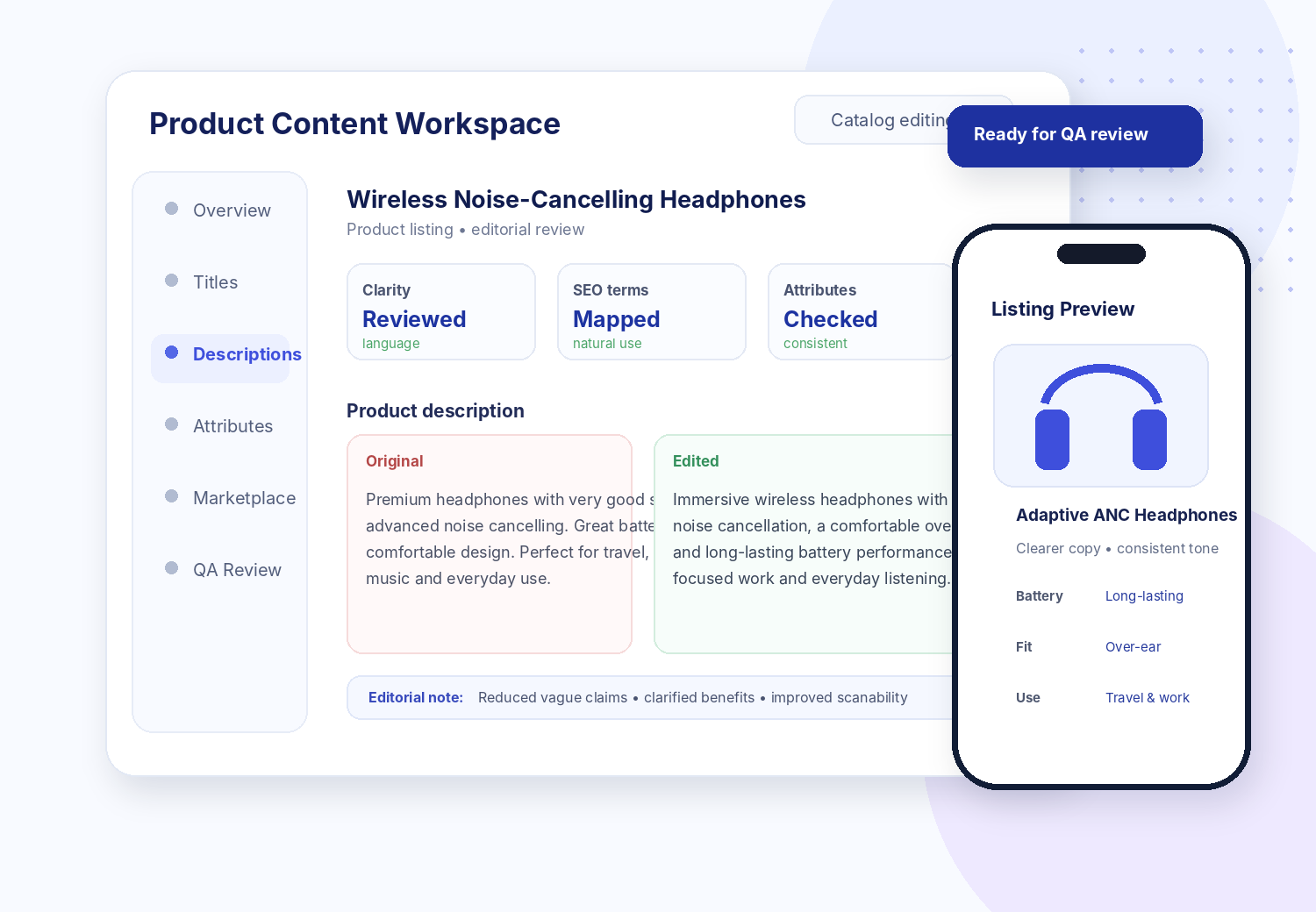
This starting batch is designed for existing catalog copy that already contains the core product facts but needs cleaner language, standardized fields and more consistent presentation.
Starting price
From ₹3,500
for up to 25 standard SKUs in one supplied content format
Suitable for: A 25-SKU batch of existing titles, bullets, descriptions or structured product fields.
Outside the starting scope: Net-new product copy, product research and marketplace operations are outside the base editing batch.
Faster delivery: Priority editing can be quoted for a smaller SKU set with clean structured source data.
Contentxprtz product content editing starts from ₹3,500 for up to 25 standard SKUs, including language correction, field standardization, channel checks and two batch revision rounds.
Polish product detail pages and launch catalogs.
Standardize multi-brand product information.
Refine listings around channel-specific fields.
Turn technical source data into clearer product copy.
Add editorial capacity to ecommerce content workflows.
Apply shared rules across structured product records.
Improve title clarity while keeping approved product names and key identifiers intact.
Refine existing descriptions for readability, structure, customer relevance, and brand tone.
Separate factual features from customer-facing benefits and remove vague or repetitive phrasing.
Standardize labels, terminology, units, field wording, and related structured product information.
Edit supplied listing fields around channel templates, character limits, and content rules provided with the brief.
Apply approved keyword guidance naturally while aligning terminology, tone, metadata, and repeated catalog patterns.
Review source content, fields, examples, and gaps.
Confirm voice, terminology, channel rules, and protected facts.
Refine titles, descriptions, bullets, attributes, and metadata.
Check consistency against the approved brief and source information.
Return content in the agreed field structure or working format.
Apply agreed editorial rules to the next catalog batch where required.
Product content editing works best when copy improvements are tied to source data, brand rules, customer readability, and a repeatable catalog structure.
Less vague, repetitive, or hard-to-scan product wording.
Shared tone, naming, capitalization, and terminology rules.
More orderly field wording and product-information presentation.
Natural use of approved search terms in relevant content fields.
These examples illustrate the type of editorial improvement the service can make. They are demonstration copy, not customer case studies or performance claims.
Remove duplicated wording, apply naming rules, and make the product type easier to identify.
Replace vague claims with clearer wording grounded in the supplied product information.
Align repeated field labels, units, capitalization, and terminology across related products.
Fit supplied content into marketplace fields, content rules, and character constraints.
Contentxprtz product content editing starts from ₹3,500 for up to 25 standard SKUs, including language correction, field standardization, channel checks and two batch revision rounds. Scope, pricing, and delivery timing are confirmed after the actual content volume and requirements are reviewed.
A defined set of product pages prepared for a launch or migration.
Editorial standardization across existing product records and repeated fields.
Recurring editing batches using an agreed set of editorial rules.
Create a project-specific editing checklist from supplied brand and channel requirements.
This section highlights the types of content problems a product editing workflow is designed to address.
Different writers, suppliers, or legacy imports can create uneven naming, tone, capitalization, terminology, and description structure across the same storefront.
Product pages often repeat generic phrases instead of explaining the supplied features and benefits in a clear, customer-friendly way.
Content may need to fit different listing fields, character constraints, taxonomy labels, or approved keyword instructions without changing underlying product facts.
Answers to common questions about scope, source data, catalog size, marketplace rules, SEO guidance, brand style, pricing, turnaround, and controlled product claims.
A product content editing service improves existing product information so titles, descriptions, features, benefits, attributes, metadata, and marketplace copy are clearer, more consistent, and easier to use without changing verified product facts.
The scope can include product titles, short and long descriptions, feature bullets, benefit statements, specifications, attributes, category copy, marketplace fields, SEO metadata, and structured catalog content.
Not exactly. Editing starts with existing product content and improves clarity, accuracy, consistency, structure, tone, and usability. Copywriting may involve creating new product messaging from a brief or rebuilding content more extensively.
Catalog projects can be scoped in batches with shared editorial rules so repeated fields, naming patterns, tone, and formatting are handled consistently. The final scope depends on catalog size, complexity, source quality, and required output format.
Marketplace-specific fields and supplied content rules can be incorporated into the editing brief. Provide the required template, character limits, prohibited wording, category rules, and any channel-specific instructions that must be followed.
Keyword guidance can be incorporated into product titles, descriptions, bullets, and metadata when you provide the target terms or approved SEO brief. The goal is natural, useful placement rather than keyword stuffing or unsupported ranking promises.
The editing workflow should treat supplied product facts, specifications, dimensions, ingredients, compatibility details, and compliance wording as controlled source information. Ambiguous or conflicting details should be flagged rather than guessed.
Yes. A supplied brand voice guide, terminology list, capitalization rules, naming conventions, prohibited claims, and example listings can be used as editorial references for the project.
Useful inputs include the current product copy, product data or specifications, target channels, brand style guide, approved terminology, SEO brief if applicable, marketplace templates, priority SKUs, and required deadline.
Pricing and delivery timing are confirmed after the catalog volume, content condition, number of fields, complexity, target channels, required checks, output format, and deadline have been reviewed.
Projects can be prepared around structured content such as spreadsheet rows, CSV-style catalog exports, PIM or CMS exports, marketplace templates, and product briefs when the required fields and output format are clearly defined.
The editing brief can distinguish between wording that may be improved and controlled claims that must remain unchanged. Editors should not invent performance, compliance, safety, sustainability, certification, or comparative claims that are not supported by your source information.
Share the catalog size, current content format, target channels, brand or marketplace rules, deadline, and the fields that need editing. That information helps define an accurate project scope without assuming unsupported pricing or turnaround.
Approximate number of products and the fields that need review.
Spreadsheet, export, product brief, marketplace template, or another structured input.
Brand voice, naming conventions, approved terms, restricted claims, and examples.
Target storefronts or marketplaces, required output format, and delivery date.
Provide enough information to assess the content volume, editorial depth, target channels, and required output.
Send your existing product content and the rules it needs to follow. The project can then be scoped around the actual catalog, channels, fields, and deadline.