Positioning Clarity
Define the audience, category, value, and distinction behind the message.
Turn scattered ideas, generic claims, and inconsistent language into a practical message system that explains your audience, positioning, value, differentiation, proof, and brand voice with greater clarity.
Brand messaging is most useful when the business knows what it does but the language customers see does not yet express that value clearly, consistently, or distinctively.
The exact scope should follow your brief. A brand messaging engagement can bring the core strategic components into one connected hierarchy instead of treating each line of copy in isolation.
A useful messaging system links the customer context to positioning, message pillars, proof, and voice—so individual phrases are traceable to a strategic reason.
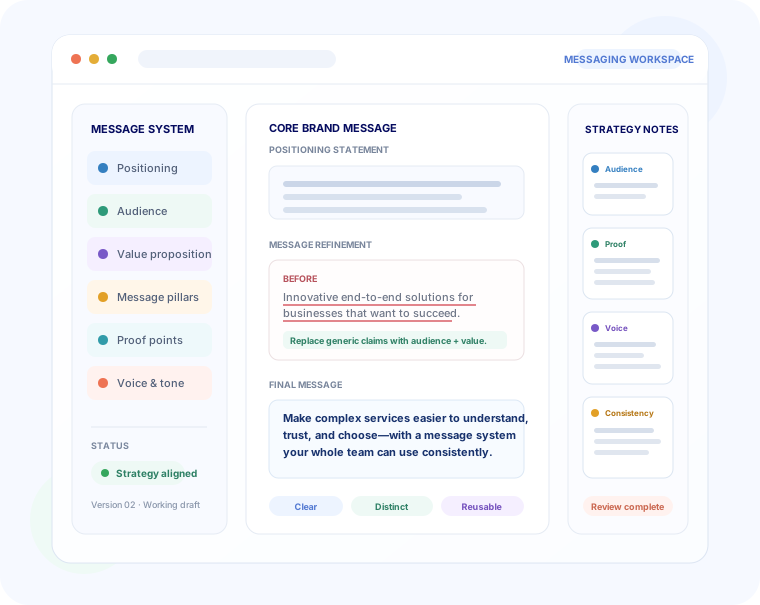
This illustrative example shows the difference between polishing a sentence and creating messaging with a defined audience, value, differentiation, and reusable logic.
We are a leading solutions provider offering innovative, end-to-end services that help businesses transform, grow, and achieve success.
Our experienced team delivers quality solutions tailored to your unique needs.
Audience: B2B teams selling complex services.
Problem: Prospects struggle to understand what makes the offer relevant or different.
Message: Replace broad claims with specific customer value, proof directions, and repeatable language.
Make complex services easier to understand, trust, and choose.
Build a practical message system that gives marketing, sales, and leadership a clearer way to explain the audience, value, differentiation, and proof behind the offer.
Both shape language, but they solve different problems. Messaging establishes the strategic foundation; copywriting applies that foundation to a specific communication asset.
Not every project needs every component. The final mix should reflect the business model, audience, available research, existing brand work, and the channels where the messaging will be used.
Who the message is for, what they are trying to solve, and what they need to understand.
The category context, core value, and meaningful distinction behind the offer.
A concise articulation of the value the intended audience should recognise.
Priority themes that organise the brand story into a repeatable structure.
Approved evidence and concrete details that support key message claims.
Practical language principles and tone shifts for different communication contexts.
Short-form descriptions that help teams explain the company consistently.
Terminology, claim boundaries, do/don't guidance, and consistency reminders.
The workflow moves from evidence and context to strategic hierarchy, message development, review, and a clean messaging system that can be put into use.
Deliverables should reflect the confirmed scope. A typical messaging engagement can combine a working strategy file with clean reference-ready messaging and practical implementation notes.
The output should become narrower and more usable at each stage: broad source material is organised into strategic priorities, then translated into concise language teams can actually apply.
Strong brand messaging is not only polished wording. It should remain aligned to audience context, supported claims, message hierarchy, voice, and the intended use across teams and channels.
Check that the message reflects the intended audience, offer, category context, and positioning direction.
Remove or flag unsupported superlatives, guarantees, statistics, or proof claims that need client evidence.
Review whether primary messages, pillars, support points, terminology, and examples reinforce one another.
Check whether the language is clear, on-brand, repeatable, and practical for the teams expected to use it.
Brand messaging can be applied across different business models and communication challenges. The strategy should be adapted to the actual offer, audience, evidence, and buying context supplied in the brief.
Messaging work can involve internal positioning, commercial details, customer insight, product plans, and unpublished language. Those materials should be handled through the designated service workflow as confidential client information.
The service should improve and organise the language around your business without claiming ownership of your underlying brand, commercial information, customer insight, product knowledge, or approved strategic decisions.
No fixed price or delivery time has been supplied for Brand Messaging Service, so this page does not invent one. The quote and schedule should be confirmed after the scope and source material are reviewed.
For planned brand messaging work where the scope can follow the normal review sequence.
For tighter project windows, subject to the confirmed scope and available delivery capacity.
For urgent requirements where an accelerated schedule is practical and explicitly agreed.
Pricing should reflect the work actually required rather than a generic package copied from an unrelated service.
A transparent scope-based quote and confirmed delivery schedule should be provided after the brief and available materials are reviewed.
Brand messaging is especially useful when a business is changing, expanding, launching, repositioning, or simply struggling to explain its value with enough clarity and consistency.
When the business vision is clear internally but difficult to express in concise customer-facing language.
When campaigns and content need a stronger common message foundation across channels.
When different team members explain the offer differently or rely on inconsistent value claims.
When a new offer needs audience framing, value language, differentiation, and proof direction before launch copy is written.
When the existing message no longer reflects the audience, market context, offer mix, or strategic direction.
When several capabilities need a clearer hierarchy so customers can understand the overall brand and individual offers.
Answers to common questions about strategy scope, positioning, copywriting, source material, claims, confidentiality, turnaround, pricing, and how a messaging system can be used.
A Brand Messaging Service develops the strategic language your business uses to explain who it is for, what it offers, why it matters, how it is different, and how that message should sound across customer-facing channels.
Depending on the agreed scope, the work can cover audience framing, positioning, value proposition, differentiators, message pillars, proof points, brand voice and tone, elevator pitch, boilerplate language, headline directions, and reusable messaging guidance.
No. Brand messaging creates the strategic message system behind your communications. Copywriting applies that system to a specific asset such as a landing page, campaign, email, brochure, or advertisement.
Yes. Existing research, positioning work, customer insights, brand guidelines, sales material, website copy, pitch decks, and internal notes can be reviewed and used as inputs when they are part of the project brief.
The service can identify vague claims, duplicated ideas, unclear differentiation, tone inconsistencies, unsupported statements, and gaps between what the business wants to communicate and what customers need to understand.
Website copy can be reviewed as an input and selected copy blocks can be refined when included in scope, but a full website rewrite is a separate copywriting requirement unless it is explicitly included in the agreed project.
Where a usable voice already exists, the messaging work can preserve and clarify it. When the voice is unclear or inconsistent, the project can define practical voice principles and examples for future communication.
A well-structured messaging system is designed to provide reusable language and hierarchy that teams can adapt across websites, presentations, campaigns, sales conversations, product pages, and other approved channels.
Claims should be grounded in information you provide. Unsupported statistics, guarantees, awards, certifications, customer outcomes, or market-leading claims should not be added simply to make messaging sound stronger.
Turnaround depends on the agreed scope, the volume and condition of source material, the number of messaging components, stakeholder input, and any review rounds included in the project. A delivery schedule should be confirmed after the brief is reviewed.
Brand messaging is quoted according to the confirmed project scope rather than an invented fixed price. Factors can include the number of messaging components, research and review requirements, stakeholder inputs, complexity, and delivery needs.
Client briefs, internal documents, draft messaging, commercial information, and unpublished materials should be handled as confidential service information through the designated submission and delivery process.
The focus is not on making every sentence sound more promotional. It is on creating a clearer strategic message structure that can guide future communication with consistency and evidence-aware language.
Share what your business sells, who it needs to reach, where the current message is getting stuck, and which materials already exist. The scope can then be reviewed before pricing and delivery are confirmed.
Remove claims that could describe almost any competitor.
Anchor the message in a recognisable customer problem and decision context.
Flag statements that need evidence before they become outward-facing claims.
Keep word choice and sentence style consistent with the intended brand character.