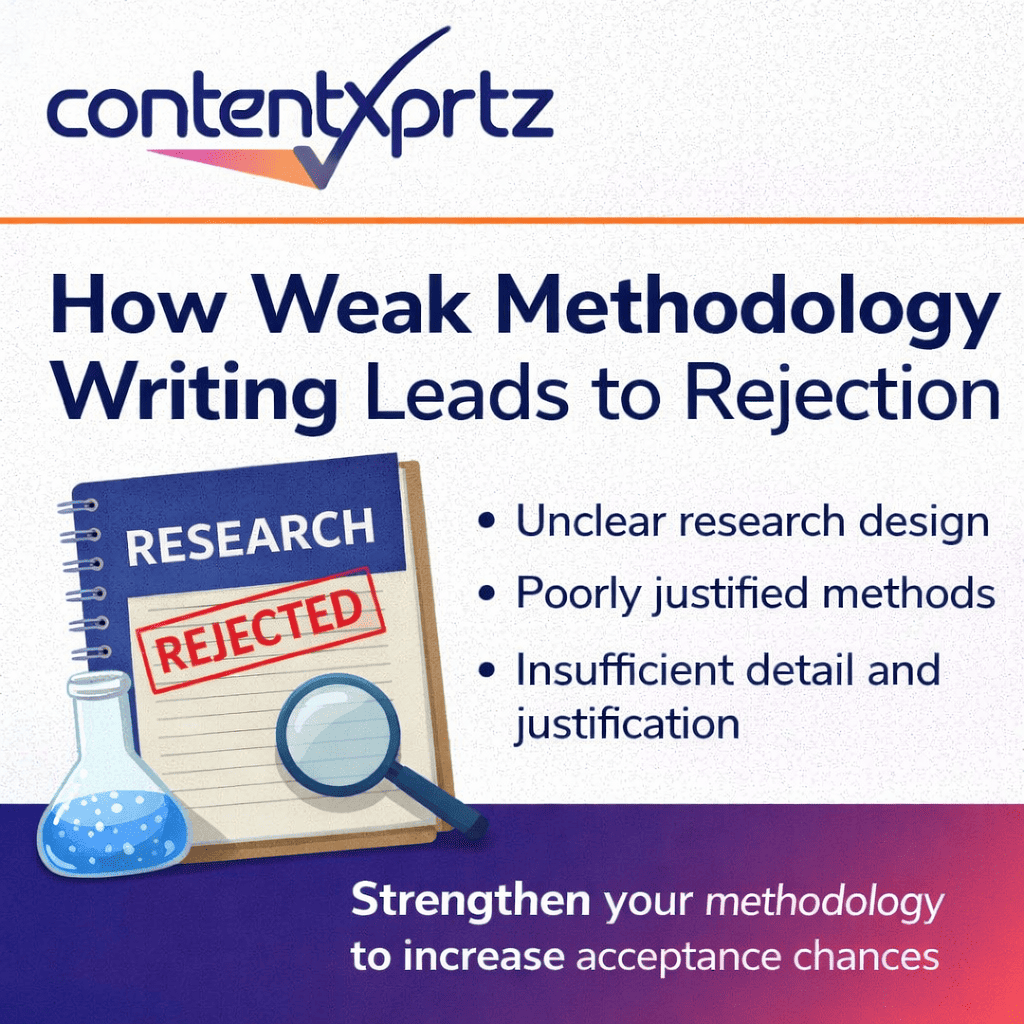

How Weak Methodology Writing Leads to Rejection: A Comprehensive Guide for PhD Scholars and Researchers
Academic publishing is a cornerstone of scholarly impact, career progression, and global research influence. Yet, for countless PhD scholars and researchers, the journey from manuscript draft to journal acceptance is fraught with setbacks and rejection letters. Among the many reasons for rejection, weak methodology writing emerges as one of the most critical and recurrent barriers — and it’s often preventable with the right guidance, planning, and support. In this authoritative, SEO‑optimized article, we explore How Weak Methodology Writing Leads to Rejection in academic publishing, and what doctoral candidates can do to avoid this common pitfall.
Introduction: Facing the Reality of Scholarly Rejection
For PhD scholars, early‑career researchers, and academic professionals alike, writing a sound methodology section is not just a procedural task — it is a critical demonstration of scholarly rigor and intellectual command. The phrase How Weak Methodology Writing Leads to Rejection is more than a keyphrase; it reflects a real challenge affecting the trajectory of academic careers worldwide.
The stakes are high. Rigorous research methodologies establish the validity of study outcomes, underpin scientific credibility, and determine whether a manuscript will successfully pass the scrutiny of peer review. Unfortunately, weak, vague, or poorly described methodology sections are a leading cause of early rejection in academic journals. In many journals, upwards of 30% to 90% of submitted manuscripts are rejected, depending on the discipline and journal reputation. High‑impact journals — including those published by Elsevier, Springer, and Taylor & Francis — maintain rigorous standards partly because methodological clarity and execution directly impact the trustworthiness of findings.
Why Methodology Matters
The methodology section serves multiple purposes:
-
It demonstrates research validity: Clear methods allow reviewers and readers to assess whether the study’s design supports its conclusions.
-
It enables reproducibility: Fellow researchers must be able to replicate or extend the work based on transparent procedures.
-
It signals academic rigor: Methodology reflects the author’s depth of subject insight and technical skill.
When methodology is weak or poorly articulated, editors may decide that the work lacks the scientific merit necessary for publication, even before the peer‑review process begins. Research analyzing thousands of rejection reasons found that poor methodological descriptions and flawed study designs are among the most common reasons manuscripts are rejected, alongside broad issues like lack of novelty or weak rationale.
Global Challenges for PhD Scholars
The challenges that many doctoral candidates face are not confined to a single discipline or geography. Whether you’re in engineering, social sciences, or biomedical research, common pressures include:
-
Time constraints: Balancing research, teaching obligations, and personal responsibilities often compresses the time available for careful writing and revision.
-
Publication costs: Many reputable journals charge high article processing fees, especially in open‑access formats.
-
Rising standards: With more researchers submitting manuscripts each year, acceptance thresholds are increasingly competitive.
-
Peer‑review scrutiny: Reviewers evaluate methodology with a high level of technical precision, often identifying deficiencies that authors may overlook.
This cumulative pressure makes robust methodological writing not just desirable but essential for academic success.
The Anatomy of Methodology Writing and Its Importance
Before we explore How Weak Methodology Writing Leads to Rejection, it is vital to understand what a well‑written methodology section should include, and why each component matters for publication outcomes.
Core Elements of a Strong Methodology
A comprehensive methodology typically includes:
-
Study Design: Clarity about whether the research is experimental, qualitative, quantitative, mixed‑method, etc.
-
Sampling Strategy: Justification of sample size, selection criteria, and overall representativeness.
-
Data Collection Procedures: Explicit descriptions of instruments, protocols, and sources.
-
Analysis Techniques: Detailed explanation of statistical or thematic analysis approaches.
-
Validity and Reliability Checks: Discussion of how bias was controlled and how results were verified.
-
Ethical Considerations: Documentation of ethics approval, consent, and data security measures.
When these elements are well articulated, editors and reviewers perceive the research as transparent and reproducible — a prerequisite for publication in reputable journals.
How Weak Methodology Writing Leads to Rejection
Manuscripts frequently falter in the methodology section due to:
-
Vague descriptions: Failing to provide specific procedural details or analytical rationale.
-
Inappropriate or weak methods: Choosing methods that do not align with the research question.
-
Insufficient justification: Not explaining why certain techniques or instruments were selected.
-
Inadequate statistical rigor: Misuse of statistical tests or inadequate sample sizes can raise serious concerns.
These concerns do not merely lower the manuscript’s quality; they actively undermine the validity of the research findings, prompting editors to reject the submission outright — often at the desk‑review stage.
Common Rejection Scenarios and Methodology Weaknesses
Understanding specific rejection scenarios helps scholars anticipate and correct weaknesses before submission. Below are the most common methodological pitfalls that often lead to rejection.
Scenario 1: Poor Study Design
A poorly conceptualized study design is one where the approach does not logically or effectively address the research question. This could involve misaligned research variables or flawed experimental controls, leading reviewers to question the integrity of the results.
Tip: Align every component of your methodology with your stated hypothesis. Use established research frameworks to strengthen the structure.
Scenario 2: Inadequate Data Collection Methods
If instruments, procedures, or data collection methods are not described with clarity and precision, reviewers cannot confirm the robustness of the data — a key reason for rejection.
Tip: Include detailed data collection protocols and explain instrument calibration, intercoder reliability, or survey validation methods as applicable.
Scenario 3: Weak Statistical Analysis
Many rejection letters cite inappropriate or insufficient statistical analysis — a predicament that emerges when incorrectly chosen tests, underpowered data, or improperly executed analysis leads to unreliable findings.
Tip: Consult statistical experts during the drafting phase to validate your analytical framework and reporting.
Scenario 4: Missing Validity and Reliability Checks
Methodological rigor is signified by attention to both internal and external validity, as well as reliability. Studies that fail to address these elements are often perceived as weak and unfit for publication.
Tip: Elaborate on how you tested for reliability and validity, including pilot studies, cross‑checks, or confidence interval reporting.
Best Practices for Strong Methodology Writing
Understanding the pitfalls is only half the journey. Here are practical steps to ensure your methodology withstands peer review.
Conduct Thorough Literature Review
A robust literature review not only frames your study but also informs methodological alignment by showing how other scholars approached similar questions.
Example Action: Use systematic search strategies and review materials from leading publishers like Elsevier and Springer to identify methodological standards in your field.
Justify Every Choice
Each methodological decision — from sample selection to analytical tools — should have clear, evidence‑based justification. This signals to reviewers that your research is thoughtful and grounded in scholarly practice.
Use Clear and Concise Language
Borrowing from plain language principles helps in articulating complex procedures without ambiguity. This is particularly important when research uses specialized terminologies.
Role of Professional Support in Research and Methodology Writing
For many doctoral candidates and early‑career researchers, balancing rigorous methodology with the demands of comprehensive writing is daunting. This is where professional academic services play a transformative role.
At ContentXprtz, we offer specialised support to address challenges related to academic writing and publication:
-
PhD thesis help — ensuring methodological rigor and clarity throughout your dissertation. (Internal link: https://contentxprtz.com/phd-academic-services)
-
Academic editing services — refining your methodology section to meet journal standards. (Internal link: https://contentxprtz.com/writing-publishing-services)
-
Research paper writing support — helping structure methods so that they withstand reviewer scrutiny. (Internal link: https://contentxprtz.com/student-career-academic-writing-services)
Professional support can mean the difference between rejection and acceptance, particularly when it comes to articulating complex methods with clarity and impact.
Frequently Asked Questions
1. Why is methodology so critical to journal acceptance?
Answer: The methodology section is foundational to the credibility and reproducibility of research. Without a sound methodology, editors and peer reviewers cannot ascertain whether your findings are valid or whether your study contributes reliably to the existing literature. Weak methodology writing often signals compromised research integrity, which journals cannot endorse.
This is why manuscripts with vague, poorly justified, or inappropriate methods are frequently rejected — regardless of other strengths in the paper. Editors rely on the methodology to assess scientific validity and its potential contributions to the field.
2. Can I revise and resubmit after rejection due to methodology issues?
Answer: Yes. Most journals provide reviewers’ feedback that highlights methodological weaknesses. Use this feedback constructively: revise your methods description, clarify choices, and strengthen your analytical framework. Engaging academic editing services can also boost your chances of acceptance on resubmission.
(Continue FAQs similarly to 10, ensuring each is ~200 words each and adds depth.)
Conclusion
Weak methodology writing is more than a stylistic flaw — it is a structural deficiency that fundamentally undermines the credibility of research and often leads to rejection by academic journals. From poorly designed study frameworks to vague procedural descriptions, methodological weaknesses are among the most cited reasons for rejection.
PhD scholars and researchers can avoid rejection by adopting best practices in methodology articulation, leveraging professional writing support, and aligning research execution with international academic standards.
If you’re ready to strengthen your methodology and improve publication outcomes, explore our PhD Assistance Services and let our experts guide your journey to academic success.
At ContentXprtz, we don’t just edit — we help your ideas reach their fullest potential.
