For PhD What Is Minimum Qualification? A Practical Eligibility Guide
For PhD what is minimum qualification is a deceptively simple question because there is no single worldwide rule. The academic credential that makes you eligible can change by country, university, discipline, degree structure, and even by the specific doctoral project. In India, current UGC regulations provide more than one route: a qualifying master’s degree is one route, while an eligible four-year/eight-semester bachelor’s degree can also create a direct pathway under specified marks criteria. In the United States, many graduate schools treat a recognized bachelor’s degree or international equivalent as the basic university-level credential for doctoral admission. In the United Kingdom, the picture is mixed: some research programs accept a strong four-year undergraduate qualification, while others expect or explicitly require a relevant master’s degree.
That means the phrase minimum qualification for PhD should be understood as the first eligibility gate, not as a promise of admission. A department may also assess your subject background, grades, research experience, proposal, writing sample, references, entrance-test performance, interview, English proficiency, and fit with available supervisors. Funding can create a separate layer of competition. Two applicants can both be formally eligible while only one has the preparation that a particular research group needs.
Prospective doctoral students also face practical uncertainty. Is 55% enough after a master’s? Can a four-year bachelor’s lead directly to a PhD? Is NET, JRF, GATE, GRE, or another entrance test compulsory? Can you switch disciplines? Do you need publications before applying? These are better answered from official regulations and program pages than from old forum posts or one-size-fits-all advice. Your task is to identify the rule that governs your application route and then build evidence that you are ready for independent research.
This guide explains the academic minimums, the difference between eligibility and competitiveness, country-level patterns, common application documents, research-readiness expectations, and mistakes to avoid. It also shows how ethical academic support can help with proposal clarity, academic editing, and document presentation without replacing your ideas or misrepresenting your credentials. Contentxprtz supports researchers with research support, PhD thesis help, and academic editing services when those services fit the scholar’s genuine needs.
Quick Answer: For PhD What Is Minimum Qualification?
The shortest reliable answer is: you normally need a recognized prior university degree that meets the doctoral program’s academic threshold, but the required level can be either a bachelor’s or a master’s depending on the system and program.
In India, the UGC Ph.D. Regulations 2022 establish a master’s-entry route and a four-year bachelor’s-entry route. The master’s route generally requires at least 55% marks or equivalent grade; the four-year bachelor’s route specifies at least 75%, subject to the permitted relaxations and the institution’s admission process. In the U.S., universities such as Stanford Graduate Admissions state a bachelor’s degree or international equivalent as the university-level minimum for graduate study. In the UK, individual doctoral courses can differ considerably, as shown by Oxford’s DPhil in Computer Science, which lists routes involving a strong four-year degree or a three-year degree plus a master’s.
Your next step is therefore to check the current program page, not just the country-level rule. Formal eligibility, competitive selection, and funding eligibility are three different questions.
Key Takeaways
- A PhD does not have one universal minimum qualification worldwide.
- In India, current UGC rules include both master’s and eligible four-year bachelor’s routes.
- Many U.S. PhD programs allow direct application after a recognized bachelor’s degree.
- Some UK doctoral programs require a master’s; others accept a sufficiently strong four-year undergraduate qualification.
- Minimum eligibility does not guarantee admission, supervisor availability, or funding.
- Research fit, methods preparation, references, proposal quality, and interviews can matter as much as the degree label.
- Always use the current university or department admission page as the final authority for your application.
What This Page Covers
- The basic academic qualifications commonly used for PhD admission
- India-specific UGC eligibility routes and marks thresholds
- Direct PhD after bachelor’s versus PhD after master’s
- How U.S. and UK entry patterns differ
- Entrance tests, research experience, documents, and supervisor fit
- Common eligibility mistakes and practical applicant examples
- How ethical academic support can improve authentic application materials
Table of Contents
Methodology and Academic Sources
This article distinguishes between regulatory minimums and program-level selection. For India, the central reference is the University Grants Commission’s 2022 PhD regulation, including the published eligibility provisions for master’s and four-year bachelor’s routes. For international comparison, the article uses official graduate-admissions information from recognized universities rather than relying on commercial admission summaries.
Because doctoral rules can change by admission cycle, the program’s current official page should always be checked before applying. A university-wide graduate-school requirement may also be supplemented by a department-level rule. For example, Princeton Graduate School states a bachelor’s degree as a general eligibility requirement, while individual programs can impose additional expectations.
What “Minimum Qualification for PhD” Means in Academic Context
Minimum qualification means the lowest formal academic credential and threshold that permits an application to be considered. It is not the same as the profile of a typical successful applicant.
Admissions language often separates three layers. First is eligibility: whether your prior degree, marks, subject, and any mandatory test meet the published rule. Second is selection: whether the department judges your research preparation, proposal, references, and fit strong enough for admission. Third is funding: whether you qualify for a scholarship, studentship, fellowship, assistantship, or funded project. You may pass the first layer and not the second or third.
| Area | Minimum eligibility question | Competitive admission question |
|---|---|---|
| Prior degree | Is the bachelor’s/master’s route accepted? | How strong and relevant was your preparation? |
| Marks/GPA | Do you meet the stated threshold? | How do your grades compare with the applicant pool? |
| Research | Is prior research formally required? | Can you demonstrate research judgment and independence? |
| Proposal | Is a proposal required? | Is the question original, feasible, and well matched to faculty expertise? |
| Tests | Is an entrance or language test mandatory? | Does your result strengthen or weaken the overall application? |
| Supervisor | Must you identify one before applying? | Is there genuine topic and methods fit, capacity, and funding? |
This distinction helps prevent a common mistake: treating the threshold as a target. If a program requires 55%, a 55% record may make you eligible but does not necessarily make you competitive for a heavily subscribed research area.
For PhD What Is Minimum Qualification in India?
Under the UGC Ph.D. Regulations 2022, India has both a master’s-level eligibility route and a route after a four-year/eight-semester bachelor’s degree. Universities still run their own admission processes within the applicable framework.
Route 1: Master’s degree pathway
The UGC regulation describes candidates who have completed a one-year/two-semester master’s after a four-year bachelor’s, or a two-year/four-semester master’s after a three-year bachelor’s, or an equivalent qualification. The master’s-level threshold is at least 55% marks in aggregate or an equivalent grade, with permitted relaxation for specified categories under the regulations.
Route 2: Four-year bachelor’s pathway
The same regulation provides that a candidate seeking admission after a four-year/eight-semester bachelor’s degree should have a minimum of 75% marks in aggregate or an equivalent grade, again subject to permitted relaxation for specified categories. This route is especially important for students who assume that a master’s is always legally compulsory before doctoral study in India.
Applicants should read the exact admission notice for the year they apply. The notice can define relevant disciplines, entrance-test format, interview weighting, exemptions, proposal requirements, supervisor allocation, and reservation provisions. A national-level rule does not remove the need to meet department-specific academic preparation.
Can You Do a PhD After a Bachelor’s Degree Abroad?
Yes, direct PhD entry after a bachelor’s degree is common in some academic systems, particularly in the United States, but it is not universal. Many U.S. doctoral programs integrate advanced coursework, qualifying examinations, and research training into the PhD itself, so a separate master’s may not be required before entry.
Stanford’s graduate eligibility page states that applicants must hold or expect to hold a U.S. bachelor’s degree or international equivalent from a recognized institution. Princeton similarly uses the bachelor’s degree as the general graduate-school eligibility baseline. Individual departments can still require specific preparation, prior coursework, research experience, or higher academic performance.
In the UK, program structures vary more visibly by field. Oxford’s DPhil in Computer Science, for example, lists a strong four-year undergraduate degree as one route and a three-year undergraduate degree plus a relevant master’s as another. By contrast, some humanities and social-science DPhil programs explicitly require a strong master’s degree. The lesson is practical: do not generalize from one university, one discipline, or one country label.
| System | Common minimum pattern | What to verify |
|---|---|---|
| India | Master’s route or eligible 4-year bachelor’s route under UGC framework | Marks, relaxation, entrance route, interview, subject relevance |
| United States | Bachelor’s degree or equivalent often sufficient to apply | Department prerequisites, research fit, language tests, funding |
| United Kingdom | Varies: strong bachelor’s in some fields; master’s expected/required in others | Course-specific entry requirement and international equivalency |
| Other systems | Varies by national framework and university | Degree equivalency, research master’s requirements, supervisor model |
Do Entrance Tests, NET, JRF, GATE, GRE, or English Scores Count as Minimum Qualification?
They can be part of eligibility or selection, but the required test depends on the institution and program. A degree threshold and a test requirement answer different questions. The degree shows your academic level; the test may be used for eligibility, ranking, fellowship selection, subject readiness, or language proficiency.
In India, doctoral admission notices may use institutional entrance tests and interviews, recognized national-level qualifications, or specific exemption routes. Do not assume that NET/JRF or GATE is required in every discipline, and do not assume that a qualifying score means the university must admit you. The current admission notice should explain how each score is treated.
For international applications, GRE policies differ by program and can change. English proficiency requirements may apply depending on your citizenship, prior education, and institutional policy. Stanford, for example, publishes a separate English proficiency standard for applicants who do not meet its exemption criteria. Always check whether the score must be valid on the application deadline or enrollment date.
What Else Do Universities Look for Beyond the Minimum Degree?
Doctoral admissions committees look for evidence that you can develop and complete original research, not merely that you possess the correct certificate. The exact evidence differs by field, but the following elements are common.
Research preparation
A dissertation, thesis, research internship, laboratory project, field study, archival project, substantial data analysis, coding research, or professional research assignment can show that you understand how questions become evidence-based work.
Subject and methods preparation
Your prior courses should support the proposed project. A candidate entering econometrics, machine learning, clinical research, textual criticism, or ethnography may need very different methods foundations.
Proposal or statement quality
A good document makes the research problem, motivation, fit, feasibility, and next steps easy to understand. If you have developed the intellectual content yourself but need language and structure refinement, ethical editing support can improve presentation while preserving authorship.
References and academic credibility
Strong references usually come from people who can evaluate your academic work, research habits, technical ability, judgment, independence, or professional research performance. Generic praise is less useful than concrete evidence.
Supervisor and program fit
Your topic must fit available expertise and capacity. A brilliant proposal can still fail if no suitable supervisor is available or the department is not accepting students in that area.
Why Students and Professionals Get Confused About PhD Eligibility
PhD pathways are easy to misunderstand because degree structures have changed and international systems use different labels. A three-year bachelor’s, four-year honours degree, integrated master’s, professional degree, MPhil, and course-based master’s may be treated differently across institutions. Applicants also encounter old online advice that predates newer regulations.
Another source of confusion is the difference between eligibility and readiness. A working professional with a relevant master’s may be formally eligible but may need to demonstrate recent research methods. A four-year bachelor’s graduate may meet a marks threshold but still need stronger evidence of independent research. A published student may appear research-active but still need a clearer proposal and better supervisor fit.
Cost and timing also matter. Some students assume they must pay for a master’s before even checking whether direct doctoral entry exists. Others apply too early because they want to save time, even though a research-oriented master’s would meaningfully strengthen their methods and topic development. The best route is the one that makes you both eligible and genuinely prepared.
Step-by-Step: How to Check Whether You Qualify for a PhD
1. Identify the exact program and intake
Eligibility can change by department and year. Start with the official course or doctoral admission page for the intake you want, not a generic university homepage.
2. Match your highest degree to the accepted route
Check whether the program accepts a bachelor’s, requires a master’s, or lists more than one route. If your degree is international, confirm equivalency rather than converting it yourself.
3. Check the grade or marks threshold
Read how percentages, GPA, classifications, and permitted relaxations are handled. Avoid informal conversions unless the university instructs you to use them.
4. Confirm subject relevance and prerequisites
Look for required coursework, methods, mathematics, laboratory training, professional registration, clinical credentials, language proficiency, or other field-specific preparation.
5. Check entrance-test and language requirements
Verify the exact test, exemption route, validity period, and minimum score. Do not rely on a previous admission cycle.
6. Assess research readiness
List your dissertation, projects, methods, publications, conference work, internships, research employment, datasets, or independent study. Then connect them to the proposed doctoral area.
7. Study supervisor and department fit
Read current faculty profiles and recent research. If the program expects supervisor contact before application, write a concise, specific message showing genuine fit.
8. Prepare documents early
Create a checklist for transcripts, references, statement, proposal, CV, writing samples, translations, portfolio, test scores, and funding documents. Use scholarly proofreading only after the factual and intellectual content is complete.
Common PhD Qualification Mistakes to Avoid
- Using an old regulation or old admission notice. Always check the current cycle.
- Assuming a master’s is always compulsory. Direct-entry routes exist in several systems.
- Assuming a bachelor’s is always enough. Some disciplines and doctoral programs explicitly require postgraduate preparation.
- Confusing minimum marks with competitive marks. Eligibility is only the first screening condition.
- Ignoring subject prerequisites. A degree may be recognized but still not provide the needed disciplinary or methods preparation.
- Treating NET/JRF, GATE, or GRE as universally required. Test policies are program-specific.
- Applying without checking supervisor capacity. Research fit can be decisive.
- Overstating publications or research roles. Academic credibility depends on accurate, traceable claims.
- Submitting an unclear proposal. Strong ideas can be weakened by vague scope, poor structure, or unsupported claims.
- Using editing support unethically. Editing should improve clarity while the applicant remains responsible for ideas, evidence, claims, and credentials.
Practical Examples: Which PhD Qualification Route Fits?
Example 1: Four-year bachelor’s graduate in India
Situation: A student completes a four-year honours degree with a substantial final-year research project and wants to apply directly for a PhD. Common confusion: The student assumes a master’s is mandatory because older advice says so. Correct approach: Check whether the current university notice implements the four-year bachelor’s eligibility route under the UGC framework, verify the required marks and subject fit, then prepare for the institution’s selection process. How expert guidance can help: Ethical research support can help the student organize a proposal and present the undergraduate research experience clearly without exaggerating it.
Example 2: U.S. direct-entry applicant with a bachelor’s degree
Situation: An engineering graduate wants to apply to U.S. PhD programs without first completing an MS. Common confusion: The applicant thinks skipping a master’s will automatically make the application weaker. Correct approach: Confirm that the graduate school and department accept bachelor’s-level entry, then show advanced coursework, research projects, coding or laboratory experience, strong recommendations, and fit with faculty research. How expert guidance can help: A careful review of the statement can improve clarity and remove generic claims while leaving the research narrative authentically the applicant’s.
Example 3: Humanities applicant targeting a UK DPhil
Situation: A student with a strong three-year bachelor’s degree wants to move directly into doctoral study in a humanities subject. Common confusion: The student reads about direct PhD entry in the U.S. and assumes the same model applies. Correct approach: Read the specific UK course page. If it requires a relevant master’s with a strong dissertation, that requirement controls the application. A research-oriented master’s can also help develop methods, historiography, theoretical framing, and a doctoral proposal. How expert guidance can help: Thesis and dissertation editing support can later improve structure and language while preserving the scholar’s interpretation and source responsibility.
Example 4: Working professional returning to research
Situation: A professional with a relevant master’s degree and ten years of industry experience wants to pursue a part-time PhD. Common confusion: The applicant believes professional seniority will substitute automatically for research preparation. Correct approach: Verify the academic threshold, then translate professional experience into research-relevant evidence: access to a problem, domain expertise, data understanding, methodological training, and a feasible research question. How expert guidance can help: Structured academic editing can help distinguish professional narrative from research argument without inventing academic achievements.
PhD Eligibility and Application-Readiness Checklist
- I am reading the current official admission page for the correct year.
- My prior degree matches an accepted academic route.
- My marks/GPA meet the published minimum and I understand any applicable relaxation.
- My prior subject and methods training fit the research area.
- I have checked entrance-test, English-language, and exemption requirements.
- I know whether a supervisor must be contacted before applying.
- I can explain my research experience honestly and specifically.
- My proposal or statement has a clear problem, rationale, fit, and feasible scope.
- My references can comment meaningfully on academic or research ability.
- My CV, transcripts, statements, and proposal are factually consistent.
- I have checked funding criteria separately from admission eligibility.
- I will use professional editing only to improve authentic work, not to fabricate content or credentials.
When Self-Service Preparation Is Enough and When Expert Support Helps
Self-service is often enough when the eligibility rules are clear, your documents are straightforward, and you can communicate your research preparation confidently. Official university pages, admissions offices, supervisors, and institutional guidance should remain your primary sources for deciding whether you qualify.
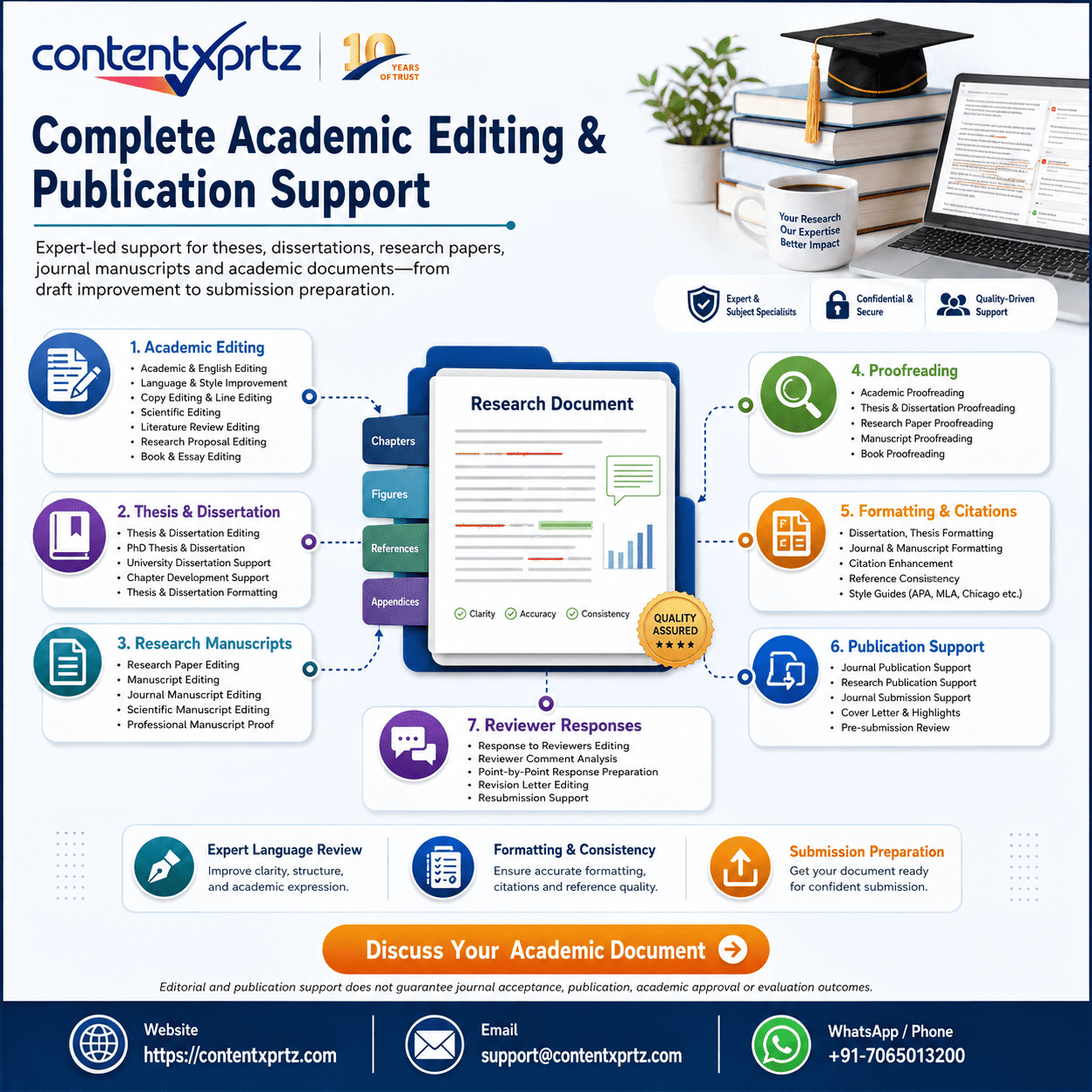
Expert support becomes useful when the challenge is communication rather than eligibility itself. A prospective scholar may understand the research problem but struggle to structure a proposal, explain methods clearly, maintain consistent terminology, or proofread a long academic document in a second language. Contentxprtz provides academic writing support, dissertation proofreading support, and research-focused editing where appropriate.
The ethical boundary is important. Editors can identify unclear sentences, inconsistent structure, weak transitions, formatting issues, or places where claims need support. They should not invent a research record, fabricate references, create false results, or misrepresent the applicant’s contribution. Applicants remain responsible for credentials, ideas, data, citations, and final submissions.
Academic Integrity and Author Responsibility in PhD Applications
PhD admission is an assessment of your potential to become an independent researcher. That makes authenticity especially important. Your statement, proposal, CV, writing sample, publications list, and research descriptions should accurately represent work you have done and ideas you can defend in an interview.
AI tools and language tools can assist with brainstorming, grammar checks, or formatting, but generated statements should be verified carefully and rewritten so that they reflect your real academic history and research goals. Never allow a tool to invent citations, projects, supervisors, publications, test scores, or methodological experience. If your university has rules about AI-assisted application materials, follow them.
Similarly, professional editing should improve communication without taking over authorship. After any edit, read every sentence, confirm every claim, verify every citation, and be prepared to explain the document independently. This principle continues after admission: thesis editing and manuscript editing are most defensible when they strengthen clarity while preserving the researcher’s intellectual responsibility.
How Contentxprtz Can Help Prospective and Current PhD Researchers
Contentxprtz supports scholars who already have genuine academic content and want to present it more clearly. Relevant support may include proposal editing, research-paper editing, thesis editing, proofreading, reference consistency, and document formatting. For doctoral researchers preparing publication work, manuscript editing and publication support can help improve clarity and submission readiness without promising acceptance.
The right service depends on the actual problem. An eligibility question should first be solved with official regulations and university admissions information. An unclear proposal may need editing. A thesis nearing submission may need deeper structural and language review. A journal manuscript may need field-sensitive editing and formatting. Matching the support to the real need is more useful than treating every academic challenge as a writing problem.
Summary: For PhD What Is Minimum Qualification?
For PhD what is minimum qualification depends on where and what you want to study. In India, UGC regulations provide a master’s route with a general 55% threshold and a four-year bachelor’s route with a general 75% threshold, subject to permitted relaxations and institutional admission procedures. In the United States, many universities accept applicants with a recognized bachelor’s degree or equivalent. In the UK, some doctoral courses accept a strong four-year undergraduate qualification, while others expect or require a relevant master’s.
Do not stop at the minimum degree. Check the current department page for subject prerequisites, entrance tests, research proposal requirements, English proficiency, supervisor fit, interviews, and funding. Then assess whether your research experience and academic documents demonstrate genuine readiness for doctoral study. Eligibility makes an application possible; preparation and fit make it credible.
Frequently Asked Questions
For PhD what is minimum qualification?
The minimum qualification for a PhD depends on the country, university, discipline, and route of entry. In India, the UGC Ph.D. Regulations 2022 allow eligible applicants through a master's route with at least 55% marks or an equivalent grade, and they also provide a route after a four-year/eight-semester bachelor's degree with at least 75% marks, subject to permitted relaxations and the admitting institution's rules. In the United States, many universities set a bachelor's degree or international equivalent as the university-level minimum, although individual doctoral programs may expect stronger subject preparation, research experience, prerequisite courses, or a master's degree. In the United Kingdom, requirements vary sharply by subject: some doctoral programs accept a strong four-year undergraduate qualification, while others normally require a relevant master's degree. Therefore, the safest approach is to treat the published university or department admission page as the controlling source. Minimum eligibility only makes you allowed to apply; it does not mean admission is automatic. Competitive selection can also depend on research fit, academic record, proposal quality, references, writing samples, interviews, entrance tests, supervisor availability, funding, and English-language requirements.
Is a master's degree compulsory before a PhD?
No, a master's degree is not universally compulsory before a PhD. The answer depends on the academic system and the specific doctoral program. Many U.S. universities permit applicants with a recognized bachelor's degree or international equivalent to apply directly to PhD study. Some UK doctoral programs also accept a sufficiently strong four-year undergraduate degree, particularly in scientific and technical fields, while other programs explicitly require a relevant master's degree and sometimes a strong dissertation result. In India, the UGC's 2022 regulations include both a master's-entry route and a four-year bachelor's-entry route, although universities can apply their own admission criteria within the regulatory framework. Applicants should not assume that 'direct PhD after bachelor's' means every department will accept them. A program may require advanced coursework, research methods training, a portfolio, laboratory experience, or proof that the applicant is ready for doctoral-level research. If you have only a bachelor's degree, check the exact degree length, grade threshold, subject prerequisites, and whether the program is designed for direct doctoral entry. If your preparation is not yet strong enough, a research-oriented master's can still be valuable preparation rather than merely an administrative requirement.
What percentage is required for PhD admission in India?
Under the UGC Minimum Standards and Procedure for Award of Ph.D. Degree Regulations, 2022, the master's route generally requires at least 55% marks in aggregate or an equivalent grade. The regulations also provide permitted relaxation of 5% marks or equivalent grade for specified categories in accordance with the Commission's decisions. For candidates seeking admission after a four-year/eight-semester bachelor's degree, the regulation states a minimum of 75% marks in aggregate or equivalent grade, again with a possible 5% relaxation for specified categories. These are regulatory eligibility thresholds, not universal admission cut-offs. A university may have additional discipline-specific requirements, an entrance test, interview, research proposal assessment, or a higher competitive standard when seats are limited. Applicants should also verify whether their degree is recognized, whether the subject is considered relevant, and how their grading system will be converted or interpreted. Do not rely only on a coaching-site summary or an old regulation, because admission notices can implement the rules differently. Read the current doctoral admission notification of the university you plan to apply to and compare it with the UGC framework.
Can I do a PhD after a four-year bachelor's degree in India?
Yes, the UGC Ph.D. Regulations 2022 provide an eligibility route for candidates after a four-year/eight-semester bachelor's degree, subject to the required academic threshold and the rules of the admitting higher educational institution. The regulation states that a candidate seeking admission through this route should have at least 75% marks in aggregate or an equivalent grade, with permitted relaxation for specified categories. This is important because it means a master's degree is not the only possible academic route to doctoral eligibility in India. However, the existence of the route does not guarantee that every university, department, or research area will admit every four-year bachelor's graduate. Institutions still publish their own admission criteria, research areas, entrance procedures, and seat availability. A strong applicant should show adequate subject depth, research readiness, and a credible reason for moving directly into doctoral study. If your undergraduate degree included a substantial research project, dissertation, laboratory work, advanced methods courses, or independent study, describe that evidence carefully in the application. Also verify whether your degree structure is formally recognized as a four-year/eight-semester program for the purpose of the university's PhD admission notice.
Do I need UGC NET, JRF, GATE, or a PhD entrance exam?
Possibly, but no single test is required for every PhD applicant in every discipline or institution. In India, universities admit doctoral candidates under the procedures and criteria notified by the institution while following applicable UGC and other regulatory norms. Depending on the university and discipline, applicants may be selected through an institutional entrance examination and interview, through recognized national-level qualifications, or through another route specified in the current admission notice. UGC NET/JRF is particularly relevant in many humanities, social-science, commerce, and related fields; GATE may be relevant in engineering, technology, and some science pathways; other disciplines can use different tests or exemptions. Internationally, test requirements vary even more. Many U.S. programs have made GRE requirements optional or removed them, while English-language testing may still apply to some international applicants. Never assume that holding a qualifying test score replaces all other requirements. Confirm the department's current rules, application cycle, score validity, exemption policy, interview process, and whether a potential supervisor must be identified before you submit the application.
Can I apply for a PhD in a subject different from my previous degree?
Sometimes, especially when the proposed research is genuinely interdisciplinary, but the new field must still consider your prior preparation adequate. Universities usually look for a logical connection between your academic background and the knowledge, methods, or technical skills required by the doctoral project. A candidate moving from economics to public policy, computer science to computational biology, engineering to data science, or literature to digital humanities may be able to show a clear bridge. A more distant shift may require prerequisite courses, a relevant master's degree, professional experience, a portfolio, or evidence of research methods training. The key is not simply whether the degree title is identical. Admissions committees need confidence that you can understand the field's literature, methods, ethics, and research expectations. In your statement or proposal, explain what you already know, what gap you are addressing, and why the proposed supervisor or program is academically appropriate. If the department publishes a list of acceptable prior disciplines, follow it. When the wording is broad or unclear, contact the graduate admissions office or potential research unit rather than guessing from a generic eligibility article.
Is research experience mandatory for PhD admission?
Research experience is not a universal formal minimum, but it can be one of the strongest indicators of doctoral readiness. Some programs admit excellent applicants who have not published a paper or worked as a full-time research assistant. What they still need is evidence that they understand research as a process: forming questions, reviewing literature, selecting methods, analysing evidence, handling uncertainty, and communicating findings. A bachelor's or master's dissertation, capstone project, laboratory project, field study, conference poster, research internship, coding project, policy analysis, archival project, or professional research assignment can provide this evidence. Publications are helpful in some fields but are not automatically required, and a weak or irrelevant publication does not compensate for poor research fit. If you lack formal research experience, focus on building a realistic project, strengthening methods, reading current scholarship, and identifying a supervisor whose work matches your interests. Ethical academic support can help improve the clarity, structure, formatting, and presentation of an application or proposal, but the research idea, evidence, claims, and authorship responsibilities must remain genuinely yours.
What documents are usually needed for a PhD application?
A typical PhD application may require academic transcripts, degree certificates, a curriculum vitae, a statement of purpose or personal statement, references, and evidence of English-language proficiency where applicable. Research-focused programs may also request a research proposal, writing sample, master's dissertation abstract, portfolio, publications list, supervisor statement, or evidence of relevant professional or laboratory experience. The exact combination varies by country and department. U.S. programs often place substantial weight on statements, references, research experience, and program fit; some UK and European programs may expect a more developed project proposal or prior contact with a supervisor; Indian universities may combine academic eligibility with entrance-test and interview documentation. International applicants may need certified translations or later credential verification. Build a document checklist from the official program page rather than a generic list. Before submitting, make sure names and dates match across documents, grades are reported in the requested format, references are authentic, and your research interests are consistent across the statement, proposal, CV, and supervisor communication. Clear editing can improve presentation, but it should never fabricate experience or inflate credentials.
Does meeting the minimum qualification guarantee PhD admission?
No. Meeting the minimum qualification only establishes eligibility to be considered; it does not guarantee admission, funding, or supervisor allocation. Doctoral admissions are usually competitive because departments have limited research capacity, funded places, laboratory space, supervisor time, and project-specific needs. A candidate who meets the academic threshold can still be unsuccessful if the research proposal is weak, the topic does not fit available expertise, references are unconvincing, the applicant lacks prerequisite methods, or another candidate is a stronger fit. Conversely, a strong application often shows a coherent research direction, evidence of independent academic work, realistic methodology, familiarity with the field, and a clear reason for choosing that department. Some programs also use interviews, entrance tests, writing samples, or supervisor matching. Treat the minimum qualification as the first gate, not the final selection standard. Before applying, compare your profile with the department's stated 'minimum' and 'competitive' expectations, review recent faculty research, prepare questions for a prospective supervisor where appropriate, and leave enough time to revise your proposal and supporting documents for clarity and consistency.
When can Contentxprtz support a prospective PhD applicant ethically?
Contentxprtz can support prospective PhD applicants when they need help improving the clarity, organization, language, consistency, or presentation of materials they have genuinely developed themselves. For example, an applicant may have a sound research idea but need academic editing of a proposal, proofreading of a statement, formatting support, or a structured review of whether arguments and sections are easy to follow. A current scholar may also need thesis editing or research-paper editing after admission. Ethical support should preserve the applicant's authorship and should not invent qualifications, fabricate publications, create fake references, misrepresent research experience, or make decisions that belong to the applicant or university. Applicants remain responsible for the accuracy of grades, credentials, research claims, citations, methods, and final submissions. Universities can also have rules about permitted assistance, so those rules should be checked before using extensive editing or writing support. The best use of professional help is to make authentic academic work clearer and more publication- or submission-ready, while keeping the intellectual contribution and responsibility with the researcher.
Conclusion: Check the Rule, Then Build a Research-Ready Application
The most useful answer to “for PhD what is minimum qualification?” is not a single degree name. It is a method: identify the official academic route, verify your marks and subject eligibility, confirm tests and language requirements, and then assess whether your research preparation matches the program.
If your route allows direct entry after a bachelor’s degree and you already have strong research preparation, a master’s may not be necessary simply for formality. If your target program requires postgraduate study—or if you need deeper methods training—a research-oriented master’s can be an important step. Self-service preparation is often sufficient when the rules and documents are clear. Expert-assisted editing can be helpful when authentic research ideas need clearer structure, language, consistency, or presentation.
Contentxprtz helps scholars improve clarity, structure, ethics, and submission readiness while keeping responsibility for research, credentials, citations, and final decisions with the author. “At Contentxprtz, we don’t just edit; we help ideas reach their fullest potential.”