How Long Does It Take to Get a Doctorate?
How long does it take to get a doctorate? For many students, the most useful planning answer is about three to seven years of full-time doctoral study after admission, with significant variation by country, subject, program design, prior qualifications, funding, and the research itself. A research-focused PhD in the UK may be designed for three to four years, while many U.S. PhD routes take roughly five years or longer because coursework, qualifying examinations, teaching, and dissertation research are often integrated into one program. Part-time doctorates commonly take longer still.
The number alone can be misleading. “Time to doctorate” can mean the period from entering a doctoral program to receiving the degree, the period from entering any graduate study, or the total time since the bachelor’s degree. The U.S. National Science Foundation explicitly distinguishes these measures in its Survey of Earned Doctorates. A student who completes a two-year master’s degree and then a four-year PhD has a four-year doctoral-program timeline but a six-year postgraduate journey.
Your discipline also changes the calendar. A laboratory project may depend on experiments and equipment; a social-science project may need ethics approval and participant recruitment; a humanities thesis may require archives, languages, or extensive primary-source reading. Even a well-designed project can encounter delays through field access, data quality, supervisor changes, revisions, funding gaps, or personal leave. These are reasons to plan a doctorate as a sequence of milestones rather than a single countdown.
This guide helps prospective and current doctoral candidates estimate a realistic timeline, compare full-time and part-time study, understand common stages, and identify where delays usually occur. It also explains when self-management is enough and when ethical PhD thesis support or academic editing services may be useful near major writing and submission milestones. Professional support should improve clarity and presentation without replacing the scholar’s research, analysis, or authorship.
Quick Answer: How Long Does It Take to Get a Doctorate?
A full-time research doctorate typically takes three to seven years after doctoral enrollment. Three to four years is a common planned length in many UK research PhDs, while U.S. programs often extend to five years or more because they may include substantial coursework and qualifying milestones before the dissertation phase. Part-time study frequently takes five to eight years or longer, depending on institutional rules.
There is no single worldwide duration. Use the official duration published by the specific department you are considering, then add realistic contingency time for research approvals, data collection, revision, examination, and corrections. If you are comparing countries, compare like with like: a direct-entry U.S. PhD and a UK PhD following a master’s degree may place the taught and research stages in different parts of the education pathway.
Key Takeaways
- A realistic general range is about 3–7 years full time after entering the doctoral program, but program structures vary widely.
- Cambridge and many Oxford DPhil programs describe full-time doctoral study as roughly 3–4 years.
- Many U.S. programs are longer because coursework, examinations, teaching, and dissertation research may all be built into the PhD.
- In India, UGC regulations specify a minimum PhD duration of three years, including coursework, with a normal maximum of six years from admission.
- Part-time study usually extends the calendar and may involve specific attendance, residency, or maximum-registration rules.
- Research design, ethics approval, data access, supervisor feedback, and revision cycles are major drivers of actual completion time.
- Editing and proofreading can streamline final communication, but they cannot replace the research work or guarantee completion by a particular date.
What This Page Covers
- Typical doctorate timelines in the US, UK, India, and research-degree systems
- The difference between doctoral-program time and total postgraduate time
- How coursework, candidacy, research, thesis writing, viva or defense, and corrections fit together
- Full-time versus part-time doctorate planning
- Why STEM, humanities, social-science, and professional pathways can differ
- Common causes of delay and practical ways to reduce avoidable slippage
- When thesis editing, proofreading, or research support may be appropriate
Table of Contents
Methodology and Academic Sources
This guide uses official doctoral-program information and current regulatory or national research sources rather than a single generic average. The U.S. National Science Foundation Survey of Earned Doctorates distinguishes time from bachelor’s completion, graduate-school entry, and doctoral-program entry. The University of Cambridge PhD guidance states that completion normally requires three or four years of full-time study. Many University of Oxford DPhil programs also list three to four years full time and six to eight years part time. For India, the UGC PhD Regulations 2022 provide the national duration framework.
These sources illustrate why a universal number is not academically responsible. Program handbooks, funding letters, graduate-school regulations, and departmental milestone documents should be treated as the primary source for an individual candidate’s plan.
What “How Long Does It Take to Get a Doctorate?” Really Means
The answer depends first on where you start the clock. A prospective student may be asking about the time from a bachelor’s degree to becoming “Dr.”, while a current candidate may mean the number of registered PhD years remaining. Universities and national datasets may report different measures.
| Timeline measure | What it counts | Why it matters |
|---|---|---|
| Doctoral-program time | From formal doctoral entry to award | Best for comparing the structure of PhD programs |
| Graduate-school time | From first postgraduate enrollment to doctorate | May include a master’s degree or other graduate study |
| Total time after bachelor’s | Elapsed time from bachelor’s completion to doctorate | Can include employment, breaks, and non-enrollment periods |
| Registered research period | Official enrollment period before thesis submission | May not include examination and final correction time |
When a university says “three to four years,” check whether that means expected submission, expected award, or the normal period of full-time registration. The thesis may still need examination, a viva or oral defense, and corrections after submission.
How Long Does a Doctorate Take by Country and Program Model?
Program design is a stronger predictor than country name alone. Still, national and university structures create useful planning patterns.
| Example system | Typical or official planning range | Important context |
|---|---|---|
| UK research PhD/DPhil | Often 3–4 years full time | Research begins early; prior postgraduate preparation is common |
| United States PhD | Often about 4–7+ years depending on field | Coursework and qualifying milestones may precede dissertation research |
| India PhD under UGC framework | Minimum 3 years; normal maximum 6 years from admission | Includes coursework; institution-specific rules also apply |
| Part-time doctorate | Frequently 5–8 years or more | Depends on institutional availability, workload, and registration limits |
United Kingdom: a concentrated research model
Cambridge describes its PhD as normally requiring three or four years full time, and Oxford lists the same expected length for many DPhil programs. This does not mean every UK candidate starts immediately after a bachelor’s degree. Some programs expect a master’s degree or equivalent research preparation before admission, so the total postgraduate journey may be longer than the PhD registration itself.
United States: coursework and research in one longer pathway
Many U.S. doctoral programs combine advanced classes, qualifying examinations, teaching or research assistantships, candidacy, dissertation research, and defense. Stanford’s Graduate School of Education, for example, describes four to five years of full-time study. Other fields and institutions anticipate longer completion. The important comparison is not “US versus UK” in isolation; it is how much preparatory graduate work is included inside the doctoral program.
India: a regulatory minimum and maximum framework
UGC regulations state that the PhD program has a minimum duration of three years, including coursework, and a normal maximum duration of six years from admission, with specified provisions for additional time under institutional processes. A candidate’s actual schedule is shaped by university ordinances, progress reviews, research approvals, data collection, thesis submission procedures, and viva requirements.
The Main Stages of a Doctorate and How They Affect Time
A useful doctorate timeline allocates time to milestones rather than assigning all remaining years to “research.” The exact names differ by university, but most research doctorates contain several of the following stages.
1. Orientation, coursework, and research training
Some programs begin with advanced coursework in theory, methods, statistics, languages, or professional research skills. In a direct-entry U.S. PhD this stage can occupy a substantial part of the first one or two years. In a research-focused UK doctorate, formal taught components may be lighter because applicants often arrive with more specialized postgraduate preparation.
2. Qualifying examination, confirmation, or candidacy
The university needs evidence that the project is viable and that the candidate is prepared for independent research. This may involve written examinations, an oral exam, a proposal defense, confirmation report, or upgrade review. Delays here can move the entire project because ethics applications, fieldwork, or full data collection may depend on an approved design.
3. Ethics approval and research permissions
Projects involving human participants, sensitive data, animals, clinical contexts, schools, companies, archives, or protected sites may require formal approvals. Build application and revision time into the plan. A research calendar that assumes immediate access can become unrealistic before data collection even begins.
4. Data collection or primary research
This is often the least predictable phase. Laboratory experiments may fail; interview participants may withdraw; longitudinal studies must wait for time to pass; archives may close; field sites may become inaccessible. Pilot work and backup strategies can reduce avoidable disruption.
5. Analysis and interpretation
Analysis frequently takes longer than expected because research generates ambiguity rather than only answers. New patterns may require additional checks, sensitivity analyses, coding revisions, or a return to the literature. Protect time for interpretation instead of treating analysis as a short bridge between data collection and writing.
6. Thesis or dissertation writing
Writing should begin before all research is complete. Literature synthesis, methodology explanations, conceptual framing, data-management notes, and chapter outlines can develop in parallel with research. This makes the final writing phase more manageable and exposes reasoning gaps earlier.
7. Supervisor and committee revision
A thesis usually goes through multiple rounds of substantive feedback. Structural comments should be addressed before line-level polishing. If you need help with language and presentation, ethical editing support is most efficient after the argument and chapter structure are sufficiently stable.
8. Submission, defense or viva, and corrections
Submission is not always the award date. Examiners may request minor or major corrections, and administrative approval can add further time. Include this post-submission period when planning graduation, employment, visas, or funding transitions.
Free, Low-Cost, and Professional Support During a Doctorate
Many doctoral problems should be solved first through resources already available to the candidate. Supervisors, graduate schools, research-methods units, statisticians, librarians, writing centers, peer groups, and institutional workshops can provide valuable guidance without extra cost. They are especially important for decisions about methodology, ethics, data interpretation, and university regulations.
Professional support becomes more relevant when the candidate has produced original work but needs independent help with academic English, consistency, document structure, formatting, or final quality control. Scholarly proofreading can catch surface-level errors near submission, while deeper academic editing can address clarity and flow. Any assistance must remain within university policy and preserve author responsibility.
When Self-Service Is Enough and When Expert Editing Is Safer
Self-service is usually enough when the problem is planning, routine drafting, or a clear local correction. A doctoral candidate should not outsource intellectual decisions such as choosing a method, interpreting data, inventing citations, or deciding what the evidence proves.
- Use supervisor or institutional support for research design, ethics, milestone requirements, and disciplinary expectations.
- Use self-editing for early drafts where the argument is still changing.
- Consider professional academic editing when a mature chapter is difficult to follow, language obscures meaning, or terminology and structure are inconsistent.
- Consider proofreading for a near-final thesis that needs careful grammar, punctuation, typographical, and consistency checks.
Contentxprtz can support doctoral writers through dissertation editing and proofreading support, but the scholar remains responsible for every research claim, citation, dataset, analysis, and final submission.
What Makes a Doctorate Take Longer or Shorter?
The strongest timeline factors are often structural rather than motivational. Knowing them early helps you choose a program and design a feasible project.
Field and research method
A theoretical mathematics project, multi-year clinical study, archival history thesis, ethnography, and engineering prototype have very different dependencies. Time estimates should be built around the actual method, not the degree label alone.
Prior preparation
A strong master’s degree may reduce the time needed to learn methods or define the topic, but it may not reduce formal doctoral requirements. Conversely, direct-entry programs may deliberately include the graduate training that another system places before doctoral admission.
Funding and employment
Stable funding can protect research time. Heavy employment outside the doctorate, uncertain assistantship loads, or a funding gap can lengthen completion. Check the relationship between funding duration and expected degree duration before accepting an offer.
Supervision and feedback cycles
Fast, useful feedback supports momentum, but a candidate also needs to submit work at agreed intervals. Establish expectations for meeting frequency, draft length, turnaround, and escalation routes early.
Project scope
Overly broad questions are a frequent source of delay. A doctorate must make a meaningful original contribution; it does not need to solve every related problem. Scope control is one of the most effective ways to protect both quality and time.
Life circumstances and leave
Illness, caregiving, relocation, disability accommodations, parental leave, and other circumstances can change the schedule. Formal leave or extension mechanisms exist in many systems. Treat these as academic administration issues to address early, not as evidence of personal failure.
How to Build a Realistic Doctorate Timeline
Start with the official deadline, then plan backward through evidence-producing milestones. A useful schedule makes dependencies visible and leaves room for revision.
- Read the program regulations. Record minimum and maximum registration, candidacy deadlines, annual reviews, submission rules, and examination procedures.
- Define the research deliverables. Convert the thesis into studies, datasets, chapters, papers, or analytical outputs.
- Map dependencies. Ethics approval must come before recruitment; data collection may precede final analysis; supervisor approval may be needed before submission.
- Create semester or quarter milestones. Use outcomes such as “pilot complete” or “chapter 2 revised,” not vague goals such as “work on thesis.”
- Add contingency. Allow time for rejected ethics amendments, failed experiments, unavailable participants, software issues, and substantive feedback.
- Write continuously. Maintain literature notes, methods text, figure captions, decision logs, and draft sections throughout the project.
- Separate revision stages. First fix argument and evidence; then improve paragraph-level clarity; finally proofread and format.
- Plan the post-submission period. Include viva or defense scheduling, corrections, repository deposit, and final award administration.
Common Doctorate Timeline Mistakes to Avoid
- Assuming the advertised minimum is the average. A minimum duration is a regulatory or program boundary, not a promise that every project can finish at that point.
- Comparing countries without comparing entry requirements. A shorter research PhD may follow a master’s degree that another system integrates into the doctorate.
- Planning only for data collection. Analysis, writing, feedback, examination, and corrections need substantial time.
- Waiting to write until research is “finished.” Early writing exposes conceptual gaps and reduces the final drafting bottleneck.
- Ignoring administrative lead times. Ethics review, committee scheduling, external examiners, visas, field permissions, and repository procedures can affect completion.
- Over-expanding the thesis. Additional studies are valuable only if they are necessary to answer the research question and can be completed responsibly.
- Using editing too early or too late. Line editing an unstable chapter wastes effort; proofreading before substantive revisions are complete creates repeated work.
Practical Examples: What a Doctorate Timeline Can Look Like
Example 1: A UK research PhD planned for four years
Maya enters a full-time social-science PhD after a research master’s. She plans year one for refining the proposal, methods training, ethics approval, and pilot interviews; year two for fieldwork; year three for analysis and chapter drafting; and year four for integration, supervisor revisions, submission, viva preparation, and corrections. Her original mistake was treating “three to four years” as three years of research plus an extra writing year. The corrected plan recognizes that writing and analysis overlap with data collection.
Example 2: A U.S. student entering after a bachelor’s degree
Daniel sees a five-year departmental target and assumes he will begin dissertation fieldwork immediately. In reality, the first two years contain advanced coursework, teaching, and qualifying exams. He uses those years to build methods expertise and refine the dissertation question, then moves into candidacy and research. The longer program is not simply “slower”; it includes training that may occur before doctoral entry in another system.
Example 3: An Indian PhD candidate planning around the UGC framework
Anika knows that the UGC framework sets a three-year minimum including coursework, but her mixed-method project requires institutional permissions, participant recruitment, a large qualitative dataset, and two substantial analysis cycles. Instead of aiming at the regulatory minimum as a personal deadline, she maps her university’s progress reviews and builds a four-year working plan within the applicable rules. Near submission, she schedules thesis editing support only after her supervisor approves the chapter structure.
Example 4: A part-time professional researcher
Leo works four days a week and enrolls part time. His first plan simply doubles a three-year full-time schedule, but that ignores periods when his job peaks and times when university attendance is required. He instead protects two consistent research blocks each week, uses annual leave for intensive fieldwork, and sets six-month outputs. The calendar is longer, but the workload is sustainable and the milestones remain visible.
Doctorate Completion Planning Checklist
- Confirm the program’s official minimum, expected, and maximum duration.
- Check whether the published duration ends at thesis submission or final award.
- List coursework, qualifying exams, candidacy, or confirmation requirements.
- Estimate ethics review, permissions, recruitment, fieldwork, laboratory, or archival lead time.
- Confirm funding length and teaching or employment expectations.
- Agree with your supervisor on meeting frequency and draft-feedback expectations.
- Build chapter writing into the research period instead of postponing it.
- Set a scope boundary for the core thesis question.
- Reserve contingency time for methodological and administrative delays.
- Schedule substantive revision before language editing and proofreading.
- Check thesis formatting, citation, submission, and repository requirements.
- Include defense/viva scheduling and corrections in your graduation plan.
Ethical Academic Editing and Author Responsibility
Doctoral editing should improve communication without replacing intellectual authorship. A candidate remains responsible for the research question, design, data, analysis, interpretation, literature use, citations, and conclusions. University rules on permitted editorial assistance differ, so candidates should check local policy before sharing a thesis with an editor.
If the research is complete but the writing still obscures the contribution, professional ethical academic editing can help with organization, academic tone, sentence clarity, terminology, transitions, and consistency. Near the end, proofreading can focus on surface correctness. Neither service can guarantee supervisor approval, examination outcome, publication, or a specific completion date.
How Contentxprtz Can Help Near Doctoral Milestones
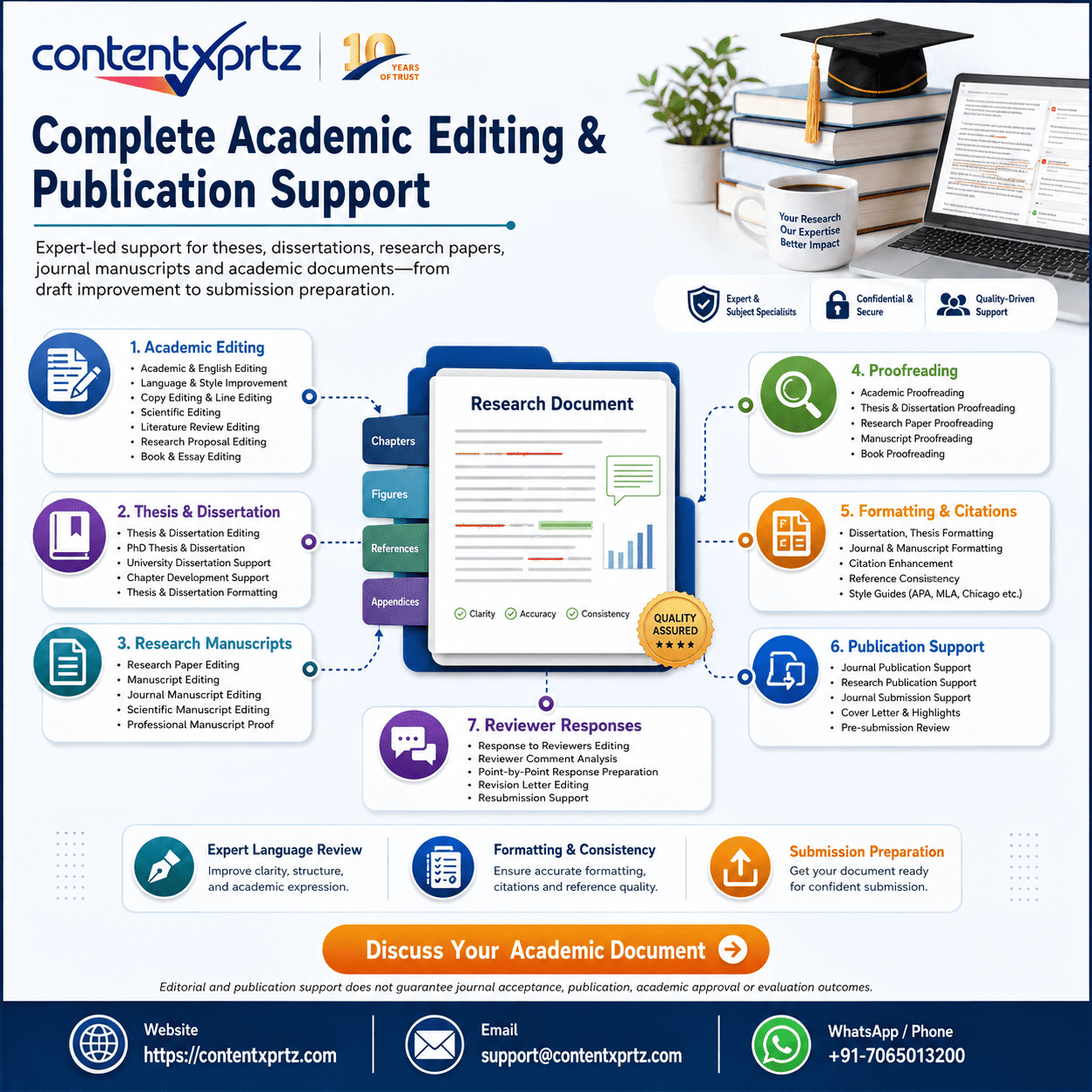
Contentxprtz supports scholars who have done the research and need help presenting it clearly. Depending on the stage, support may include thesis or dissertation editing, proofreading, language refinement, citation consistency checks, and manuscript-level clarity review. For a doctoral candidate, the most useful engagement is usually tied to a defined deliverable: a proposal, a mature chapter, a near-final thesis, or a research paper derived from the doctorate.
If you are turning doctoral research into a journal manuscript, Contentxprtz also offers research paper editing support. The purpose is to improve readability, structure, and publication readiness while preserving the author’s evidence, meaning, and responsibility.
Summary: How Long Does It Take to Get a Doctorate?
Most full-time doctorates should be planned as a multi-year project, commonly around three to seven years after doctoral entry. Research-focused UK PhDs are often designed for three to four years, many U.S. programs run longer because they include coursework and qualifying stages, and India’s UGC framework sets a minimum of three years and a normal maximum of six years from admission. Part-time routes extend the schedule.
The best estimate for you comes from four sources: the official program duration, the milestone structure, the demands of your research method, and the recent experience of candidates in your department. Build the timeline around approvals, evidence, analysis, writing, feedback, examination, and corrections—not just the earliest possible submission date.
Frequently Asked Questions
How long does it take to get a doctorate?
A doctorate commonly takes about three to seven years of full-time study after admission to the doctoral program, but the range is not universal. Research-focused PhDs in the United Kingdom are often designed around three to four full-time years, while many U.S. programs combine coursework, qualifying examinations, research, teaching, and a dissertation and may take roughly five or more years. Field also matters: laboratory research, archival work, longitudinal data collection, clinical requirements, and extensive language preparation can lengthen the schedule. Your starting qualification matters too; a program that expects a prior master’s degree may have a different structure from one that admits students directly after a bachelor’s degree. The safest way to estimate your own timeline is to check the official program handbook, funding period, milestone deadlines, and recent completion patterns for your department rather than relying on one global average.
Can you finish a doctorate in three years?
Yes, some doctorates can be completed in about three years, particularly research-intensive programs designed for students who begin with a well-developed proposal and appropriate prior preparation. Cambridge states that its PhD normally requires three or four years of full-time study, and many Oxford DPhil programs list an expected length of three to four years. However, a three-year plan usually leaves little room for major changes in topic, delayed fieldwork, unavailable data, extended revisions, or long interruptions. In systems where doctoral study includes substantial coursework and qualifying examinations, three years may be uncommon or unrealistic. Finishing quickly should not be the main goal if it compromises research quality, methodological rigor, or the time needed for thoughtful revision. Plan from the actual milestones your university requires: confirmation or candidacy, ethics approval, data collection, analysis, thesis drafting, examination, and final corrections.
How long does a PhD take in the United States?
Many U.S. PhD programs take around five to seven years, although the expected time varies sharply by discipline and university. Some programs are structured for four to five years, while humanities and social-science programs may anticipate longer periods because of coursework, comprehensive examinations, teaching, language requirements, archival research, or dissertation development. Stanford’s Graduate School of Education, for example, describes its PhD as requiring four to five years of full-time study, while some Harvard arts, humanities, and social-science programs anticipate around six to seven years. National Science Foundation data also show why “time to doctorate” must be defined carefully: it can be measured from bachelor’s completion, graduate-school entry, or doctoral-program entry. When comparing programs, ask which measure is being used and review the department’s actual milestone schedule rather than assuming every U.S. doctorate follows one national timetable.
How long does a PhD take in the UK?
A full-time UK PhD is commonly structured around three to four years of research, though individual universities and disciplines set their own rules. Cambridge says completion normally requires three or four years of full-time study, and Oxford lists three to four years for many DPhil programs. Part-time routes are substantially longer. UK research doctorates often begin with a relatively focused research project, so applicants may enter after a master’s degree or equivalent preparation and move into supervised research early. Even when the formal program is three to four years, the overall journey may include time before admission to prepare a proposal, secure funding, or complete a master’s degree, plus examination and corrections after thesis submission. Always distinguish between the registered research period and the total time from first postgraduate study to final award.
How long does a PhD take in India?
Under India’s University Grants Commission regulations, a PhD program has a minimum duration of three years, including coursework, and a normal maximum duration of six years from admission. The regulations also provide a route for additional time through re-registration under institutional rules, subject to stated limits and specific relaxations. This regulatory range does not mean every candidate should expect exactly three or six years. Actual completion depends on coursework, research design, ethics or institutional permissions, data access, publication or progress requirements imposed by the university, supervisor feedback, thesis writing, pre-submission processes, viva voce examination, and corrections. Candidates should use the current regulations of their own university alongside UGC requirements because institutions may specify milestone reviews and administrative procedures within the broader national framework.
Does having a master’s degree make a doctorate faster?
A relevant master’s degree can sometimes shorten the doctoral journey, but it does not automatically reduce the official program length. It may help because you could enter with stronger subject knowledge, research methods training, a developed proposal, prior data skills, or a clearer literature base. Some institutions explicitly note that relevant postgraduate preparation can affect the path into the PhD. In other programs, every doctoral student must still complete the same coursework, examinations, residency, credits, or candidacy requirements regardless of previous degrees. A master’s dissertation can also reveal whether your proposed doctorate is feasible, but you generally cannot assume that previous thesis text or data can simply be reused without permission, disclosure, and compliance with university rules. Before applying, compare entry routes, transfer-credit policies, and milestone exemptions rather than assuming a master’s degree guarantees a shorter doctorate.
How long does a part-time doctorate take?
A part-time doctorate often takes about five to eight years, although the exact range depends on the institution and country. Cambridge notes that its PhD takes at least five years part time, while many Oxford DPhil programs list six to eight years. Part-time study spreads the same core research responsibilities across a longer calendar period, which can be helpful for professionals, caregivers, or students balancing other commitments. The tradeoff is that research continuity may be harder to maintain, and access to supervisors, laboratories, archives, cohorts, or funding can differ from full-time arrangements. Before choosing part-time study, check residency or attendance requirements, maximum registration periods, funding eligibility, expected weekly research hours, and whether your department actually offers the route. Build a sustainable schedule around milestones rather than simply doubling a full-time plan.
What usually delays a doctorate?
The most common delays are not just “slow writing.” Doctoral timelines can expand because a research question changes, ethics approval takes longer than expected, participants are difficult to recruit, laboratory work fails, archival access is restricted, fieldwork is interrupted, data analysis becomes more complex, or a supervisor requests substantial revision. Teaching and employment can also reduce research time. Personal leave, funding gaps, health or family circumstances, and administrative processes may affect progress as well. Some delays are productive because they prevent weak methods or unsupported conclusions. The practical response is to separate controllable risks from uncontrollable ones: define a feasible project, agree on milestone dates, keep a decision log, back up data, write while research is ongoing, and schedule regular supervisory reviews. A realistic plan should include contingency time rather than treating the earliest possible submission date as the only acceptable outcome.
How can I finish my doctorate on time without lowering quality?
Start by translating your university’s formal milestones into a research calendar with smaller deliverables. Set dates for literature review updates, ethics applications, pilot work, data collection, analysis, chapter drafts, supervisor feedback, revision, formatting, and submission checks. Write early: methods notes, literature synthesis, figure explanations, and limitations can be developed before the final thesis-writing phase. Keep the project bounded enough to answer the research question rather than adding every interesting side question. Agree with your supervisor on what “ready for feedback” means so you do not spend months polishing a chapter that still needs structural changes. Near submission, separate substantive revision from language editing and proofreading. Ethical professional academic editing can help improve clarity, consistency, and presentation, but the research decisions, arguments, data, citations, and final approval remain the doctoral candidate’s responsibility.
When should I get thesis editing or proofreading help?
Consider editing or proofreading when the research and core argument are substantially developed but the document still needs clearer structure, consistent terminology, smoother academic English, reference checks, or final presentation review. Earlier developmental feedback may be useful if chapters are difficult to follow, but university policies vary on what assistance is permitted. The author should remain responsible for the intellectual content, methods, analysis, interpretations, citations, and response to examiner or supervisor feedback. For an ESL researcher, professional editing can help make intended meaning easier to understand without replacing the scholar’s voice. For a near-final thesis, proofreading is usually narrower: grammar, punctuation, typographical errors, consistency, and formatting. Before using any service, check your institution’s rules and disclose assistance if required. Contentxprtz offers ethical academic editing and thesis support intended to improve communication rather than to substitute for authorship.
Conclusion: Plan the Doctorate Around Milestones, Not a Single Number
The question “how long does it take to get a doctorate?” is best answered with a range and a plan. The formal duration depends on the education system and program, but the actual completion time depends on how successfully you move through training, candidacy, research, analysis, writing, feedback, examination, and corrections.
Self-service planning, supervisor guidance, university writing resources, and peer feedback are often enough through much of the doctorate. When a mature thesis or research paper needs independent language and presentation support, professional editing can help reduce avoidable communication problems. It should never replace the scholar’s original research or responsibility.
For a defined writing milestone, discuss your research paper editing requirement with Contentxprtz and choose support that matches the stage of your work.
“At Contentxprtz, we don’t just edit; we help ideas reach their fullest potential.”