Literature Review Meaning: Definition, Purpose, Types and Examples
Literature review meaning is easiest to understand as a structured, critical synthesis of what credible sources already say about a research topic or question. A literature review does not simply collect definitions or summarize one paper after another. It identifies the most relevant studies, compares their findings and methods, explains important patterns and disagreements, evaluates limitations, and shows what the existing body of knowledge means for the research problem you are trying to solve.
That distinction matters because students and first-time researchers often mistake “reading many articles” for reviewing the literature. Reading is the input; synthesis is the intellectual work. A useful literature review helps a reader see the field as a connected conversation. It may show, for example, that several studies report a similar relationship but use narrow samples, that two theoretical traditions explain the same phenomenon differently, or that a popular conclusion depends on evidence from one country or one method. Those relationships are what turn a set of citations into an academic review.
For a postgraduate dissertation or PhD thesis, the review usually establishes the intellectual context for the study and demonstrates why the research question is worth asking. In a journal article, it may be a concise background section or a standalone review paper. In evidence-based disciplines, a systematic or scoping review may follow a formal protocol, explicit eligibility criteria, reproducible searching, screening, and reporting standards. The structure therefore depends on purpose: a narrative review, thesis chapter, systematic review, and scoping review are not interchangeable simply because each discusses previous research.
This guide explains the literature review definition, purpose, major types, practical structure, search-and-synthesis workflow, research-gap logic, common mistakes, and examples. It also distinguishes self-service research tasks from situations where a supervisor, academic librarian, subject specialist, or ethical academic editing service can improve clarity without replacing the author’s research judgment. The goal is not to produce a longer reference list; it is to build a traceable, well-reasoned account of what is known, what is uncertain, and why that matters.
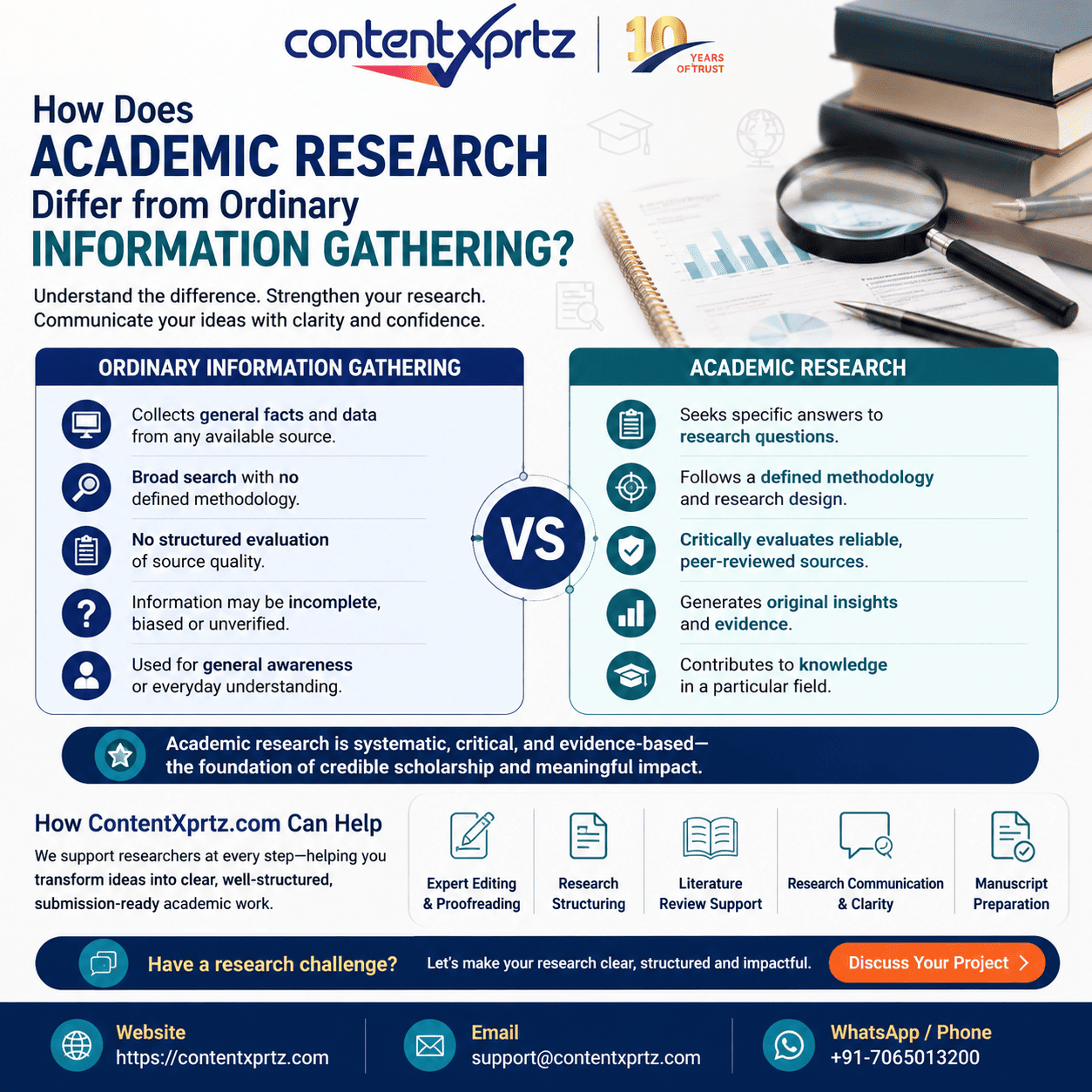
Quick Answer: Literature Review Meaning
A literature review is a critical synthesis of existing research related to a defined topic, problem, theory, or research question. It shows what scholars have studied, how they studied it, where findings converge or conflict, what limitations remain, and how the reviewed evidence informs the next research step.
The practical action is to move beyond source-by-source summary. Search systematically enough for your purpose, evaluate the credibility and relevance of each source, group evidence by meaningful themes or relationships, compare studies within paragraphs, and end each major section with an interpretive point. Your university or target journal may require a particular review type or reporting method, so check those instructions before deciding how formal the search and screening process must be.
The most common caution: a literature review is not an annotated bibliography, a list of quotations, or a claim that “no research exists” based on a quick search. Its conclusions must be supported by a transparent and sufficiently broad reading of the field.
Key Takeaways
- A literature review synthesises and evaluates existing research; it does not merely summarise sources.
- Its purpose is to explain the state of knowledge, major debates, methods, limitations, and justified research gaps.
- Narrative, systematic, scoping, integrative, and other review types use different levels of methodological structure.
- A strong review is organised around themes, concepts, methods, theories, or debates rather than one paragraph per author.
- Search terms, databases, date limits, and source-selection rules should match the purpose and stakes of the review.
- Claims about gaps should emerge from evidence, not from the absence of one exact search phrase.
- Authors remain responsible for reading sources, verifying citations, interpreting evidence, and following institutional or journal rules.
What This Page Covers
- The literature review definition in plain and academic language
- The purposes of a literature review in a thesis, dissertation, or research paper
- Differences among narrative, systematic, scoping, and related review types
- A practical workflow for searching, screening, note-taking, synthesis, and drafting
- How to identify themes, disagreements, methodological weaknesses, and research gaps
- Common literature-review mistakes and how to correct them
- Examples, a quality-control checklist, ethical editing guidance, and detailed FAQs
Table of Contents
Methodology and Academic Sources
This article reflects common academic writing and evidence-synthesis practice, with distinctions between ordinary narrative literature reviews and formal evidence reviews. For practical writing guidance, the Purdue Online Writing Lab literature review resource is a useful university reference. For systematic reviews, the PRISMA 2020 statement provides reporting guidance, while PRISMA-S addresses reporting of literature searches. Scoping-review authors can consult the PRISMA extension for scoping reviews.
Review conventions vary by discipline, university, assignment, journal, and review design. Researchers should therefore check their own institutional guidance and target-journal author instructions before applying any generic template. Contentxprtz can assist with ethical research support, literature-review organisation, academic editing, and language polishing, while the author remains responsible for evidence selection, analysis, citations, and conclusions.
What Does “Literature Review” Mean in Academic Research?
A literature review means an organised examination and synthesis of relevant scholarship. The word “literature” refers to the body of published and otherwise appropriate academic or professional sources relevant to the question—not novels or creative literature unless the research field itself concerns literary studies. The word “review” implies more than reading: it involves selection, comparison, evaluation, interpretation, and synthesis.
Imagine a research field as a large conversation happening across journal articles, books, conference papers, theses, datasets, reports, and other credible sources. Individual papers are individual voices. A literature review tells the reader how those voices relate. Which claims have strong support? Which results are inconsistent? Are researchers using different definitions of the same concept? Do most studies rely on one type of sample? Has a new method challenged an older conclusion? Has the field overlooked a setting, population, variable, or theoretical explanation?
A good review therefore performs two jobs at once. First, it is descriptive: it accurately reports what the relevant literature contains. Second, it is analytical: it explains patterns, differences, strengths, limitations, and implications across that literature. Without description, synthesis loses its evidence base. Without analysis, the review becomes a bibliography in paragraph form.
What Is the Purpose of a Literature Review?
The purpose of a literature review is to establish what is known and make the case for the next intellectual step. The exact next step may be a new empirical study, a theoretical argument, a design decision, a policy analysis, or simply a clearer synthesis of a fragmented field.
1. Establish the state of knowledge
A review gives readers a reliable map of the most relevant ideas, findings, methods, and debates. This prevents the new study from appearing in isolation and helps the researcher avoid repeating work that has already been done.
2. Define concepts and theoretical frameworks
Many research problems depend on terms that different authors define differently. A literature review can compare those definitions, explain why one is more appropriate for the current study, and show how the chosen framework shapes variables, hypotheses, interview questions, or interpretation.
3. Compare evidence rather than count papers
Ten studies reporting similar outcomes are not automatically stronger than three rigorous studies reporting a different outcome. The review should consider design, sample, measurement, context, bias, and analytical quality. Weighting evidence intellectually is more important than treating every citation as equal.
4. Identify a defensible research gap
A meaningful gap is a limitation or unanswered question that matters. It may arise from inconsistent findings, neglected contexts, weak methods, missing longitudinal evidence, poor theoretical integration, or changing conditions that make older evidence less applicable.
5. Justify your study design
The review can explain why a particular population, method, framework, dataset, or analytical approach is appropriate. It may show that previous work relied on cross-sectional surveys and therefore motivate a longitudinal design, or that a field dominated by quantitative evidence would benefit from qualitative insight.
Main Types of Literature Review and What Each One Means
“Literature review” is an umbrella term. Different review types answer different questions and require different levels of methodological transparency. Choosing the wrong label can create unrealistic expectations about searching, screening, appraisal, and reproducibility.
| Review type | Typical purpose | Methodological expectation | Best fit |
|---|---|---|---|
| Narrative or traditional review | Interpret and discuss a body of literature around themes, theories, or debates | Search and selection should be credible and explained, but may be flexible | Thesis chapters, conceptual overviews, background synthesis |
| Systematic review | Answer a focused question using predefined, reproducible methods | Explicit protocol, search strategy, eligibility criteria, screening, appraisal, transparent reporting | Evidence synthesis where comprehensiveness and reproducibility are central |
| Scoping review | Map the breadth, characteristics, concepts, and gaps in a field | Structured search and selection with transparent reporting; often broader than a systematic review | Emerging, heterogeneous, or broadly defined evidence areas |
| Integrative review | Combine diverse forms of evidence to generate broader understanding | Transparent selection and synthesis appropriate to mixed evidence | Questions spanning empirical and theoretical literature |
| Rapid review | Produce evidence synthesis within a shorter decision timeframe | Streamlined systematic methods with explicit shortcuts or constraints | Time-sensitive policy or practice decisions |
| Meta-analysis | Statistically combine compatible quantitative results | Requires suitable data and rigorous review methods; often part of a systematic review | Estimating pooled effects or relationships |
The names are not merely stylistic. Calling a paper a systematic review signals that readers can expect a method detailed enough to understand and assess how the evidence was identified and selected. PRISMA 2020 focuses on reporting systematic reviews, while PRISMA-ScR provides a reporting extension for scoping reviews. A conventional thesis literature-review chapter may not need those formal standards unless the university or research design specifically requires them.
What Is a Good Literature Review Structure?
A good literature review structure follows the logic of the research problem, not the order in which the writer discovered sources. The reader should be able to see why each section exists and how it advances the synthesis.
Introduction to the review
Define the topic, scope, purpose, and organising logic. Clarify key terms that could be interpreted differently. In a formal evidence review, also state the review question and methodological framework.
Thematic or conceptual body
Organise evidence into themes, concepts, theories, methods, populations, chronological phases, or debates. The best organising principle is the one that makes relationships among studies visible. A chronological structure can work when the historical development of an idea is itself important, but chronology alone often encourages summary rather than synthesis.
Critical comparison inside each section
Each thematic section should compare sources. Explain not just that studies differ, but why the difference may exist: measurement choices, sampling, context, theoretical assumptions, data quality, analytical methods, or time period.
Synthesis and transition
End important subsections with a sentence or short paragraph that states what the combined evidence suggests. This is where the writer’s analytical voice becomes visible. Then connect that insight to the next theme rather than abruptly starting a new cluster of citations.
Conclusion and research rationale
Summarise the strongest patterns, unresolved issues, and limitations of the evidence base. A thesis review should lead naturally to the study’s research questions or hypotheses. Avoid announcing a gap that the preceding review has not actually demonstrated.
How to Write a Literature Review Step by Step
The most reliable workflow separates searching, evaluating, organising, synthesising, and writing. Trying to draft polished paragraphs while still discovering the field often leads to repetition and weak structure.
Step 1: Define the review question and boundaries
Write a one- or two-sentence statement of what the review must explain. Set sensible boundaries around population, phenomenon, discipline, geography, date range, language, source type, or methodology only when those limits serve the question. A scope that is too broad creates a descriptive survey; a scope that is too narrow may miss adjacent terminology and relevant evidence.
Step 2: Build a concept and synonym map
Break the question into core concepts and list synonyms, abbreviations, spelling variants, related constructs, and subject headings. Search databases using combinations rather than relying on one natural-language phrase. Record the strongest search strings so the process can be refined and, when necessary, reproduced.
Step 3: Search multiple appropriate sources
Use discipline-relevant databases, library catalogues, publisher platforms, citation indexes, repositories, and scholarly discovery tools appropriate to the project. One search engine rarely provides complete coverage. For a formal systematic review, follow the protocol and report the databases, platforms, dates, and full strategies required by the applicable standard.
Step 4: Screen for relevance before deep reading
Use titles and abstracts to remove clearly irrelevant records. Apply consistent inclusion and exclusion logic. For high-stakes reviews, document reasons for exclusion where the method requires it. Then retrieve full text for the sources that genuinely inform the question.
Step 5: Evaluate source quality and context
Do not treat publication prestige or citation count as a substitute for critical appraisal. Examine the research design, sample, measurement, analysis, limitations, conflicts, and fit with your question. A methodologically strong study in the wrong population may be less relevant than a modest but directly applicable study.
Step 6: Build a synthesis matrix
Create rows for studies and columns for elements you need to compare: purpose, theory, sample, method, variables, findings, limitations, context, and relevance. Add columns specific to your field. The matrix reduces memory load and reveals patterns that are hard to see across dozens of PDFs.
Step 7: Group evidence into analytical themes
Cluster studies based on meaningful relationships. A theme is not simply a broad topic label such as “technology.” It is a proposition or analytical pattern such as “benefits are strongest when technology is paired with structured feedback” or “findings vary by the way engagement is measured.” Strong themes already contain the seeds of an argument.
Step 8: Draft paragraphs around claims, not authors
Begin with a synthesis statement, then use multiple studies as evidence. Compare and qualify those studies, explain differences, and close with the implication. This produces paragraphs that sound like scholarship rather than a sequence of book reports.
Step 9: Verify every citation against the source
Check author names, year, title, journal or publisher, pages, DOI where applicable, and the exact claim supported. Citation software can reduce clerical work, but imported metadata can contain errors. Never cite a source you have not verified merely because another paper or an AI system mentioned it.
Step 10: Revise for argument, balance, and traceability
Ask whether the review fairly represents conflicting evidence, whether every major claim has support, whether the strongest evidence receives appropriate weight, and whether the conclusion follows from what was reviewed. Then edit for cohesion, academic tone, terminology, and citation consistency.
Literature Review Summary vs Synthesis: What Is the Difference?
Summary reports what individual sources say; synthesis explains what multiple sources collectively mean. Most weak literature reviews contain accurate summaries but fail to make the relationships among them explicit.
| Source-by-source summary | Synthesis-led literature review |
|---|---|
| “Singh (2022) found X. Rao (2023) found Y. Chen (2024) found Z.” | “Across three studies, the association is positive, but its reported strength varies with measurement and sampling choices.” |
| Paragraph is organised around one author. | Paragraph is organised around a theme, claim, contrast, or methodological issue. |
| Little explanation of agreement or disagreement. | Explicit comparison of convergence, conflict, context, and limitations. |
| Researcher’s analytical voice is difficult to see. | Researcher interprets the pattern while keeping claims grounded in sources. |
A useful paragraph pattern is: claim → evidence from multiple sources → comparison or qualification → implication. For example, instead of reporting four separate studies on remote supervision, a reviewer might state that remote supervision improves meeting frequency across settings, but evidence on research quality is mixed because studies operationalise “quality” differently. That sentence creates a relationship that a reader can use.
How Does a Literature Review Help Identify a Research Gap?
A literature review identifies a research gap by showing where the current evidence is incomplete, inconsistent, methodologically limited, theoretically unresolved, or poorly transferable. The gap should be a conclusion from the synthesis, not a marketing phrase inserted after the fact.
Strong gap statements are specific. “There is little research on this topic” is weak unless the search process supports it. A stronger version might show that existing studies focus on large urban universities, use cross-sectional self-report data, and rarely include first-generation doctoral students. That makes the missing context and methodological limitation visible.
Five evidence-based gap patterns
- Population gap: a relevant group is rarely represented.
- Context gap: evidence comes mainly from settings that differ from the target environment.
- Method gap: the field relies heavily on one design, measure, or data source.
- Theory gap: important findings are not well explained by existing frameworks, or competing theories have not been compared.
- Evidence conflict: high-quality studies reach different conclusions that need explanation.
Before claiming a gap, search again using alternative terminology, citation chaining, and adjacent concepts. Also check recent reviews because another scholar may already have mapped the issue. A gap does not need to mean “nobody has ever studied this.” It can mean that the available evidence cannot yet answer an important question well.
Common Literature Review Mistakes to Avoid
The most damaging literature-review mistakes usually arise from weak scope control, weak synthesis, or weak evidence discipline, not from grammar alone.
Writing one paragraph per source
This creates an annotated bibliography effect. Fix it by defining themes first and moving several sources into each analytical paragraph.
Using only convenient or confirmatory studies
A credible review represents relevant disagreement. Deliberately search for studies that challenge your preferred explanation and explain why results differ.
Confusing “recent” with “best”
Recent research matters, but foundational theories and landmark studies may remain essential. Use recency strategically rather than excluding older evidence mechanically.
Claiming a gap from a narrow search
Use synonyms, multiple databases or scholarly discovery routes, reference lists, and forward citation searching before concluding that evidence is absent.
Overquoting instead of synthesising
Long quotations rarely demonstrate understanding. Paraphrase accurately, cite the original source, and reserve direct quotations for wording that is itself analytically important.
Ignoring methods and limitations
Two studies can report conflicting findings because they studied different populations or measured the central concept differently. Without methodological comparison, the review may present a false contradiction.
Using unverified AI-generated references
AI-generated bibliographies can contain nonexistent or inaccurate citations. Verify every reference against the original publication or a reliable bibliographic record and read the source before representing its findings.
Editing the language but not the logic
Perfect grammar cannot rescue a source-by-source structure or unsupported gap claim. If the argument is weak, revise the synthesis before proofreading. When needed, thesis editing support should focus on clarity, coherence, and academic communication while preserving the researcher’s own reasoning.
Practical Literature Review Examples and Mini Case Studies
Examples make the literature review meaning clearer because they show how the same evidence can be handled descriptively or analytically.
Example 1: PhD scholar reviewing doctoral wellbeing research
Situation: A doctoral researcher wants to study how supervisory communication affects PhD wellbeing. The first draft has 35 paragraphs, most beginning with an author’s surname. Confusion: The writer assumes the large number of citations demonstrates comprehensiveness. Better approach: Reorganise the evidence into themes such as feedback quality, meeting frequency, psychological safety, supervisory style, and institutional context. Compare how studies define wellbeing and supervision, then identify where evidence is strongest or inconsistent. Ethical expert support: An editor can point out repetitive structure and unclear synthesis, but the scholar must decide which evidence is relevant and what conclusions it supports.
Example 2: Master’s student searching for a research gap
Situation: A student searches one database for the exact title phrase “AI feedback and rural university writing” and finds only two papers. Confusion: The student concludes that the topic is completely unresearched. Better approach: Expand the search using related terms such as automated feedback, writing analytics, generative AI, higher education, non-metropolitan institutions, and digital writing support. Follow references and citations from strong seed studies. The eventual gap may be narrower—for example, limited evidence on how students in low-bandwidth environments use real-time AI feedback—yet more defensible. Ethical expert support: A research consultant can help refine search concepts and organise evidence without fabricating a gap.
Example 3: ESL researcher preparing a journal manuscript
Situation: A researcher has a strong evidence matrix but the literature-review section reads as a dense chain of citations. Confusion: The author believes more complex sentences will sound more academic. Better approach: Use concise synthesis statements, separate major contrasts into distinct paragraphs, define key terminology consistently, and make the transition from literature to research question explicit. Ethical expert support: professional academic editing can improve readability and cohesion while leaving the interpretation and claims with the author.
Example 4: Research team planning a systematic review
Situation: A team has searched several databases and wants to label the paper a systematic review. Confusion: They have not documented the complete search strategies, screening process, or eligibility criteria. Better approach: Define the review protocol, document search methods, apply explicit inclusion and exclusion criteria, record screening decisions, appraise evidence as appropriate, and use relevant reporting guidance such as PRISMA. Ethical expert support: Methodological or editorial support can improve reporting completeness, but it should not conceal missing review procedures.
Literature Review Quality Checklist Before Submission
Use this checklist to test whether the draft functions as a literature review rather than a collection of summaries.
- Is the review question, topic, or purpose defined clearly?
- Are the scope and boundaries appropriate for the assignment or research design?
- Have you searched with synonyms and more than one appropriate discovery route where needed?
- Can you explain why the included sources are relevant?
- Are important conflicting or minority findings represented fairly?
- Is the body organised by themes, concepts, theories, methods, or debates rather than by author order?
- Do most analytical paragraphs compare more than one source?
- Have you distinguished findings from your interpretation of those findings?
- Are methods, samples, contexts, and limitations considered when evidence conflicts?
- Is the research gap specific and supported by the reviewed evidence?
- Have all references and factual claims been verified against authentic sources?
- Does the citation style match your university or journal requirements?
- Does the conclusion explain what is known, uncertain, and relevant to the next research step?
- Has language editing preserved the author’s meaning and intellectual responsibility?
When Self-Service Is Enough and When Expert Editing Can Help
Self-service is usually enough when the review scope is modest, the writer understands the field, the search requirements are straightforward, and the draft already has a coherent synthesis. University libraries, supervisors, writing centres, citation managers, and discipline databases can solve many common problems without paid support.
Expert assistance becomes more useful when the evidence set is large or technically complex, the literature-review chapter has grown without a clear organising logic, the author is struggling to distinguish summary from synthesis, references are inconsistent, or language issues obscure otherwise sound reasoning. In those situations, Contentxprtz can provide academic editing, scholarly proofreading, and related editorial support.
The ethical boundary is important. Editing should improve communication, structure, consistency, and readability without inventing evidence, replacing the author’s analysis, fabricating citations, or guaranteeing an academic outcome. Students should check university policies on third-party assistance; authors should follow journal and publisher requirements on authorship, acknowledgements, and disclosure.
Ethical Academic Editing and Author Responsibility
A literature review is an act of scholarly judgment, so the author remains responsible for the evidence and interpretation. External editors, supervisors, librarians, or AI tools can support parts of the workflow, but responsibility for source selection, reading, synthesis, citation, and conclusions cannot be outsourced invisibly.
References must be authentic and traceable. Paraphrasing must preserve the source meaning and cite the original work. When a review uses AI-assisted tools, the author should verify outputs carefully and follow applicable institutional or publisher policies. If a tool suggests a citation, do not assume the source exists or supports the claim until you confirm it independently.
For systematic and scoping reviews, transparent methods are part of the scholarly contribution. Reporting standards help readers assess what was searched, included, excluded, and synthesised. For narrative thesis chapters, transparency is still valuable even when a formal reporting checklist is not required.
Summary: Literature Review Meaning
Literature review meaning can be condensed to one idea: it is a critical synthesis of existing research that explains the state of knowledge around a focused question. Its value comes from the relationships it reveals among studies—not from the number of citations it contains.
A strong review defines scope, searches credible sources, evaluates evidence, organises findings into analytical themes, compares methods and conclusions, identifies justified gaps, and connects the synthesis to the next research step. Narrative reviews can be flexible; systematic and scoping reviews require more formal methods and reporting. In every format, authors should verify citations, represent evidence fairly, and follow the rules of their university, discipline, or target journal.
If the evidence is sound but the chapter remains difficult to follow, ethical editorial support can help improve structure, language, and coherence. The intellectual contribution, however, remains the researcher’s own.
Frequently Asked Questions
What is the literature review meaning in simple words?
A literature review is a critical, organised synthesis of existing research on a defined topic or question. It does more than list what individual authors said. A strong review groups studies by themes, methods, theories, findings, or debates; compares where they agree or disagree; evaluates the strength and limitations of the evidence; and explains what the combined literature means for the reader. In a thesis or dissertation, the review usually establishes what is already known, where uncertainty remains, and how the current study fits that knowledge. In a journal article, a review may be a background section or a standalone review paper. The exact scope depends on the assignment, discipline, and review type. The practical test is whether the section moves from source-by-source description to evidence-based synthesis. If every paragraph simply summarizes one paper, the work is probably an annotated summary rather than a developed literature review.
What is the main purpose of a literature review?
The main purpose of a literature review is to show how existing knowledge relates to a focused research problem. It helps the writer establish the state of the field, identify patterns and disagreements, explain important theories or methods, expose gaps or unresolved questions, and justify why a new study, argument, or synthesis is needed. A good literature review also helps readers understand the intellectual context before they encounter the writer’s research question, methods, or conclusions. The purpose is therefore analytical, not merely descriptive. The review should make relationships among sources visible and should distinguish strong evidence from weak, narrow, outdated, or context-specific evidence. For students and PhD scholars, this purpose must be aligned with university requirements because some institutions expect a dedicated chapter while others integrate literature throughout a thesis. Before drafting, define what decision the review must support: framing a study, identifying a gap, evaluating a theory, comparing methods, or synthesising an evidence base.
What is the difference between a literature review and a research paper?
A literature review primarily analyses and synthesises existing scholarship, while a research paper may use existing literature as context for a new argument, analysis, dataset, experiment, or other original contribution. Many research papers contain a literature review section, but the paper as a whole has a broader purpose. A standalone literature review can itself be a publishable scholarly article when it follows an appropriate method and produces a meaningful synthesis. The distinction is clearest when you ask where the evidence comes from. In a conventional literature review, the core evidence is the body of published or otherwise relevant literature selected for review. In an empirical research paper, the core evidence may include newly collected observations, survey responses, interviews, experiments, archival material, simulations, or secondary datasets. Both require accurate citation and critical reasoning. Neither should be a collage of quotations. If your assignment is unclear, check the brief, marking rubric, supervisor guidance, or target journal instructions before deciding the scope.
What should a literature review include?
A literature review should include a clearly defined topic or research question, an explanation of the scope, a transparent basis for selecting relevant sources, a synthesis of the most important themes or debates, critical evaluation of evidence, and a conclusion that explains what the literature collectively shows and what remains unresolved. Depending on the review type, it may also report databases searched, search terms, date limits, inclusion and exclusion criteria, screening procedures, quality appraisal, and a flow diagram. A thesis literature review often needs a conceptual or theoretical framework and a clear bridge to the research questions. A narrative review may describe the search more flexibly, but it should still be transparent enough for the reader to understand why particular evidence was included. Citation style and chapter structure should match institutional or journal requirements. The strongest reviews prioritize relevance and synthesis over raw source count: ten well-integrated sources can be more useful than fifty disconnected summaries.
How is a literature review different from an annotated bibliography?
An annotated bibliography is usually organised source by source, with each entry summarising or evaluating one work. A literature review is organised around the research problem and synthesises multiple sources together. In an annotated bibliography, it is normal to have one paragraph per article or book. In a literature review, paragraphs typically combine several sources to compare findings, methods, definitions, theories, or limitations. The review therefore creates an argument about the literature rather than a catalogue of documents. An annotated bibliography can still be a valuable preparation tool because it helps you record the purpose, methods, findings, relevance, and weaknesses of each source. The next step is to transfer those notes into a synthesis matrix or thematic outline so that related evidence is brought together. If your draft repeatedly begins with author names and moves chronologically through one study at a time without comparison, reorganising by theme, concept, method, or debate will usually make it function more like a literature review.
What are the main types of literature review?
Common literature review types include narrative or traditional reviews, systematic reviews, scoping reviews, integrative reviews, rapid reviews, mapping reviews, and meta-analyses, although terminology varies across disciplines. A narrative review offers an interpretive synthesis and usually allows more flexibility in searching and selection. A systematic review uses predefined methods to identify, select, appraise, and synthesise evidence for a focused question. A scoping review maps the breadth and characteristics of evidence, often when a field is broad or emerging. Meta-analysis is a statistical technique that may be used within an appropriate systematic review to combine quantitative results. The correct type depends on the research question, available evidence, discipline, time, and reporting standards. Do not label a review “systematic” simply because you searched several databases. Systematic reviews require a reproducible method and transparent reporting. For health and related evidence syntheses, researchers should consult current PRISMA guidance and discipline-specific methodological standards.
How many sources should a literature review have?
There is no universal number of sources that makes a literature review complete. The appropriate number depends on the breadth of the question, academic level, discipline, review type, publication format, date range, and available evidence. A short undergraduate assignment may use a relatively small, carefully selected set, while a doctoral chapter or systematic review may examine hundreds or thousands of records before screening. Quality, relevance, coverage, and synthesis matter more than hitting an arbitrary count. A practical approach is to continue searching until the major concepts, influential studies, recent developments, disagreements, and relevant methods are represented well enough to answer the review question. Watch for important omissions rather than counting references alone. Supervisors, modules, and journals may impose minimums or expectations, so always check local guidance. If you are repeatedly finding the same themes and citations across independent search routes, you may be approaching reasonable conceptual coverage, but that does not substitute for formal saturation or systematic-review methodology.
How do I find a research gap from a literature review?
A research gap is identified by comparing what the literature can currently support with what your research question needs to know. Useful gaps include contradictory findings, populations or contexts that remain under-studied, methodological weaknesses repeated across studies, theories that have not been tested in a relevant setting, outdated evidence, unexplained mechanisms, or questions that previous authors explicitly leave unresolved. A gap should not be invented simply because you cannot find a paper with the exact wording of your proposed topic. It must be supported by the evidence you reviewed. Build a synthesis matrix that records study context, sample, method, variables or concepts, findings, and limitations. Patterns in the empty or inconsistent cells often reveal stronger gaps than general statements such as “few studies exist.” Then test the proposed gap with fresh searches using synonyms and adjacent terminology. A defensible gap is specific, evidenced, and connected to a meaningful research contribution rather than merely being novel.
Can I use AI tools to write a literature review?
AI tools can assist limited parts of a literature-review workflow, but the researcher remains responsible for source authenticity, interpretation, citation accuracy, argument quality, and compliance with university or journal rules. AI may help brainstorm search synonyms, organise notes you provide, improve sentence clarity, or suggest ways to compare themes. It should not be trusted to invent citations, replace reading of original sources, or make unsupported claims about what studies found. References generated by an AI system must be independently verified in the original publication or a reliable bibliographic database. Some institutions and publishers require disclosure of particular AI uses, and policies can change, so check the rules that apply to your work. A safe workflow keeps a traceable evidence table linking every substantive claim to sources you have actually read. If language editing support is used, it should preserve the author’s ideas and analytical responsibility rather than creating an undisclosed substitute for the researcher’s scholarship.
When can professional literature review editing support help?
Professional support can be useful after the researcher has gathered and interpreted the evidence but needs help making the literature review clearer, more coherent, better structured, or more consistent with academic style. Ethical support may identify repetitive source-by-source summaries, weak transitions, unclear thematic organisation, inconsistent terminology, citation-formatting problems, or places where claims appear broader than the evidence presented. It can also help an ESL researcher improve readability without changing the intended meaning. The researcher should remain responsible for the search strategy, source selection, interpretation, arguments, citations, and final submission unless an institution explicitly permits a different level of assistance. Contentxprtz can support literature-review editing, academic language, thesis editing, and reference consistency as an editorial service, not as a guarantee of grades, approval, acceptance, or publication. Before using any external service, students and authors should check their university, supervisor, funder, or journal policy on permitted assistance and disclosure.
Conclusion: Turn Reading Into a Defensible Academic Synthesis
Understanding the literature review meaning is useful only when it changes how you work with sources. The central task is to convert individual studies into a coherent account of patterns, disagreements, methods, limitations, and unanswered questions. That requires disciplined searching, careful reading, a transparent evidence trail, and paragraphs built around synthesis rather than author-by-author description.
For a smaller assignment, self-service searching, supervisor feedback, library resources, and a synthesis matrix may be enough. For a thesis chapter, dissertation, complex evidence base, or manuscript where structure and language are obscuring good research, expert-assisted editing can be a sensible next step. Contentxprtz supports literature-review clarity, academic structure, citation consistency, and language quality through its academic editing service while keeping authors responsible for their evidence and conclusions.
At Contentxprtz, we don’t just edit; we help ideas reach their fullest potential.