Plagiarism: How to Check Academic Work Step by Step
Plagiarism how to check is often typed into a search box at the most stressful point in academic writing: a student is about to submit an assignment, a PhD scholar is preparing a thesis chapter, or a researcher has received a similarity report that looks alarming. The immediate temptation is to focus on one number. Yet responsible plagiarism checking is not a race to produce the lowest percentage. It is a structured review of where language, ideas, data, images, methods, and earlier work have come from, whether they have been represented accurately, and whether the required acknowledgement appears exactly where a reader needs it.
A plagiarism checker can compare a document against web pages, publications, and stored submissions, then highlight matching text. That function is useful, but it does not make an ethical judgement. A correctly quoted definition may match. A reference list may match. Standard wording in a methods section may match. At the same time, a low-similarity document can still contain unattributed ideas, translated copying, reused figures, fabricated references, or paraphrases that follow a source too closely. This is why students, doctoral candidates, and academic authors need both a similarity report and a careful human review.
The process also changes with the document. A short essay may require a focused citation check. A thesis may contain earlier conference material, shared methods, and hundreds of references. A journal manuscript may need disclosure of preprints, related submissions, or text recycled from a protocol. ESL researchers may understand their sources fully but need help expressing the synthesis in independent academic language. Cost and tool access matter too: free plagiarism checkers can support early review, while institution-approved systems usually provide broader databases and clearer procedures.
This guide explains how to check plagiarism step by step, how to interpret a similarity score, how to distinguish quotation from patchwriting, and how to correct citation or paraphrasing problems without hiding them. It also shows when self-checking is sufficient and when ethical plagiarism and AI-integrity support, academic editing, or proofreading can help. The aim is practical academic integrity: authentic authorship, traceable sources, accurate citations, and revisions the writer can understand and defend.
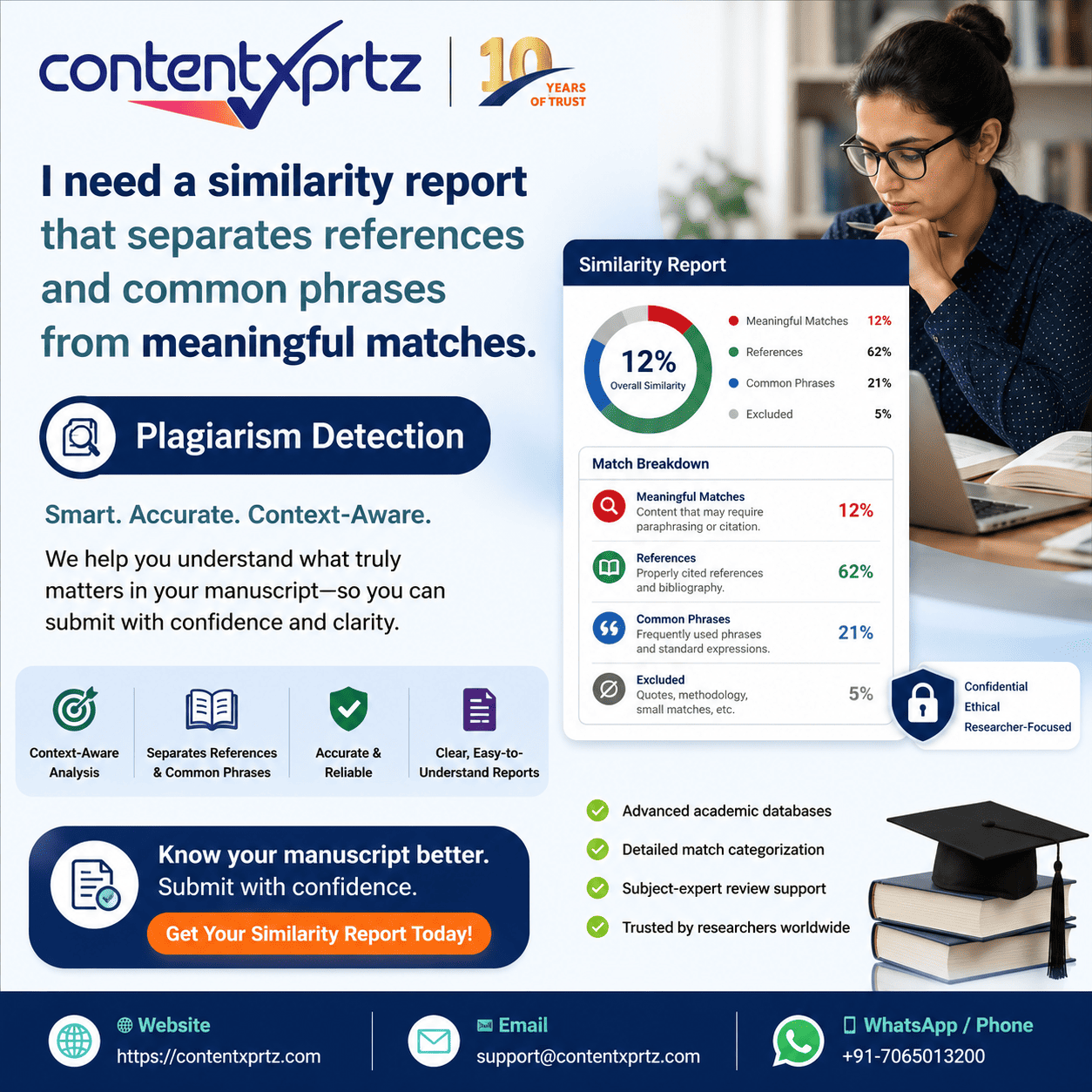
Quick Answer: Plagiarism—How to Check It Correctly
Check plagiarism by running the document through an approved similarity checker, opening the detailed report, and reviewing every meaningful match against its source. Do not treat the overall percentage as a verdict. Determine whether each match is a legitimate quotation, correctly cited source language, standard terminology, a reference entry, your own earlier work, or text that needs rewriting and attribution.
Next, audit citations manually. Every borrowed idea, definition, dataset, image, table, code segment, and distinctive phrase should be traceable. Direct quotations need the required quotation format and citation. Paraphrases must change the language and structure while preserving meaning, and they still need citation. Review self-reuse and prior dissemination separately.
The final check is policy-based. Universities, journals, publishers, and professional bodies apply different rules, and no single similarity percentage is universally acceptable. The goal is a transparent, original document—not a cosmetically low score.
Key Takeaways
- A similarity score measures matching text; it does not independently prove or disprove plagiarism.
- Review individual sources and passages before deciding what needs revision.
- Correct quotations, references, templates, and technical language can create legitimate matches.
- Paraphrasing requires independent wording and structure, accurate meaning, and citation.
- Self-plagiarism and text recycling require disclosure or citation when earlier work is reused.
- Free tools are useful for screening, but privacy, database coverage, and report detail vary.
- The applicable university or journal policy is more important than a universal percentage target.
What This Page Covers
- What plagiarism and similarity mean in academic work.
- A practical plagiarism-checking workflow for assignments, theses, and manuscripts.
- How to use manual checks and similarity software together.
- How to interpret matched text and similarity percentages.
- How to revise quotations, paraphrases, citations, and reused material ethically.
- Common mistakes, mini case studies, and a final checklist.
- When expert academic editing or plagiarism-risk review may be appropriate.
Table of Contents
Methodology and Academic Sources
This article is based on common academic-integrity, editing, citation, and manuscript-review workflows. It distinguishes software-detected text similarity from the broader academic judgement involved in identifying plagiarism. The guidance is informed by official materials from Turnitin on similarity scores, the University of Oxford’s plagiarism guidance, the COPE process for suspected plagiarism, the ICMJE recommendations on overlapping publication, and Purdue OWL plagiarism resources.
Rules vary by institution, discipline, document type, and publisher. Writers should therefore check their university handbook, assessment instructions, supervisor guidance, target journal author instructions, and permitted-use policies for AI or professional editing. Contentxprtz can assist with ethical editing, proofreading, reference consistency, and plagiarism-risk reduction, but authors remain responsible for their sources, claims, data, interpretation, and final submission.
What “Plagiarism How to Check” Means in Academic Context
In academic work, checking plagiarism means evaluating whether another person’s words, ideas, evidence, creative work, or intellectual contribution has been presented without sufficient acknowledgement. It also includes reviewing the reuse of your own earlier work when readers or editors may reasonably expect new material.
Plagiarism is broader than copied sentences. It can involve an uncited idea, a translated passage, a figure reproduced without attribution, code taken from a repository without following its licence, a table copied from a report, or a paraphrase that keeps the source’s structure while changing only a few words. Policies may also address collusion, contract cheating, fabricated citations, duplicate publication, and unauthorised AI use as separate or related integrity concerns.
Similarity is evidence, not a decision
A similarity checker identifies text that resembles material in its databases. It cannot reliably determine the writer’s intention, whether a quotation is permitted, whether a citation is adequate in a particular style, or whether an idea has been copied without matching language. Turnitin explicitly explains that its similarity score reflects matched text and should be interpreted through academic review.
| Term | Practical meaning | Required response |
|---|---|---|
| Direct quotation | Exact words taken from a source | Use the required quotation format and a precise citation. |
| Paraphrase | A source idea restated in genuinely independent language and structure | Cite the source and verify that the meaning remains accurate. |
| Patchwriting | Source wording lightly altered through synonyms or rearrangement | Return to the idea, write independently, and cite. |
| Self-plagiarism or text recycling | Reusing earlier work without transparent acknowledgement | Check policy, cite or disclose prior work, and obtain permission when needed. |
| Similarity score | Percentage of text matched to a comparison database | Inspect sources and context; do not treat it as a misconduct verdict. |
| Academic editing | Improving clarity, organisation, grammar, and consistency | Preserve the author’s ideas and follow disclosure rules. |
Why Students, PhD Scholars, and Researchers Check Plagiarism
Writers check plagiarism to protect source transparency, strengthen academic credibility, and identify problems before submission. The process is especially valuable when a document has grown through months of reading, co-author input, note-taking, translation, or revision.
Assignments and dissertations
Students often copy a useful sentence into notes and later forget whether it is a quotation or their own summary. A final review can reconnect the draft with the original source, correct citation placement, and reveal patchwriting before the document is assessed. Thesis writers also need to check whether conference papers, research proposals, or earlier chapters have been reused in ways their institution permits.
Research papers and journal manuscripts
Researchers may need to disclose preprints, protocols, conference abstracts, or related manuscripts. Reused methods language and standard technical phrases require contextual review, while substantial overlap can raise duplicate-publication or copyright concerns. Co-authored manuscripts are particularly vulnerable when sections arrive from different contributors with inconsistent citation practices.
ESL and multilingual writing
Researchers writing in a second language may follow the sentence structure of a source too closely even when they understand the underlying idea. Translation can also conceal copying from ordinary text-matching systems. Ethical editing should help the author communicate independently without replacing the intellectual work.
AI-assisted drafting
AI-generated wording may show low text similarity but still contain invented references, unattributed ideas, or language that breaches an assessment policy. Checking originality therefore includes verifying claims, sources, drafts, permissions, and disclosure—not merely scanning for matching sentences.
Plagiarism How to Check: A Step-by-Step Academic Workflow
The safest workflow begins before uploading a document and ends only after every meaningful match has been reviewed. Use the following sequence for an assignment, thesis chapter, dissertation, research paper, or manuscript.
Step 1: Identify the policy and permitted tools
Read the assessment brief, university academic-integrity policy, thesis regulations, or journal instructions. Confirm whether students can view similarity reports, whether drafts are stored, whether AI use must be disclosed, and whether professional editing is permitted. Use institution-approved systems whenever possible.
Step 2: Prepare the correct version
Check the complete document rather than isolated paragraphs. Include captions and appendices if they form part of the submission, but follow local instructions on reference lists, title pages, and templates. Remove tracked changes and hidden text that could distort the report. Keep a dated copy of the uploaded version.
Step 3: Run the similarity check
Upload the document through the approved platform and allow the report to finish. Some systems delay reports after resubmission or compare later drafts with an earlier stored version. Do not repeatedly upload confidential work to unknown websites merely to compare percentages.
Step 4: Review the largest sources first
Open the detailed source list. A single long uncited passage generally requires more attention than many small common phrases. Read the full paragraph around each highlight so that you can judge its role in the argument.
Step 5: Classify every meaningful match
Label the match as a correct quotation, cited paraphrase, reference entry, common terminology, template text, self-match, or potentially problematic reuse. This classification prevents unnecessary rewriting of acceptable material and focuses effort on genuine risk.
Step 6: Verify citations and source accuracy
Open the original source. Confirm author, year, title, page or section, DOI, and the exact claim being supported. Check that the citation is placed next to the borrowed material and follows the required style. Never cite a source you have not read merely because it appears in another paper’s reference list.
Step 7: Revise ethically
Use quotation when the original wording matters. Otherwise, understand the idea, set the source aside, write from your own reasoning, compare for accuracy, and cite. Add missing references, disclose related work, or seek permission for figures and tables where necessary.
Step 8: Recheck the revised version
Run a permitted final check and confirm that revisions have improved attribution and independence. Do not mechanically replace words until the score falls. Keep a record of the report and changes if your supervisor, editor, or integrity office may need an explanation.
Manual and Software Techniques for Checking Plagiarism
The most reliable review combines database matching with manual source checks. Each method sees a different part of the problem.
Use a similarity checker for broad comparison
An institution-approved checker can compare the document with web pages, journal content, and stored submissions available to that system. Open the complete report rather than relying on a dashboard percentage. Review source clusters, overlapping matches, and self-matches.
Search distinctive phrases manually
Place an unusual phrase of six to ten words in quotation marks in a search engine. This can reveal public webpages or reports not clearly identified in a report. Repeat with translated or lightly modified phrases when you suspect notes were copied too closely.
Audit the citation trail
Create two checks: every in-text citation must appear in the reference list, and every reference-list entry should have a meaningful use in the text. Then confirm that the cited source actually supports the claim. Citation presence does not correct a misleading or inaccurate paraphrase.
Compare the draft with your notes
Colour-code direct quotations, summaries, and your own analysis in research notes. If the original status of a sentence is unclear, reopen the source. Good note management prevents accidental plagiarism more effectively than last-minute synonym replacement.
Review non-text material
Inspect figures, photographs, diagrams, datasets, survey instruments, code, equations, and tables. Confirm licences, permissions, captions, and attribution. A text report may not identify these forms of reuse.
| Method | Useful for | Main limitation |
|---|---|---|
| Institutional similarity checker | Large-scale text comparison and source highlighting | Coverage depends on the database; result still needs interpretation. |
| Free web checker | Early screening of short, non-confidential text | May have limited databases, unclear privacy, or incomplete reports. |
| Quoted phrase search | Finding distinctive wording on public webpages | Cannot search closed databases and may miss translated or altered text. |
| Citation audit | Finding missing, misplaced, or unsupported references | Requires access to and understanding of the original sources. |
| Manual source comparison | Evaluating paraphrase, meaning, and attribution | Time-intensive and dependent on careful academic judgement. |
| Expert review | Complex reports, self-reuse, multilingual writing, and journal readiness | Must remain ethical and cannot replace author responsibility. |
Free, Institutional, and Professional Plagiarism-Checking Options
Choose the checking method according to the sensitivity and importance of the document. A free tool may be suitable for a short draft, while a thesis or unpublished manuscript needs stronger privacy and contextual review.
| Option | Best use | Advantages | Questions to ask |
|---|---|---|---|
| Manual self-check | Early drafting and source management | Free, private, and improves research habits | Can you access every source and review consistently? |
| Free online checker | Short, non-confidential passages | Fast initial screening | What database is used, and is uploaded text stored or reused? |
| University or employer system | Assignments, theses, and institutional submissions | Approved process, broader databases, local guidance | Can you see the report, and how are drafts handled? |
| Publisher or journal screening | Editorial review of submitted manuscripts | Integrated with publication ethics procedures | What overlap must be disclosed before submission? |
| Professional academic review | Complex similarity reports, ESL manuscripts, and self-reuse | Source-level interpretation, citation and language support | Does the service preserve authorship and avoid score-manipulation claims? |
Before using any third-party platform, check confidentiality and intellectual-property terms. Unpublished findings, personal data, client documents, or patent-sensitive material should not be uploaded casually. When expert help is appropriate, choose a service that explains the problem and supports transparent revision. Contentxprtz offers academic editing services and scholarly proofreading that can be combined with plagiarism-risk review without promising a zero score or replacing the author’s judgement.
How to Interpret a Similarity Report Without Misreading It
Interpretation begins at passage level. The percentage is a navigation aid; the source, context, and type of overlap determine whether action is required.
Start with the largest meaningful match
A long continuous passage from one source deserves immediate attention. Check whether it is quoted, cited, and necessary. A cluster of small matches may be less serious, although repeated patchwriting across many sources can reveal a broader writing problem.
Separate legitimate and problematic overlap
Reference lists, common phrases, assignment questions, legislation, standard methods, and correctly formatted quotations may be legitimate. However, citation alone does not make extensive verbatim copying acceptable. The amount of quotation permitted depends on the task, discipline, and publisher.
Investigate self-matches
A match to your earlier submission may result from an approved draft repository, a reused thesis chapter, or undisclosed prior work. Keep evidence of authorship and ask whether citation, disclosure, or editor permission is needed.
Do not game filters
Excluding quotations, bibliography, or small matches can clarify a report, but exclusions should follow policy. Changing spellings, inserting invisible characters, replacing words mechanically, or converting text to images undermines the purpose of review and may create additional misconduct concerns.
What should you do with each type of match?
| Match type | Likely action |
|---|---|
| Exact words with no citation | Quote and cite if wording is necessary, or rewrite independently and cite. |
| Close paraphrase with citation | Restructure from understanding; citation alone does not correct patchwriting. |
| Correctly quoted passage | Keep if proportionate and permitted; verify page details and formatting. |
| Bibliography or citation string | Usually legitimate; exclude only when the reporting policy permits. |
| Standard method or technical phrase | Assess whether wording is unavoidable, attributable, and proportionate. |
| Earlier work by the same author | Cite or disclose prior work and check copyright or duplicate-publication rules. |
| Unknown student-paper source | Review your notes and draft history; ask the instructor if source access is restricted. |
Ethical Paraphrasing, Citation, and Author Responsibility
Ethical revision improves the writer’s own explanation; it does not disguise copied wording. The most dependable paraphrasing method is comprehension-first writing.
- Read the source until you can explain the idea without looking at it.
- Record the source details and the page or section before drafting.
- Close the source and write the point for your specific argument.
- Change the structure, emphasis, and wording naturally rather than substituting synonyms.
- Reopen the source and check that the meaning, limitations, and level of certainty remain accurate.
- Add the citation exactly where the borrowed idea appears.
- Use quotation marks when distinctive wording must remain unchanged.
Authors remain responsible for data, claims, citations, permissions, and final approval even after editing. A professional editor may point out close paraphrasing, improve clarity, and standardise references, but should not invent sources or rewrite copied material solely to bypass detection. Contentxprtz ethical editing support focuses on understandable, defensible revision while preserving authorship.
Common Mistakes to Avoid When Checking Plagiarism
Most checking failures come from treating the report as a scorecard rather than a source-review tool.
- Chasing a zero score: Some legitimate matches are unavoidable. Removing accurate quotations or technical terms can damage the document.
- Assuming citation makes copying acceptable: A citation acknowledges the source, but excessive verbatim wording may still require quotation or revision.
- Using synonyms as paraphrasing: Patchwriting preserves the source’s architecture and does not demonstrate independent expression.
- Ignoring self-reuse: Earlier assignments, reports, preprints, and publications may need citation, disclosure, or permission.
- Uploading confidential work anywhere: A free tool may store or reuse text. Review privacy terms first.
- Excluding matches to lower the percentage: Filters should clarify analysis, not conceal overlap.
- Checking only the introduction: Methods, literature reviews, captions, appendices, and tables can also contain source-dependent material.
- Trusting AI or reference software blindly: Generated citations may be fabricated or inaccurate; imported metadata needs verification.
- Rewriting without reopening the source: This can distort the original claim or remove an important limitation.
- Waiting until submission day: Meaningful revision requires time to consult sources and policies.
Practical Examples: From Similarity Match to Ethical Revision
Example 1: A PhD scholar checking a thesis chapter
Situation: A literature-review chapter returns 28% similarity, with long matches to review articles and several matches to the scholar’s own conference paper.
Common confusion: The scholar believes every highlight must be rewritten and starts replacing technical words with awkward synonyms.
Correct approach: The references and standard terminology are separated from the substantive overlap. Review-article passages are rewritten from the primary studies, with clearer synthesis and citation. Material from the conference paper is disclosed and cited according to university rules. The final score remains above zero, but the argument is more independent and transparent.
Ethical expert guidance: Thesis editing support can flag patchwriting, improve synthesis, and check consistency while the scholar retains responsibility for evidence and interpretation.
Example 2: A first-time researcher interpreting a low score
Situation: A manuscript receives only 4% similarity, so the author assumes it is safe to submit.
Common confusion: Several paragraphs are translated from a non-English source, and one figure has been adapted without attribution. Neither issue creates a strong text match.
Correct approach: The translated ideas are rewritten from understanding and cited. The figure source and licence are checked, the caption states that it is adapted, and permission is obtained if required. The author also verifies every reference and discloses a related preprint.
Ethical expert guidance: A manuscript assessment can review source integration and publication readiness beyond the percentage.
Example 3: An ESL student using a free checker
Situation: A student checks an essay through three free websites and receives three different percentages.
Common confusion: The student assumes the lowest number is the correct result and ignores a paragraph that closely follows a textbook.
Correct approach: The student checks the university’s approved system, compares the paragraph with the textbook, writes a new explanation from notes, and adds the required citation. The free tools are treated as preliminary screens because their databases and settings differ.
Ethical expert guidance: Proofreading can improve grammar after the student has completed the intellectual revision, without changing the argument or hiding source use.
Example 4: A multi-author research paper with reused methods
Situation: A corresponding author combines sections from four co-authors. The methods overlap with a prior paper from the same research group.
Common confusion: The team assumes authors can reuse any wording from their own publication.
Correct approach: The prior paper is cited, the new study’s differences are made explicit, and the journal’s text-recycling and copyright rules are checked. Related work is disclosed in the cover letter. Repeated wording is reduced where practical without changing the technical meaning.
Ethical expert guidance: Journal-focused editing can harmonise style, references, and disclosures, but all authors must approve the final text.
Academic Plagiarism-Checking and Submission Checklist
Before running the report
- The applicable university, journal, or employer policy has been read.
- The checking tool is approved and suitable for confidential material.
- The correct full version of the document is ready.
- Drafts, notes, and source files are retained.
Source and citation review
- Every borrowed idea and distinctive phrase is traceable to a source.
- Direct quotations use the required format and citation.
- Paraphrases change both language and structure while preserving meaning.
- In-text citations and reference-list entries match in both directions.
- Figures, tables, code, data, and translated passages are attributed.
Similarity-report review
- The full report has been opened, not just the percentage.
- Largest and most meaningful matches were reviewed first.
- Each match was classified by type and context.
- Filters were used only as permitted, not to manipulate the score.
- Self-matches and related publications were investigated.
Final submission review
- Revisions were made from understanding rather than synonym replacement.
- Prior dissemination and related manuscripts are disclosed where required.
- AI use and professional editing are disclosed when policy requires it.
- All authors have reviewed and approved the final document.
- The final report and revision history are saved when appropriate.
How Contentxprtz Can Help With Plagiarism-Risk Reduction
Contentxprtz supports writers who need more than an automated percentage. A plagiarism-risk review can identify close paraphrasing, missing source acknowledgement, inconsistent citations, possible self-reuse, and passages that require clearer distinction between source material and original analysis.
Relevant support may include plagiarism and AI-integrity review, academic editing, proofreading, and manuscript assessment. The service should match the document’s actual problem. A thesis may need synthesis and citation consistency; a journal article may need overlap disclosure and publication-ready language; an ESL manuscript may need independent expression that preserves technical meaning.
Ethical assistance does not fabricate references, guarantee plagiarism removal, promise a zero similarity score, or rewrite copied material simply to defeat detection. Authors remain responsible for reading sources, confirming permissions, approving revisions, following institutional or journal rules, and submitting work that reflects their own contribution.
Summary: Plagiarism How to Check Responsibly
To check plagiarism responsibly, use an approved similarity checker, examine individual matches, compare them with original sources, and audit citations, paraphrases, quotations, figures, data, and earlier work. A score is only a starting point. The central questions are whether the source is traceable, the attribution is complete, the wording and reasoning are genuinely independent, and the applicable policy has been followed.
Free and manual methods are often sufficient for early drafts and short assignments. Institutional systems and expert review become more useful when the document is confidential, publication-bound, multilingual, co-authored, or connected with earlier work. The most defensible revision is one the author understands and can explain—not one designed merely to lower a percentage.
Frequently Asked Questions
Plagiarism: how to check an academic document correctly?
To check an academic document correctly, use a similarity checker as one part of a wider review. Upload the final or near-final version through a tool approved by your university, journal, employer, or client. Then open the full report and examine each highlighted passage against its source. Decide whether the match is an acceptable quotation, a correctly cited technical phrase, a reference-list entry, an unavoidable method description, an earlier version of your own work, or wording that needs revision. Check that quotations use quotation marks where required, paraphrases genuinely change both wording and sentence structure, and every borrowed idea has an appropriate citation. Review tables, figures, captions, code, data, and translated material separately because text-matching systems may not assess all of them reliably. Finally, verify the policy that applies to your submission; there is no universal acceptable percentage. The correct outcome is not the lowest possible score, but a document in which every source-dependent passage is transparent, traceable, accurately represented, and permitted by the relevant academic rules.
Does a high similarity score always mean plagiarism?
No. A high similarity score does not automatically prove plagiarism, and a low score does not prove that a document is original. A similarity score measures the amount of text that matches material in the checker’s comparison database. Correct quotations, standard terminology, bibliographies, assignment templates, legal wording, and a previously submitted draft can all create matches. Conversely, copied ideas, translated copying, contract cheating, fabricated citations, image reuse, or heavily disguised paraphrasing may produce little obvious text similarity. Review the report source by source instead of judging the colour or percentage alone. Ask whether the matched wording is necessary, whether it is quoted, whether the source is cited at the point of use, and whether the surrounding interpretation is genuinely the author’s own. Turnitin’s official guidance likewise distinguishes text similarity from a finding of plagiarism. The institution, journal, supervisor, or editor must interpret the evidence in context and apply its own academic-integrity policy.
What is an acceptable plagiarism or similarity percentage?
There is no universal acceptable similarity percentage for every university, journal, subject, or document type. A thesis with a long reference list, a methods chapter using established terminology, a legal document, and a short reflective essay can produce very different patterns. Some institutions use internal thresholds for screening, but those numbers are administrative triggers rather than automatic definitions of misconduct. A 5% report can still contain one serious uncited passage, while a 25% report may consist mainly of correctly quoted material, references, or required template language. Follow the exact instructions issued by your university, supervisor, journal, publisher, or assessment body. More importantly, inspect the largest and most meaningful matches, exclude bibliography or small matches only when the policy permits it, and document any legitimate overlap such as a preprint, protocol, conference abstract, or earlier thesis chapter. Aim for accurate attribution and authentic writing rather than trying to manipulate the report to reach a particular number.
Can I check plagiarism for free?
You can perform a basic plagiarism check with free or institution-provided tools, but free access has practical limits. Some services compare only against publicly available web pages, restrict word counts, display incomplete sources, retain uploaded text under unclear terms, or provide a percentage without a detailed report. A university account may offer broader database coverage and clearer privacy controls, so check your library, learning platform, supervisor, or research office first. Before uploading unpublished research, confidential data, a client document, or a journal manuscript, read the tool’s storage, reuse, deletion, and intellectual-property terms. Manual checking remains essential: search distinctive phrases in quotation marks, verify references, compare notes with sources, and inspect quotations, paraphrases, figures, tables, and code. Free checking is usually enough for an early draft or a short assignment when combined with careful citation review. Higher-stakes theses and manuscripts benefit from an approved similarity report plus expert interpretation, because the quality of the decision depends on context rather than the percentage alone.
How do I interpret a Turnitin similarity report?
Interpret a Turnitin Similarity Report by moving from the overall score to the individual matches. Open the match overview, identify the largest sources, and read the highlighted passage in its full paragraph. Confirm whether the match is a quotation, citation, reference entry, common phrase, template, previous submission, or genuinely problematic reuse. Use filters for quotations, bibliography, or small matches only if your instructor or institutional policy allows them; do not use exclusions simply to make the score look lower. Compare each source with the wording in your document and record what action is needed: keep and cite, place in quotation marks, paraphrase more independently, add a missing reference, disclose prior publication, or rewrite from your own understanding. Be cautious when a source is another student paper that you cannot view. Official Turnitin guidance states that the report highlights matching text and does not itself determine plagiarism. Academic judgement, source verification, authorship history, and the applicable policy are still required.
How can I check plagiarism without a plagiarism checker?
You can identify many plagiarism risks manually, although manual review cannot reproduce the coverage of a large comparison database. Start by comparing the draft with your notes and source files. Mark every sentence that contains a borrowed fact, idea, definition, method, image, table, or distinctive phrase. Confirm that direct wording is quoted and cited, while paraphrases differ in vocabulary, syntax, emphasis, and organisation without changing the source’s meaning. Search unusual six-to-ten-word phrases in quotation marks using a search engine. Verify that every in-text citation appears in the reference list and every reference-list entry is actually used. Check repeated language from your own earlier assignments, conference abstracts, preprints, reports, or published papers. Review figure permissions, captions, code licences, translated passages, and data provenance. Reading the draft aloud can also expose sudden changes in voice. This process is slower and may miss inaccessible sources, but it improves source awareness and often finds citation problems that a simple percentage cannot explain.
Is paraphrasing enough to avoid plagiarism?
Paraphrasing is not enough unless it is genuinely independent and accompanied by citation. Replacing a few words with synonyms, changing the order of phrases, translating a passage, or using a rewriting tool while keeping the source’s structure is patchwriting and can still misrepresent authorship. A responsible paraphrase begins with understanding the source, setting it aside, writing the idea in a form that fits your own argument, checking that the meaning remains accurate, and then citing the source at the point where the idea is used. Technical terms may need to remain unchanged, but the surrounding explanation should reflect your own reasoning. Quotations are more appropriate when the original wording is itself important, such as a formal definition or policy statement. Keep notes that clearly distinguish copied quotations from summaries and your own observations. Editing support may improve clarity, but it should not disguise copied text or replace the author’s intellectual contribution.
Can plagiarism checkers detect AI-generated or translated text?
Similarity checkers and AI-writing detectors assess different signals, and neither provides certainty about authorship. A conventional plagiarism checker mainly compares text with material in its databases, so newly generated wording may show little similarity even when it contains unverified claims, invented references, or unattributed ideas. Translated copying may also evade ordinary phrase matching, especially when the source language is not included in the database. Some platforms offer separate AI-writing indicators, but those results should be treated as screening information rather than conclusive proof. False positives and false negatives are possible, particularly for formulaic academic prose, ESL writing, edited text, or short passages. The safer process is to retain drafts and notes, verify every factual claim and citation, disclose AI use when required, and follow the institution’s or journal’s policy. Human review should consider the writing process, source traceability, disciplinary conventions, and the author’s ability to explain the work.
How do I check self-plagiarism or text recycling?
Check self-plagiarism by comparing the new document with your own previous assignments, thesis chapters, reports, conference abstracts, preprints, protocols, websites, and published articles. Reusing your own words can still create ethical, copyright, or duplicate-publication problems when readers are led to believe the material is new. Search distinctive phrases, review similarity matches to your earlier submissions, and map overlapping sections. Then determine whether the reuse is permitted, requires citation, needs quotation, should be summarised, or must be disclosed to an editor. Methods may legitimately use some repeated technical wording, but policies differ and substantial overlap should not be hidden. For journal submissions, disclose related manuscripts and prior dissemination in the cover letter. The ICMJE’s recommendations on overlapping publication emphasise transparency when work substantially overlaps with previous reports. When in doubt, ask the supervisor, journal editor, or research-integrity office before submission rather than trying to rewrite mechanically after a screening result.
When should I seek professional plagiarism-risk review?
Professional review is useful when a thesis, dissertation, research paper, book chapter, or journal manuscript contains extensive source-based writing and the author cannot confidently interpret the similarity report. It can also help when multiple authors contributed text, an ESL author has paraphrased complex literature, previous publications overlap with a new manuscript, citations are inconsistent, or a deadline leaves little time for systematic checking. Ethical support should identify risky passages, explain why they are risky, check citation placement and reference consistency, and suggest transparent revision strategies while preserving the author’s ideas and responsibility. It should not promise a zero score, rewrite copied material merely to defeat detection, fabricate references, or conceal unauthorised assistance. Contentxprtz can provide plagiarism-risk reduction guidance, academic editing, and proofreading aligned with the document’s purpose. The author must still verify sources, approve every change, comply with university or journal rules, and make the final submission decision.
Conclusion: Use Plagiarism Checking to Strengthen Academic Integrity
The real problem is not a coloured percentage. It is uncertainty about whether the document clearly distinguishes the author’s contribution from the sources that informed it. A good plagiarism check makes that boundary visible through accurate quotation, independent paraphrasing, complete citation, transparent self-reuse, and careful source verification.
Self-service checking is often enough when the document is short, the sources are well managed, and the writer can interpret every match. Expert-assisted academic editing or publication support is safer when the report is complex, the manuscript reuses earlier work, multiple authors contributed, or language barriers make independent expression difficult. Contentxprtz helps improve clarity, structure, citation consistency, ethics, and publication readiness while preserving the author’s ideas and decisions.
Academic integrity ultimately depends on author responsibility. Keep authentic notes, verify every source, disclose assistance when required, and submit only work you can explain and defend. “At Contentxprtz, we don’t just edit; we help ideas reach their fullest potential.”