DrillBit Plagiarism Check: How to Run and Read It
A DrillBit plagiarism check can help a student, PhD scholar, researcher, or academic author locate text that overlaps with internet pages, scholarly publications, submitted papers, or an institutional repository. The result is commonly presented as a similarity percentage with highlighted passages and source links. That number is useful, but it is not a final judgement on plagiarism. A reliable review begins by asking what caused each match, whether the source has been acknowledged, and whether the wording reflects genuine independent writing.
Researchers often search for DrillBit guidance shortly before a thesis submission, journal deadline, plagiarism-certificate request, or supervisor review. At that stage, one unexplained percentage can create unnecessary anxiety. References, quotations, standard methods, technical expressions, university templates, and the author’s own earlier work may all appear as matches. At the same time, a low overall score can conceal one serious uncited passage. Reading the report source by source is therefore more important than trying to reach a single “safe” number.
DrillBit is available through institutional and individual workflows. Its official documentation describes similarity analysis, matched-source reporting, exclusion settings, language options, repositories, and related document-analysis tools. Institutions may configure those features differently, and universities may apply their own thresholds, certificate processes, and academic-integrity rules. Students should follow the authorised local procedure instead of using random online checkers or changing settings solely to lower the score.
This guide explains how to prepare a document, run the check, interpret the similarity report, revise ethically, and decide when plagiarism and academic-integrity support may be helpful. It is written for real academic decisions: improving paraphrasing, checking citations, protecting author responsibility, and preparing clearer work without hiding matches or promising a guaranteed outcome.
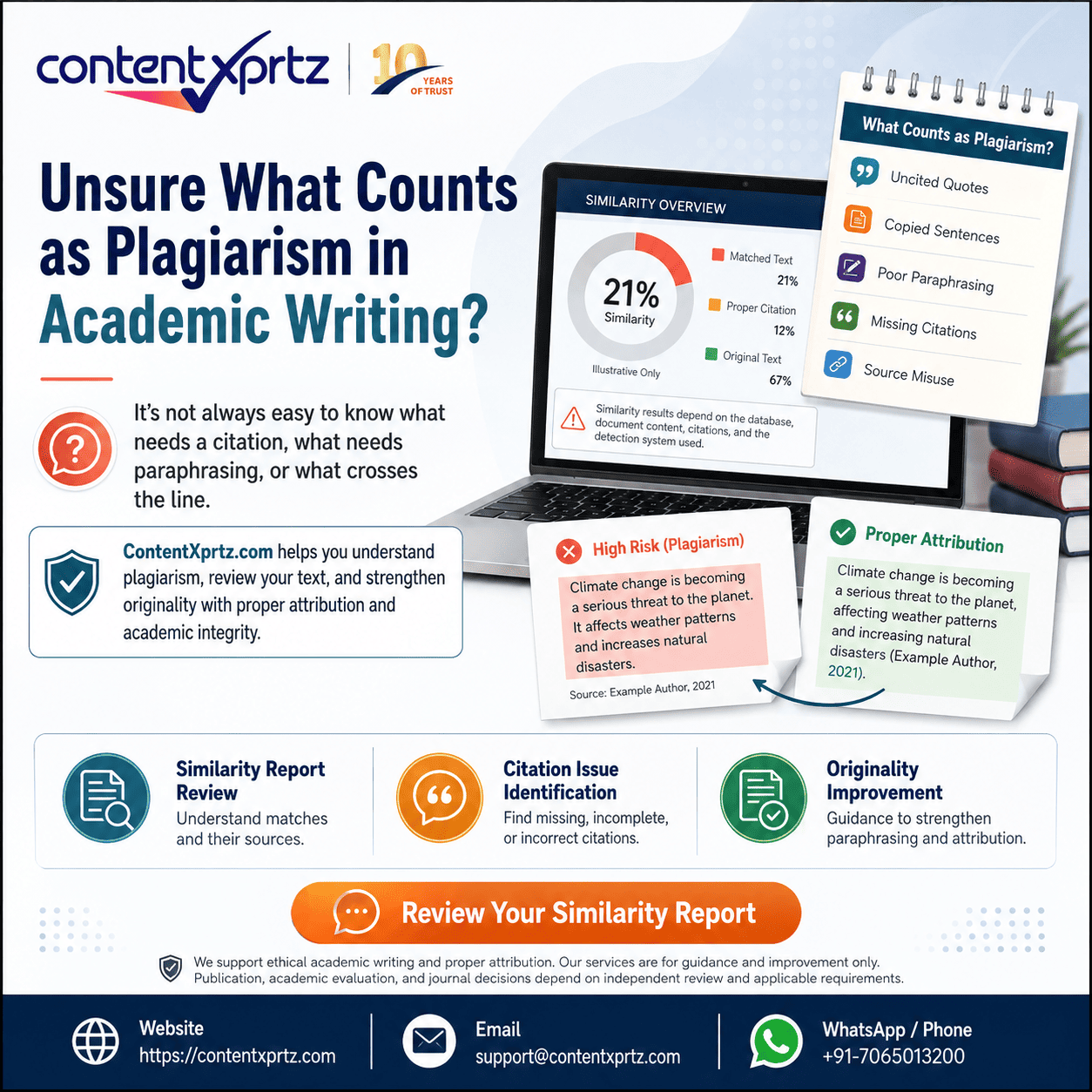
Quick Answer: What Does a DrillBit Plagiarism Check Show?
DrillBit compares a submitted document with selected databases and reports text similarity. The report can identify overlapping passages, show the sources associated with them, display an overall similarity percentage, and record which exclusions or databases were used. Official DrillBit guidance describes report sections for submission information, result information, exclusion settings, database selection, matched sources, and highlighted document content.
Use the result as a review map. Start with the largest or most important matches, open the source, and decide whether the overlap is a legitimate quotation, a correctly cited standard phrase, a close paraphrase, uncited copying, or reuse of earlier work. Correct the academic problem rather than simply changing words until the percentage falls.
Similarity is evidence of overlap, not automatic proof of plagiarism. Your university, supervisor, journal, or publisher determines the relevant policy. The software report supports that decision but does not replace human academic judgement.
Key Takeaways
- DrillBit reports similarity; reviewers decide whether a match represents plagiarism or acceptable reuse.
- The headline percentage must be read with matched sources, highlighted text, exclusions, and database settings.
- No universal “acceptable” score applies to every institution, thesis, or journal.
- References, quotations, technical language, and standard methods can raise similarity without being misconduct.
- Ethical revision uses accurate citation, genuine paraphrasing, synthesis, quotation, and removal of unnecessary repetition.
- Institutional settings and certificate procedures should take priority over personal attempts to lower a score.
- Authors remain responsible for their ideas, evidence, citations, disclosures, and final submission.
What This Page Covers
- What DrillBit checks and what a similarity score means
- Institutional, classroom, and individual access routes
- How to upload a document and review analysis settings
- How to interpret report grades, sources, exclusions, and highlighted text
- Ethical ways to reduce problematic similarity
- Common errors made before thesis or manuscript submission
- When academic editing or plagiarism-risk guidance may help
Table of Contents
Methodology and Academic Sources
This article is based on the current DrillBit similarity-detection overview, the official DrillBit file-upload guide, and the official similarity-report guide. Academic interpretation is also informed by the UGC academic-integrity regulations and COPE guidance on text recycling.
Product interfaces, upload allowances, language support, and institutional settings can change. Always confirm the current instructions in your account and follow the policy of the university, journal, or organisation receiving the document. Contentxprtz can support ethical editing and source-integration review, but the author remains responsible for the accuracy and originality of the work.
What “DrillBit Plagiarism Check” Means in Academic Practice
A DrillBit check is a similarity-detection process that searches for textual overlap between an uploaded file and the databases enabled for that submission. It may compare against internet sources, journals and publishers, student papers, and an institutional repository. The output identifies matching text and helps reviewers investigate where wording may need attribution, quotation, paraphrasing, or further explanation.
The word plagiarism is often used casually for any match, but academic evaluation is more precise. Plagiarism involves presenting another person’s words, ideas, data, images, or structure without appropriate acknowledgement. Similarity is broader. It includes acceptable and unacceptable overlap. A bibliography entry can match perfectly because citation formats are standard. A definition can match because a field uses fixed wording. A methods section can resemble earlier studies because the same validated procedure was followed. These matches need context rather than automatic condemnation.
Similarity detection and plagiarism determination are different tasks
Similarity software performs the first task: locating overlap. A student, supervisor, editor, librarian, academic-integrity panel, or journal then performs the second task: evaluating the overlap. That evaluation considers the length and location of the match, the source type, whether attribution is present, whether quotation marks are used, whether the paraphrase is independent, and whether the reuse is permitted.
How Students and Researchers Access DrillBit
Access usually comes through an institution, a classroom workflow, or an individual account. The correct route affects who can upload, which databases are searched, whether a file enters a repository, how many submissions are allowed, and whether an official certificate can be issued.
| Access route | Typical user | Main advantage | Important check |
|---|---|---|---|
| University or library account | PhD scholars, faculty, postgraduate students | Institution-approved workflow and databases | Who may submit and how certificates are issued |
| Classroom or LMS assignment | Students and instructors | Submission, feedback, and report access in one process | Repository, resubmission, and report-view permissions |
| Research-cell submission | Thesis and dissertation authors | Formal screening before examination or deposit | Required chapters, exclusions, forms, and deadlines |
| Individual account | Independent researchers and professionals | Direct self-service checking | Current allowance, pricing, privacy, and storage terms |
In India, participating higher education institutions may receive DrillBit-Extreme through the ShodhShuddhi programme. That does not mean every student receives automatic public access. Registration and usage are generally coordinated by the institution. Ask the library or research office before purchasing a separate check.
Protect unpublished work
A thesis draft may contain confidential data, patentable ideas, unpublished findings, or identifiable participant information. Before upload, confirm the approved platform, account ownership, repository setting, access permissions, and institutional data policy. Do not send a sensitive manuscript to an unknown third party merely to obtain a quick percentage.
How to Run a DrillBit Plagiarism Check Step by Step
A careful check begins before the upload. The goal is to produce a report that reflects the document fairly and can be interpreted consistently.
1. Prepare the correct version
Use the draft that is genuinely ready for review. Remove tracked changes, comments intended only for collaborators, duplicate appendices, and accidental copies of earlier chapters. Keep a secure backup. If your university specifies which sections to include, follow that instruction exactly.
2. Confirm the authorised settings
Review whether references, quotations, small sources, or specific phrases should be excluded. Also check whether the file will be compared against student papers, journals and publishers, the internet, or an institutional repository. A first report and a revised report should normally use the same approved settings so the comparison remains meaningful.
3. Upload the file and complete metadata
Select the correct language route and enter the author name, title, and document type accurately. Official DrillBit upload guidance lists a wide range of supported document formats, but account limits and analysis availability can vary. A clean, text-readable PDF or DOCX generally produces a more interpretable report than a poorly scanned image file.
4. Open the full report
Do not stop at the dashboard percentage. Download or view the complete similarity report and note the submission ID, date, word count, grade band, active exclusions, databases searched, and matched-source list.
5. Review matches by academic importance
Begin with long passages, repeated sources, matches in the abstract or conclusions, and any source that should have been cited. Then inspect smaller matches. Classify each as acceptable, questionable, or requiring correction.
6. Revise the scholarship
Add missing citations, format quotations correctly, rewrite close paraphrases from understanding, synthesise multiple sources, remove unnecessary copied definitions, and disclose reuse of previous work where required. Use academic editing services only in ways permitted by the institution.
7. Recheck and retain records
Run the revised file using the same authorised configuration. Compare the source pattern, not only the percentage. Retain versions, reports, and relevant approval emails when the thesis office or journal may ask how issues were resolved.
How to Read the DrillBit Similarity Report
The report should be read in layers: submission details, result summary, settings, matched sources, and highlighted text. Each layer answers a different question.
| Report element | What it tells you | Reviewer question |
|---|---|---|
| Submission information | Author, title, paper ID, submitter, date, pages, and words | Is this the correct file and version? |
| Similarity percentage | Total matched text under the active settings | Which sources and passages created it? |
| Matched-source count | Number of identified sources contributing overlap | Are a few sources dominating the report? |
| Grade band | DrillBit’s visual classification of the percentage | Does institutional policy use the same interpretation? |
| Exclusion information | Whether quotes, references, small sources, or phrases were ignored | Were the settings permitted and consistently applied? |
| Database selection | Which source collections were searched | Was the relevant academic coverage enabled? |
| Highlighted content | Exact matched passages linked to sources | Is the wording quoted, paraphrased, cited, or copied? |
Start with sources, not colour
A coloured grade or high percentage attracts attention, but the source list carries the academic meaning. One 12% match to a single uncited article can be more serious than dozens of small, legitimate matches. Review the largest source, then the most important sections of the document, and finally the remaining patterns.
Check the settings before comparing reports
A report with references excluded cannot be compared directly with one that includes them. The same problem applies when one check searches an institutional repository and another does not. Record the configuration so revisions are evaluated on equal terms.
What Is an Acceptable DrillBit Plagiarism Percentage?
No single percentage is acceptable everywhere. DrillBit’s official report guide displays A at 0–10%, B at 11–40%, C at 41–60%, and D at 61–100%, but those product bands are not universal academic rules.
| DrillBit band | Displayed range | Responsible next step |
|---|---|---|
| A | 0–10% | Still inspect every substantial or uncited match. |
| B | 11–40% | Identify dominant sources, references, quotes, and close paraphrases. |
| C | 41–60% | Conduct a structured source-by-source revision before submission. |
| D | 61–100% | Pause submission and review document provenance, duplication, and attribution. |
The institution’s threshold, exclusions, and review procedure control the academic decision. UGC regulations, university ordinances, thesis manuals, and journal policies may distinguish different document types and may exclude certain material from calculation. Do not assume that a number accepted for a coursework assignment automatically applies to a doctoral thesis or journal article.
Why a low score can still be risky
A 5% report may contain a complete uncited paragraph from one source. Because the overall document is long, the percentage appears small. The passage is still a serious concern.
Why a higher score can sometimes be explainable
A legal thesis, laboratory protocol, questionnaire, or systematic-review search strategy may contain necessary standard language. The correct response is transparent review and appropriate attribution, not automatic accusation or automatic approval.
How to Reduce Similarity Ethically
Ethical reduction means correcting the writing and citation problem that produced a match. It does not mean hiding text from the software.
Use quotation when the exact wording matters
If the source’s wording is distinctive or must be reproduced precisely, use quotation marks or block quotation according to the required style. Cite the original source and include a page or paragraph locator where the style or institution requires it.
Paraphrase from understanding
Read the source, close it, explain the idea in your own conceptual structure, and then compare the result with the original. A true paraphrase changes more than vocabulary; it reorganises emphasis, syntax, and explanation while preserving meaning and attribution.
Synthesise instead of rewriting one source
Academic writing becomes more original and useful when it compares multiple studies. Explain where authors agree, where methods differ, and what remains uncertain. This approach reduces dependence on one source and strengthens the literature review.
Handle self-reuse transparently
Reuse from a thesis chapter, conference paper, preprint, report, or earlier article may require citation, disclosure, permission, or fresh wording. COPE describes this issue as text recycling and encourages context-sensitive editorial judgement. Do not assume that your own previous wording is automatically free to reuse.
Fix citations as well as prose
Check that every in-text citation has a corresponding reference, author names and years are accurate, quotation locators are present, and the cited source genuinely supports the claim. professional proofreading support can help identify consistency problems, but only the author can confirm that the source has been read and represented accurately.
Free, Institutional, and Professional Support Options
Different stages of the writing process require different levels of support. Choose the least intensive option that still protects accuracy and academic integrity.
| Option | Best use | Strength | Limitation |
|---|---|---|---|
| Self-review with the DrillBit report | Clear, limited matches and routine revision | Immediate and author-controlled | Requires strong citation and paraphrasing skills |
| Supervisor or librarian guidance | Institutional rules, thesis procedures, database settings | Local policy knowledge | Availability may be limited near deadlines |
| Peer feedback | Clarity and obvious source-integration problems | Low cost and discipline context | Peers may miss technical citation issues |
| Academic editing | Repeated close paraphrasing, language, flow, and consistency | Systematic document-level review | Must remain within university or journal rules |
| Publication support | Journal-ready citation, formatting, and response planning | Connects revision with submission requirements | Cannot guarantee editorial acceptance |
For a thesis, dissertation, or article with complex similarity patterns, thesis editing support or publication support can help organise revision. The service should preserve the author’s ideas and identify source problems rather than conceal them.
Common Mistakes to Avoid Before Submission
- Chasing only the total percentage: the location and nature of matches matter more than the headline number.
- Changing settings between checks: excluding references or databases can create a misleading improvement.
- Using synonym replacement: mechanical wording changes often preserve the source’s structure and can distort meaning.
- Ignoring self-plagiarism: previous conference papers, reports, and thesis chapters may require disclosure or citation.
- Deleting citations to reduce matches: removing attribution makes the academic problem worse.
- Submitting scanned images: poor text extraction can produce incomplete or confusing analysis.
- Uploading to unverified websites: unpublished work may be stored, exposed, or entered into an unknown repository.
- Assuming AI and similarity scores are interchangeable: they evaluate different signals and require separate interpretation.
- Waiting until the final day: meaningful paraphrasing and source verification take time.
Practical Examples: Reading DrillBit Matches Correctly
Example 1: A PhD scholar with a high methodology match
A doctoral candidate receives 24% similarity, with most overlap in the methods chapter. The first reaction is to rewrite every technical phrase. A closer review shows that the procedure follows a published instrument and includes standard steps. The correct approach is to cite the original protocol, quote any required exact wording, explain adaptations made for the present study, and confirm whether the institution permits exclusion of standard methodology or small sources. Ethical expert guidance can help distinguish necessary technical language from close paraphrasing without altering the research design.
Example 2: A first-time journal author with one dominant source
A researcher receives only 8% similarity, but 5% comes from one article in the introduction. The passage is cited, yet its sentence order and argument closely follow the source. The author should not treat the low total as clearance. The safer revision is to read additional studies, rebuild the paragraph around the research question, compare findings across sources, and cite each claim accurately. A manuscript editor can flag structural borrowing and improve synthesis while leaving scientific conclusions to the author.
Example 3: An ESL researcher with repeated definition matches
An ESL author uses several textbook definitions because they seem linguistically safe. DrillBit highlights the definitions and transition sentences. Replacing each word with a synonym produces awkward and sometimes inaccurate prose. The better solution is to retain one essential quoted definition with citation, paraphrase other concepts from understanding, and use original examples relevant to the study. Language editing can improve grammar and academic tone after the author has established the correct source relationship.
DrillBit Plagiarism Check and Revision Checklist
- Use the authorised institutional or verified individual account.
- Confirm file format, language route, size, page, and word requirements.
- Check whether the file will be stored in a repository.
- Apply institution-approved exclusions for references, quotations, small sources, and phrases.
- Record the databases selected for comparison.
- Verify author name, title, document type, and submission ID.
- Open the complete report rather than reading only the dashboard score.
- Review the largest sources and the most important sections first.
- Correct missing citations and quotation formatting.
- Rewrite close paraphrases from understanding and synthesise multiple sources.
- Check self-reuse, permissions, and disclosure requirements.
- Verify every reference against the original source.
- Rerun the file using the same approved settings.
- Retain the report and revision record if a certificate or audit may be required.
- Obtain supervisor, librarian, or editor support when policy or source interpretation is unclear.
How Contentxprtz Can Help After a DrillBit Report
Contentxprtz supports authors who need more than a percentage. Our plagiarism-risk guidance can help classify matches, identify close paraphrasing, improve source integration, standardise citations, and strengthen academic language. The purpose is not to make a report look artificially clean. It is to help the manuscript communicate original work clearly and ethically.
Support may include academic editing, proofreading, thesis editing, reference-consistency review, and publication-readiness guidance. Editors can flag passages requiring author action and explain why a quotation, citation, paraphrase, or synthesis is needed. They cannot verify research that has not been supplied, invent references, change data, guarantee a target percentage, or promise thesis approval or journal acceptance.
Authors should share the relevant university or journal policy, the DrillBit report, the manuscript, and any supervisor instructions. This allows the review to focus on the real requirement while preserving the author’s responsibility.
Summary: DrillBit Plagiarism Check
A DrillBit plagiarism check identifies textual overlap and presents it through a similarity percentage, source list, report settings, and highlighted passages. The report becomes academically meaningful only when each important match is reviewed in context.
Use the authorised access route, record the settings, read the full report, and revise the underlying scholarship. A low score is not automatic proof of originality, and a higher score is not automatic proof of misconduct. Institutional policy, document type, attribution, quotation, paraphrasing quality, and source context all matter.
Self-service revision is often sufficient for a small number of clear matches. Supervisor, librarian, or professional editing support becomes valuable when a thesis or manuscript contains repeated source-integration problems, complex self-reuse, inconsistent citations, or language barriers.
Frequently Asked Questions
What is a DrillBit plagiarism check?
A DrillBit plagiarism check is a text-similarity analysis that compares an uploaded document with selected source collections and produces a report showing overlapping text and matched sources. Depending on the account and settings, those collections may include internet pages, journals and publishers, student papers, and an institutional repository. The report may also show document metadata, the overall similarity percentage, a grade band, the number of matched sources, exclusion settings, and highlighted passages. The important distinction is that the software identifies similarity; it does not independently decide whether plagiarism has occurred. A legitimate quotation, a standard technical phrase, a correctly cited definition, a repeated methods description, or the author’s earlier work can all create matches. The reviewer must inspect the source, wording, citation, context, and institutional rules. Students and researchers should therefore use the report as an evidence map. Open the strongest matches, verify whether attribution is present, and revise only where the writing is improperly copied, too closely paraphrased, inaccurately cited, or needlessly repetitive.
Is DrillBit plagiarism checker free for students?
Access depends on the route available to the student. Many learners use DrillBit through a university, college, library, classroom, or research office that has an institutional account. India’s ShodhShuddhi programme also provides DrillBit-Extreme access to participating higher education institutions, but membership and user activation are managed through the institution. DrillBit additionally presents an individual-user option on its official website, so personal access may be available subject to current account terms, page or word allowances, and regional availability. Students should not assume that every public page offers an unlimited free check. The safest first step is to ask the university library, research cell, supervisor, or plagiarism coordinator whether an authorised account already exists. Institutional access can also matter because the configured databases, repository options, exclusion rules, and certificate process may differ from a personal account. Avoid uploading unpublished research to an unknown website merely because it advertises a free score. Confirm who operates the service, how the file is stored, whether it enters a repository, and who can view the report.
How do I run a DrillBit plagiarism check?
Log in through the authorised DrillBit portal provided by your institution or individual account, then open the relevant folder, class, assignment, or personal upload area. Select the correct language route, choose the document, and complete required fields such as author name, paper title, and document type. Before submitting, review the available settings. DrillBit guides describe options for excluding references or bibliography, quotations, small sources, and specified phrases, as well as choosing comparison databases. Use those settings only when they match the purpose of the check and your university’s policy. After upload and analysis, open the similarity result rather than relying on the headline percentage alone. Review the cover information, active exclusions, searched databases, matched-source list, and highlighted text. Start with the largest sources and inspect every substantial block. Correct missing citations, quotation formatting, close paraphrasing, duplicated wording, or inappropriate reuse. Keep a record of the original and revised reports if your institution requires evidence of revision. Resubmit only through the permitted workflow and do not manipulate formatting to suppress valid matches.
What DrillBit similarity percentage is acceptable?
There is no universal acceptable percentage that applies to every university, thesis, journal, or document type. DrillBit’s official similarity-report guide currently displays four product bands: A for 0–10%, B for 11–40%, C for 41–60%, and D for 61–100%. Those bands help readers scan the report, but they do not replace the rules of a university, funding body, publisher, or examiner. In India, institutions may apply the UGC academic-integrity regulations and their own approved procedures, including rules about exclusions and disciplinary review. A low score can still contain a serious uncited passage, while a higher score may be inflated by references, properly quoted material, templates, legal wording, or standard methods. Therefore, the correct question is not only “Is the number below the limit?” but also “What created the matches?” Check each major source, verify attribution, and follow the threshold and certificate process published by the relevant institution. When policies conflict, the official university or journal instruction should control the submission decision.
Does a DrillBit similarity score prove plagiarism?
No. A similarity score shows how much text overlaps with material in the databases searched under the active settings; it is not a legal, disciplinary, or scholarly verdict. Plagiarism requires interpretation of authorship, attribution, intent, context, and the nature of the reused material. A report can flag correctly cited quotations, bibliography entries, a standard questionnaire, common technical expressions, institutional templates, and an author’s previous publication. Conversely, a low score may miss idea plagiarism, translated reuse, fabricated citations, image or data misuse, or heavily disguised paraphrasing. Reviewers should open the source links and examine the exact passage. Ask whether the wording is original, whether a quotation needs quotation marks, whether the citation points to the right source, whether the paraphrase is genuinely independent, and whether previous work has been disclosed. Software supports the investigation; trained academic judgement completes it. This distinction is essential for fair treatment of students and for responsible editorial decisions.
Can I exclude references, quotations, or small matches in DrillBit?
DrillBit documentation describes settings that can exclude references or bibliography, quoted text, small matched sources, and selected phrases. These options can make a report more useful when predictable material would otherwise dominate the percentage. For example, excluding a long reference list can help a reviewer concentrate on the argument, and excluding properly marked quotations can separate acknowledged borrowing from unquoted overlap. However, exclusions should never be used to hide problematic writing. They also may not be available for every language route or institutional workflow. Record which settings were active and apply the same approved configuration when comparing a first report with a revised one. If the institution requires an official certificate, follow its exact settings rather than choosing the lowest-scoring combination. Even after exclusions, inspect meaningful matches manually. A paraphrase can remain too close to its source even when the citation is present, and a large block may require quotation, restructuring, or more independent synthesis.
Does DrillBit also detect AI-generated content?
DrillBit offers AI-content analysis as a separate capability on eligible products and language routes, but an AI indicator is not the same as a plagiarism similarity score. Similarity detection looks for overlap with sources; AI detection estimates whether patterns in the text may be associated with generated writing. A document can be original in wording yet receive an AI indicator, and a copied passage can show high similarity regardless of how it was produced. DrillBit’s guides also note that report availability varies by language and account configuration. Researchers should therefore read the similarity report and AI report separately. Neither should be treated as unquestionable proof. False positives, discipline-specific style, formulaic academic language, translated text, and editing history can affect interpretation. Follow the university or journal’s current policy on generative AI, keep drafts and source notes, verify every citation, disclose permitted AI assistance where required, and retain responsibility for the final argument, data, and wording.
How can I reduce DrillBit similarity ethically?
Reduce similarity by improving scholarship, not by disguising copied text. First, open each major match and classify it: properly quoted material, correctly cited but closely paraphrased text, uncited reuse, standard wording, reference-list overlap, or self-reuse. For a necessary direct quotation, use quotation marks or block-quote formatting and cite the exact source. For paraphrased material, close the source, restate the idea from your own understanding, preserve the original meaning, and cite it. Where several sources support one point, synthesize their agreement and differences rather than rewriting one sentence at a time. Remove duplicated background, shorten generic definitions, and use your own analytical transitions. For methods that must follow an established procedure, cite the protocol and explain what was done in this study. Never replace words mechanically, insert hidden characters, convert text to images, or manipulate spacing. Those tactics damage readability and may breach academic rules. After revision, rerun the check using the same approved settings and inspect the passages again.
Can DrillBit check a thesis, research paper, and regional-language document?
DrillBit is used for academic documents including theses, dissertations, research papers, manuscripts, project reports, and other institutional submissions. Official upload guidance lists common formats such as PDF, DOC, DOCX, TXT, PPTX, RTF, HTML, ODT, TEX, and XML, while limits and available analyses depend on the account type and route. The platform also advertises support for multiple international and Indian regional languages. DrillBit’s personal-user guide states that regional-language uploads may receive plagiarism checking without the same AI and grammar reports available for some English or non-English routes, and certain exclusion settings may not apply. Before uploading a thesis, confirm the accepted format, maximum size or page count, repository setting, language support, and whether the institution wants front matter and references included. Some universities instruct scholars to submit only selected chapters or to use specific exclusion rules. Follow the official local process because the certificate may depend on the authorised account and configuration.
When should I seek professional help after a DrillBit report?
Professional support is useful when the report reveals repeated close paraphrasing, unclear source integration, citation inconsistencies, substantial language problems, or a thesis-wide pattern that cannot be fixed safely with isolated word changes. An ethical editor can help the author distinguish proofreading from substantive editing, improve transitions, flag unsupported claims, standardise citation style, and identify passages that need quotation, citation, restructuring, or author review. The editor should not fabricate sources, rewrite the research as undisclosed authorship, manipulate the file to defeat detection, or promise a guaranteed percentage. For a thesis or journal manuscript, the author must remain responsible for the data, interpretation, originality, citations, and final submission. Check university and publisher policies before commissioning support, particularly where editing disclosure is required. Contentxprtz can assist with plagiarism-risk reduction guidance, academic editing, and proofreading while preserving the writer’s ideas and making unresolved source issues visible for the author to correct.
Conclusion: Use DrillBit to Improve Integrity, Not Just a Number
The main challenge in a plagiarism review is not obtaining a percentage. It is deciding which overlaps are acceptable, which need attribution, and which reveal that the writing depends too heavily on another source. DrillBit can make those patterns visible, but responsible authorship requires human review.
Free or institutional self-service checking may be enough when matches are limited and the author understands citation and paraphrasing. Expert-assisted academic editing is safer when the document contains repeated close paraphrases, complex literature synthesis, self-reuse, inconsistent references, or language problems that affect meaning. Contentxprtz helps improve clarity, structure, source integration, and publication readiness while keeping the researcher responsible for ideas, evidence, citations, and final submission.
Academic integrity is protected through original analysis, transparent attribution, accurate references, and honest revision. “At Contentxprtz, we don’t just edit; we help ideas reach their fullest potential.”