Help Me Assignment: A Practical, Ethical Guide to Getting Unstuck
If you are searching “help me assignment,” you probably do not need a miracle; you need a clear next step. The assignment may feel confusing because the question is broad, the deadline is close, the research is not coming together, or your draft does not yet sound academic. The most useful support is not someone secretly completing assessed work for you. It is structured guidance that helps you understand the task, find and evaluate evidence, build your own argument, improve your writing, and submit work you can explain and defend.
This guide shows how to move from “I do not know where to begin” to a workable plan. It covers interpreting assignment briefs, time planning, research, outlining, paragraph development, citation, ethical use of AI, editing, and deciding when professional feedback is appropriate. It is designed for undergraduate and postgraduate students, PhD scholars completing coursework, international students writing in an additional language, and working professionals returning to study.
Quick Answer: How Can I Get Help With My Assignment?
Start by identifying exactly where you are stuck. If the brief is unclear, decode the command words and marking criteria. If research is the problem, define two or three concepts and search reliable academic sources. If you have notes but no draft, build an outline around your central answer. If you already have a draft, revise the argument before polishing grammar.
Ask for support that teaches, reviews, or edits rather than replaces your work. A tutor, librarian, writing centre, supervisor, classmate, or professional editor can help you understand expectations and improve a draft, subject to your institution’s rules. If you use AI tools, check your university policy first, verify factual claims and references, and disclose use where required.
The fastest ethical path is often: brief → plan → sources → outline → draft → evidence check → citations → editing → final proofread. You remain the author at every stage.
Key Takeaways
- “Help me assignment” usually signals a specific blocker, not a need to outsource the whole task.
- Read the question and rubric before researching; the marking criteria should shape the structure.
- Build paragraphs around claims, evidence, explanation, and a clear link back to the question.
- Use credible sources and verify every citation rather than relying on generated or untraceable references.
- Follow your institution’s rules for tutoring, editing, collaboration, and AI-assisted work.
- Professional editing is most useful after you have produced your own substantive draft.
- Strong revision fixes reasoning and structure before sentence-level grammar.
What This Page Covers
- How to interpret an assignment question and marking rubric.
- How to plan a realistic workflow when the deadline is close.
- How to research, evaluate sources, and take usable notes.
- How to build an argument, outline, and academic paragraphs.
- How to cite sources and use AI without losing academic responsibility.
- How to revise, proofread, and use feedback effectively.
- When self-service support is enough and when professional editing can help.
Methodology and Academic Sources
This article is based on established academic-writing workflows: interpreting assessment criteria, planning research, evaluating evidence, drafting, revising, referencing, and proofreading. Because rules differ among universities and disciplines, students should treat their own module handbook, rubric, academic-integrity policy, and instructor guidance as the controlling requirements.
For independent writing support, the Purdue Online Writing Lab provides free resources for academic writing and citation. For AI-related educational practice, UNESCO guidance on generative AI in education and research emphasizes human agency, ethical use, privacy, and institutional policy. These sources support a learner-first approach: technology and editing should strengthen learning rather than obscure who did the assessed work.
What “Help Me Assignment” Means in an Academic Context
The phrase can describe many different needs. One student may understand the subject but not the question. Another may have strong ideas but weak organization. An international student may need language editing after completing the research. A postgraduate student may be unsure how much critical analysis is expected. Someone returning to university after years in the workplace may simply need a refresher on citation and academic tone.
That distinction matters because the solution should match the problem. If your topic is too broad, more proofreading will not fix it. If your evidence is weak, rewriting the introduction repeatedly will not help. If the argument is sound but the prose is hard to follow, language editing may be the right intervention. Before searching for “assignment help,” write one sentence that names your blocker: “I cannot interpret the question,” “I cannot find recent sources,” “my paragraphs are descriptive,” or “my draft needs final editing.”
Ethical academic support keeps the intellectual decisions with you. Someone can explain a concept, help you compare structures, show you how to cite, ask questions about your reasoning, or edit the language of your draft. The risk begins when another person or system supplies undisclosed analysis, data, arguments, or final text that you submit as if you produced it independently.
Step 1: Decode the Assignment Brief Before You Write
The assignment question is not just a topic label; it is a set of instructions. Start by circling or listing the command words. “Describe” asks what happened or what something is. “Explain” asks how or why. “Compare” requires similarities and differences. “Evaluate” asks you to judge quality or significance using criteria. “Critically discuss” usually requires a reasoned position that considers evidence, assumptions, limitations, and alternatives.
Next, extract the constraints: word count, required readings, date range, case or population, citation style, format, and submission rules. Then read the rubric. A rubric often tells you what the question alone does not: how much weight is given to evidence, analysis, structure, originality, presentation, or application.
Rewrite the task in plain language. For example, “Critically evaluate the impact of remote work on employee productivity using contemporary organizational theory” becomes: “I need to judge how remote work affects productivity, use theory to interpret the evidence, consider both positive and negative effects, and reach a qualified conclusion.” That rewritten version is much easier to plan.
Turn the rubric into working questions
- What must I prove, explain, compare, or evaluate?
- Which concepts need definitions?
- What kinds of sources count as strong evidence in this discipline?
- What would a high-mark answer do that an average answer would not?
- Which requirements can be checked objectively before submission?
Step 2: Build a Realistic Assignment Plan
Planning reduces cognitive load because you stop trying to solve research, structure, citation, and wording at the same time. Divide the work into stages and allocate time backwards from the deadline. Even with a short deadline, reserve a final block for checking references and proofreading.
| Stage | Main question | Useful output | Common trap |
|---|---|---|---|
| Interpret | What exactly is being assessed? | Plain-language task statement | Starting research before understanding the question |
| Plan | What sections will answer it? | Working thesis and outline | Writing a long introduction too early |
| Research | What evidence supports or challenges each point? | Source notes linked to sections | Saving sources without recording why they matter |
| Draft | Does each paragraph make one useful move? | Complete rough draft | Editing every sentence while drafting |
| Revise | Is the reasoning convincing and complete? | Stronger argument and structure | Proofreading before fixing logic |
| Proofread | Is the final document accurate and consistent? | Submission-ready file | Changing major ideas at the last minute |
If you have three days, you might spend day one on brief analysis, outline, and core sources; day two on drafting; and day three on revision, references, and proofreading. If you have three weeks, spread the same stages out and seek feedback earlier. The sequence matters more than a perfect timetable.
Step 3: Research Efficiently and Evaluate Sources
Good research begins with concepts, not with copying the whole assignment question into a search box. Identify the two to four main ideas, list synonyms, and combine them. Search your university library databases, Google Scholar, discipline-specific databases, reputable government or professional sources, and assigned readings as appropriate to the task.
When you open a source, ask what role it can play. Is it defining a concept, providing empirical evidence, presenting a theory, offering a counterargument, or supplying context? Record that purpose in your notes. This prevents the common problem of collecting many PDFs but not knowing how they contribute to the assignment.
Evaluate authorship, publication venue, date, method, evidence, limitations, and relevance. A recent source is not automatically better, and a highly cited source is not automatically correct. Use original sources where possible, especially for important statistics or claims. If a paper has a DOI or publisher record, verify bibliographic details before adding it to your final reference list.
A simple source-note template
- Full citation: capture it while the source is open.
- Main claim: summarize in your own words.
- Evidence: note the method, sample, data, or reasoning.
- Limitations: record what the source cannot establish.
- Use in assignment: name the paragraph or argument it supports.
- Your response: agree, qualify, contrast, or question the source.
Step 4: Build an Outline That Answers the Question
An outline is a map of your reasoning, not just a list of topics. Start with a one-sentence provisional answer. Then create sections that each perform part of the work needed to support that answer. If a section does not move the argument forward, cut or merge it.
For a 2,000-word essay, a rough structure might allocate 150–200 words to the introduction, 1,500–1,600 words to four or five analytical sections, and 150–200 words to the conclusion. Those numbers are not rules; they simply prevent an overgrown introduction from consuming the space needed for analysis.
Within each section, plan paragraphs as claim → evidence → explanation → connection. The claim states what the paragraph argues. The evidence supports it. The explanation tells the reader why the evidence matters, including limitations or competing interpretations. The connection links the paragraph back to the assignment question and forward to the next idea.
Use headings if the assignment format permits them. Reports and professional assignments often benefit from descriptive headings, while traditional essays may rely more on paragraph transitions. Follow the conventions of your discipline and the instructions in the brief.
Step 5: Draft First, Then Revise for Analysis and Clarity
A first draft is a thinking document. Aim to make the reasoning visible before making every sentence elegant. Begin with the body section you understand best if the introduction feels difficult. Once the argument exists, you can write an introduction that accurately previews it.
During revision, ask whether you are describing sources or using them. A descriptive sentence says, “Smith found that flexible schedules were associated with higher job satisfaction.” An analytical sequence goes further: it explains whether the evidence applies to the population in your question, how it aligns or conflicts with another study, and what that means for your overall judgement.
Read each paragraph’s first sentence in sequence. Do those sentences tell a coherent story? If not, the structure may need work. Then check evidence placement, transitions, repetition, and paragraph endings. Only after the argument is stable should you refine style, grammar, punctuation, and formatting.
If English is an additional language, do not confuse language difficulty with lack of academic ability. You may have sophisticated ideas that need clearer sentence structure or more conventional academic phrasing. Ethical assignment editing support can focus on clarity and presentation while preserving your ideas and voice.
Ethical Assignment Help, Academic Integrity, and AI
Academic integrity means that the work submitted under your name accurately represents your contribution and acknowledges other people’s ideas. The exact rules for collaboration, proofreading, editing, tutoring, and AI use vary, so there is no universal permission that applies to every course.
Before using external help, check your institution’s policy. If a tutor comments on your outline, keep the final decisions yours. If an editor works on your draft, review every change and make sure the service is allowed. If AI is permitted for brainstorming or language support, verify outputs and citations against real sources. Do not assume that an AI-generated reference exists, and do not submit generated analysis you cannot explain.
UNESCO’s guidance on generative AI in education and research emphasizes a human-centred approach and the protection of human agency. In practical assignment terms, that means the tool should support your learning process rather than quietly become the author. Your university may have stricter rules, including disclosure requirements, so local policy comes first.
Safer uses of external support
- Clarifying what a question or rubric asks.
- Learning how to search databases or evaluate evidence.
- Receiving feedback on your outline or argument.
- Proofreading grammar and consistency in your own draft when permitted.
- Checking reference formatting against the required style.
- Practising with examples that are not your assessed answer.
For broader support choices, Contentxprtz also explains its assignment and coursework support as an ethics-first service focused on structuring, refining, and improving student work rather than contract cheating.
Common Assignment Mistakes to Avoid
1. Answering the topic instead of the question
A paper can contain accurate information and still score poorly if it does not respond to the command verb or scope. Keep the assignment question visible while drafting and ask how each section contributes to the required task.
2. Researching endlessly without a provisional argument
More sources do not automatically create a better assignment. Once you understand the field, form a tentative answer and research to test, refine, and challenge it.
3. Treating quotations as analysis
A quotation is evidence, not your reasoning. Introduce it, explain its significance, and connect it to the claim you are making. In many assignments, paraphrased synthesis is more useful than frequent direct quotation.
4. Using references you have not checked
Reference generators and AI tools can produce errors. Verify author names, year, title, journal or publisher, volume, pages, DOI, and URL where relevant. Cite the source you actually read.
5. Leaving revision until the final hour
Proofreading catches surface errors, but substantive revision may require moving sections, rewriting topic sentences, or finding stronger evidence. Leave enough time for both.
6. Outsourcing authorship
Submitting work written by another person or generated in ways prohibited by your institution can create serious academic-integrity risk. Seek feedback and editing that strengthens your own work instead.
Practical Examples: From Stuck to Structured
Example 1: The first-year student who does not understand “critically evaluate”
Maya has a 1,500-word sociology essay and keeps collecting definitions. Her real problem is the command verb. She rewrites the task as a judgement question, identifies two criteria for evaluating the theory, and organizes the body around strengths, limitations, and application to a current case. Her next research searches are targeted to those sections. She needs conceptual guidance, not ghostwriting.
Example 2: The postgraduate student with too many sources
Arjun has 40 articles for a management assignment but no argument. He creates an evidence matrix with columns for question, method, finding, limitation, and relevance. Patterns become visible: some studies measure self-reported productivity, while others use objective outputs. His assignment improves when he explains why those measurement differences matter instead of listing studies one by one.
Example 3: The international student with a complete but unclear draft
Lina has done the research and written every section herself, but long sentences make the argument difficult to follow. She first checks her university’s policy on editing, then uses academic editing focused on sentence clarity, transitions, terminology, and reference consistency. She reviews every tracked change and remains responsible for the content.
Example 4: The student considering AI the night before submission
Daniel is tempted to ask an AI system to “write my conclusion.” Instead, he checks the course AI rules and uses his own outline to answer three questions: What did I establish? What limits the conclusion? What is the direct answer to the assignment question? He then drafts the conclusion himself and uses permitted tools only for proofreading.
Assignment Readiness Checklist
Question and structure
- I can explain the assignment question in my own words.
- My thesis or central answer responds to the command verb.
- Each section has a clear purpose.
- Every paragraph contributes to the overall answer.
Evidence and analysis
- My main claims are supported by relevant sources or data.
- I explain why evidence matters rather than only summarizing it.
- I consider important limitations, alternatives, or counterarguments.
- I have verified important facts and references against original sources.
Citations and integrity
- Borrowed ideas and quotations are cited.
- The reference list matches in-text citations.
- Any permitted external or AI assistance follows institutional rules.
- I can explain and defend the submitted work as my own.
Final presentation
- The document follows word count, formatting, and file requirements.
- Headings, tables, figures, and appendices are consistent where used.
- Grammar, punctuation, spelling, and terminology have been proofread.
- I have checked the final uploaded file rather than assuming it exported correctly.
When Free Support Is Enough and When Professional Editing Helps
Free support is often enough when you have time to learn the process. University writing centres, librarians, office hours, peer study groups, course materials, and resources such as Purdue OWL can help you develop transferable skills. These options are especially valuable early in the assignment because they improve how you approach future tasks as well.
Professional editing becomes useful when you have already produced a substantive draft and want a disciplined second set of eyes. An editor can flag unclear sentences, inconsistent terminology, weak transitions, formatting problems, and places where the logic is difficult to follow. Depending on the allowed scope, an editor may also comment on structure and referencing consistency while leaving the intellectual content and final decisions with you.
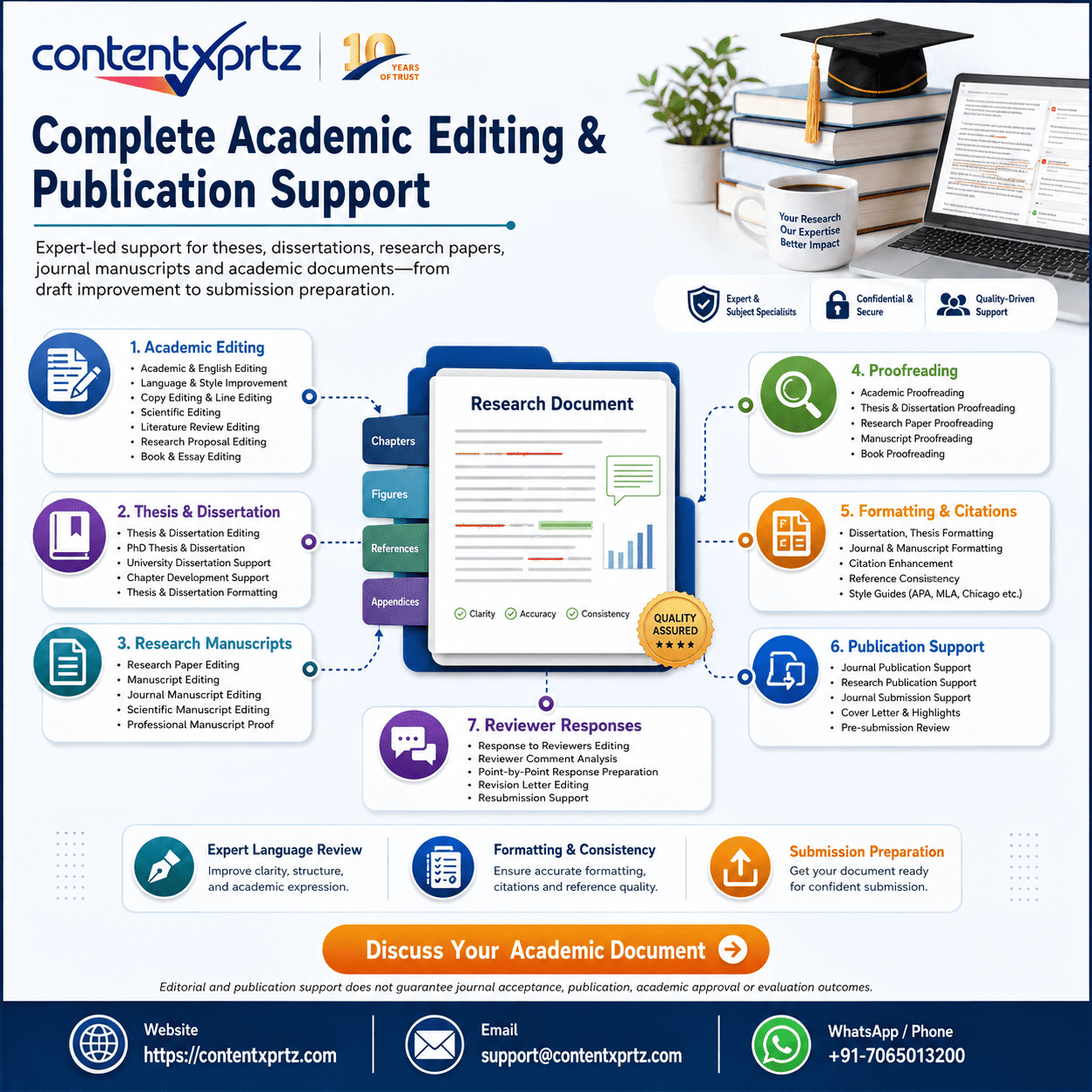
Contentxprtz offers assignment editing for students, researchers, and professionals and broader academic services for students. For research-oriented coursework, the requested CTA route is research paper editing support. The right service depends on what your institution permits and what stage your draft has reached.
Summary: Help Me Assignment
If “help me assignment” is the thought running through your head, identify the blocker before choosing the solution. Understand the brief, use the rubric as a design document, plan backwards from the deadline, research with a purpose, build an argument-led outline, draft before polishing, and revise the reasoning before grammar.
Use free learning support whenever it can solve the problem. Bring in professional editing when you have your own draft and need clearer structure, language, or presentation, subject to your institution’s rules. Use AI only within permitted boundaries and verify what it produces. The goal is not simply to finish one assignment; it is to submit work that reflects your understanding and leaves you better prepared for the next task.
Frequently Asked Questions
What does “help me assignment” usually mean?
It usually means a student is stuck at a particular stage: understanding the brief, choosing a topic, finding sources, planning a structure, explaining evidence, citing correctly, or polishing a draft. Ethical assignment help should support those skills while keeping the student responsible for the ideas, analysis, and final submission.
Can someone help me with my assignment without writing it for me?
Yes. Useful support can include explaining the rubric, helping you break the task into steps, suggesting research strategies, reviewing an outline, commenting on logic, checking language, and proofreading a draft. The safest approach is guidance that helps you improve your own work rather than replacing your authorship.
Is professional assignment editing allowed by universities?
Rules vary by institution, course, and assessment. Many institutions distinguish between permitted proofreading or learning support and prohibited third-party authorship, but the boundary can differ. Check your module handbook, academic-integrity policy, and instructor guidance before using outside assistance, especially for assessed work.
How do I start an assignment when I feel stuck?
Start by rewriting the assignment question in your own words, identifying the command verb, listing the required topics and constraints, and noting the marking criteria. Then create a simple working thesis, a section outline, and a short research plan. A small first step is more useful than trying to draft the introduction perfectly.
How can I improve a weak assignment draft?
Revise in layers. First check whether every paragraph answers the question. Next strengthen the claim-evidence-explanation pattern, remove repetition, improve transitions, and verify citations. Only after the argument works should you focus on sentence-level grammar, punctuation, formatting, and final proofreading.
Can AI help me with an assignment?
AI may be useful for brainstorming, explaining concepts, generating study questions, or suggesting ways to reorganize your own notes when your institution permits it. It can also be inaccurate or produce untraceable material. Follow your university AI policy, verify information against reliable sources, and disclose AI use when required.
How many sources should an assignment have?
There is no universal number. The right amount depends on word count, discipline, level of study, assignment type, and rubric. A short reflective task may need few sources, while a research essay may require broad evidence. Prioritize relevance, credibility, and purposeful use rather than collecting citations for appearance.
What is the difference between assignment help and assignment editing?
Assignment help is broad and may include planning, research guidance, structure, study support, and feedback. Assignment editing usually begins after you have a draft and focuses on clarity, flow, academic tone, grammar, referencing consistency, and presentation while preserving the author’s meaning and responsibility.
How do I avoid plagiarism when getting assignment help?
Keep your own notes, cite every borrowed idea or quotation, distinguish source language from your wording, verify references, and avoid submitting text produced by another person as your own. If someone reviews your draft, make sure revisions preserve your argument and comply with your institution’s rules on permitted assistance.
When should I ask for professional assignment support?
Consider it when you understand the subject but need structured feedback on a draft, have recurring language or organization problems, are unsure whether your argument follows the rubric, or need final proofreading. Professional support should be transparent, author-led, and focused on improving your work rather than completing assessed work on your behalf.
Conclusion: Get the Right Kind of Assignment Help
The real challenge behind an assignment request is usually specific: an unclear brief, weak research plan, missing structure, underdeveloped analysis, citation uncertainty, language problems, or time pressure. Solve that specific problem instead of handing away the whole learning process.
Self-service resources are often enough for planning, research skills, citation learning, and early drafting. When your own draft needs clearer language, stronger organization, or more consistent presentation, expert-assisted editing can be a practical next step. Contentxprtz focuses on improving clarity, structure, ethics, and submission readiness while keeping authorship and academic responsibility with the student or researcher.
Request ethical academic editing support for your draft when the service fits your assignment and your institution permits it.
At Contentxprtz, we don’t just edit; we help ideas reach their fullest potential.