Article Writing: How to Write a Clear, Useful Article
Article writing how to write is an awkward search phrase, but the need behind it is straightforward: you want a reliable way to turn an idea, assignment, research question, or professional topic into an article that people can understand and trust. The difficulty is rarely typing sentences. The harder work is deciding what the article is really about, what the reader needs, which evidence deserves space, how sections should connect, and what must be revised before the draft is ready to submit or publish.
Students often begin with a broad topic and discover that their draft becomes a collection of facts. PhD scholars may know their subject deeply but struggle to explain the significance of a narrow point to readers outside the immediate project. Researchers may be writing for a journal with strict conventions. Professionals may need an evidence-based article that sounds authoritative without becoming academic jargon. ESL writers may have strong ideas but spend disproportionate time checking grammar and sentence rhythm. Across these situations, a workable article-writing process reduces cognitive load: separate planning, research, drafting, revision, editing, and proofreading instead of trying to perfect every sentence while you invent the argument.
Clarity also carries an ethical dimension. A well-written article should represent sources accurately, distinguish evidence from interpretation, cite material that can be traced, and avoid overstating conclusions. Publication pressure, grades, deadlines, and the convenience of automated writing tools can tempt writers to skip those checks. Yet a polished paragraph is not useful if the reference is wrong, the claim is unsupported, or the wording changes the meaning of the evidence. Academic and professional readers increasingly expect transparent authorship and responsible use of editorial or AI assistance.
This guide gives you a practical system for planning an article, building a usable outline, researching efficiently, writing focused paragraphs, revising for logic, editing for clarity, and checking publication readiness. It also shows when free tools and self-editing are usually enough, when feedback from a teacher, librarian, colleague, or peer is valuable, and when ethical academic writing support or editing can help. The goal is not to make every article sound the same. It is to give you a repeatable process that leaves room for your subject, evidence, discipline, and voice.
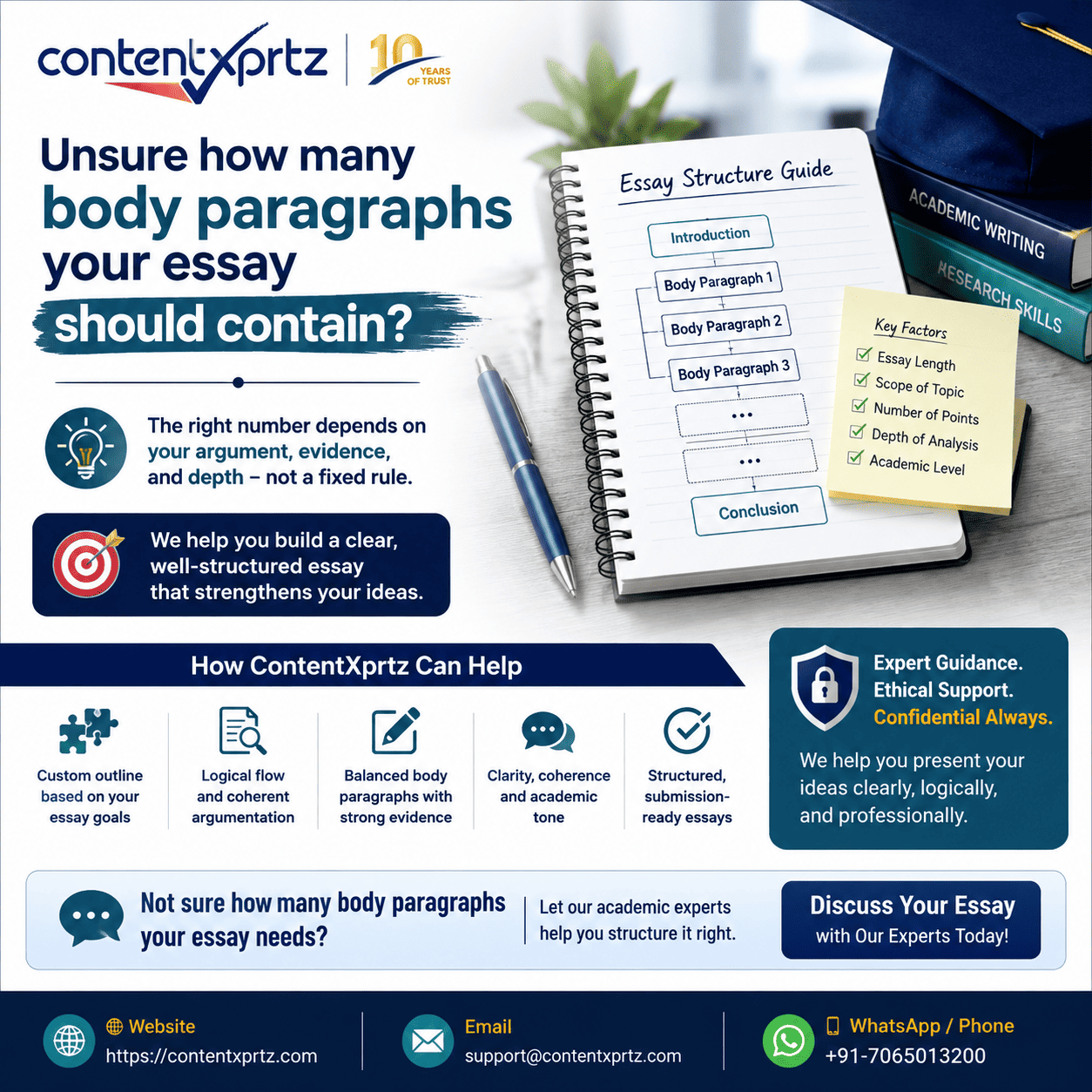
Quick Answer: Article Writing—How to Write an Article Well
To write a strong article, first define one clear purpose: what should the reader understand, decide, or do after reading? Narrow the topic into a focused question, identify the intended audience, gather reliable sources, and write a one-sentence working thesis or promise. Then build an outline that answers the reader’s questions in a logical order.
Draft the body without trying to perfect every line. Give each section a distinct job and each paragraph one main idea. Support claims with evidence, examples, data, or reasoning appropriate to the article type. After the draft is complete, revise for argument and structure before editing grammar or style. Finally, proofread references, headings, captions, formatting, and small errors.
The most important caution is that good prose does not compensate for weak evidence. In academic and research-based writing, sources must be authentic and represented accurately. Follow your university, client, publisher, or target journal requirements when they differ from generic writing advice.
Key Takeaways
- Start with a reader question and purpose, not with a pile of facts.
- Research and outline before drafting so the article has a visible line of reasoning.
- Each paragraph should advance one main idea with explanation, evidence, or example.
- Revise structure before editing sentences; proofread only after major changes are stable.
- Use credible, traceable sources and verify every citation against the original material.
- Free writing tools can assist with surface issues, but they cannot take responsibility for argument quality or academic integrity.
- Professional support is most useful when it improves clarity and process while preserving the author’s intellectual ownership.
What This Page Covers
- How to turn a broad article topic into a focused writing question
- A practical article structure for academic, student, research, and professional writing
- How to research, outline, draft, revise, edit, and proofread efficiently
- How to write coherent paragraphs and use evidence responsibly
- Free, low-cost, peer, and professional support options
- Common article-writing mistakes and three realistic examples
- A final publication-readiness checklist and ten detailed FAQs
Table of Contents
Methodology and Academic Sources
This guide combines standard writing-process practice with guidance from established academic and publication organizations. The Purdue Online Writing Lab provides open writing resources for academic, professional, and general writing. For citation and style decisions, writers can consult APA Style when APA rules apply.
For research and publication contexts, authorship means responsibility as well as credit. The ICMJE recommendations on author responsibilities explain accountability in scholarly publishing, while COPE publication-ethics resources provide broader guidance for research and journal publishing. Requirements vary by discipline, university, publisher, and article type, so the target instructions should always be checked before final submission.
What “Article Writing How to Write” Means in an Academic Context
Article writing is the process of developing a focused piece of communication for a defined reader and purpose. In an academic context, that process includes more than composition. It requires a defensible question or claim, appropriate evidence, accurate citation, logical structure, and a form that matches disciplinary expectations.
An article can be explanatory, argumentative, analytical, reflective, journalistic, professional, or research-based. The writing method changes with the genre, but the core sequence remains recognizable: clarify the purpose, understand the reader, gather material, organize the logic, draft, test the draft, and refine it. A journal research article may follow an Introduction–Methods–Results–Discussion pattern; a literature review may organize evidence by theme, method, chronology, or debate; a student article may use a thesis-led essay structure; and a professional explainer may start with an answer and move into practical detail.
The word “article” therefore does not describe one fixed template. It describes a communication task. Before choosing headings, ask what kind of evidence the reader expects and what the article must accomplish. That decision prevents a common mistake: copying a format that looks professional but does not fit the purpose.
Why Students, PhD Scholars, and Researchers Struggle with Article Writing
The most common problem is trying to solve too many writing decisions at once. A writer opens a blank page and simultaneously asks: What is my argument? Is this source reliable? Is the grammar correct? Does the paragraph flow? Is the citation style right? Will the reader understand this term? That combination produces hesitation and constant rewriting.
A second problem is scope. Broad topics encourage broad writing. If your subject is “artificial intelligence in education,” almost any fact can appear relevant. A better writing question—such as how generative AI affects formative feedback in first-year university courses—creates boundaries. Scope helps you decide what evidence belongs and what must be left out.
A third problem is the difference between subject knowledge and reader guidance. Experts often know more than the article can contain. Good article writing therefore involves selection. You are not proving that you know everything; you are helping the reader follow the most important sequence of ideas. New writers have the opposite problem: they may collect many quotations or facts because they are unsure what they themselves need to explain. Both problems are solved by a clear purpose and outline.
Step-by-Step: How to Write an Article from Idea to Final Draft
1. Define the reader, purpose, and main question
Write three short statements before you research: “My reader is…,” “After reading, they should…,” and “The article answers…”. These statements force useful decisions. If you cannot complete them, the topic is probably still too broad.
2. Turn the topic into subquestions
List what a skeptical reader would ask next. A practical article about article writing might need to answer how to start, how to structure the body, how to use sources, how to revise, and how to know when the article is finished. These subquestions can become headings, but they also reveal gaps in your research.
3. Research with a source plan
Do not collect links without purpose. For each subquestion, decide what type of evidence is strongest: original research, official guidance, statistics, established theory, expert interpretation, or a concrete example. Record full reference details immediately. This saves time and reduces citation errors later.
4. Build a working outline
An outline is a logic map, not a decorative list. Under every heading, write the point you intend to make and the evidence that supports it. If two sections make the same point, combine them. If a heading has no evidence, research before drafting. If evidence does not help answer the central question, remove it even if it is interesting.
5. Draft for completeness
Write the first draft to make the reasoning visible. Use temporary wording if necessary. Mark missing citations or examples rather than interrupting every paragraph to polish them. Many writers benefit from drafting the body first, then writing the introduction and conclusion after the argument is established.
6. Revise at the article level
Read only the first sentence of each paragraph. Do those sentences form a logical sequence? Then read each section and ask what it contributes. Move, merge, expand, or delete material before line editing. Revision is where an article becomes coherent.
7. Edit and proofread in separate passes
Edit for clarity, concision, terminology, tone, grammar, and transitions. Then proofread for spelling, punctuation, headings, reference details, numbering, captions, and formatting. If possible, leave time between passes or read the article aloud to hear awkward phrasing.
A Practical Article Writing Format You Can Adapt
No single format fits every article, but the following model works as a planning framework for many explanatory and academic pieces. Adapt it to the target journal, assignment, or publication requirements rather than treating it as a rigid formula.
| Article part | Main purpose | Useful question to ask |
|---|---|---|
| Title | Signals the specific topic and value | Would the right reader know this is relevant? |
| Introduction | Establishes context, problem, purpose, and direction | Why should the reader continue? |
| Body section 1 | Defines or frames the issue | What must the reader understand first? |
| Body sections 2–4 | Develop evidence, analysis, steps, comparisons, or examples | What sequence best supports the main point? |
| Limitations or cautions | Prevents overstatement and adds context | Where does the evidence not apply? |
| Conclusion | Synthesizes the answer and next step | What should the reader retain or do? |
For a formal research manuscript, use the structure required by the journal. For a student article, use the rubric. For a professional article, consider answer-first organization so a busy reader receives the key point early. Structure should serve comprehension rather than demonstrate complexity.
How to Write Strong Paragraphs Instead of Lists of Facts
A paragraph should make one meaningful contribution to the article. A useful pattern is point, evidence, explanation, and connection. The point tells the reader what the paragraph is doing. Evidence supports it. Explanation interprets that evidence rather than leaving a quotation or statistic to speak for itself. The connection shows why the paragraph matters to the wider argument.
Compare two approaches. A weak paragraph may list three studies with one sentence each. A stronger paragraph groups those studies around a shared finding, explains where they agree or differ, and identifies what that pattern means for the article’s question. This shift from reporting to synthesis is especially important in literature reviews and research-based articles.
Transitions should also express logic. Use language that identifies the relationship: “in contrast,” “as a result,” “however,” “a limitation is,” or “this pattern suggests.” Do not add transition words mechanically. If two paragraphs have no real relationship, the structural problem needs revision rather than a connector.
Free, Low-Cost, Peer, and Professional Article-Writing Support
Free support is often enough when the article is low stakes, the argument is already clear, and you mainly need help catching surface problems. University writing centers, library consultations, style guides, peer feedback, spelling and grammar tools, and read-aloud functions can all improve a draft without major cost.
Low-cost tools are most useful when you know what problem you are asking them to solve. A reference manager can reduce formatting work. A grammar checker can identify patterns worth reviewing. A structured checklist can prevent omissions. But tools should not become substitute decision-makers. Automated rewriting may remove disciplinary nuance or introduce a claim you did not intend.
Expert support becomes more useful when a thesis chapter, dissertation article, research manuscript, or high-stakes professional article has deeper problems: unclear organization, repeated language issues, inconsistent terminology, weak transitions, complex feedback, or publication-specific formatting. Ethical editing support should improve communication without inventing findings or replacing the author’s reasoning. If the main need is final language cleanup, proofreading support may be more appropriate than substantive editing.
When Free Support Is Enough—and When Deeper Editing Is Safer
Use free or self-service support when you can explain the article’s purpose in one sentence, the sections already follow a sensible order, the evidence is reliable, and your remaining concerns are local: grammar, spelling, citation formatting, or sentence length. Ask a peer to read for comprehension rather than simply “check the grammar.” A reader who can summarize your argument accurately has given you useful evidence that the article is working.
Consider deeper editing when revisions keep returning to the same structural problems. If you repeatedly rewrite the introduction because the article’s purpose is unclear, the issue is probably not the introduction alone. If paragraphs are correct individually but the paper feels fragmented, you may need macro-level revision. For ESL researchers, language editing can reduce the burden of sentence-level correction while preserving technical meaning, but the editor should not change claims or data without author review.
Ethical Academic Editing and Author Responsibility
Academic editing is ethical when it helps the author communicate their own work more clearly and stays within relevant institutional and publication rules. Authors remain responsible for research design, data, analysis, claims, citations, conclusions, and the submitted text. Assistance should not create false authorship, fabricate references, or disguise work that the author did not meaningfully produce.
AI-assisted writing adds another verification burden. A fluent output can still contain invented references, inaccurate summaries, altered technical meaning, or unsupported confidence. Treat AI output as material requiring human verification. Check university and journal policies because disclosure requirements vary and continue to evolve. The principle is stable even when specific policies differ: responsibility cannot be delegated to a tool.
If you use external editing, define the scope clearly. Language editing, structural feedback, reference-format checks, and reviewer-response polishing may be appropriate depending on the context. For advanced manuscripts, manuscript assessment can help identify communication weaknesses before line editing, while the author retains control of intellectual decisions.
Common Article-Writing Mistakes to Avoid
- Starting too broad: narrow the topic into a question before collecting evidence.
- Writing before deciding the purpose: a draft without a reader promise often becomes repetitive.
- Using sources as decoration: every citation should support a specific claim or context.
- Quoting instead of explaining: readers need your interpretation of why the evidence matters.
- Editing too early: polish after the structure is stable.
- Letting tools override meaning: review automated suggestions, especially with technical language.
- Ignoring the target requirements: style, length, headings, references, and submission rules matter.
- Overclaiming: conclusions should match the strength and limits of the evidence.
Practical Article-Writing Examples
Example 1: A student using a grammar tool on an unfocused article
A postgraduate student writes 2,000 words on remote learning and runs the draft through a grammar checker. The sentences become cleaner, but the tutor still says the article lacks a clear argument. The mistake was treating language correction as revision. The student returns to the assignment question, narrows the article to feedback quality in remote seminars, removes unrelated sections, and reorganizes the evidence around three claims. Grammar checking becomes the final pass rather than the main writing method. A writing center or ethical academic editor can help the student see structural patterns, but the student remains responsible for the argument and sources.
Example 2: A PhD scholar converting thesis material into an article
A doctoral researcher copies a long background chapter into a journal manuscript and tries to shorten every paragraph equally. The result is still too broad because a thesis chapter and a journal article serve different purposes. The better approach is to identify one publishable question, select only the evidence necessary for that question, and rebuild the introduction around the journal audience. Deeper thesis and academic editing support can help clarify structure, but authorship decisions, data interpretation, and claims stay with the scholar.
Example 3: An ESL researcher preparing a first journal article
An ESL researcher has strong data and a coherent discussion, but reviewers repeatedly comment on sentence clarity and inconsistent terminology. Rewriting with a general paraphrasing tool changes several technical terms and makes the methods less precise. The correct response is controlled language editing: preserve specialist terminology, shorten overloaded sentences, define abbreviations consistently, and verify every change against the original meaning. The author then checks the target journal instructions and approves each substantive change. Ethical expert guidance can reduce language friction without inventing content or guaranteeing publication.
Article Writing and Publication-Readiness Checklist
- Can I state the article’s reader, purpose, and main question in one sentence each?
- Does the title accurately describe what the article actually covers?
- Does the introduction explain the problem and direction without unnecessary background?
- Does every section have a distinct purpose?
- Does every paragraph contain one main idea with adequate support?
- Are claims based on credible, traceable sources appropriate to the claim?
- Have I verified quotations, paraphrases, statistics, and references against original sources?
- Have I distinguished evidence from my interpretation?
- Does the conclusion synthesize rather than introduce a new argument?
- Have I revised structure before editing grammar and style?
- Have I checked citation style, headings, tables, figures, captions, and required declarations?
- Have I reviewed any AI-assisted text for accuracy, originality, and compliance with applicable rules?
- Have I completed a final proofread after major changes stopped?
How Contentxprtz Can Help with Article Writing
Contentxprtz supports writers who need help making an article clearer, more coherent, and easier to review. Depending on the document and allowed scope, support may include structural feedback, academic editing, language polishing, proofreading, reference consistency, or preparation for submission. The right service depends on the problem; a strong draft with minor errors does not need the same intervention as a manuscript with unclear organization.
For academic work, the goal should be to strengthen communication while protecting author responsibility. Writers who need deeper support can explore academic editing services. Those preparing research manuscripts for journal processes may also consider relevant publication support where it fits the task and target requirements.
Summary: Article Writing—How to Write with a Repeatable Process
Strong article writing begins before the first polished sentence. Define the reader and purpose, narrow the topic into a focused question, research with a source plan, and outline the logic. Draft for completeness, revise for structure, edit for clarity, and proofread only after the major decisions are stable.
For academic and research articles, quality also depends on source integrity, accurate citation, transparent authorship, and compliance with university or publisher requirements. Free tools can help with surface issues, but they cannot take responsibility for evidence or argument. Expert support is most valuable when it improves communication without replacing the author’s intellectual work.
Frequently Asked Questions
What does “article writing how to write” mean in practical terms?
It means learning a repeatable process for turning a topic or question into a focused, useful article. Start by identifying the reader, purpose, and central question. Then gather reliable evidence, choose a clear angle, and outline a logical sequence before drafting. A strong article usually moves from context to explanation, evidence, examples, and a conclusion that gives the reader a useful next step. Writing is only the first pass: revision checks logic and completeness, editing improves sentence-level clarity, and proofreading catches surface errors. For academic or research-based articles, citation accuracy and source quality are part of the writing process, not an afterthought. The key is to separate stages so you do not try to research, draft, fact-check, edit, and polish every sentence at once. A simple process makes article writing more manageable and produces more consistent results.
How do I start writing an article when I have only a topic?
Start by converting the topic into one precise reader question. “Climate change” is too broad, while “How does urban heat affect older adults during summer heatwaves?” gives you a direction. Next, define who will read the article and what they should understand or be able to do after reading it. Write a one-sentence working thesis or promise, then list three to six subquestions that must be answered. Search for credible sources that address those subquestions and record citation details as you go. Once you see the evidence, arrange the subquestions in a natural order and draft the easiest section first if the introduction feels difficult. Do not wait for a perfect opening. Many experienced writers draft the body before refining the introduction because the argument becomes clearer during writing. Your first goal is a complete, evidence-based draft; elegance comes during revision.
What is the best article writing format for students and researchers?
The best format depends on the assignment, discipline, and publication venue, but a practical default is: title, focused introduction, clearly headed body sections, evidence and examples, synthesis or discussion, and a concise conclusion. Research articles submitted to journals may require a formal structure such as IMRaD—Introduction, Methods, Results, and Discussion—while essays, reviews, explainers, and professional articles use different conventions. The important point is that structure should follow purpose. Each major section should answer a distinct question and connect logically to the next. Paragraphs should usually contain one controlling idea supported by explanation, evidence, or example. If a university, journal, or client provides author instructions, those instructions override generic templates. Before drafting, check required length, citation style, heading rules, abstract requirements, table or figure limits, and submission format. Good formatting makes the article easier to read, but it cannot compensate for unclear reasoning or weak evidence.
How long should an article introduction be?
There is no universal length, because the introduction should be proportionate to the article and the reader’s needs. In a short web article, a few concise paragraphs may be enough. In a long academic article, the introduction may need more space to establish context, define a problem, review essential background, identify a gap, and state the purpose. A useful test is functional rather than numerical: does the introduction tell the reader what the article is about, why it matters, what question it addresses, and what direction the article will take? Remove background that does not help the reader understand the central problem. Avoid opening with broad statements that could fit any topic. For research writing, do not overload the introduction with every source you found; reserve detailed synthesis for the appropriate section. Drafting the introduction after the body can help you match the opening to what the article actually delivers.
How can I make article paragraphs clearer and more coherent?
Give each paragraph one primary job. Begin with a sentence that signals the paragraph’s main point, then develop that point with explanation, evidence, comparison, example, or analysis. End by showing why the information matters or how it connects to the next idea. Coherence improves when sentences share a clear subject, use consistent terminology, and move from known information to new information. Avoid placing several unrelated claims in one paragraph merely because they concern the same broad topic. During revision, label each paragraph in a few words; if you cannot name its purpose, the paragraph may be unfocused. Also check transitions between paragraphs. A transition should show the relationship—contrast, cause, consequence, continuation, limitation, or example—rather than simply adding words such as “moreover.” For academic writing, preserve precise technical terms where needed, but explain them when the intended reader may not know them.
What sources should I use in a research-based article?
Use sources that are credible, relevant, current enough for the topic, and appropriate for the claim you are making. Peer-reviewed journal articles are often important for scholarly arguments, but official statistics, standards, government reports, books, conference papers, systematic reviews, and reputable institutional guidance may also be necessary. Evaluate who produced the source, the method used, the publication context, the date, and whether the source actually supports your sentence. Prefer the original study or official document when making a specific factual claim rather than relying on a secondary summary. Keep a source log with author, title, publication details, DOI or stable link, and notes about what the source supports. Authentic references should be traceable. If you use AI tools to help brainstorm or organize, verify any factual statement and citation against the original source before including it in academic work.
What is the difference between revising, editing, and proofreading an article?
Revising changes the article at the level of ideas and structure; editing improves clarity, style, grammar, and consistency; proofreading is the final check for surface errors. Revision may involve changing the thesis, moving sections, deleting repetition, adding missing evidence, or rewriting a weak explanation. Editing then improves sentences, terminology, transitions, tone, and mechanical correctness while preserving the author’s intended meaning. Proofreading comes after those changes have stabilized and focuses on typographical errors, punctuation, spacing, headings, numbering, references, captions, and formatting. Mixing all three stages can be inefficient because you may spend time polishing a sentence that later gets deleted. For a thesis, dissertation, or journal manuscript, institutional and publisher policies may also define what level of outside editing is permitted, so authors should remain responsible for their ideas, evidence, interpretation, and final submission.
Can free grammar tools write or edit an academic article well enough?
Free grammar tools can be useful for identifying some spelling, punctuation, grammar, and readability issues, but they do not reliably solve argument structure, disciplinary style, evidence quality, citation accuracy, or whether a paragraph actually answers the research question. Automated suggestions can also change technical meaning or flatten an author’s intended voice, especially in specialist or multilingual writing. Use such tools as a first-pass aid, not as an authority. Review every suggestion and compare it with your discipline’s conventions. A strong article still requires human decisions about logic, relevance, emphasis, source interpretation, and ethical authorship. If a draft has repeated language problems but the argument is already sound, a tool plus careful self-editing may be sufficient. If the article has structural weaknesses, complex academic language, or submission-specific requirements, deeper human review may be more appropriate.
How do I know when an article is ready to submit or publish?
An article is ready when its purpose is clear, every major claim is supported appropriately, the structure is easy to follow, the conclusion matches the evidence, and the document complies with the target requirements. Use a final checklist rather than relying on how the draft feels. Confirm that the title and introduction match the actual content; headings follow a logical hierarchy; tables and figures are discussed in the text; citations are complete and consistent; quotations and paraphrases are accurate; and all references are authentic and retrievable. Read once for argument, once for language, and once for formatting. For journal submission, compare the manuscript line by line with the author guidelines and required declarations. For university work, check the rubric and academic integrity policy. A clean document is not automatically a strong article, but a strong article should be both intellectually sound and professionally presented.
When should I consider professional article writing or editing support?
Consider professional support when the stakes, complexity, or time pressure exceed what self-editing can reasonably handle, or when you need an independent review of clarity and structure. Appropriate support can include feedback on organization, language editing, proofreading, formatting, reference consistency, or explaining why a passage is unclear. For students and researchers, ethical assistance should not replace the author’s original analysis, fabricate evidence, invent citations, or conceal authorship. University and journal policies vary, so check what assistance must be disclosed or is permitted. Contentxprtz can help with academic editing, proofreading, and writing support when those services fit the task, but the author remains responsible for claims, data, citations, interpretations, and the final version. A useful rule is to seek support for communication and process problems while retaining intellectual ownership of the work.
Conclusion: Build the Article in Stages, Then Make It Polished
If article writing feels difficult, the solution is usually not to write faster. It is to make fewer decisions at the same time. Start with purpose and scope, then research and outline. Draft the ideas before polishing the language. Revise the argument before correcting commas. This sequence makes writing more efficient and gives every editing pass a clear objective.
Self-service resources are often enough for straightforward assignments and early drafts. Deeper support becomes useful when the article has structural, language, citation, or submission-readiness problems that are difficult to diagnose alone. Contentxprtz can help improve clarity, structure, consistency, ethics, and readiness while the author remains responsible for ideas, evidence, citations, and final decisions.
“At Contentxprtz, we don’t just edit; we help ideas reach their fullest potential.”