
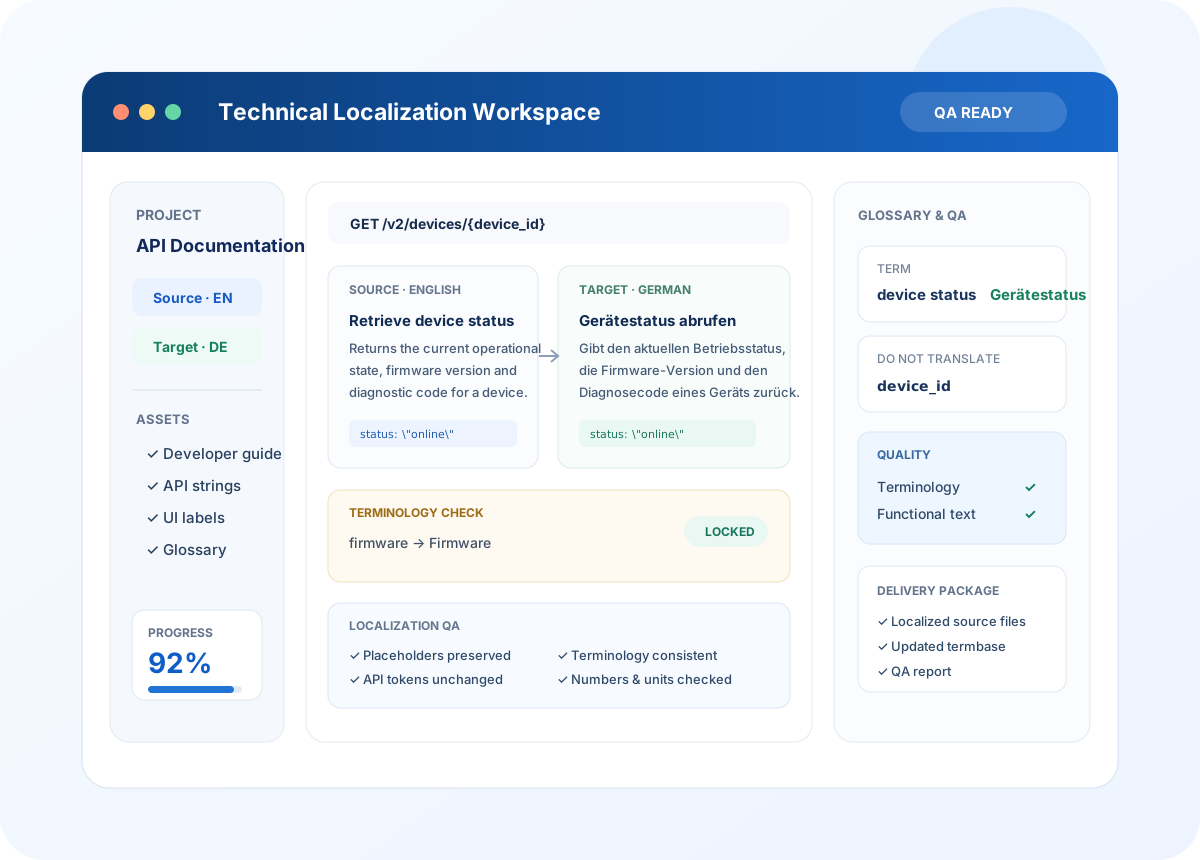
Technical Content Translation Service for Clear Global Communication
★★★★★4.9/5 based on 500+ reviews
Translate complex software, engineering, product, compliance, support and training content without losing technical meaning. ContentXprtz combines language expertise, terminology control, localization QA and structured delivery for multilingual technical communication.
✓Human-first translation by native-language professionals.
✓Contextual accuracy supported by product and domain terminology.
✓Industry-specific terminology, style guides and glossary control.
✓Quality processes aligned to structured translation review.
✓Secure handling for confidential technical and unpublished content.
✓Scalable workflows for one document, a product release or ongoing localization.
Our core technical translation services
Technical Document Translation
User manuals, specifications, datasheets, SOPs, product guides and technical reports translated with terminology control.
Software & UI Localization
Interface strings, in-app help, error messages, onboarding, release notes and product terminology localized for target users.
API & Developer Documentation
API references, SDK guides, developer portals, implementation notes and code-adjacent content translated while protecting technical tokens.
Technical Training Localization
E-learning modules, training manuals, instructor materials, safety training and product enablement content for multilingual teams.
Compliance & Safety Content
Policies, safety instructions, regulated technical content, quality procedures and compliance-oriented materials prepared for local-language use.
Support & Knowledge Content
Knowledge bases, troubleshooting guides, FAQs, service bulletins and technical customer-support content localized for consistent assistance.
1
Our Technical Translation & Localization Process
A structured six-stage workflow keeps source context, terminology, technical tokens, review requirements and delivery formats under control from intake to handoff.
1
Analyze
Review content, target audience, formats, terminology and technical constraints.
2
Plan
Set language pairs, glossary rules, file handling, reviewer roles and tools.
3
Translate
Native linguists translate in context while preserving protected technical elements.
4
Review
Editors review language, terminology, readability and technical consistency.
5
Quality Check
Run glossary, number, unit, placeholder, formatting and functional text checks.
6
Deliver
Return localized files, agreed terminology assets and final reviewed deliverables.
Industries We Support
IT & Software
Manufacturing & Engineering
Automotive
Healthcare & Pharma
Finance & Banking
Legal & Compliance
Education & E-learning
E-commerce & Retail
Telecom & Cloud
Energy & Infrastructure
100+ Languages. One Standard: Technical Clarity.
🇬🇧English
🇪🇸Spanish
🇫🇷French
🇩🇪German
🇨🇳Chinese
🇯🇵Japanese
🇸🇦Arabic
🇷🇺Russian
🇵🇹Portuguese
🇮🇹Italian
🇰🇷Korean
+10+ More Shown
↔ Right-to-left support◫ Locale & date formats◎ Cultural adaptation≡ Glossaries & style guides
Our Quality Framework
Native LinguistsQuality language decisions by native-language professionals.
Multiple-Stage ReviewTranslation, editorial review and proofing as defined by project scope.
ISO StandardsProcesses informed by quality, security and translation-service requirements.
Quality in Every Word
Terminology ControlApproved glossaries, industry dictionaries and style guidance.
QA & TestingLinguistic and functional checks for text, placeholders, units and formatting.
Continuous ImprovementReviewer feedback can be incorporated into future terminology and workflow.
Technology & Tools We Use
SDL Trados Studio
memoQ
Phrase
Smartcat
Wordfast
Memsource
Crowdin
XTM International
Translation Memory
Terminology Management
Automated QA
Secure Workflows
What We Translate
User manuals & help guides
Developer & API documentation
Software help & UI content
Technical specifications
Engineering reports
Knowledge-base content
Product datasheets
Training & e-learning content
Compliance & safety materials
Common Technical Formats
Documents & structured technical files
Developer content, UI resources and code-adjacent strings
Tables, figures, captions and formatted manuals
Sample Use Cases
ALaunch technical product documentation in new international markets.
BLocalize API and developer documentation for distributed engineering teams.
CTranslate safety, quality and compliance materials for local operations.
DStandardize multilingual support knowledge and troubleshooting guidance.
EPrepare technical training and onboarding content for regional teams.
FMaintain terminology consistency across product releases and document sets.
2
Clients Trust Our Translation & Localization Support
Feedback presented in the supplied translation and localization service design emphasizes quality, reliability, responsiveness and cultural understanding.
★★★★★
“Their localization quality and cultural understanding helped us successfully enter 5 new markets. Exceptional team!”
★★★★★
“Accurate, fast, and reliable. Our go-to partner for all multilingual content and ongoing localization needs.”
★★★★★
“Professional, responsive and detail-oriented. They truly understand our industry and audience.”
4.9 / 5
★★★★★
Based on 500+ reviews
GoogleClutchGoodFirms
10,000+Projects Delivered
100M+Words Translated
100+Languages
500+Native Experts
98%On-time Delivery
99%Client Retention
3
Frequently Asked Questions
Common questions about technical content translation, terminology, localization workflows, file handling, quality review and delivery planning.
What types of technical content can you translate?+
We can work with user manuals, product documentation, software and UI strings, API and developer documentation, engineering content, technical specifications, support knowledge, training content, compliance materials, datasheets and related technical assets.
How do you keep technical terminology consistent?+
Projects can use terminology glossaries, approved termbases, translation memories, style guidance and reviewer feedback so recurring product, engineering and software terms remain consistent across deliverables.
Can code, variables and placeholders stay unchanged?+
Yes. When identified in the source material, API tokens, code snippets, placeholders, variables, file paths, product names and other non-translatable strings can be protected while the surrounding explanatory content is translated.
Do you support software and API documentation localization?+
Yes. Technical content translation can cover developer portals, API references, SDK documentation, release notes, UI help, software strings, implementation guides and knowledge-base content, subject to the files and requirements supplied.
Which languages are available?+
The supplied translation and localization service information states coverage for 100+ languages, including major European, Asian and Middle Eastern languages.
How is technical translation quality reviewed?+
The workflow can combine native-language translation, terminology control, editorial review, linguistic QA, formatting checks and automated QA to review language, numbers, units, placeholders, terminology and presentation before delivery.
Can you use our glossary and translation memory?+
Yes. Client glossaries, approved terminology, style guides and existing translation-memory resources can be incorporated when supplied in a usable format.
Can you translate regulated technical content?+
Technical translation can support compliance, policy, safety, legal-technical and regulated documentation. The workflow should be defined around the subject matter, required terminology, source references and review expectations.
Do you preserve formatting, tables and figures?+
Where source formats permit, the workflow can preserve document structure and review tables, figures, captions, labels, callouts, units and layout-dependent text as part of localized delivery.
Can you integrate with localization tools or platforms?+
The supplied service design references professional localization platforms and workflows including translation memory, terminology management, automated QA and secure project handling. Tool choice can be aligned to source format and project requirements.
How are delivery timelines determined?+
Scheduling depends on language pair, word volume, technical complexity, file format, terminology preparation, review scope and the number of target languages. Share your deadline for a project-specific schedule.
How do I request a technical translation quote?+
Use the enquiry form below and provide the source language, target language or languages, document type, approximate word count, deadline and any glossary or style-guide requirements.
4
Discuss Your Technical Translation Requirement
Tell us what you need translated, which languages you are targeting, the file type, approximate word count and your preferred delivery date. We will use those details to review the scope of your technical content translation request.
Share the source files
Include the documents, exported strings, reference files or representative samples that define the translation scope.
Specify source and target languages
List every required locale, including regional variants where terminology or formatting differs.
Provide terminology guidance
Send glossaries, product names, style guides, translation memories or do-not-translate terms if available.
Tell us your deadline
Delivery planning depends on content volume, technical complexity, language count, file format and review requirements.
Free project enquiry
Request a Technical Translation Quote
Complete the details below so the team can review your technical translation requirement.
Bring Your Technical Content to Global Users
Translate complex product, software and engineering information into clear, consistent content for the people who need to use it.