
Clinical Researchers
For manuscripts and study documents needing consistent research presentation.
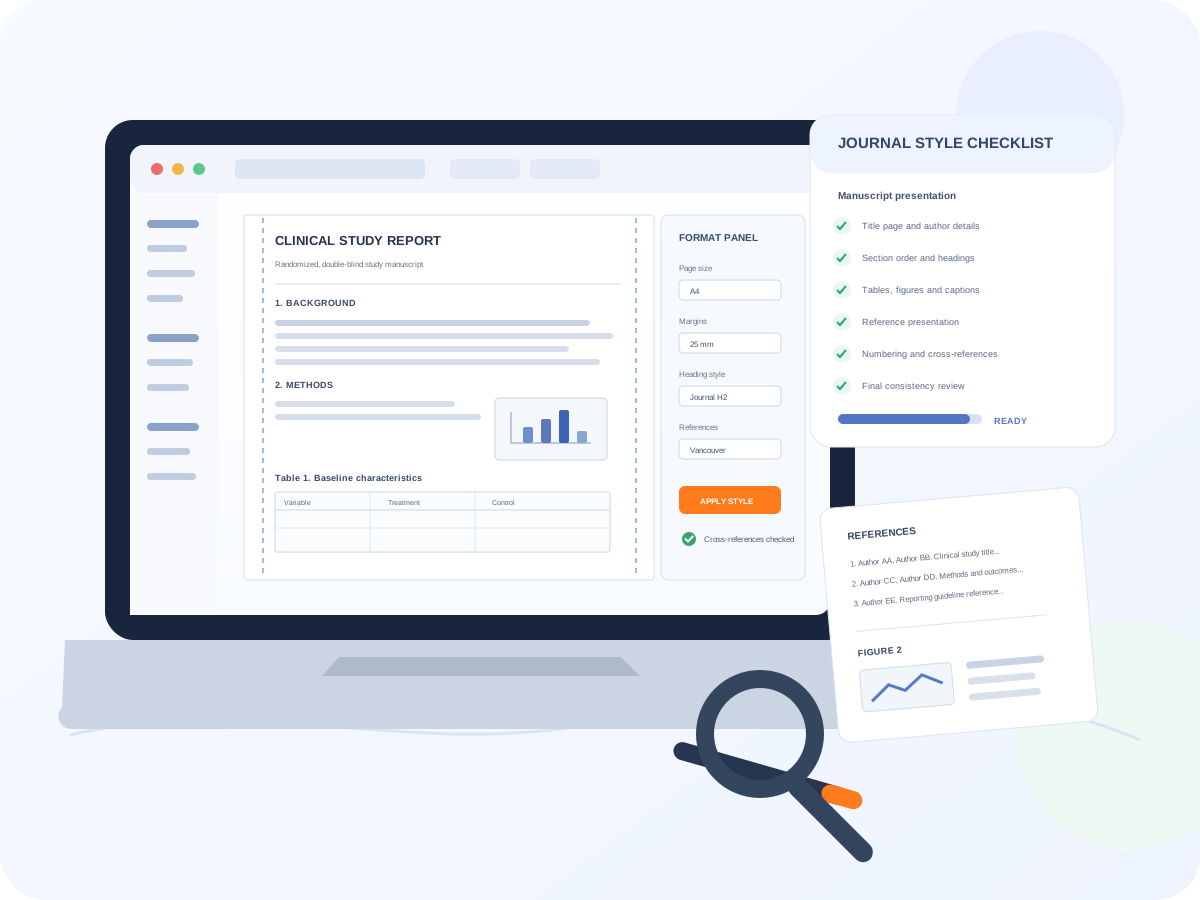
Bring clinical research manuscripts and study documents into a clear, consistent format using the journal, publisher, sponsor, institutional, or document guidelines you provide. We focus on structure, layout, headings, tables, figures, references, numbering, and final presentation.
Clinical research documents often combine dense text, structured sections, study tables, figures, abbreviations, references, appendices, and submission-specific requirements. Even when the science is complete, inconsistent presentation can create avoidable review work.
Our clinical research formatting service focuses on the document layer: applying the supplied requirements consistently across the manuscript or study file, resolving visible formatting inconsistencies, and preparing a coherent final document for your next review or submission step.
The service is appropriate when your research content is already developed and the main need is layout, formatting, reference presentation, numbering, tables, figures, or adherence to a defined template or style guide.
Clinical and medical research documents that are substantially complete but need consistent professional formatting.
A cleaner, more consistent document aligned to the formatting requirements supplied for the project.
Your manuscript or study document, target instructions or template, reference style, and any special formatting notes.
A formatted editable document and, where useful, clear notes or queries for items that require author confirmation.
Formatting support can be useful whenever a clinical research document must follow a defined presentation standard without changing the underlying study findings or scientific meaning.
For manuscripts and study documents needing consistent research presentation.
For journal-facing documents that need alignment to supplied author instructions.
For structured study files that need consistent layout across multiple sections.
For clinical theses, dissertations, and research papers with institutional formatting requirements.
For project documents that must be presented in a clear, consistent structure.
For research documents prepared under institutional, journal, or publication requirements.
Small formatting inconsistencies can multiply across long research documents. The service is designed to address presentation issues systematically rather than correcting them one by one at the last minute.
Headings, fonts, spacing, indents, and page elements do not follow one coherent system.
The document does not fully reflect a journal, publisher, sponsor, or institutional template.
Captions, numbering, placement, labels, and visual presentation are inconsistent across the file.
Reference entries and in-text citations vary in punctuation, order, spacing, or required presentation.
Section numbers, table and figure references, appendices, or call-outs do not align consistently.
Formatting work is concentrated near a review or submission point and needs structured handling.
The exact scope depends on your document and the instructions supplied. These are the main formatting areas that can be addressed within a clinical research document.
Presentation of title pages, author details, affiliations, running elements, and front-matter structure where required.
Consistent heading levels, numbering, font treatment, spacing, and section hierarchy throughout the document.
Margins, line spacing, paragraph spacing, indents, page breaks, orientation, headers, and footers where applicable.
Consistent table and figure titles, legends, captions, numbering, placement, spacing, and call-out presentation.
Formatting of in-text citations and reference-list presentation to the specified style or target instructions.
Section, table, figure, appendix, and internal cross-reference consistency across the document.
Presentation consistency for abbreviations, units, symbols, capitalization, punctuation, and notation where visible formatting rules apply.
Consistent titles, labels, numbering, tables, figures, and internal references in supplied supporting materials.
Systematic application of the target journal, publisher, sponsor, institution, or document template supplied for the project.
A final consistency pass across the formatted file to catch visible layout and presentation inconsistencies before delivery.
Scope boundary: Clinical research formatting focuses on presentation and consistency. It does not independently validate study data, statistical analysis, scientific conclusions, source accuracy, or regulatory compliance, and it does not replace substantive scientific or language editing.
The formatting workflow is designed to move from scattered presentation issues to one coherent document system based on the requirements you provide.
A structured process keeps the formatting decisions tied to your document type and supplied requirements instead of applying a generic template.
Share the manuscript or study file, target guidelines or template, and your formatting priorities.
We identify the document structure, style rules, tables, figures, references, and special formatting needs.
The supplied requirements are translated into a consistent formatting plan for the document.
Layout, styles, numbering, tables, figures, references, and related presentation elements are standardized.
A final pass checks the formatted document for visible inconsistencies and missed formatting items.
The formatted editable file is returned with any necessary queries or notes for author review.
Deliverables are centered on a usable, editable, consistently formatted research document and the information needed to review any remaining author decisions.
An editable file with consistent page layout, styles, spacing, and section presentation.
References and citations formatted to the supplied style or target instructions.
Consistent titles, legends, captions, numbering, placement, and visible cross-references.
A final document-wide formatting check before the completed file is returned.
A revision-ready document suitable for your own final review, comments, or next submission step.
Clinical research formatting can vary considerably from one project to another, so the practical scope depends on the document, its formatting complexity, and the target requirements.
The following factors help determine the amount of formatting work involved and the information needed to plan the project.
Share enough information for the formatting requirement to be reviewed accurately.
The service is designed around careful application of instructions, consistency across complex research files, and a clear separation between formatting work and scientific content decisions.
Formatting follows the document requirements supplied for the project.
Headings, spacing, numbering, and layout are handled as one system.
Tables, figures, captions, appendices, and cross-references are included in the formatting review.
Reference-list and citation presentation can be aligned to the required style.
The completed file receives a document-wide consistency check before delivery.
Formatting is kept distinct from scientific validation, data checking, or substantive rewriting.
Ambiguous formatting choices can be flagged for confirmation rather than guessed silently.
Formatting quality depends on disciplined checking. The process separates initial formatting, consistency review, corrections, and final verification so that the file is not treated as finished after a single pass.
Apply the required document styles and layout.
Check the file against the formatting plan and supplied requirements.
Resolve missed or inconsistent formatting items.
Complete the final document-wide consistency check.
Different parts of a clinical research file need different kinds of attention. The workflow combines document formatting, reference presentation, and final quality review rather than relying on one narrow check.
Layout & Style Application
Handles page setup, headings, paragraph styles, section order, numbering, tables, figures, captions, and document-wide presentation.
Style Consistency
Reviews in-text citation and reference-list presentation against the specified style or target-document instructions supplied for the project.
Final Consistency Check
Checks the formatted file for visible inconsistencies in styles, numbering, layout, tables, figures, references, and related presentation elements.
The service can be adapted to different clinical and medical research document types when the relevant formatting instructions or template are available.
The difference is not simply who changes the font. Professional formatting applies requirements consistently across the entire document while preserving the scientific content itself.
When formatting is handled piecemeal, inconsistencies can remain across long clinical research files.
A structured workflow treats the document as one connected formatting system.
Answers to common questions about document suitability, journal guidelines, references, tables, figures, scientific content boundaries, project scope, and delivery planning.
A clinical research formatting service focuses on document presentation and consistency. It can apply supplied journal, publisher, sponsor, institutional, or study-document requirements to page layout, headings, tables, figures, captions, references, numbering, and other formatting elements.
Suitable documents can include clinical research manuscripts, clinical study reports, study protocols, case reports, abstracts, posters, theses or dissertations in clinical disciplines, response documents, appendices, and supplementary files when formatting requirements are supplied.
Yes. The formatting workflow can be based on the target journal or publisher instructions you provide, including page layout, heading structure, reference presentation, tables, figures, captions, and other visible submission requirements.
Formatting primarily addresses structure, layout, presentation, and consistency rather than substantive scientific rewriting or language editing. If the manuscript also needs editorial work, a related editing service can be considered separately.
Yes. Reference and citation presentation can be aligned to the supplied style or target-journal requirements. The service focuses on formatting and consistency; it does not independently verify the scientific validity of cited sources.
Yes. Tables, figures, legends, captions, numbering, placement, and cross-reference presentation can be brought into a consistent format based on the supplied document requirements.
Send the manuscript or study document together with the target journal, publisher, sponsor, institutional, or document-formatting guidelines. Also identify the intended document type, any templates, required reference style, and your deadline.
No. Formatting is intended to change presentation rather than study findings, statistical results, scientific interpretation, or the author’s substantive conclusions.
When supplied with the main project, appendices and supplementary files can be formatted for consistent headings, numbering, tables, figures, labels, and cross-references according to the relevant requirements.
A fixed price is not shown on this page. Use the enquiry form to share the document, formatting requirements, and deadline so the request can be reviewed and quoted appropriately.
A fixed turnaround is not published on this page. The required time depends on the document length, formatting complexity, number of tables and figures, reference work, and the supplied target requirements.
Yes. The service can be scoped specifically around formatting, layout, consistency, references, tables, figures, numbering, and submission presentation when that is the only support required.
Tell us what needs to be formatted and which requirements the document must follow. Clear project details make it easier to understand the scope accurately.
Share your contact details and project information below. You can provide the actual manuscript and guidelines when the request moves forward.
Share your document type, target requirements, and deadline so the formatting scope can be reviewed.