
01. Discover
Understand goals, audience and context.
Turn research findings, evidence, outputs and outcomes into structured impact statements, case-study narratives and audience-ready content that helps funders, policymakers, institutions and wider communities understand why the work matters.
Understand goals, audience and context.
Gather evidence and identify key insights.
Define messages, channels and the impact logic.
Craft impact statements, stories, visuals and content.
Prepare content for the right channels and formats.
Measure impact, capture learning and optimize.
Build the impact statement and the communication system around it—from narrative development and scientific writing to visual design, public engagement and impact reporting.
Craft clear, compelling messages that present the value of research for the intended audience.
Translate complex research into accurate, engaging content for diverse audiences.
Develop visuals, infographics, posters, reports and presentations that clarify the story.
Plan multi-channel content pathways to maximize reach, engagement and influence.
Shape media, stakeholder and community communication around research outcomes.
Define indicators, organize evidence and report impact in a way decision-makers can use.
Combine research analysis, writing, design, digital publishing and measurement capabilities to make impact evidence clearer and easier to use.
Shape one coherent impact story, then adapt it into practical formats for the channels where research audiences actually engage.
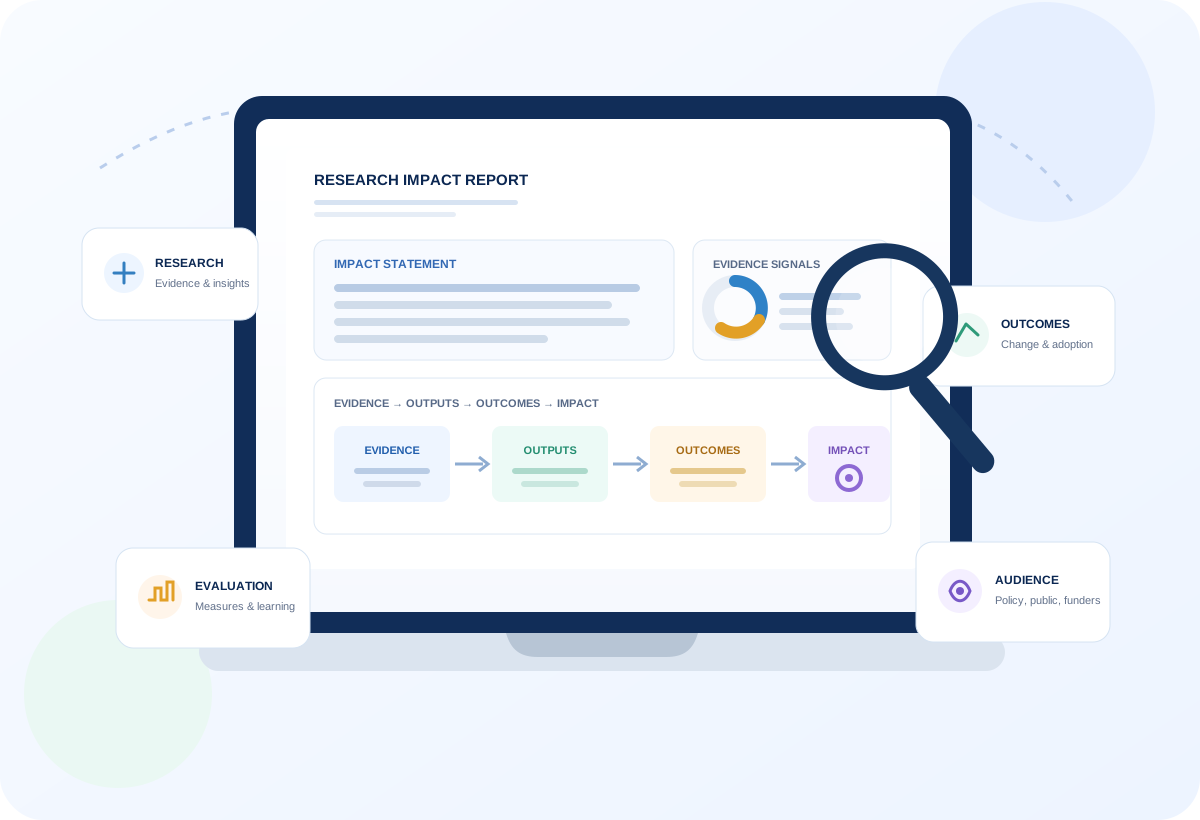
Structure the impact narrative around a visible chain from research inputs and communication activities to outputs, outcomes and wider impact.
Research impact content can serve academic, scientific, policy, funding, public-awareness and corporate sustainability contexts when the evidence and audience requirements are clear.
Increase visibility, citations and collaboration opportunities.
Communicate findings clearly to improve understanding and health outcomes.
Influence policy with evidence-led communication.
Strengthen proposals and demonstrate measurable impact.
Educate communities and support social impact.
Communicate sustainability and innovation impact effectively.
Choose a project, retainer, campaign or strategic partnership model, then align the work to a phased research-impact communication timeline.
Combine research understanding, scientific rigor, creative communication, audience planning, data-led improvement and global communication experience.
Deep understanding of research and complex topics.
Evidence-based approach with attention to accuracy.
High-quality design that communicates clearly.
Messaging tailored to the people who need to understand it.
Measure, learn and continuously improve communication.
Experience communicating across countries, cultures and contexts.
Practical answers about evidence, impact statements, audience adaptation, formats, channels and engagement scope.
It is a communication service focused on turning research evidence, outputs, outcomes and real-world change into clear impact statements and supporting content. The work can include impact narratives, case studies, plain-language summaries, reports, presentations, web content and visual communication.
Useful inputs include the research objective, key findings, outputs, beneficiaries or audiences, evidence of uptake or change, stakeholder feedback, relevant metrics, dates, source material and any reporting or funding framework the statement must follow.
Yes. We can organize the evidence you already have, identify gaps and distinguish verified evidence from points that still need confirmation. Unsupported outcomes should not be presented as established impact.
We map the logic from inputs and activities to outputs, outcomes and wider impact, then use the available evidence to explain what changed, for whom, how the research contributed and what can be measured or demonstrated.
Yes. The underlying evidence can be retained while the narrative, level of technical detail, terminology, visual presentation and call to action are adapted for funders, policymakers, institutions, media, communities or public audiences.
Yes. The service can support concise impact statements, longer case studies, report sections, executive summaries, presentation content, website copy and campaign-ready derivatives when those formats are part of the agreed scope.
Yes. Where data is available, it can be organized into charts, infographics, framework diagrams, dashboards or presentation visuals so the relationship between evidence and impact is easier to understand.
Source material remains the basis of the content. Technical claims, terminology, figures and impact evidence are kept traceable to supplied research and data, while the communication is simplified only to the level appropriate for the target audience.
Yes. Impact content can be structured for policy briefs, funding reports, grant narratives, donor communication and stakeholder materials, provided the relevant requirements and supporting evidence are supplied.
Depending on scope, content can be prepared for reports and publications, websites and blogs, email campaigns, social media, media outreach, webinars, conferences and partnership communication.
The supplied service model shows discovery and research in weeks 1–2, strategy and planning in weeks 3–4, content creation and design in weeks 5–8, distribution and launch in weeks 9–10, followed by ongoing evaluation and optimization where required.
No fixed price is stated for this service in the supplied information. Scope can vary by the amount of research material, evidence analysis, number of deliverables, channels and design requirements, so the engagement is discussed before work begins.
Tell us what research you need to communicate, the evidence available, the intended audience and the formats or channels you need.
A useful brief makes it easier to separate verified evidence from interpretation, identify the strongest impact pathway and recommend the right content formats.
Share enough detail for us to understand the research context, impact evidence, audience and communication requirement.
From evidence and impact statements to storytelling and distribution, build a communication pathway around what your research has changed.
Discuss Your Requirement