₹18,000
for a defined writing project
Appropriate for a new SOP, work instruction, policy/procedure, process guide, or comparable quality document with accessible process-owner input.
Buy Service Now
Turn process knowledge, existing drafts, review comments and quality requirements into logically structured documentation with clear responsibilities, actionable steps, control points, records, approvals and consistent presentation.
A useful SOP or quality document must reflect how the process is actually performed, controlled, evidenced, and approved. The project minimum is intended for one bounded document assignment where process owners can provide the facts, records, forms, and requirements needed for accurate drafting.
Appropriate for a new SOP, work instruction, policy/procedure, process guide, or comparable quality document with accessible process-owner input.
Buy Service NowWork is shaped around the document purpose, source material and confirmed requirements.
Unpublished process information and working files are treated as confidential project material.
Content is checked for clarity, consistency, completeness, controls, references and formatting.
Receive a usable document package with revisions, review notes and clean final copy as agreed.
Common documentation gaps make procedures difficult to follow, review, approve or evidence. A strong quality document makes the intended process, responsibility and control logic visible.
The document does not clearly state what activity it governs, where it starts and ends, or who should use it.
Steps are too high level, out of sequence or missing decision points, inputs, outputs and hand-offs.
Roles, reviewers, approvers or escalation responsibilities are not clearly assigned to the relevant activities.
The document describes activity but does not show the checks, acceptance criteria, approvals or exception paths.
Required records, forms, evidence locations, retention references or traceability points are not identified.
Document ownership, review status, change history or approval information is inconsistent or incomplete.
The exact structure depends on your document type and supplied requirements. These are the common building blocks used to turn raw process knowledge into a coherent controlled document.
We can develop or refine the document from high-level intent through procedure, control, evidence and approval content.
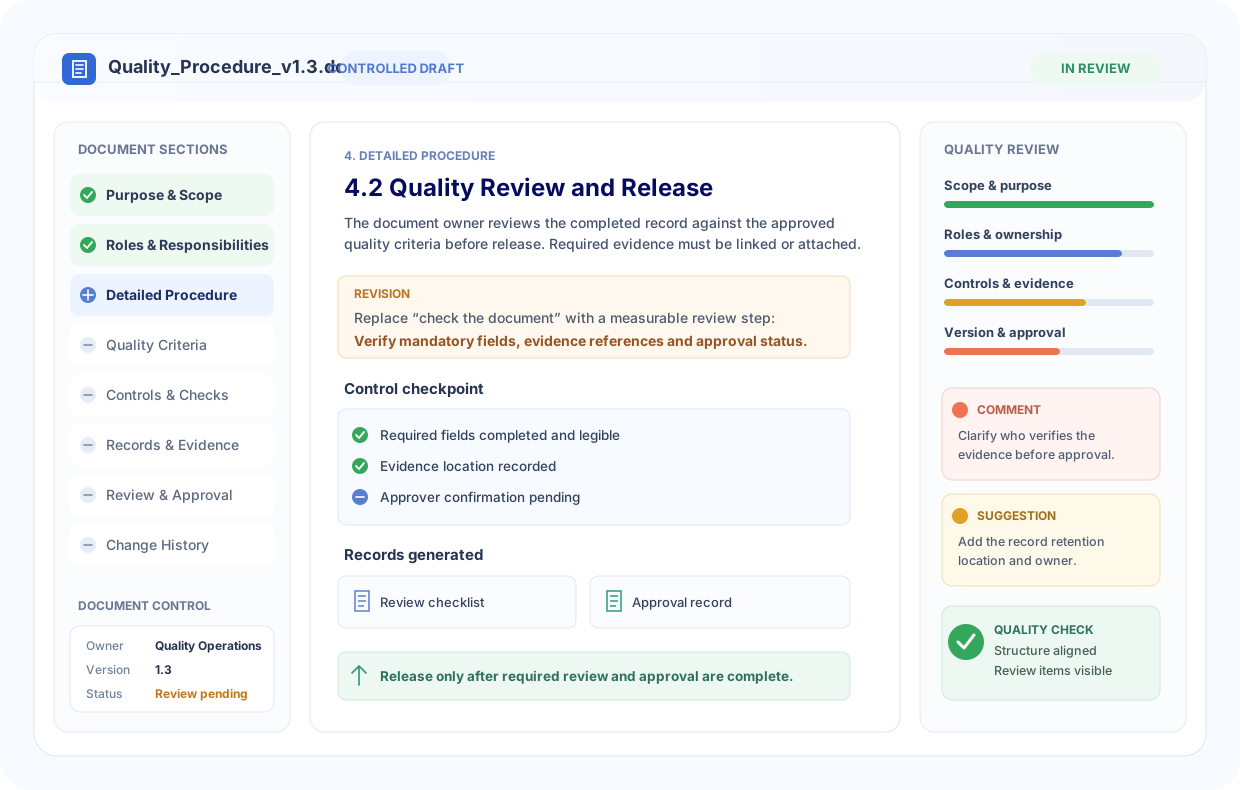
A useful quality document turns informal knowledge into a repeatable, reviewable sequence. This example shows the difference between rough instructions, an annotated draft and a clean controlled version.
“Check the form when the work is done. Make sure the important parts are there and send it for approval. Save the evidence somewhere in the shared folder.”
4.2 Quality Review and Release
The document owner reviews the completed record against the approved quality criteria before release.
The document owner verifies mandatory fields, required evidence and review status before routing the record to the designated approver. Records that do not meet the quality criteria are returned for correction before release.
Formatting and language editing are useful when the content already exists. Full quality documentation support goes further by helping develop the structure, procedure logic, responsibilities, controls, records and review framework.
The service can be adapted to different documentation formats. Final content and terminology are developed from your supplied process information, templates and requirements.
A staged workflow keeps the document grounded in your supplied process information while making structure, review points and final deliverables clear.
Provide the document purpose, existing notes, templates, process information and required outcome.
Define boundaries, intended users, required sections, inputs, outputs and supporting records.
Build the document hierarchy, control fields, headings, numbering and reusable content blocks.
Convert source material into clear procedural language, responsibilities, controls and evidence requirements.
Incorporate supplied subject-matter comments, clarifications, exceptions and required changes.
Check clarity, sequence, terminology, cross-references, controls, records and document completeness.
Align the final draft to the supplied template, numbering, references, tables, appendices and presentation rules.
Deliver the agreed editable and clean files with review notes or supporting tools where included in scope.
Better source information produces a more accurate draft. Share the available process knowledge and requirements; the final package is then built around the confirmed scope.
A multi-stage review helps keep the document usable, internally coherent and consistent with the source material and requirements supplied for the project.
Check purpose, scope, section order, process flow and document architecture.
Improve action language, readability, sequencing and user-facing instructions.
Review names, roles, abbreviations, labels and repeated terms for consistency.
Verify that stated checks, approvals, records and evidence requirements are visible.
Review headings, numbering, tables, references, appendices and supplied template rules.
Complete a final consistency pass before the agreed document package is delivered.
Your process information, drafts and quality documentation remain confidential project material.
This service does not match a fixed plan in the service scope, so no price or exact turnaround is stated here. Scope and delivery are assessed from the actual documentation requirement.
Well-planned and thorough documentation development.
Faster delivery for upcoming review or approval deadlines.
Urgent-support request for tight timelines, subject to assessment.
Final turnaround depends on scope, complexity, source readiness, service depth, review inputs and capacity.
Document architecture, procedures, roles, controls, records, review logic and presentation can be included depending on the agreed scope.
Editing improves existing text; full documentation support can also develop the structure and operational content from source material.
Yes. Share your approved template, control fields, numbering and formatting requirements.
Yes. Existing drafts, notes, reviewer comments and process information can be used as source material.
Pricing is assessed from scope, length, complexity, source condition, formatting needs, supporting tools and turnaround.
The exact package depends on scope and can include editable draft, review notes, clean final copy and supporting document tools.
These answers clarify scope, source requirements, review responsibilities, pricing logic and how quality documentation support differs from simple language polishing.
The service can support document purpose and scope, definitions, roles, process flow, procedures, quality criteria, control points, records and evidence requirements, review and approval steps, version information, forms, appendices and final formatting, based on the materials and requirements you provide.
Proofreading and language editing mainly improve correctness, wording and presentation. Quality documentation writing can also develop document architecture, process steps, responsibilities, control points, records, review logic and supporting templates where those items are within the agreed scope.
Common document types include standard operating procedures, work instructions, policies and procedures, quality manuals, process documents, checklists, forms, inspection or review guides, training guidance and controlled-document support materials.
Yes. You can provide your approved template, document-control fields, terminology, numbering rules, reference requirements and formatting conventions so the draft can be structured around those supplied requirements.
Yes. Existing drafts, process notes, reviewer comments and source documents can be used as the starting point. The work can focus on structure, clarity, completeness, consistency, control points, records, formatting and reviewer-action items, depending on the agreed scope.
Version fields, review status, approval roles and change-history sections can be incorporated when they are required by your template or document-control approach.
A custom quote can be based on document length, source-material condition, depth of writing support, process complexity, formatting or reference requirements, number of appendices or tables and requested turnaround. Contentxprtz quality documentation writing projects start from ₹18,000 for a defined writing engagement. Final quotation and delivery depend on document type, process complexity, source readiness, forms and records, stakeholder input, review cycles, and deadline.
Standard, priority and express handling can be discussed. The actual delivery plan depends on scope, complexity, source readiness, review requirements and capacity, so an exact turnaround is confirmed after the material is assessed.
Useful inputs include the document purpose, existing draft or notes, approved template, process information, roles, forms or records, quality or regulatory requirements, reviewer comments, terminology and your required deadline.
No. The writing service can help structure and present quality documentation, but your authorised subject-matter experts and approvers remain responsible for confirming technical accuracy, operational suitability and any organisation-specific or regulatory requirements before release.
Share what you need to develop, the source material you already have and the review or approval deadline. The scope can then be assessed before a quote or delivery plan is confirmed.
Tell us whether you need an SOP, work instruction, policy, quality manual, process guide, checklist or another document.
Describe the notes, drafts, templates, process maps, forms, standards or reviewer comments already available.
Highlight required roles, checks, approvals, records, evidence, exceptions, metrics or document-control fields.
Include your template, numbering conventions, reference expectations and any internal terminology that must be used.
Share stakeholder, quality, audit, supervisor or SME comments that the revised document should address.
State the review date, approval milestone and the editable or final file formats you expect.
Share your contact details and documentation requirements so the scope, source readiness and suitable delivery approach can be reviewed.
Share your current material, process requirements and review goals. We can help turn them into a clear, structured document package for your internal review and approval process.