
Notes & Source Material
“The main issue is that teams have too much information. There are reports everywhere. We need a simple way to decide what matters and what to do next.”
Turn a topic, brief, outline, interviews, research, or existing content into a coherent ebook manuscript. The writing process is structured around your audience, purpose, source material, preferred voice, and review feedback.
A structured path from concept to chapters
Unpublished project material is treated as confidential
Tone and terminology guided by your brief
Feedback can be incorporated before final handoff
Organised files for author review and next-stage production
Built for structured, reviewable ebook projects
An ebook often starts as expertise scattered across notes, conversations, presentations, research, or an unfinished draft. The writing task is to organise that material into a sustained reader journey.
We have many ideas about decision making and there are lots of things leaders need to consider.
Good decisions become repeatable when leaders separate the signal, the constraint, and the action they can actually control. The chapter can then move from problem → framework → example → action, giving the reader a clear reason to continue.
Writing note: the revised passage is not a cosmetic edit. It establishes the chapter's purpose, creates a stronger promise to the reader, and gives the rest of the section a usable structure.
The exact scope depends on your brief. These are the core areas that can be addressed when they are relevant to the project.
A writing project is developed through decisions about structure, emphasis, evidence, reader context, and voice—not simply by expanding a short sentence into a longer one.
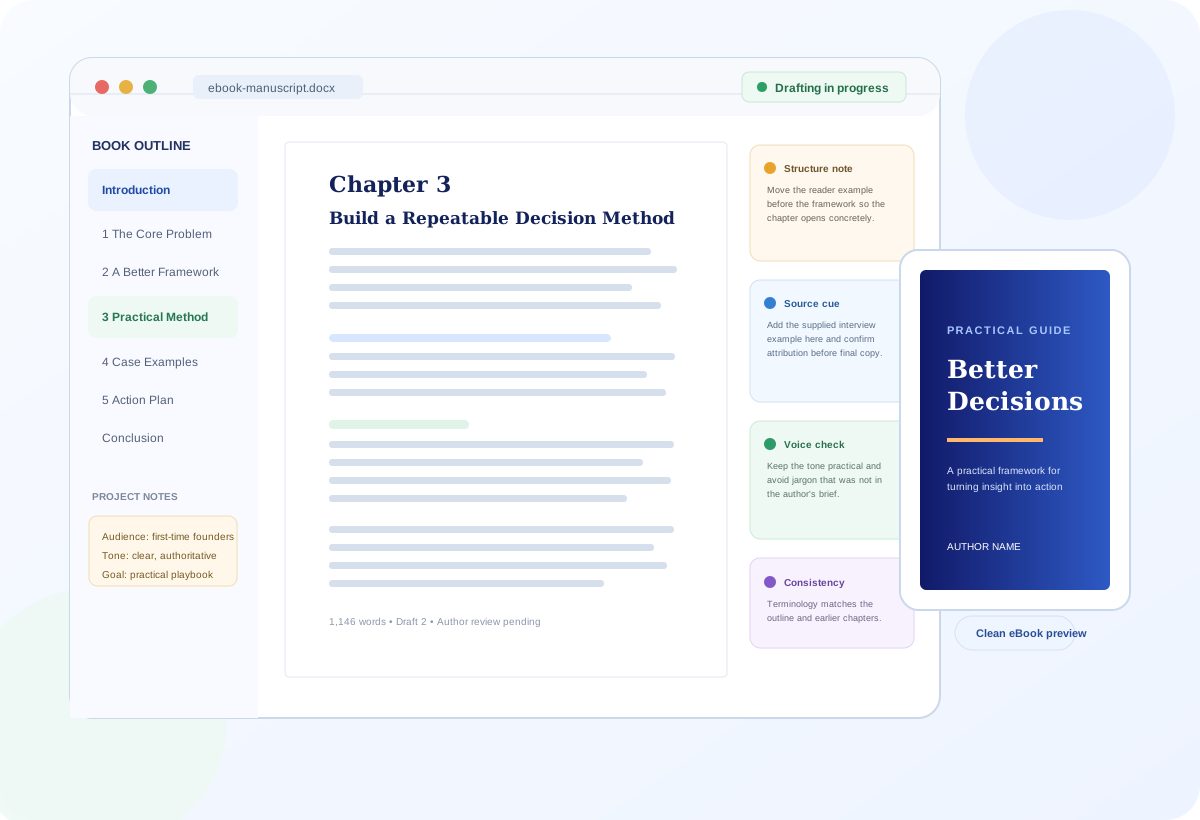
The first version of the chapter starts by explaining every concept at once. A stronger opening begins with a concrete reader problem and then introduces the framework only when the reader is ready for it.
The supporting material is grouped around three decisions: what matters, what is constrained, and what action is available. Each decision is followed by an example and a short takeaway.
The closing section then turns the chapter into an action step so the next chapter feels earned rather than disconnected.
The project can begin at different stages. This example shows how raw material can move through drafting and author review toward a more polished long-form manuscript.
“The main issue is that teams have too much information. There are reports everywhere. We need a simple way to decide what matters and what to do next.”
Most teams do not suffer from a shortage of information. They suffer from a shortage of decisions. A useful framework separates what is merely visible from what is genuinely actionable, then gives the reader a repeatable sequence for moving from signal to choice.
After review, the chapter language, examples, transitions, terminology, and takeaways are aligned with the agreed audience and the logic of the surrounding chapters.
Choose writing support when the manuscript still needs content creation or substantial development. Choose editing when the content already exists and primarily needs improvement.
| Aspect | Editing-Only Support | Ebook Writing Service |
|---|---|---|
| Starting point | Existing manuscript or substantial draft | Brief, outline, source material, interviews, notes, partial draft, or mixed inputs |
| Primary focus | Improve existing language, clarity, flow, or structure | Develop and write the manuscript around the agreed purpose and audience |
| Content creation | Limited by the editing scope | New chapter prose can be drafted within the agreed project scope |
| Outline work | Usually refinement of an existing structure | Chapter architecture can be developed before drafting where required |
| Author input | Clarifications and review of edits | Briefing, source material, voice guidance, factual review, and revision feedback |
| Best fit | Content is already written | You need help turning expertise or source material into sustained long-form content |
Your project may use all or only some of these components. The final structure should reflect the ebook's purpose rather than a fixed template.
Working title, subtitle, audience promise
Reader context, problem, purpose, roadmap
Main ideas, frameworks, explanations, examples
Cases, quotes, data, research, supplied proof points
Takeaways, checklists, prompts, next steps where suitable
Reinforcement, synthesis, and closing direction
A staged workflow makes long-form writing easier to review and keeps major structural decisions visible before the manuscript is finalised.
Topic, audience, goal, source material, tone, and constraints
Define chapter purpose, sequence, and content priorities
Write chapter content from the agreed inputs and structure
Resolve author feedback, consistency, clarity, and gaps
Provide the agreed clean files for final author review or production
Deliverables depend on the agreed scope. The handoff is organised so you can review what was developed and move the manuscript into your next publishing stage.
Chaptered document with the agreed long-form content and headings.
Outline or chapter architecture used to guide the manuscript where included in scope.
A working version for author comments and factual or voice feedback when review stages are included.
Final agreed manuscript version after incorporated revisions.
Reference or source notes where citations, quotations, or supplied evidence form part of the scope.
Clarifications, unresolved author decisions, or production notes where needed.
Quality checks move from big-picture purpose to final manuscript consistency so the ebook works as one long-form document rather than a collection of disconnected chapters.
The service is suited to nonfiction projects where the author can provide a clear brief, expertise, source material, or direction. Suitability is confirmed during scoping.
Practical long-form content built around frameworks, lessons, processes, or business expertise.
Ebooks that develop a point of view, explain an approach, or organise expert insight.
Projects developed from interviews, presentations, notes, existing articles, or subject-matter expertise.
Structured explanatory content, learning guides, playbooks, and reader-facing instructional material.
Focused content assets designed around a defined audience problem, educational goal, or business topic.
Unpublished ideas, manuscripts, notes, interviews, and business material can be sensitive. The workflow is designed around controlled handling and clear handoff of project files.
Share only the source material needed for the agreed scope. If you need additional confidentiality arrangements, include that requirement when you submit the project brief so it can be reviewed before work begins.
No fixed turnaround is stated on this page. Share your target date so timing can be assessed against the scope, source material, intended length, and review stages.
For projects with a defined brief and enough time for staged drafting and author review.
For projects with a nearer target date. Feasibility depends on manuscript scope and available project capacity.
Share the exact target date and required deliverables so feasibility can be assessed before any commitment is made.
No fixed price is stated on this page. Share the actual project details so the writing scope can be reviewed before a quote is provided.
Useful scoping details include the intended audience, working topic, source material, approximate length or chapter count, current draft status, research needs, tone, review stages, and target date.
The value of professional ebook writing is not just more words. It is a controlled process for turning subject matter into a coherent manuscript that can survive chapter-by-chapter review.
Audience, purpose, and source material guide the work.
Outline and chapter logic make major decisions easier to review.
Feedback can be resolved before the whole manuscript is locked.
Files, open queries, and final agreed copy are organised for the next step.
Practical questions about project inputs, scope, review, research, formatting boundaries, pricing, and timing.
The exact scope is agreed from your brief. A typical ebook writing project may include topic framing, chapter planning, drafting from supplied material, revision for clarity and flow, consistency checks, and delivery of a clean manuscript for author review.
Yes. A project can be developed from a structured brief, outline, notes, interview material, presentations, articles, transcripts, research, or other source material you provide, subject to the agreed scope.
The writing process can be guided by your preferred tone, audience, examples, terminology, and point of view. Author review checkpoints help confirm that the manuscript continues to reflect the intended voice.
When the project needs it, the writing workflow can begin with chapter architecture, section purpose, sequencing, and content priorities before full drafting starts.
Yes. Existing chapters or partial drafts can be used as source material. The required work may involve continuing the manuscript, filling gaps, reorganising sections, or aligning new writing with the established voice.
References can be integrated when they are part of the agreed scope and suitable source material is available. Any required citation style, source restrictions, or attribution requirements should be shared at the start.
This page focuses on ebook writing and manuscript development. Basic manuscript organisation can be prepared for handoff, while final publishing-platform formatting, cover design, conversion, or distribution should be confirmed separately if required.
The service can be scoped for business, professional, educational, thought-leadership, informational, or other nonfiction ebook projects when the brief and source material are suitable.
This page does not state a preset word limit for Ebook Writing Service. Share the intended length or chapter plan in the enquiry so the scope can be reviewed.
No fixed turnaround is stated for this service on this page. Timing should be confirmed after the brief, manuscript length, source material, review stages, and required depth are understood.
No fixed price is published for this service on this page. Submit the project details so the required scope can be reviewed before a quote is provided.
Send the working title or topic, audience, objective, source material, preferred tone, approximate length, any existing outline or chapters, and your target deadline through the enquiry form.
Share the project goal, audience, source material, current draft status, intended length, and target date. The details help define the right writing scope before a quote or timeline is confirmed.
Share enough detail for the writing scope, source-material needs, review approach, and deadline feasibility to be assessed.