
Originality & Book Manuscript Readiness

Book Plagiarism Support Service for Clearer, Safer Source Use

Get human-led support for passages that raise originality concerns in a book manuscript. We help you interpret source overlap, check attribution and quotation use, review paraphrasing, and make transparent revisions without turning the process into score-chasing.

  • Context-sensitive review of flagged overlap instead of relying on a raw similarity percentage alone
  • Practical guidance for quotation, citation, attribution, and genuine re-expression in your own voice
  • Clear author-action notes for chapters, references, and previously used material
  • Confidential handling through the designated manuscript submission and delivery process
Important: This service is for ethical originality and attribution support. It does not promise a zero or specific similarity score, publisher acceptance, or a method for defeating plagiarism-detection systems.
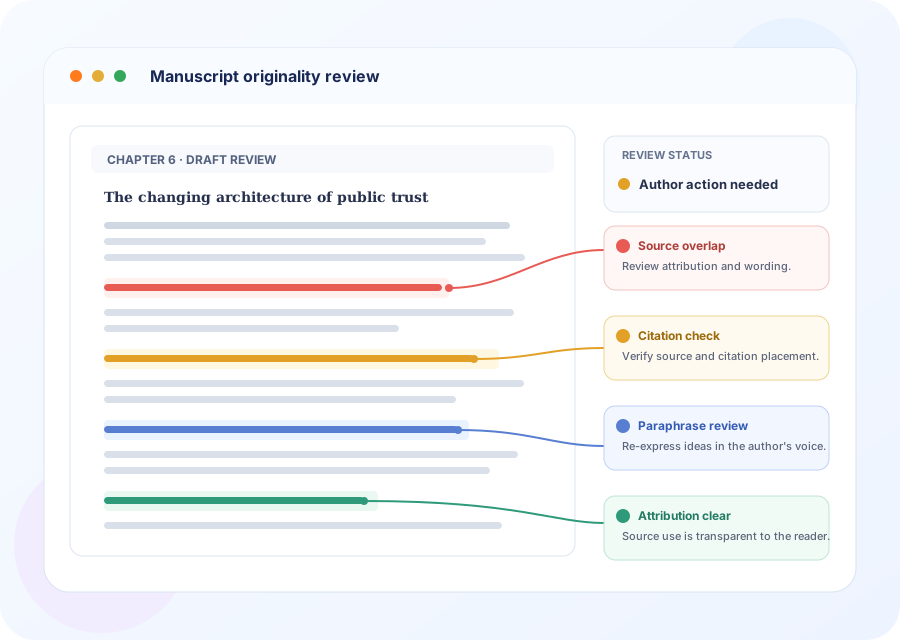
Book manuscript originality review with highlighted source overlap, citation checks, paraphrase review, and attribution notes

Human Context Review

Matches are assessed in context

Source-Aware Guidance

Attribution and quotation are reviewed

Author Voice Preserved

Revisions focus on genuine expression

Actionable Notes

Clear next steps for author revision

Confidential Handling

Unpublished material stays protected

Scope-Led Scheduling

Timing is confirmed after review

1

What Problems This Service Helps You Resolve

A similarity match is not automatically plagiarism. The practical task is to identify which passages need author action, which are correctly attributed, and which should be rewritten, quoted, cited, or checked against prior use.

Unattributed source overlap
Paraphrasing too close to the source
Quotation or attribution gaps
Citation-reference mismatch
Reuse from earlier author material
Unclear action after a similarity report

Illustrative book-manuscript excerpt

Public trust can decline when institutions repeat familiar messages without showing how decisions were reached. When readers encounter the same distinctive wording used in a source, the overlap should be checked before publication.

Some language may be conventional, while other passages may need a quotation, a citation, or clearer attribution. Where an idea is retained without quoting, the author should restate it through genuinely independent wording and sentence structure.

Previously published author material can also need review so that reuse, rights, and attribution are transparent to the intended publisher and reader.

Source overlapCheck whether the wording is distinctive and whether the source is visible to the reader.
Attribution decisionDecide whether the passage needs quotation marks, citation, or another form of acknowledgement.
Paraphrase reviewPreserve the idea while rebuilding the wording from the author's own understanding and voice.
Prior-use reviewIdentify earlier author material and check the publisher or rights context before reuse.
2

What Book Plagiarism Support Covers

The review is built around the manuscript and the originality concern you actually have. The items below can be included where they are relevant to the confirmed scope.

Similarity Match Interpretation

Separate meaningful overlap from references, common phrasing, quotations, titles, and other context that may not require the same response.

Source & Attribution Review

Check whether borrowed ideas or wording are made sufficiently visible to the reader through appropriate attribution.

Quotation Handling

Review quoted passages for clear presentation and source acknowledgement when quotation is the appropriate treatment.

Paraphrase Guidance

Identify wording that remains too close to a source and guide genuine re-expression in the author's own syntax, emphasis, and voice.

Citation Placement

Review whether citations appear where source-dependent statements or borrowed ideas need acknowledgement.

Reference Cross-Checks

Flag obvious inconsistencies between in-text citations or notes and the supplied reference list when included in scope.

Previously Used Material

Identify author-reuse concerns that may need disclosure, citation, rights checking, or publisher-specific treatment.

High-Risk Passage Notes

Prioritise passages where wording, attribution, or reuse needs the author's attention before the manuscript moves forward.

Revision Strategy

Explain whether to quote, cite, rewrite, remove, consolidate, or seek publisher guidance instead of mechanically changing every match.

Final Integrity Check

Review completed changes for consistency of attribution, quotation, citations, and author-approved wording within the agreed scope.

3

Service Demonstration: Annotated Manuscript Excerpt

This illustrative example shows the type of author-facing reasoning that can sit behind a revision. It is not a real similarity report and does not reproduce any third-party source.

128As the book develops its central argument, the discussion turns to institutional memory and public accountability.
129A distinctive sequence of wording may mirror a source closely enough to require direct attention.
130The author should first determine whether the wording is a quotation, a paraphrase, or an unattributed reuse.
131If a source-dependent claim remains, the citation should appear where the source relationship is clear.
132If the idea is paraphrased, the sentence should be rebuilt from the author's own understanding rather than by swapping isolated words.
133Earlier author material may need separate treatment depending on publication history, rights, and publisher expectations.
134A final review should keep attribution consistent across the chapter, notes, and references.
Source overlapCheck whether the sequence is genuinely borrowed and whether quotation or revision is needed.
Citation placementPut source acknowledgement at the point where the reader needs it.
Paraphrase qualityRebuild meaning in the author's own structure and voice instead of performing cosmetic substitution.
ConsistencyConfirm the citation, note, and reference-list treatment aligns across the manuscript.
4

From Flagged Passage to Author-Approved Revision

The goal is not to erase every match. The goal is to make the source relationship clear and help the author produce independent, appropriately attributed writing.

Before Review

Potentially Problematic Draft

Institutional credibility depends on the continuing alignment of public communication, shared expectations, and repeated signals of accountability, a point discussed in the source material without a clear acknowledgement here.
Issue: distinctive overlap + unclear attribution
Tracked Revision

Source Relationship Made Explicit

The author revises the sentence around the chapter's own argument, rebuilds the phrasing rather than exchanging synonyms, and adds a citation or quotation where the underlying source must remain visible.
Action: genuine re-expression + attribution decision
Clean Final Copy

Transparent, Original Expression

The revised passage now presents the book's point in the author's own structure and emphasis, while any source-dependent idea is acknowledged where the reader can understand the relationship.
Result: clearer authorship + appropriate source visibility
5

Similarity Report vs. Book Plagiarism Support

An automated report can show matching text. Human editorial support helps determine what the match means and what the author should do next.

AspectSimilarity Report AloneBook Plagiarism Support
Primary focusLocates text matches against available sourcesInterprets matches in manuscript context and identifies practical author actions
QuotationMay still appear as matched textChecks whether quotation and attribution are clear and appropriate to the supplied context
ParaphrasingShows overlap but does not explain how to revise ethicallyGuides genuine re-expression while preserving the intended meaning and source acknowledgement
CitationsDoes not by itself prove a citation is correctly placed or completeReviews citation placement and obvious citation-reference mismatches when included in scope
Prior author materialMay flag reuse from an earlier publication or submissionSeparates the originality concern from the rights, disclosure, and publisher questions the author may need to address
OutcomeA list or visual map of matchesAn author-focused review path: retain, quote, cite, rewrite, remove, or escalate for publisher guidance
6

Book Manuscript Areas We Can Review

Scope can be full-manuscript or targeted. The most useful review areas depend on where source-dependent writing, prior reuse, quotations, and citations appear.

Front Matter

Prefaces, acknowledgements, introductions, and other opening material that may reuse earlier descriptions.

Core Chapters

Main narrative, analysis, explanation, literature discussion, and source-dependent argument.

Quoted Passages

Block quotations, inline quotations, epigraphs, extracted material, and attributed source text.

Notes & Citations

Footnotes, endnotes, in-text citations, source acknowledgements, and citation placement.

Reference Lists

Obvious consistency checks between cited works and the supplied bibliography or references.

Tables & Figure Text

Captions, source lines, explanatory text, reproduced material, and attribution around visual content.

Previously Published Text

Sections adapted from articles, reports, theses, websites, conference material, or earlier book editions.

Appendices & Supplementary Text

Supporting material, adapted instruments, supplementary explanations, and source-dependent appendices.

7

Our Book Plagiarism Support Workflow

The sequence below keeps the review focused on authorship, attribution, and transparent revision. Exact steps can vary with the manuscript and the material you supply.

Step 1

Scope Your Review

Share manuscript type, concern, deadline, and any similarity report.

Step 2

Map Flagged Material

Identify where overlap, quotation, citation, or prior reuse needs attention.

Step 3

Review Source Context

Assess whether each issue calls for attribution, quotation, revision, or no action.

Step 4

Guide Ethical Revision

Rework close wording through genuine independent expression and clear attribution.

Step 5

Check Citations

Review citation placement, notes, references, and source visibility where included.

Step 6

Return Review Notes

Receive a marked review path with clear author actions and rationale.

Step 7

Final Consistency Pass

Check author-approved revisions for consistent attribution within the agreed scope.

8

What You Receive

Deliverables depend on the confirmed service scope. A typical support package can combine marked manuscript review, author-action notes, and a clean revision path rather than a bare similarity percentage.

Annotated Review Copy

Passages requiring attention can be marked with clear editorial comments or author-action notes.

Overlap & Source Notes

Context on why a passage is concerning and whether quotation, attribution, rewriting, or other action is appropriate.

Citation Action Points

Notes on citation placement, quotation handling, or obvious reference mismatches where those checks are part of the scope.

Revision Guidance

Practical guidance for genuine re-expression that keeps the author's intended meaning and makes source relationships transparent.

Final Review Checklist

A concise list of outstanding author decisions, publisher questions, or items that should be confirmed before publication.

9

Quality Assurance Methodology

The review narrows from broad similarity context to the specific author actions that matter most. The purpose is clarity and integrity, not indiscriminate rewriting.

Layer 1 · Match & Context Triage
Layer 2 · Attribution & Quotation Review
Layer 3 · Paraphrase & Originality Review
Layer 4 · Citation & Reference Consistency
Layer 5 · Final Integrity Check
Context before correction

A match is interpreted before any revision is recommended.

Source visibility preserved

Quotations, citations, and attribution remain visible where the reader needs them.

Author voice protected

Rewriting guidance focuses on original expression rather than superficial word substitution.

Consistency checked

Author-approved changes are reviewed for consistent source handling within the agreed scope.

Unsupported promises avoided

No fixed score, detector outcome, legal clearance, or publisher-acceptance result is promised.

10

Book & Manuscript Types We Can Scope

Suitability depends on your material and originality concern. Share the manuscript type when requesting a quote so the review can be scoped appropriately.

Scholarly Books
Monographs
Textbooks
Edited-Volume Chapters
Nonfiction Manuscripts
Professional & Reference Books
Thesis-to-Book Revisions
Individual Book Chapters
11

Confidentiality & File Handling

Book manuscripts can contain unpublished arguments, original research, proprietary material, and sensitive author information. Confidential handling is therefore part of the service workflow.

Confidential Manuscript

Your manuscript and instructions are handled as confidential service information.

Designated Transfer

Use the designated submission and delivery process for manuscript materials.

Controlled Review

The review is limited to the agreed service purpose and author instructions.

Clear Deliverables

Author-facing notes distinguish required action from questions that need your decision.

Author Control

You remain responsible for final wording, source use, rights decisions, and publication choices.

Your research and writing remain yours. If your project has special confidentiality, NDA, access, or retention requirements, include those requirements in the enquiry so they can be reviewed before work begins.
12

Turnaround Planning

No fixed turnaround is invented for this service page. Your delivery date is confirmed after the manuscript and requested review scope are assessed.

Manuscript Length

Total word count, chapter count, and whether the work is full-manuscript or targeted affect the review plan.

Review Depth

Turnaround can vary with the number of flagged passages and the level of citation, reference, quotation, or prior-use review required.

Your Deadline

Share the exact deadline and time zone. Availability and a realistic delivery date can then be confirmed before the service starts.

13

Pricing Clarity

Book Plagiarism Support Service does not match the supplied Editing, Writing, or Proofreading plan catalogue, so no catalogue price is copied into this page.

What shapes your quote

A custom quote is prepared after the requested scope is reviewed. This avoids applying an unrelated editing or proofreading price to a distinct originality-support requirement.

  • Manuscript length and number of chapters in scope
  • Whether a similarity report is supplied and how complex the flagged material is
  • Depth of source, quotation, citation, reference, or prior-use review requested
  • Targeted chapter review versus broader manuscript-wide support
  • Confirmed deadline and any special confidentiality or delivery requirements
Custom Quote Based on Manuscript Scope

Send the manuscript details, approximate word count, deadline, and your main originality concern. If you already have a similarity report, mention that in the enquiry.

Request Your Quote
14

Book Plagiarism Support FAQs

Practical answers about similarity reports, source overlap, quotation, paraphrasing, citations, previously used material, confidentiality, pricing, turnaround, and publication expectations.

What does a Book Plagiarism Support Service do?

It helps authors review potentially problematic text overlap, source use, quotations, paraphrasing, citations, references, and reused material so the manuscript can be revised transparently and ethically.

Is this the same as an automated similarity check?

No. A similarity score or match list is only a starting point. Human review considers context, attribution, quotation, common language, source use, and whether an author action is actually needed.

Do you guarantee a zero or specific similarity score?

No. The service does not guarantee a particular similarity percentage, a zero-match result, publisher acceptance, or a way to defeat plagiarism-detection systems. The focus is appropriate attribution and original expression.

Can you review a similarity report I already have?

Yes, a supplied similarity report can be reviewed alongside the manuscript when that is part of the confirmed scope. Provide the report with the corresponding manuscript version so the matches can be interpreted in context.

Can you help revise passages that are too close to a source?

Support can include guidance for genuine re-expression in the author's own voice, together with appropriate quotation or citation where the source must remain visible. The purpose is not to disguise copied wording.

What if matched text is a quotation or standard phrase?

Matched text is assessed in context. Correctly presented quotations, unavoidable terminology, titles, references, and conventional phrasing may require different treatment from unattributed or overly close borrowing.

Can citation and reference issues be reviewed?

Citation placement, quotation attribution, and obvious citation-reference mismatches can be reviewed when included in the agreed service scope.

Can you review reuse from my own earlier work?

Previously published or submitted material can be flagged for author attention where it appears in the manuscript or supplied similarity report. Appropriate reuse depends on the source, rights, publisher requirements, and attribution.

What types of book manuscripts can be considered?

The service can be scoped for scholarly books, monographs, textbooks, edited-volume chapters, nonfiction, professional or reference books, and thesis-to-book revisions. Suitability should be confirmed with the manuscript details.

How is turnaround determined?

Turnaround is confirmed after reviewing manuscript length, the number and complexity of flagged passages, citation or reference work, requested review depth, and your deadline.

How is pricing determined?

A custom quote is prepared after the requested scope is reviewed. Factors can include manuscript length, review depth, similarity-report complexity, citation or reference checks, and deadline requirements.

Will my manuscript be treated as confidential?

Manuscripts, instructions, personal details, and unpublished materials are handled as confidential service information through the designated submission and delivery process.

What should I provide for an enquiry?

Share the manuscript type, approximate word count, deadline, main concern, and whether you already have a similarity report. Additional files can be supplied when the service scope is confirmed.

Does plagiarism support guarantee publisher acceptance?

No. Editorial support can improve attribution, transparency, and originality handling, but it cannot guarantee acceptance, legal clearance, or a publisher's final decision.

15

Why Authors Choose Human Plagiarism Support

The value is not a promised number. It is the editorial reasoning that helps an author understand source relationships and revise the manuscript responsibly.

Context, Not Score-Chasing

The review focuses on why text matched and what source-aware action is appropriate.

Transparent Revision

Author notes explain the reasoning behind quotation, citation, rewriting, or retention decisions.

Author Voice Preserved

Re-expression is built around meaning and independent phrasing rather than cosmetic synonym replacement.

Citation-Aware Support

Source use is reviewed alongside quotation, citation placement, notes, and references when included in scope.

Confidential Handling

Unpublished manuscripts and instructions are treated as confidential service information.

Clear Boundaries

No false promise of zero similarity, detector evasion, legal clearance, or guaranteed publisher acceptance.

16 · Ready to Review Your Manuscript?

Resolve Originality Concerns Before Your Book Moves Forward

Tell us what you are working on, where the concern appears, and whether you already have a similarity report. We will use those details to assess scope, timing, and a custom quote.

  • Human review of source overlap and author action
  • Ethical rewriting, quotation, and citation guidance
  • Scope-based timing and pricing — no invented package claims
  • Confidential handling of unpublished manuscript materials

Request a Book Plagiarism Support Quote

Provide enough detail to understand the manuscript, originality concern, and deadline. You can send supporting files after the enquiry moves forward.

Loading question…

Do not include confidential manuscript text in this enquiry box. Supporting files can be shared through the designated submission process after scope is confirmed.