
Common Cover Problems
Subtitle
Author
Weak visual hierarchy
Generic image placement and similar font weights make the title hard to prioritise.
Back-cover and spine decisions have not yet been integrated.
Build a cover direction that presents your title, author name, imagery, typography and publishing format as one coherent visual system—without relying on a generic template that could belong to any book.
Pricing and turnaround are not pre-filled for this service page; they are confirmed after the actual cover brief and production requirements are reviewed.
A cover can have all the necessary text and still feel unclear, generic or visually disconnected from the book. The design process brings those elements into a deliberate hierarchy.
Weak visual hierarchy
Generic image placement and similar font weights make the title hard to prioritise.
Back-cover and spine decisions have not yet been integrated.
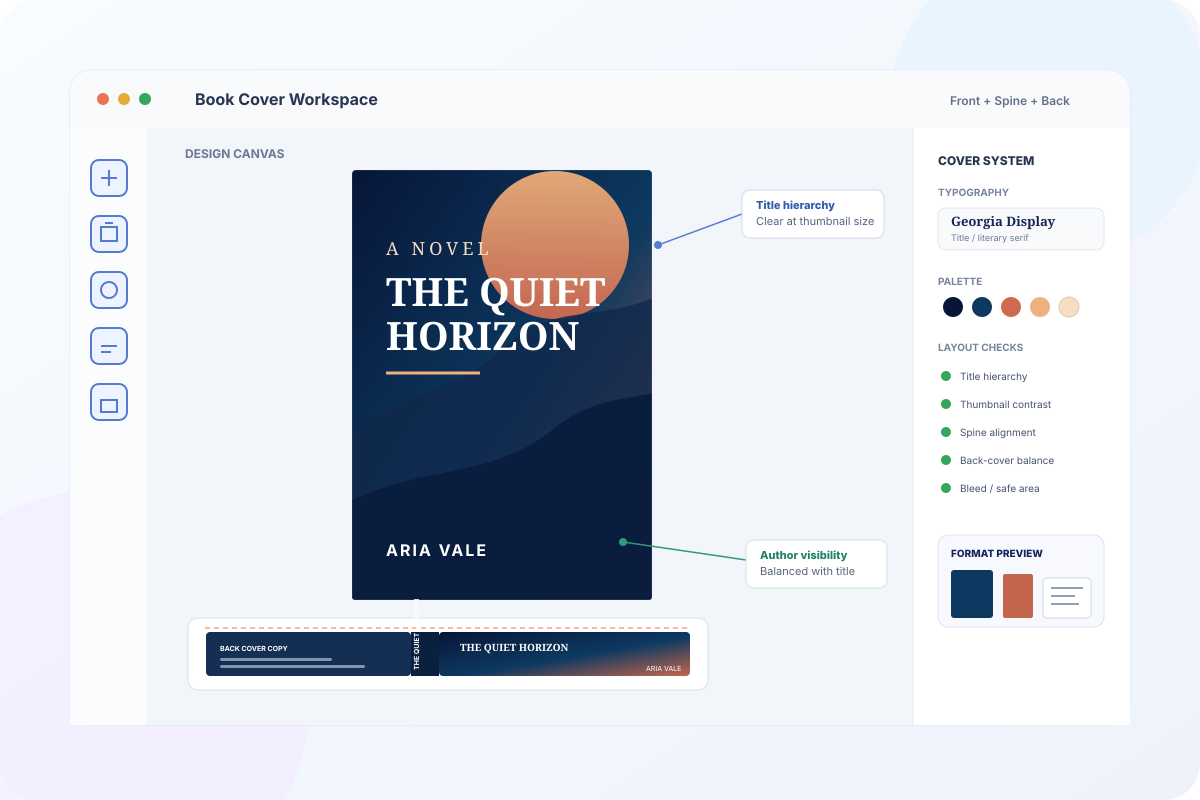
The sample below uses a fictional title to show how visual hierarchy, colour, typography and format decisions can be evaluated during cover development.
The design journey moves from information and constraints to visual exploration, then into a focused cover that can be prepared around the agreed publishing requirements.
A template can organise existing elements. A cover-design service goes further by making deliberate visual decisions around the book brief, hierarchy, imagery and publishing context.
Useful when the visual direction is already established.
Built around the specific title, audience, tone and format brief.
The strongest covers are systems rather than isolated decorative choices. Each element should support the next and remain readable within the required format.
Scale, font character, spacing and placement.
Supportive hierarchy without competing with the title.
Visibility and emphasis appropriate to the cover structure.
Composition, crop, focal point and integration with type.
Palette consistency, mood, contrast and readability.
Continuity with front and back when print specs are provided.
Copy blocks, supporting information and visual balance.
Layout aligned to the dimensions or template you supply.
Visual hierarchy checked at reduced display size.
Reusable visual rules when multiple related covers are planned.
The workflow keeps creative exploration connected to practical requirements, so visual decisions are reviewed against the actual book brief rather than treated as decoration.
Final deliverables depend on the agreed format and publishing requirements. The examples below show the kinds of outputs and checks that can form part of a book-cover project.
There is no single visual formula for a good book cover. The direction should be appropriate to the content, audience and positioning rather than chosen simply because a style is fashionable.
Strong type structure becomes the main visual device when the title itself should dominate.
Photography or illustration carries the visual idea while typography supports the focal point.
Reduced elements, negative space and one strong idea create clarity without unnecessary detail.
Shared typography, grid, colour logic or illustration style can connect related titles.
Your brief, manuscript information and related project files should be treated as confidential service information through the designated submission and delivery process.
Book cover projects can differ substantially in format, artwork, production templates and the amount of concept development required. This page therefore does not invent a fixed price or turnaround.
Share the book brief, required formats and design expectations so the actual project scope can be reviewed before a quote is confirmed.
Quote after brief reviewNo unsupported fixed price shownDelivery timing depends on the agreed cover scope, production requirements and review needs. A project timeline can be confirmed once those details are known.
Timeline confirmed with scopeNo unsupported delivery claim shownTitle, genre or subject, target audience, formats, trim size, supplied artwork, visual references, printer template and any specific design concerns.
Start with the cover briefUse the enquiry form belowThe service is structured around visible design decisions that can be explained, reviewed and aligned to the book brief instead of relying on decoration alone.
Start with content, audience and positioning before selecting visual treatments.
Make title, subtitle and author information easier to read in the right order.
Bring production constraints into the layout when relevant specifications are supplied.
Feedback can focus on clear design choices instead of vague preferences alone.
Typography, imagery, colour and format components are treated as parts of one cover.
Answers to practical questions about cover scope, eBook and print formats, required inputs, spine and back-cover work, existing artwork, redesigns, confidentiality, quote and turnaround planning.
The service focuses on the visual presentation of your book cover: concept direction, title and author hierarchy, typography, colour, imagery, front-cover composition, and—when required—spine and back-cover layout around the publishing specifications you provide.
Yes, the design scope can be planned for a digital front cover, a print cover spread, or both. For print work, provide the trim size and the printer or publisher template when available so the layout can be built around the required dimensions.
Useful inputs include the working title, subtitle, author name, book summary, genre or subject area, intended audience, preferred tone, visual references, publishing format, trim size if known, and any publisher or printer specifications.
You can include existing artwork, photography, logos, or visual references in your brief. The design approach can then be planned around the material you provide and the usage rights you confirm.
When a print cover is part of the agreed scope, the layout can include the front, spine, and back. Spine width and placement depend on the final production specifications, so the relevant printer or publisher template should be supplied where possible.
This page is for cover design rather than copywriting. If you also need help with wording, mention it in your enquiry so the additional requirement can be discussed separately rather than assumed as part of the design scope.
The number and depth of concept routes are not fixed on this page. If alternative concepts are important to your project, state that in the brief so the required design scope can be confirmed before work begins.
Yes, a redesign brief can start from an existing cover. Share the current artwork, explain what is not working, and identify what should be retained, changed, or repositioned.
Genre, subject, audience, tone, and comparable-cover references are useful inputs because they help establish an appropriate visual direction without simply copying another cover.
Provide the trim size, bleed requirements, page count when relevant to spine width, barcode or ISBN placement instructions, and any cover template supplied by your printer or publishing platform.
Your brief, unpublished manuscript information, personal details, and related files should be treated as confidential service information through the designated submission and delivery process.
No fixed price or turnaround is stated on this page. Share the cover brief, formats, specifications, and design requirements so the scope, quote, and delivery plan can be confirmed against the actual project.
Tell us what you are publishing, what the cover needs to communicate, which formats you need, and any production specifications already available.
A concise, specific brief helps separate essential design requirements from optional preferences.
Use the form to provide enough detail for the cover scope, required formats and next steps to be reviewed.
Share the title, audience, publishing format and visual goals so the design scope can be discussed against the actual project.