Policy-Focused Structure
Built around the issue, audience and decision required.

Turn complex research, stakeholder inputs and policy questions into a structured policy paper or concise policy brief with a clear problem statement, evidence synthesis, options, recommendations and decision-focused narrative.
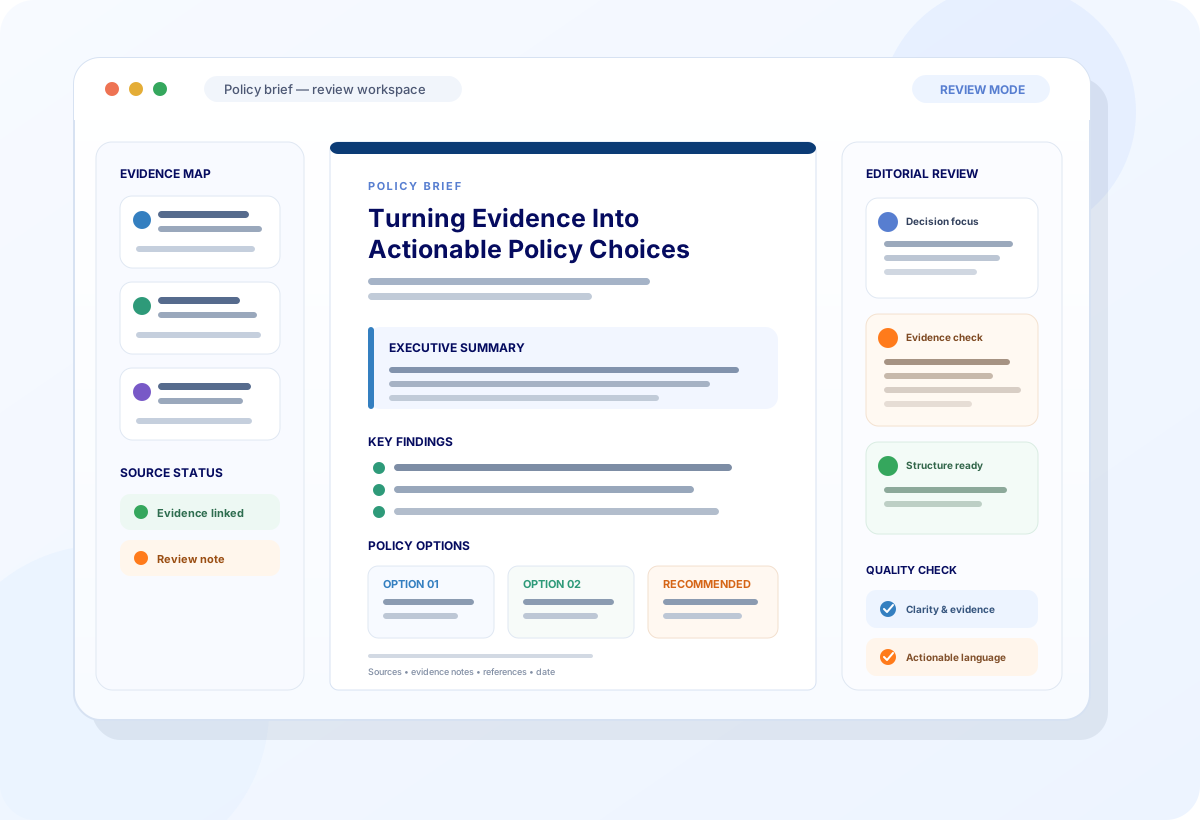
Built around the issue, audience and decision required.
Research inputs are synthesised into a coherent narrative.
Options and recommendations are presented for action and review.
Assumptions, sources and requested revisions remain traceable.
Decision-focused writing price
The entry scope is aligned to a concise policy brief, giving buyers a clear professional price while longer policy papers can be quoted according to evidence depth and analysis requirements.
for a policy brief up to 2,000 words
Best fit: Teams with an established policy question and usable evidence pack that need a concise decision-focused brief with clear options or recommendations.
When the quote changes: Long-form policy papers, additional research, extensive quantitative analysis, stakeholder consultation and custom design are quoted separately.
The service can be shaped around a new policy paper, a concise policy brief, an evidence-led memo or an existing draft that needs stronger structure, synthesis and decision-focused writing.
Structured long-form policy documents covering context, evidence, policy choices, implementation considerations and recommendations.
Concise, audience-focused briefs that distil the policy issue, evidence, implications and clear recommendations.
Research findings translated into a readable evidence narrative, with key findings, limitations and policy relevance made explicit.
Short-form content that gives senior readers the issue, evidence, trade-offs, decision points and recommended action quickly.
Clear comparison of plausible options, trade-offs, feasibility considerations and the evidence supporting each route.
Purpose-built documents for internal discussion, formal positions, advocacy arguments or stakeholder-facing policy communication.
Structured submissions and response papers that organise evidence, stakeholder positions and clear points for consideration.
Existing drafts reorganised and rewritten for stronger logic, concise policy language, consistent terminology and better reader flow.
The workflow keeps the policy purpose, evidence base, audience and decision requirement visible throughout the writing process.
Clarify the issue, objective, audience and required decision or action.
Review supplied research, source quality, stakeholder inputs and existing drafts.
Organise evidence, identify information gaps and map source support.
Build the logic, headings, executive flow and policy options framework.
Write concise, evidence-led content in the agreed policy voice and format.
Check logic, traceability, audience fit, terminology and recommendation clarity.
Address feedback, tighten language and strengthen the decision narrative.
Provide the agreed final document with clean structure and references.
Policy writing is more than fluent prose. It requires disciplined synthesis, audience awareness, clear reasoning and a visible link between evidence, options and recommendations.
The exact handoff depends on the project brief and supplied materials. The following elements can form the working and final policy-writing package.
Section logic and document flow.
Source-to-claim working structure.
Policy paper, brief or related format.
Concise issue, evidence and action view.
Decision routes and recommended action.
Refined language, structure and references.
The writing approach is adapted to the document purpose. Frameworks are used as organising tools, not as substitutes for source evidence or client-specific policy context.
These are illustrative service scenarios, not customer testimonials or claimed case-study results.
A research team has detailed findings but needs a concise document for a policy audience.
A team needs a structured paper comparing possible responses to a defined policy problem.
An existing policy document is informative but too long, fragmented or unclear for the intended reader.
Project scope is agreed from the materials, audience, length, required depth and deadline you provide.
Both formats can be evidence-led and action-oriented. The right choice depends on how much context, analysis and implementation detail the audience needs.
Best suited when the issue needs deeper analysis, a fuller evidence base and more room to explain choices, trade-offs and implementation considerations.
Best suited when the audience needs a concise explanation of the issue, evidence and recommended action without a long analytical document.
Answers to common questions about scope, inputs, evidence, audience, citations, review, confidentiality, pricing and turnaround.
The scope can include policy problem framing, research and source synthesis, outline development, executive summary writing, options analysis, recommendations, citations, document structure and final language refinement, depending on the brief you provide.
A policy brief is usually a concise, decision-focused document that distils evidence and recommendations for a defined audience. A policy paper can support a broader or deeper treatment of the issue, evidence, alternatives, implementation considerations and recommendations.
Yes. You can provide research notes, reports, datasets, source links, internal papers, stakeholder inputs and an existing draft. The writing scope can then be structured around the materials you supply.
You can submit the topic, purpose, intended audience, available sources and any required format. The enquiry can then be reviewed to determine an appropriate writing scope before work begins.
Yes. The brief can be shaped around the intended audience, decision context, level of technical detail, tone and action required, provided those requirements are included in your project brief.
Yes, where the source report and brief requirements are supplied. The work can focus on identifying the policy-relevant evidence, compressing the narrative and making implications and recommendations easier to scan.
Citation and reference integration can be included when sources and the required citation or house style are supplied or agreed for the project.
Yes. Where the evidence and decision criteria support it, the document can compare options across dimensions such as expected effect, feasibility, implementation requirements, risks, constraints and stakeholder implications.
The writing process is designed to distinguish source evidence from interpretation and recommendation. Where meaning is uncertain, clarification should be obtained rather than silently changing the underlying claim.
Yes. If you provide the template, formatting instructions, terminology rules, citation style or example documents, the draft can be aligned to those requirements.
Revision support can be scoped around consolidated stakeholder or reviewer comments. The request should identify which comments must be incorporated and where client decisions are still required.
Contentxprtz policy paper and brief writing starts from ₹10,000 for a policy brief up to 2,000 words. The starting scope includes evidence-led drafting, recommendation framing, two revisions and typical delivery in 6–8 business days.
Please share the document type, target audience, purpose, current word count or expected length, deadline, available sources, existing draft if any, required format or template, and the specific support you need.
The page follows the Contentxprtz reference design's confidentiality positioning. Include any project-specific confidentiality or handling requirements in the enquiry so they can be reviewed before work begins.
Share the policy question, audience, source material, expected format and deadline. The project can then be scoped around the writing depth and document type you actually need.
Discuss Your RequirementContentxprtz policy paper and brief writing starts from ₹10,000 for a policy brief up to 2,000 words. The starting scope includes evidence-led drafting, recommendation framing, two revisions and typical delivery in 6–8 business days.
The more context you share at the start, the easier it is to define a useful writing scope without making assumptions about your policy objective or evidence base.
Submit the project details below. Do not include highly sensitive information that is not necessary for the initial scope review.