Proposal Editing & Language Refinement
Improve clarity, tone, readability, grammar and donor-facing expression while preserving the project’s intended meaning.

Strengthen a developed grant or donor proposal with clearer logic, consistent terminology, donor-aligned presentation, sharper results language and transparent editorial guidance—without inventing project facts, evidence or commitments.
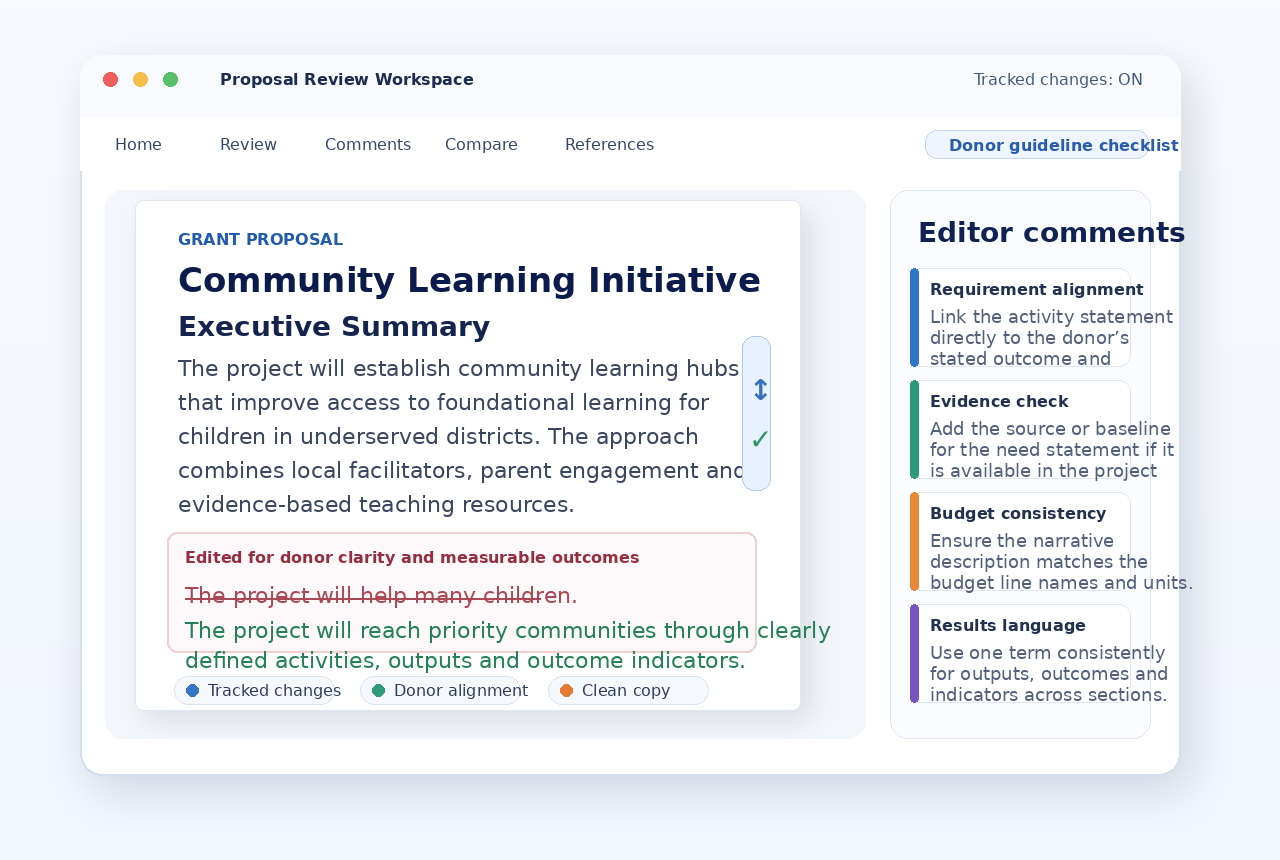
Proposal-specific editing scope
Proposal editing is priced against document length and intervention depth so organisations can buy a real editorial pass without paying for full proposal development when the draft already exists.
for a proposal draft up to 5,000 words
Best fit: Existing grant or donor proposals that need stronger clarity, donor-aligned structure, consistency and submission-focused editorial QA.
When the quote changes: Long proposals, complex annexes, logframe rebuilding, major rewriting, multiple partner inputs or urgent submission windows are scoped separately.
Comprehensive proposal editing across the narrative, results language, donor requirements and final presentation—based on the files and instructions you provide.
Improve clarity, tone, readability, grammar and donor-facing expression while preserving the project’s intended meaning.
Cross-check the draft against supplied application instructions, templates, eligibility language and scoring criteria.
Strengthen connections between need, approach, activities, outputs, outcomes and the wider proposal narrative.
Edit budget explanations for clarity and terminology consistency with the proposal and supplied budget labels.
Clarify outputs, outcomes, indicators, assumptions and targets without inventing programme data or commitments.
Improve how supplied baselines, statistics, citations and supporting evidence are introduced and explained.
Refine high-attention sections so the proposal’s purpose, need and planned response are easier to understand.
Review headings, labels, terminology, numbering, tables and final presentation against supplied requirements.
Eight practical stages keep the review traceable from donor requirements and draft assessment through editing, consistency checks and delivery.
Review your draft, funding call, template, scoring criteria and the proposal team’s priorities.
Identify language, logic, consistency, compliance and presentation issues across the submission.
Create an editing focus around donor instructions and the sections that need the most attention.
Improve wording, structure, transitions, consistency and donor-facing presentation using tracked changes.
Compare connected sections such as narrative, results framework, indicators and budget narrative where supplied.
Standardise terminology, headings, labels, formatting and style across the proposal package.
Run a final consistency and readability check and surface unresolved points through editor comments.
Provide the edited file and clear revision visibility so your team can review and finalise the submission.
The goal is not to overwrite your programme design. It is to make the proposal easier to evaluate, more internally consistent and clearer against the funding instructions you supply.
“The project will help many young people and create a big positive impact in the community.”
“The project will support the priority participant groups identified in the proposal through the planned activities, with progress reported against the agreed output and outcome indicators.”
Contentxprtz grant and donor proposal editing starts from ₹7,500 for drafts up to 5,000 words. The starting scope includes tracked edits, donor-alignment checks and one consolidated revision, with typical delivery in 4–6 business days.
A practical three-part view of what can be strengthened, which proposal components can be reviewed, and how the editing process is made transparent.
Align wording and section coverage with the application instructions you provide.
Sharpen the case for need using your existing evidence and project context.
Improve the relationship between activities, outputs, outcomes and intended change.
Standardise terms used across objectives, indicators, assumptions and targets.
Improve clarity and consistency with supplied cost headings and programme descriptions.
Make the logic, conditions and intended continuation strategy easier to follow.
Clarify supplied risk, safeguarding, inclusion and mitigation statements.
Check names, figures, dates, locations, acronyms and programme terminology throughout.
These examples show when proposal editing can be useful. They are scenarios, not client testimonials, funding outcomes or success claims.
A developed proposal needs donor-aligned editing before internal sign-off or submission.
A prior draft needs clearer responses to reviewer or donor comments while preserving approved programme facts.
Content from multiple contributors needs a consistent voice, terminology and presentation across the final package.
Use adjacent Contentxprtz editing services where your document is closer to a research proposal, annual report or broader corporate content requirement.
Send the latest draft together with the donor instructions, application template, scoring criteria, submission deadline and the sections you want reviewed. The request can then be assessed for editing scope.
Discuss Your Proposal Editing RequirementThe editing workflow focuses on donor alignment, clarity, consistency and submission readiness while keeping funding decisions and final approvals with the client and donor.
Practical answers about scope, donor guidelines, programme logic, results language, budget narrative, files and delivery format.
It focuses on improving the clarity, structure, consistency, donor-facing language, and presentation of a proposal draft. The review can also check alignment with supplied donor instructions, terminology, results language, budget narrative, and supporting sections without inventing project facts or evidence.
Yes, when you provide the funding notice, donor guidelines, template, scoring criteria, or application instructions. The editor can cross-check the draft against those materials and flag gaps or inconsistencies for your team to resolve.
This page is for proposal editing. We refine and strengthen material you provide. Where content is missing, unclear, or unsupported, the editor can flag the issue and suggest what information is needed rather than inventing facts, budgets, beneficiaries, outcomes, or evidence.
Yes. These sections can be edited for clarity, relevance, flow, evidence presentation, and consistency with the wider proposal, while preserving the project's intended meaning and supplied facts.
We can review the language, consistency, terminology, and internal alignment of these materials when they are supplied. Technical programme design decisions and factual targets remain the responsibility of the project team.
Yes. We can help improve wording, consistency, and readability of outputs, outcomes, indicators, assumptions, and monitoring statements, and flag ambiguous or mismatched terms for clarification.
We can edit the budget narrative for clarity and consistency with the proposal text and supplied budget labels. We do not independently validate financial calculations unless that has been separately agreed and supported by the source material you provide.
No. Editing should preserve your intended programme logic and factual content. Substantive changes that could alter meaning are highlighted with tracked changes or comments so your team can review them.
Share the latest proposal draft plus any donor guidelines, application template, scoring criteria, project concept note, results framework, budget narrative, style requirements, and internal terminology that the editor should follow.
The editing approach can use tracked changes and editor comments so revisions are transparent. A clean copy can also be prepared after the edits, consistent with the document-handling approach used across Contentxprtz editing services.
Yes. Multi-author drafts often benefit from terminology, tone, formatting, and cross-section consistency checks. The editor can harmonize presentation while flagging conflicts that require a decision from the proposal team.
Contentxprtz grant and donor proposal editing starts from ₹7,500 for drafts up to 5,000 words. The starting scope includes tracked edits, donor-alignment checks and one consolidated revision, with typical delivery in 4–6 business days.
Contentxprtz grant and donor proposal editing starts from ₹7,500 for drafts up to 5,000 words. The starting scope includes tracked edits, donor-alignment checks and one consolidated revision, with typical delivery in 4–6 business days.
Provide enough detail to understand the document, donor requirements and the type of editing support you need.