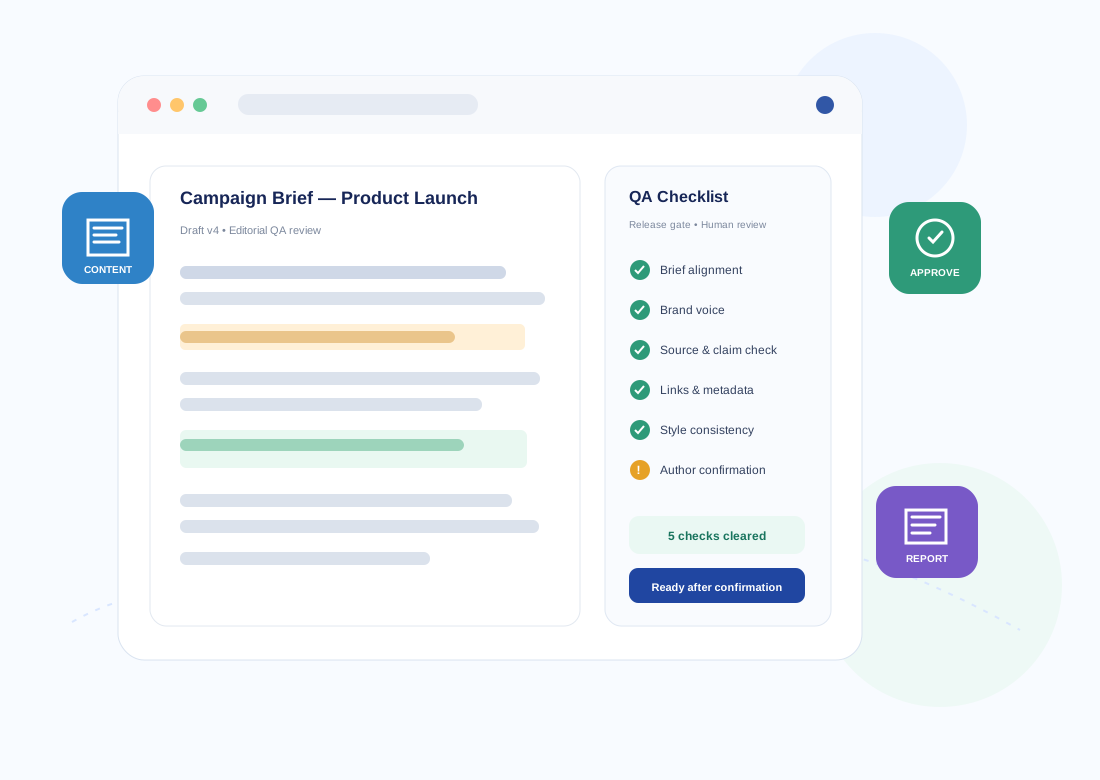
Managed Content Production Quality Assurance Service for Consistent, Review-Ready Content
★★★★★4.8 rating from Researchers, Authors, Students, and Scholars
Add a structured human QA layer to your content production workflow so every deliverable is reviewed against the brief, editorial standards, brand rules, SEO requirements, links, metadata, formatting, and release criteria before handoff.
Apply quality checkpoints from the original brief through final delivery.
Use human editorial judgment where context and nuance affect quality.
Check brand voice, style and terminology consistently across content.
Document issues, fixes and escalations so handoffs remain clear.
Content QA is most useful when the checks and release standard are defined in advance. The starting project covers a controlled review batch and a documented issue-and-recheck workflow.
Starting price
₹8,000
per batch of up to 10 standard content assets
Suitable for: Teams that need a final quality gate before content is approved, published, or handed to another channel owner.
Project-specific QA checklist setup
Brand, tone, terminology, and style checks
Links, metadata, headings, and presentation checks where relevant
Source-consistency checks against supplied references
Issue log with clear pass / revise status
One recheck after listed issues are resolved
DeliveryTypical review window: 3–5 business days for a complete batch with all source materials supplied.
Review allowanceOne QA recheck pass is included after corrections.
Complex technical validation, regulated-content review, large libraries, multilingual QA, or embedded workflow reporting can be scoped separately.
Multi-Stage QAChecks across the production lifecycle
Human Editorial ReviewContext-aware judgment before release
Brand AlignmentVoice, terminology, and style control
Source & Claim ChecksFlag unsupported or unclear statements
Release ReadinessLinks, metadata, formatting, and handoff
Controlled WorkflowClear access, approvals, and escalation
What We Do
Quality Assurance Across the Content Production Lifecycle
Brief & Requirements
Check purpose, audience, scope, and mandatory instructions.
Research & Sources
Review supplied evidence, source links, and claim support.
Structure & Logic
Check hierarchy, sequencing, coherence, and content flow.
Accuracy & Claims
Flag unsupported, inconsistent, or over-stated assertions.
Language & Style
Review grammar, clarity, tone, readability, and consistency.
Brand Voice
Apply approved terminology, voice, and editorial conventions.
SEO & Readability
Check headings, target topic, metadata, and on-page requirements.
Links & Metadata
Review links, labels, titles, descriptions, and handoff fields.
Formatting & Access
Check presentation, scanability, and agreed accessibility cues.
Final Release Review
Complete the release checklist before delivery or publishing.
How We Work
A Proven QA Process for Managed Content
01
Align
Confirm the brief, standards, voice, sources, channel, and release criteria.
02
Build the QA Checklist
Turn requirements into repeatable editorial and operational checkpoints.
03
Review
Run the first human QA pass and document issues that require correction.
04
Verify
Check sources, claims, SEO elements, links, metadata, and formatting in scope.
05
Resolve
Recheck corrected content and escalate items that need stakeholder confirmation.
06
Release
Complete final checks and hand off reviewed content with the agreed QA record.
1
Managed Content QA Coverage
Apply the same quality language across teams, formats, and channels while tailoring the checklist to the content type, audience, publishing destination, and review depth required.
Why Choose Managed QA?
Human review against defined standards
Repeatable checks across content batches
Consistent editorial and brand criteria
Clear issue ownership and escalation
Flexible handoff to your production team
Review records that support governance
Core QA Checkpoints
Brief and audience alignment
Source and claim support
Grammar, clarity, and readability
Brand voice and terminology
SEO and metadata requirements
Formatting and presentation
Content Formats
Blog posts
Articles
Web pages
Landing pages
Social content
Emails & newsletters
Case studies
Whitepapers & eBooks
Scripts & briefs
Channels We Support
Websites & blogs
Search
Social media
Email marketing
Mobile experiences
Marketplaces
PR & media
Internal platforms
Ready to move forward?Managed Content QA Coverage.
Use a focused QA layer for one project or build a repeatable managed review function around ongoing content production. The operating model can be shaped around volume, formats, tools, and approval ownership.
Industries We Serve
Technology & SaaS
E-commerce & Retail
Healthcare & Pharma
Finance & Banking
Education & E-learning
Real Estate
Travel & Hospitality
Manufacturing
Media & Entertainment
B2B Services
Professional Services
Multi-market Teams
Flexible Engagement Models
Dedicated QA Team
A consistent review group aligned to your guidelines and content programme.
Managed QA
End-to-end quality assurance ownership across the agreed production lifecycle.
Project-Based QA
Defined review scope for launches, migrations, campaigns, or content batches.
QA Support Hours
On-demand review capacity for planned or ad-hoc content requirements.
Ready to move forward?Industries and Flexible Engagement Models.
Quality control works best as a traceable sequence rather than a last-minute spellcheck. The framework below separates requirement alignment, editorial review, verification, resolution, and release.
Our Quality Assurance Framework
Brief & Standards
Editorial Review
Source Verification
Brand & Style
SEO & Metadata
Final Release
Originality / reuse checks in scope
Source-backed review
Grammar & style consistency
SEO & readability review
The Results the QA Process Is Designed to Support
More Consistent Content
Shared review rules reduce variation across writers, batches, and channels.
Clearer Release Decisions
Reviewers can see what passed, what changed, and what still needs confirmation.
Stronger Governance
Defined checkpoints help teams manage claims, sources, brand rules, and approvals.
Cleaner Handoffs
Final content moves to publishing with agreed checks completed and issues documented.
Ready to move forward?Quality Assurance Framework and Outcomes.
Tools, Release Funnel, and Confidentiality Controls
QA can combine human review with practical content, SEO, analytics, CMS, and workflow tools. Tool use depends on your existing stack and the checks included in the agreed service scope.
Tools & Technologies We Can Work Around
Surfer
Clearscope
Grammarly
Copyscape
Semrush
Screaming Frog
Google Analytics
Ahrefs
WordPress
HubSpot
Canva
Mailchimp
Content QA Release Funnel
ALIGN — Brief & standards
REVIEW — Editorial QA
VERIFY — Sources & SEO
RESOLVE — Fix & escalate
RELEASE — Final handoff
Each stage narrows unresolved issues before content moves to final delivery or publishing.
Security & Confidentiality
NDA and data-protection requirements
Role-based review access
Secure file-transfer practices
Controlled communication and handoff
IP and unpublished-content sensitivity
Confidentiality requirements documented in scope
Scope and commercial terms: pricing and delivery timing are confirmed after the content volume, formats, review depth, workflow, reporting needs, and required QA checks are scoped. The published starting QA batch is ₹8,000 for up to 10 standard content assets; final turnaround is confirmed after the review scope is agreed.
Ready to move forward?Tools, Release Funnel, and Confidentiality Controls.
Common questions about content coverage, review depth, human and automated checks, brand guidelines, fact and source review, workflow integration, deliverables, turnaround, pricing, and confidentiality.
What is a Managed Content Production Quality Assurance Service?+
It is a structured review layer applied to content production before release. The QA scope can cover brief alignment, editorial quality, factual and source checks, brand voice, SEO elements, links, metadata, formatting, accessibility cues, and final delivery readiness based on the agreed workflow.
Where does quality assurance fit in the content production workflow?+
QA can be placed after drafting, after editing, before client review, or as a final release gate. For managed programmes, checkpoints can also be applied at multiple stages so issues are caught before they compound across batches or channels.
What content can be reviewed?+
The service can be structured around web content, blog posts, articles, landing pages, social content, email and newsletter copy, case studies, whitepapers, eBooks, scripts, product or marketplace content, and other agreed production formats.
Does QA include fact-checking?+
QA can include checking whether claims are supported by the supplied or approved sources, whether numbers and names are internally consistent, and whether citations or source links are present where the workflow requires them. The exact verification depth should be agreed before production begins.
Can you work with our brand and editorial guidelines?+
Yes. Brand voice, terminology, spelling preferences, style rules, prohibited language, formatting conventions, approval requirements, and channel-specific standards can be converted into a repeatable QA checklist for the programme.
How are SEO elements reviewed?+
Where SEO review is in scope, the QA pass can check the target topic, heading structure, on-page readability, title and description fields, internal or external links, basic keyword use, and other supplied SEO requirements without overriding editorial quality.
Do you use automated tools or human reviewers?+
Tools can support consistency, spelling, link checks, SEO review, and workflow efficiency, but the service is designed around human editorial judgment for context, meaning, brand alignment, claim strength, and release decisions.
Can the QA process plug into our existing CMS or workflow?+
The QA checklist and handoff process can be organised around the workflow and tools you already use, including document-based review, spreadsheets or trackers, CMS review steps, and structured approval handoffs. The implementation is defined during scope planning.
What do we receive after a QA review?+
Deliverables can include reviewed content, issue annotations or comments, a release checklist, a record of items that were corrected or escalated, and a clean handoff version where that is part of the agreed production workflow.
How do you handle content that needs author or stakeholder confirmation?+
Items that cannot be resolved safely from the available brief or sources are flagged rather than guessed. The reviewer can identify what is unclear, why it matters, and what confirmation is needed before release.
How long does managed content QA take?+
Turnaround is confirmed after scope and deadline review. A delivery plan should be confirmed after the scope and production cadence are reviewed.
How is this service priced?+
Managed content QA starts from ₹8,000 per batch of up to 10 standard content assets. Final pricing depends on content formats, expected volume, QA checklist, workflow integrations, review depth, and reporting requirements.
How is confidential content handled?+
Confidentiality requirements can be incorporated into the agreed workflow through controlled access, need-to-know review, secure file-sharing practices, and clearly defined handoff responsibilities. Share any specific security or NDA requirements during scoping.
6
Discuss Your Managed Content QA Requirement
Share the content formats, production volume, channels, brand or editorial guidelines, workflow tools, required QA checkpoints, and any approval or security constraints. The review model can then be scoped around your actual production process.
Content programme
Tell us the formats, channels, approximate production volume, and whether the work is ongoing or project-based.
QA checklist
Share the editorial, brand, SEO, source, link, metadata, formatting, or accessibility checks that matter.
Workflow & tools
Describe where content is drafted, reviewed, approved, published, and how your team currently tracks issues.
Approval & confidentiality
Identify reviewer roles, escalation rules, NDAs, access restrictions, and other governance requirements.
Helpful to include: sample content, brand or style guide, SEO brief, release checklist, expected formats, approval roles, and examples of issues you want the QA process to catch.
Managed Content QA Enquiry
Request a QA Scope Review
Provide enough detail for the content workflow, quality gates, review depth, and delivery model to be assessed.
CONTENT QA
✓Brief aligned
✓Claims reviewed
✓Brand checked
✓Links validated
✓Release ready
Make Every Content Delivery Review-Ready
Build a quality assurance layer around your content production workflow so standards are clearer, issues are traceable, and release decisions are easier to manage.