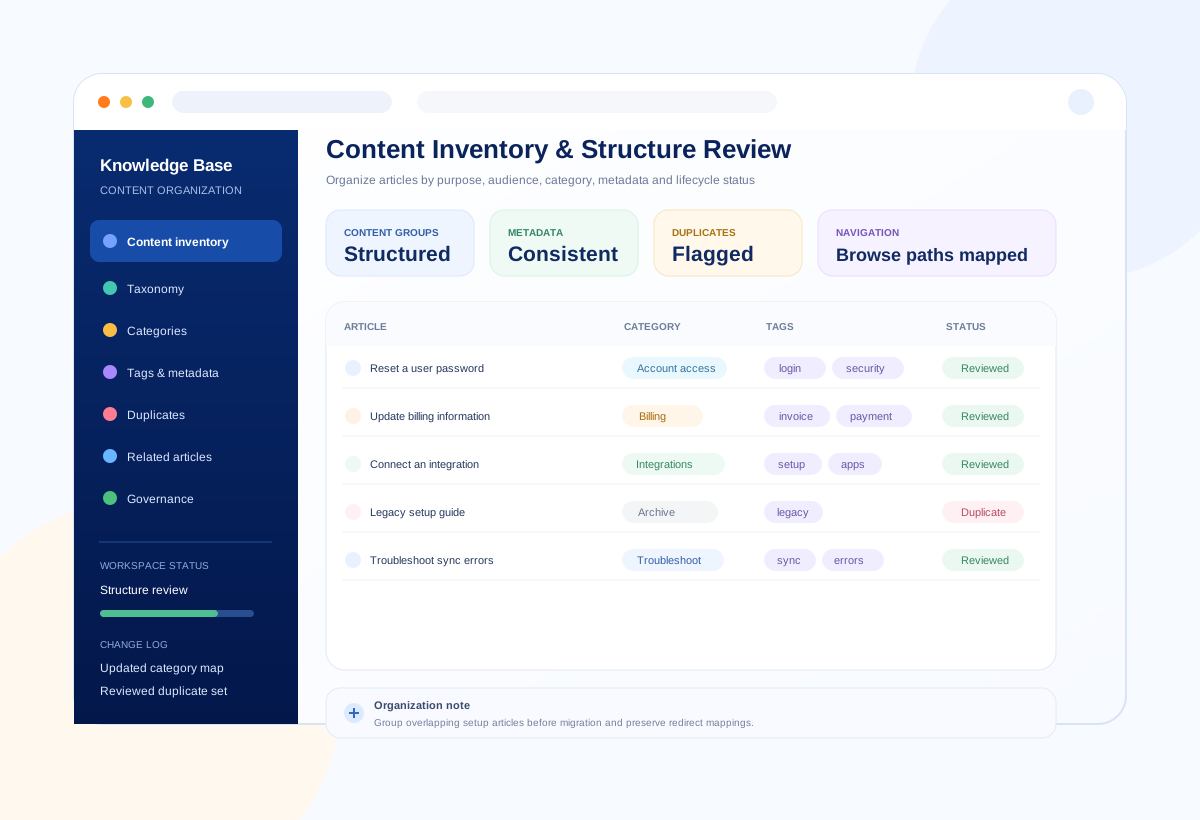
Managed Knowledge Base Content Organization Service for Clearer, Faster Information Access
★★★★★4.8 rating from Researchers, Authors, Students, and Scholars
We audit, classify, restructure and govern existing knowledge content so articles are easier to find, navigate, maintain and reuse across customer-facing and internal knowledge bases.
Build a clear taxonomy and hierarchy for easier knowledge discovery.
Apply consistent metadata and tagging across the content library.
Organize content around navigation, search and user findability.
Use human-led QA before the new structure is handed over.
Content InventoryMap articles, pages, owners and status
Taxonomy DesignBuild logical categories and hierarchy
Metadata & TagsStandardize labels and classification
Navigation MappingConnect related and next-step content
Lifecycle StructureSeparate active, review and archive states
QA & GovernanceDocument standards for ongoing upkeep
Pricing & Delivery
Knowledge Base Organization Project Pricing
Information architecture is a project-level service because the effort depends on the size and disorder of the existing library. The entry scope below is suitable for a focused knowledge base that needs a clearer structure before further writing or migration.
Project minimum
₹12,000
for an organization audit of up to 100 existing articles
Suitable for: Knowledge libraries with confusing categories, duplicated content, weak labels, poor navigation, or inconsistent article placement.
Inventory review for up to 100 existing articles
Category, subcategory, and taxonomy recommendations
Duplicate, overlap, and obvious gap mapping
Article naming and label conventions
Navigation, related-content, and findability recommendations
Prioritized cleanup / migration action map
DeliveryTypical delivery: 7–10 business days after the content inventory and platform context are available.
Review allowanceOne consolidated revision round on the proposed structure and taxonomy.
Larger libraries, full migration execution, search analytics analysis, multilingual taxonomies, or platform reconfiguration are quoted separately.
What We Do
Comprehensive Knowledge Base Organization Solutions
Content Audit & InventoryBuild a structured view of existing knowledge content and status.Taxonomy & Category DesignCreate logical topic groups and parent-child relationships.Article Grouping & HierarchyArrange content by user need, subject, workflow or product area.Metadata StandardizationNormalize tags, labels, audience fields and classification values.Duplicate & Overlap ReviewIdentify competing articles and content that may need consolidation.Title & Naming NormalizationAlign naming patterns so similar content is easy to scan and compare.Related-Article MappingConnect prerequisite, next-step and supporting knowledge content.Browse Path DesignImprove category paths and information routes for different audiences.Search Term AlignmentOrganize terminology around the language users are expected to look for.Lifecycle Status MappingSeparate active, needs-review, duplicate, redirect and archive candidates.Archive OrganizationKeep retired or historical knowledge distinct from current guidance.Migration-Ready MappingPrepare structured content, category and URL mapping for implementation teams.
How We Work
A Proven Process for Organized, Maintainable Knowledge
01
UnderstandDefine users, content goals, platform constraints and governance needs.
02
AuditInventory content, fields, URLs, categories, tags and lifecycle status.
03
DesignCreate the taxonomy, hierarchy, metadata rules and naming logic.
04
OrganizeApply categories, tags, groupings, relationships and content states.
05
ValidateReview consistency, duplicate decisions, navigation and edge cases.
06
HandoverDeliver the organized structure, mappings, notes and governance guidance.
Transparent change log
Dedicated content lead
Governance-ready documentation
Why Choose Managed Knowledge Base Organization?
Taxonomy-first organization rather than cosmetic rearrangement
Human-led review of context, purpose and content relationships
Source meaning preserved while structure is improved
Clear category, tag and metadata conventions
Platform-agnostic organization approach
Governance-ready documentation for future maintenance
Stakeholder review points for ambiguous or domain-specific content
Types of Knowledge Content We Organize
Support & Help ContentHow-to, troubleshooting, account and service guidance
Product & Feature KnowledgeSetup, configuration, feature and integration documentation
Policy & Compliance ContentPolicies, standards, controlled procedures and reference guidance
Operational KnowledgeSOPs, workflows, checklists and internal process documentation
Learning & Onboarding ContentOrientation, training, role-based and internal enablement knowledge
Localized Knowledge SetsRegional, language and market variants that need consistent structure
Knowledge Formats
Knowledge Base Articles
FAQs
How-To Guides
Troubleshooting Guides
SOPs & Checklists
Glossaries
Policies
Release & Update Notes
Channels We Support
Public Help Centers
Customer Portals
Internal Wikis
Intranets
Support-Agent Knowledge
Product Documentation
CMS Libraries
Search Portals
Ready to move forward?Why Choose Managed Knowledge Base Organization?.
Discover: users can identify the right area or article.Navigate: categories and related links provide a clear path.Understand: labels and structure make article purpose easier to interpret.Resolve: supporting content is connected to the user’s next action.Maintain: governance rules keep the structure usable over time.
Security & Confidentiality
NDA and data-protection requirements
Role-based working access
Controlled file transfer
Controlled sharing and handling
Client intellectual-property protection
Confidential content workflow
Ready to move forward?Systems & Inputs We Can Work With.
Practical answers about taxonomy, content audits, metadata, duplicate review, migrations and the managed organization workflow.
What does a managed knowledge base content organization service include?+
The service can include content inventory, taxonomy and category design, article grouping, metadata and tag normalization, duplicate and overlap review, cross-link mapping, lifecycle status, navigation structure and governance-ready handover documentation.
Do you rewrite the knowledge base content?+
The core service focuses on organization rather than full rewriting. During review, wording or structural issues can be flagged for separate editorial action when they affect categorization, clarity of purpose or findability.
Can you organize an existing help center without changing platforms?+
Yes. The organization work can be planned around the content, URLs, categories, tags and metadata available in your current environment, with the resulting structure documented for implementation in the same platform.
Can you create a knowledge-base taxonomy from scratch?+
Yes. A taxonomy can be developed from the existing content set, user needs, product or process structure, search behaviour supplied by the client and agreed naming conventions.
How are duplicate or overlapping articles handled?+
Potential duplicates and overlaps are identified and grouped for review. The handover can distinguish keep, merge, redirect, update or archive recommendations without deleting source content automatically.
Can this service support a knowledge-base migration?+
Yes. Content inventories, category maps, metadata sheets, URL mappings and lifecycle decisions can be prepared in a migration-ready structure for the implementation team.
Do you organize both internal and customer-facing knowledge bases?+
Yes. The same organization principles can be applied to public help centers, customer portals, internal wikis, support-agent knowledge bases and other controlled knowledge repositories.
How are metadata and tags selected?+
Metadata and tags are derived from the agreed taxonomy, article purpose, audience, product or process area, topic relationships and the fields supported by the destination system.
Will you change our existing URLs?+
URL changes are not assumed. Where a reorganization or migration may affect URLs, the service can document recommended mappings and redirect considerations for client approval and technical implementation.
What do you need from us to start?+
Useful inputs include the current content inventory or export, existing category and tag structure, target audiences, platform constraints, terminology or style guidance, known pain points and any search or support data you want considered.
How do subject-matter experts fit into the process?+
Subject-matter experts can validate ambiguous groupings, terminology, lifecycle decisions and content relationships. Review checkpoints can be built into the organization workflow where domain approval is needed.
How are scope and turnaround determined?+
Scope and delivery planning depend on the number and condition of content items, current structure, metadata quality, platform constraints, required outputs and the level of stakeholder review. These are confirmed after the initial requirements review.
Tell Us What You Need
Share the core requirement and contact details. We will review the scope for Knowledge Base Content Organization and respond with the appropriate next step.
Let’s Turn a Scattered Knowledge Base Into a Clear Content System
From content audit to taxonomy, metadata, duplicate review and governance handover, we can organize the knowledge you already have around a structure your teams can maintain.