Managed Knowledge Base Content Maintenance Service
★★★★★4.8 rating from Researchers, Authors, Students, and Scholars
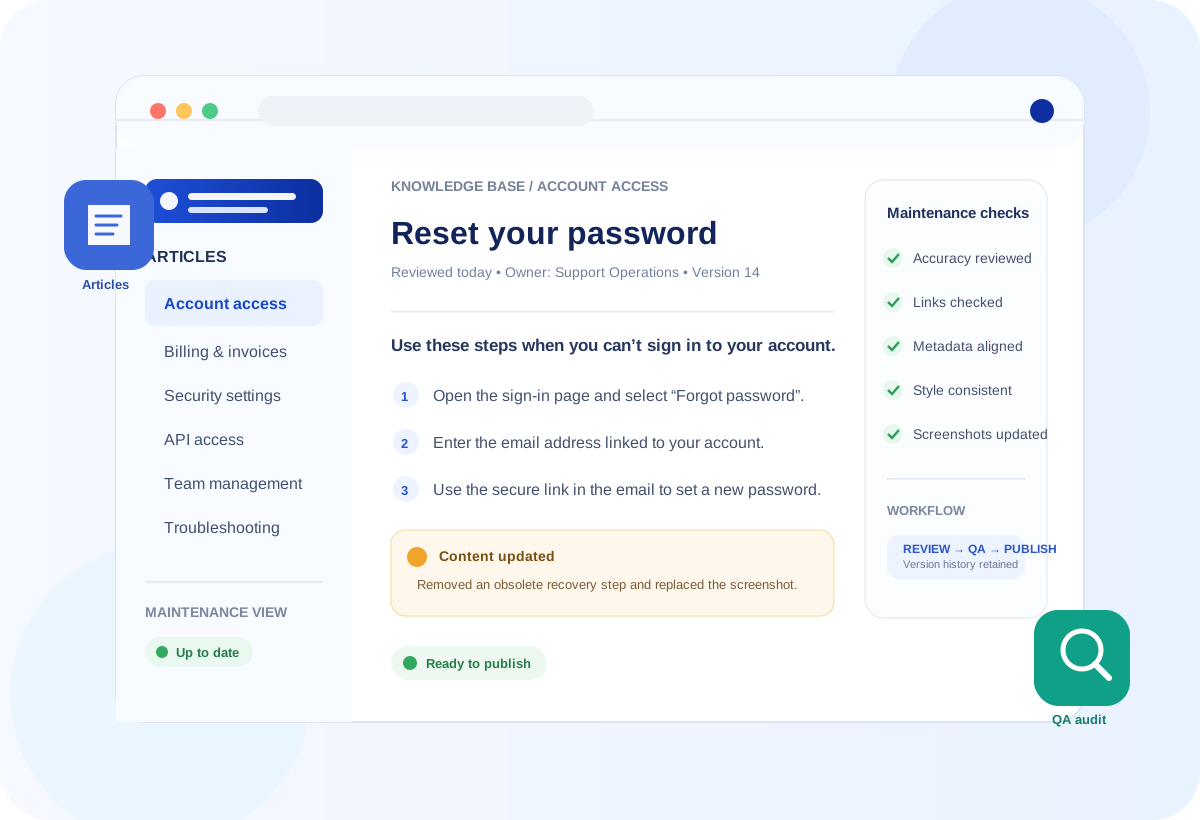
Keep help-centre and knowledge-base content accurate, current, consistent, easy to navigate, and ready to publish. We organise ongoing maintenance around article audits, approved content updates, quality checks, governance, and a controlled review-to-publish workflow.
Audit articles and prioritize updates through a controlled maintenance queue.
Update factual content against approved product and business sources.
Check consistency, links, metadata, and usability before publishing.
Use governed review and publishing support for controlled changes.
Quality ControlsStructured checks before publishing
Planned CadenceReview cycles matched to scope
Change TrackingReview status and update records
Findability ReviewStructure, linking, and metadata
Pricing & Delivery
Knowledge Base Maintenance Pricing
Knowledge bases lose value when articles age silently. This monthly starting scope creates a controlled update queue for routine review, correction, linking, and content-governance work.
Monthly starting engagement
₹10,000
per month for up to 20 routine article reviews or updates
Suitable for: Teams with a live help center, SOP library, internal wiki, or support knowledge set that changes continuously.
Up to 20 routine article reviews or updates
Staleness, ownership, and change-trigger checks
Product or policy updates based on supplied current inputs
Link, label, metadata, and cross-reference maintenance
Consistency QA across edited articles
Monthly maintenance log and next-priority list
DeliveryRoutine maintenance is scheduled throughout the month, with normal update batches returned in 3–5 business days.
Review allowanceOne approval-and-correction pass per maintenance batch.
Major rewrites, new content programmes, platform migrations, localization, complex product testing, or higher monthly volumes require a larger maintenance scope.
What We Do
Comprehensive Knowledge Base Maintenance
Article Audits
Identify stale, unclear, duplicated, or incomplete pages.
Content Updates
Apply approved product, policy, process, and support changes.
Template Alignment
Standardise headings, steps, notes, warnings, and article patterns.
Link Maintenance
Review internal and external links and repair broken destinations.
Screenshot Review
Flag or replace interface visuals when supplied screens have changed.
Search Optimisation
Improve titles, labels, hierarchy, and discoverability where relevant.
Metadata Checks
Review owners, dates, categories, tags, descriptions, and status fields.
Editorial QA
Check clarity, terminology, formatting, references, and instructions.
Change Logs
Record review status and maintenance notes for ongoing governance.
How We Work
A Controlled Process for Reliable Knowledge Content
01
Inventory
Map articles, owners, content types, and maintenance status.
02
Prioritise
Use supplied change information, age, risk, and content signals to order work.
03
Update
Revise the approved areas while preserving accurate existing content.
04
Review
Route questions and material changes to the appropriate owner or SME.
05
Quality Check
Validate language, links, structure, metadata, and requested standards.
06
Publish & Log
Prepare approved updates for publishing and retain maintenance records.
Ready to move forward?Comprehensive Knowledge Base Maintenance.
Answers to common questions about scope, source validation, update workflows, quality assurance, governance, recurring maintenance, and how an engagement is assessed.
What is managed knowledge base content maintenance?+
It is an ongoing service for reviewing, updating, quality-checking, organising, and publishing knowledge-base or help-centre content so articles remain aligned with current product, policy, process, brand, and support information supplied by your team.
What types of knowledge bases can you maintain?+
The service can be scoped for customer help centres, product documentation libraries, internal knowledge bases, support portals, policy and process repositories, onboarding resources, and other structured article collections.
Can you update existing articles instead of rewriting everything?+
Yes. Maintenance can focus on targeted updates to existing content, including outdated instructions, links, screenshots, terminology, metadata, structure, and consistency, while preserving content that remains accurate.
How do you identify outdated knowledge-base content?+
A maintenance workflow can combine content inventories, review dates, supplied change logs, broken-link checks, search and support signals, owner feedback, and manual article review to prioritise pages that need attention.
Do you verify product or policy facts independently?+
We maintain content against the authoritative source material and instructions you provide. Where a fact is unclear or unsupported, it should be flagged for clarification rather than guessed or silently changed.
Can you maintain article structure and style as well as factual content?+
Yes. The scope can include headings, scanability, terminology, tone, formatting, links, metadata, article templates, and other presentation conventions in addition to factual updates.
Can the service include SEO and findability checks?+
Where relevant to the knowledge base, maintenance can include search-oriented titles, descriptions, internal links, content hierarchy, duplicate-topic review, and readability improvements without changing the underlying approved information.
Can you work with our existing approval workflow?+
Yes. The maintenance process can be mapped to your owners, reviewers, subject-matter experts, approval stages, publishing permissions, and change-log requirements.
What do you need from us to start?+
Typically, we need access or exports of the knowledge base, a content inventory if available, current product or policy source material, style and terminology guidance, ownership information, publishing rules, and priority areas.
Will you keep a record of what was changed?+
The workflow can include article-level notes, review status, change summaries, ownership fields, and version or publishing records according to the process agreed for your knowledge base.
Can maintenance be handled as a recurring service?+
Yes. The service is designed for ongoing maintenance and can be organised around an agreed review cadence, change queue, ownership model, and publishing workflow after the knowledge base and maintenance needs are assessed.
How are pricing and turnaround determined?+
Pricing and delivery timing depend on the size of the knowledge base, article condition, update volume, platform, review workflow, content complexity, access requirements, and publishing responsibilities. These are confirmed after the scope is reviewed.
Service Enquiry
01
Discuss Your Knowledge Base Maintenance Requirement
Share the scale of your knowledge base, platform, content condition, update volume, source material, approval workflow, and publishing responsibilities. We can use those details to assess the right maintenance scope.
Knowledge base size
Approximate article count, content types, languages, and main content groups.
Platform & access
Help-centre, CMS, wiki, documentation platform, exports, or staging workflow.
Update requirements
Backlog cleanup, recurring changes, new releases, policy updates, or article refreshes.
Owners & approvals
SMEs, reviewers, approvers, publishing roles, and escalation points.
Accuracy, consistency, broken links, findability, templates, metadata, or governance.
Knowledge Base Maintenance Enquiry
Request a Scope Review
Send the core details below. Pricing and delivery timing can be discussed after the size, condition, workflow, and responsibilities are understood.
Keep Your Knowledge Base Current, Useful, and Governed
Move from occasional cleanup to a structured maintenance workflow built around approved updates, editorial QA, clear ownership, and publication controls.