
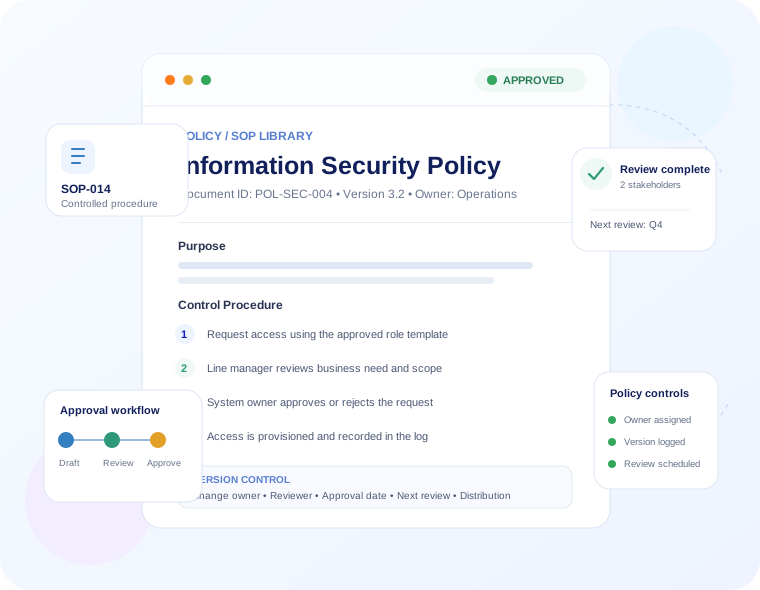
SOP Development
Step-by-step procedures with roles, inputs, outputs, controls, exceptions, and records.
Build and maintain business-critical SOPs, policies, procedures, work instructions, playbooks, and controlled templates through one structured documentation workflow—from discovery and process mapping to review, approval, version control, and ongoing updates.
Turn operational knowledge into usable controlled documentation, then manage the path from process discovery and drafting through review, approval, handover, and ongoing maintenance.
Step-by-step procedures with roles, inputs, outputs, controls, exceptions, and records.
Purpose, scope, principles, responsibilities, controls, exceptions, and governance.
Current-state and target-state workflows, handoffs, decision points, and ownership.
Task-level guidance for repeatable execution, system steps, checks, and evidence.
Scenario-based guidance for teams handling recurring operations and exceptions.
Reusable forms, checklists, controlled templates, and standardized document structures.
Logical naming, indexing, ownership, review status, effective dates, and archive rules.
Change requests, scheduled reviews, version updates, consolidation, and new-document intake.
Confirm document objectives, users, process owners, source files, templates, and governance expectations.
Capture process steps, decisions, handoffs, inputs, outputs, controls, exceptions, and system touchpoints.
Develop the SOP, policy, procedure, work instruction, or supporting template in the agreed structure.
Route drafts to process owners and stakeholders for factual validation and controlled revision.
Check clarity, terminology, cross-references, roles, formatting, traceability, and internal consistency.
Prepare the approved version for handover with ownership, version, effective date, review cycle, and change history.
Structure the engagement around the documents, operating teams, delivery formats, and governance needs that matter to your business.
Documentation needs vary by operating model. Choose a project structure that fits a defined backlog, ongoing change, or embedded documentation support.
A focused writer/editor resource or small team integrated with your documentation priorities.
An ongoing documentation lifecycle covering intake, drafting, reviews, maintenance, and governance.
A defined documentation package with agreed scope, deliverables, stakeholders, and handover.
Flexible support for ad-hoc updates, document cleanup, formatting, review, and backlog reduction.
Each document passes through structured content and control checks designed to improve clarity, consistency, traceability, and maintainability.
Make responsibilities, approvals, handoffs, and escalation points easier for teams to understand.
Give teams a consistent reference for recurring activities, checks, records, and exceptions.
Create structured reference material that supports onboarding, role changes, and process continuity.
Support controlled reviews, version history, ownership, effective dates, and scheduled maintenance.
Receive a maintainable documentation set with clear ownership, review structure, controlled assets, and project handling aligned to the agreed workflow.
Practical answers about scope, source material, review workflows, controlled templates, maintenance, compliance boundaries, timelines, and confidential process information.
The service can cover discovery, process mapping, document architecture, SOP and policy drafting, stakeholder review, controlled templates, versioning, approval workflows, handover, and planned maintenance based on the agreed scope.
Yes. Existing documents can be assessed for structure, duplication, gaps, terminology, ownership, formatting, review status, and consistency before they are revised or consolidated.
Yes. Subject-matter input can be captured from interviews, notes, process maps, screenshots, forms, or existing operating material and converted into a structured draft for stakeholder validation.
A project can include controlled templates for SOPs, policies, work instructions, checklists, records, and related documentation when template design is part of the confirmed scope.
A review workflow can identify document owners, reviewers, approvers, comments, revision rounds, approval status, effective dates, and future review dates so changes are traceable.
Yes. The writing and formatting can be aligned to supplied terminology, naming conventions, style guides, templates, document-control rules, and approved examples.
Yes. Managed documentation can be structured as an ongoing engagement for change requests, periodic reviews, document refreshes, version updates, new SOPs, and controlled library maintenance.
No. Documentation support can organize and present requirements supplied by your authorized legal, compliance, quality, or subject-matter teams, but it does not replace professional legal or regulatory advice.
Useful inputs include the target document list, current files, process owners, intended users, existing templates, terminology, review and approval roles, systems involved, known risks, and any internal or external requirements the documents must reflect.
Pricing and delivery timing depend on the number and complexity of documents, discovery effort, stakeholder availability, review rounds, formatting needs, and whether the engagement includes ongoing document governance. A quote is provided after scope review.
Yes. Cross-functional documentation can be organized around handoffs, roles, inputs, outputs, controls, exceptions, approvals, and ownership across the departments included in the agreed scope.
The engagement can be structured around controlled access, agreed file-transfer and review methods, role-based stakeholder participation, and confidentiality requirements defined for the project.
Share the documents you need, the teams involved, current source material, review process, and any governance requirements so the engagement can be scoped around your operating reality.
You do not need perfectly organized source material. A clear description of the business process, document goals, owners, and available references is enough to begin scoping.
Existing SOPs, policies, templates, screenshots, forms, process maps, or notes.
Who performs the work, validates the steps, owns the document, and approves release.
Trigger, steps, handoffs, systems, decisions, controls, exceptions, records, and outputs.
Templates, terminology, approval rules, effective dates, review frequency, and confidentiality needs.
Provide enough detail for the document set, discovery effort, stakeholder review, and maintenance needs to be assessed.
From one critical SOP to an ongoing document-control program, structure your policies, procedures, and operational knowledge around clear ownership, consistent execution, and maintainable governance.