
Managed Academic Publishing Services

Managed Academic Publishing Institutional Editing Service for Consistent, Publication-Ready Output

Build a repeatable editorial operation for manuscripts, reports, journals and scholarly publications. ContentXprtz can support institutional teams with editor coordination, style governance, tracked editing, quality review and delivery workflows aligned to the requirements you provide.

  • Institution-wide editorial standards
  • Managed editor assignment and routing
  • Tracked changes, comments and clean-copy workflows
  • Multi-stage language and consistency review
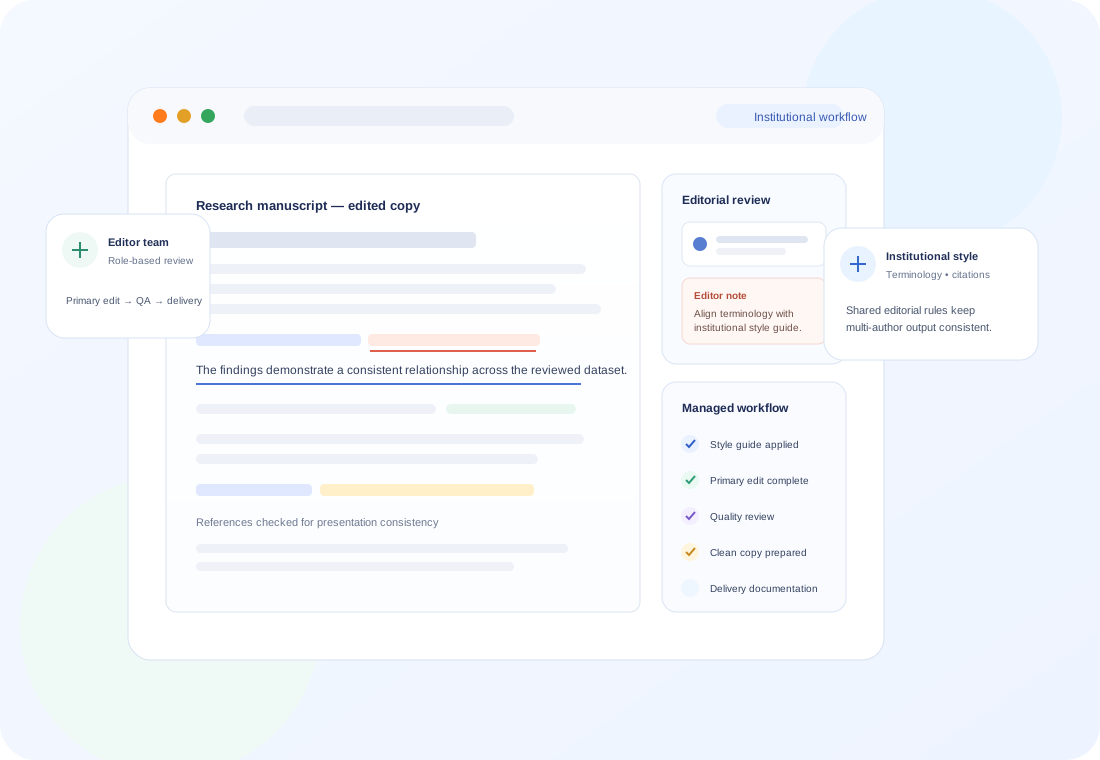
Institutional academic publishing editing workspace showing a research manuscript with tracked edits, editor comments, style-governance notes and managed quality-review stages
Dedicated Editor PoolRole-based editorial capacity for recurring work
Style GovernanceShared terminology and publication conventions
Multi-Stage QAEditing, review and delivery checks
Managed WorkflowIntake, routing, review and handoff structure
Confidential HandlingControlled treatment of unpublished materials
Flexible CapacitySupport for programmes, batches and peaks
What We Do

Institutional Editing Solutions for Academic Publishing Workflows

Journal & Manuscript Editing

Language, academic tone, paragraph flow, terminology and presentation review across journal-ready manuscripts.

Institutional Style Governance

Apply approved terminology, house style, formatting conventions and editorial rules across distributed author teams.

Multi-Author Consistency

Harmonise voice, terminology, abbreviations, headings and recurring presentation patterns across contributors.

Reference Presentation Review

Check citation and reference presentation for consistency with the institution or publication style provided.

Research Report Editing

Edit research reports, policy papers, working papers, monographs and institutional publications for clarity and consistency.

Editorial Workflow Support

Coordinate intake, routing, editor assignment, revision handling, quality review and clean-copy delivery.

Publisher & Journal Support

Support editorial offices with manuscript preparation, author-facing correction cycles and submission-stage presentation review.

Quality-Control Review

Use staged review to check language, style consistency, formatting, instructions and delivery completeness before handoff.

Global English Consistency

Standardise formal academic English while preserving discipline-appropriate meaning and author intent.

Confidential Document Handling

Manage unpublished research and editorial materials through controlled, role-aware workflows.

Style-aligned editing Tracked revisions Editorial QA Clear editor notes
How We Work

A Managed Process for Consistent Institutional Publishing

01

Discover

Confirm publication types, document volume, stakeholders, editorial depth, style guides, systems and handoff requirements.

02

Design the workflow

Define intake rules, editor roles, templates, review stages, escalation paths and delivery conventions.

03

Pilot & calibrate

Use sample documents to align editorial decisions, terminology, intervention depth and feedback expectations.

04

Edit & manage

Route documents through the agreed editorial workflow with tracked changes, comments and status visibility.

05

Quality review

Check adherence to instructions, language consistency, style rules, formatting and completion before delivery.

06

Deliver & refine

Provide edited and clean files, record recurring decisions, and refine the workflow as institutional needs evolve.

Transparent communication Defined editorial roles Shared style decisions Documented delivery
Why Choose Managed Institutional Editing?
  • Editorial rules can be shared across publication teams
  • Dedicated processes support recurring document flows
  • Human editorial judgment remains central to language decisions
  • Quality review is built into the managed workflow
  • Author meaning and research ownership are preserved
  • Document handoffs can follow defined institutional conventions
  • Capacity can be adjusted for projects, backlogs or publication peaks
Academic Content We Support
Journal ManuscriptsResearch articles, reviews, case reports and scholarly submissions
Research & Policy ReportsInstitutional reports, working papers, white papers and research outputs
Books & ChaptersMonographs, edited volumes, chapters and scholarly long-form content
Proceedings & CollectionsMulti-author proceedings, themed collections and programme outputs
Publication Support FilesReferences, captions, abstracts, summaries and related editorial material
Editorial Deliverables
Tracked Edited FileVisible language and presentation revisions
Clean Edited CopyResolved file prepared for institutional review
Editor CommentsQueries and action points where author input is needed
Style DecisionsRecurring editorial choices captured for consistency
Workflow RecordsClear status and handoff conventions for managed programmes
Publishing Channels
Academic JournalsAuthor and editorial-office publication workflows
Books & MonographsInstitutional and scholarly long-form publishing
Institutional WebsitesResearch outputs and publication pages
Editorial CommunicationsAuthor-facing and publication-team correspondence support
Digital RepositoriesPrepared research outputs and archive-ready documents
1

Who We Support & How We Engage

Configure the service around your publishing environment, internal ownership, document mix and preferred level of managed editorial support.

Universities & Academic Departments

Research Institutes & Centres

Academic Publishers

Journal Editorial Offices

Scholarly Societies & Associations

Think Tanks & Policy Institutes

Conference & Proceedings Teams

Education & E-learning Organisations

Healthcare & Scientific Organisations

Professional & Standards Bodies

Dedicated Editorial Team

A stable editor pool aligned to your publication types, style rules and internal stakeholders.

Project-Based Programme

A defined editing project for a publication series, proceedings set, report collection or manuscript batch.

Flexible Capacity Support

Additional editorial capacity for peaks, backlogs or time-bound publication programmes.

Commercial & delivery planning: institutional programmes are scoped around document types, editing depth, expected volume, workflow complexity, required review stages and delivery cadence. A confirmed quotation and schedule are provided after requirements review; no fixed price or turnaround is assumed for this non-catalogue service.
2

Quality Assurance Framework & Editorial Outcomes

Build consistency into the workflow itself, from the brief and style guide through primary editing, quality review and final delivery.

Brief & style review

Confirm scope, house style, journal requirements and document-specific instructions.

Primary edit

Complete the agreed language, consistency and presentation work.

Editorial QA

Review edits against the brief, recurring style decisions and document-level consistency.

Technical consistency

Check headings, terminology, abbreviations, citations, references, tables and figures as applicable.

Clean-copy preparation

Resolve confirmed edits and prepare a clean version alongside tracked changes when required.

Delivery record

Return files with clear naming, notes and workflow status for the institutional team.

More Consistent Publications

Supports repeatable language, terminology and presentation standards across contributors and titles.

Clearer Academic Communication

Helps authors present ideas in precise, readable formal English without changing the intended research meaning.

Smoother Editorial Handoffs

Defined review stages and delivery conventions reduce ambiguity between authors, editors and publication teams.

Scalable Editorial Capacity

A managed workflow can be expanded or narrowed to match publication pipelines and changing institutional demand.

3

Editorial Operations, Workflow Funnel & Confidentiality

The managed service can be organised around the tools and handoffs your team already uses, with editorial rules carried through each stage.

Tools & Working Formats

WWord / DOCX
GGoogle Docs
PPDF Review
XExcel Tables
TTemplates
SStyle Guides
RReference Lists
FFigures
CCaptions

Managed Editorial Funnel

INTAKE — requirements & files
ALIGN — style & editorial brief
EDIT — manuscript intervention
REVIEW — quality & consistency
DELIVER — tracked + clean files

Security & Confidentiality

  • Confidential unpublished material handling
  • Role-aware editorial workflow
  • Controlled document handoffs
  • Clear version and file naming conventions
  • Institutional IP and author-intent respect
  • Document-specific access discipline
4

Institutional Editing Examples

These examples illustrate the type of language, consistency and editorial-governance decisions a managed workflow can address. They are examples, not promises about every manuscript.

Academic Clarity

Sentence-level refinement while preserving the research meaning.

Before
The results which were obtained from the survey are showing that respondents have a general tendency to prefer the second option.
Edited
The survey results indicate that respondents generally preferred the second option.

Why it changed: removes unnecessary wording and improves formal academic clarity without changing the reported finding.

Institutional Terminology

Shared editorial decisions applied across multiple publications.

Variation
Different contributors alternate between “e-learning programme,” “online learning program,” and “digital learning programme.”
Managed decision
Apply the institution-approved term consistently across the publication set, except where a quoted source or official title requires another form.

Why it changed: a shared style decision prevents avoidable terminology drift across authors and documents.

Editorial Handoff

Clear action notes for issues that require institutional or author input.

Editor query
The manuscript cites the 2024 institutional framework here, but the reference list contains two similarly titled versions.
Workflow action
Flag the citation for author confirmation, retain the intended sentence meaning, and route the query with the document rather than guessing the source.

Why it changed: the editor identifies a presentation risk without inventing or replacing the author’s source.

5

Managed Institutional Academic Editing FAQs

Key questions about scope, workflow, style governance, editor assignment, confidentiality, pricing and rollout.

What is a Managed Academic Publishing Institutional Editing Service?

It is an organisation-level editing service designed for recurring academic publishing workflows rather than a single standalone manuscript. The service can coordinate intake, editor assignment, style governance, manuscript editing, quality review and delivery conventions across multiple authors, documents or publication programmes.

Who is this service designed for?

It is suitable for universities, academic departments, research institutes, journal offices, scholarly societies, publishers, think tanks and other organisations that need repeatable editing standards across multiple academic or research documents.

What types of documents can be included?

The workflow can be designed around journal manuscripts, research reports, working papers, policy papers, conference proceedings, book chapters, monographs, institutional reports, scholarly communications and other academic publications within the agreed scope.

Can you follow our institutional style guide?

Yes. When you provide your house style, terminology rules, journal instructions, templates or publication guidelines, they can be built into the editorial brief and quality-control checklist for the managed workflow.

How is this different from ordering a single editing plan?

A single editing plan focuses on one document and one defined editing level. A managed institutional service focuses on repeatable operations across a broader publication pipeline, including editorial governance, routing, calibration, quality control and consistent delivery practices.

Can the same editorial standards be applied across multiple authors?

Yes. Shared instructions, style decisions, terminology lists and quality checks can be used to improve consistency across documents written by different contributors while preserving individual author meaning and disciplinary conventions.

Do you provide tracked changes and clean copies?

The delivery format can include tracked changes, editor comments and clean edited copies when those outputs are part of the agreed workflow. The exact file and handoff convention is confirmed during scope design.

Can this service support journal or publisher requirements?

Yes, when the relevant author instructions, journal requirements or publisher style rules are supplied. The workflow can incorporate those requirements into language, presentation and consistency checks within the agreed editorial scope.

How are editors assigned?

Editor assignment can be organised around document type, subject area, required editorial depth, language needs and the institution’s agreed workflow. Calibration and recurring style decisions help maintain consistency across the editor pool.

Is pricing fixed for this service?

Institutional programmes are scoped around document mix, editorial depth, expected volume, workflow complexity, systems and delivery cadence. A commercial proposal is prepared after the requirements and sample workflow are reviewed.

What turnaround can we expect?

Delivery schedules are agreed after the document mix, expected volume, editing depth, review stages and deadline pattern are understood. The managed workflow can then be planned around the institution’s actual publication calendar.

How do you handle confidential or unpublished research?

The service can be organised around controlled document access, role-based handoffs, clear file handling and confidentiality expectations appropriate to unpublished academic and research materials.

Can we start with a pilot before a larger rollout?

Yes. A pilot is a practical way to calibrate editing depth, style decisions, handoff requirements, quality checks and stakeholder feedback before the workflow is expanded to a broader publication programme.

Institutional Service Enquiry

Plan a Managed Academic Publishing Editing Workflow

Share your publication types, expected document flow, editorial depth, style requirements and stakeholders. The service can then be scoped around your institutional workflow rather than forcing a single-document plan onto a recurring publishing operation.

Organisation & publication context

University, publisher, journal, research institute, society or another scholarly organisation.

Document mix & expected flow

Tell us which publication types recur and how work typically reaches the editorial team.

Style guides & editorial rules

Include house style, terminology lists, templates, journal requirements or sample edited documents.

Delivery pattern

Describe deadlines, publication cycles, backlog needs or recurring capacity requirements.

Request a Scope Review

Discuss Your Institutional Editing Requirement

Provide enough detail for the team to understand the workflow, stakeholders and editorial scope before proposing the next step.

Security check *Loading question…

A quotation or delivery schedule is not assumed from this form alone. Scope, workflow and timing are confirmed after the requirements are reviewed.

Build a Consistent Editorial System for Your Academic Publishing Programme

Move from one-off document handling to a managed workflow with shared editorial rules, defined review stages and clear institutional handoffs.

Discuss Your Requirement Now
Managed editorial capacity Quality review Style governance Confidential workflow