Unclear Earnings Narrative
The deck contains accurate information but does not make the performance story or key drivers easy to follow.

Turn approved results, KPIs, management commentary and source materials into a structured presentation that helps shareholders and investors understand performance, key drivers, outlook and the messages management intends to communicate.
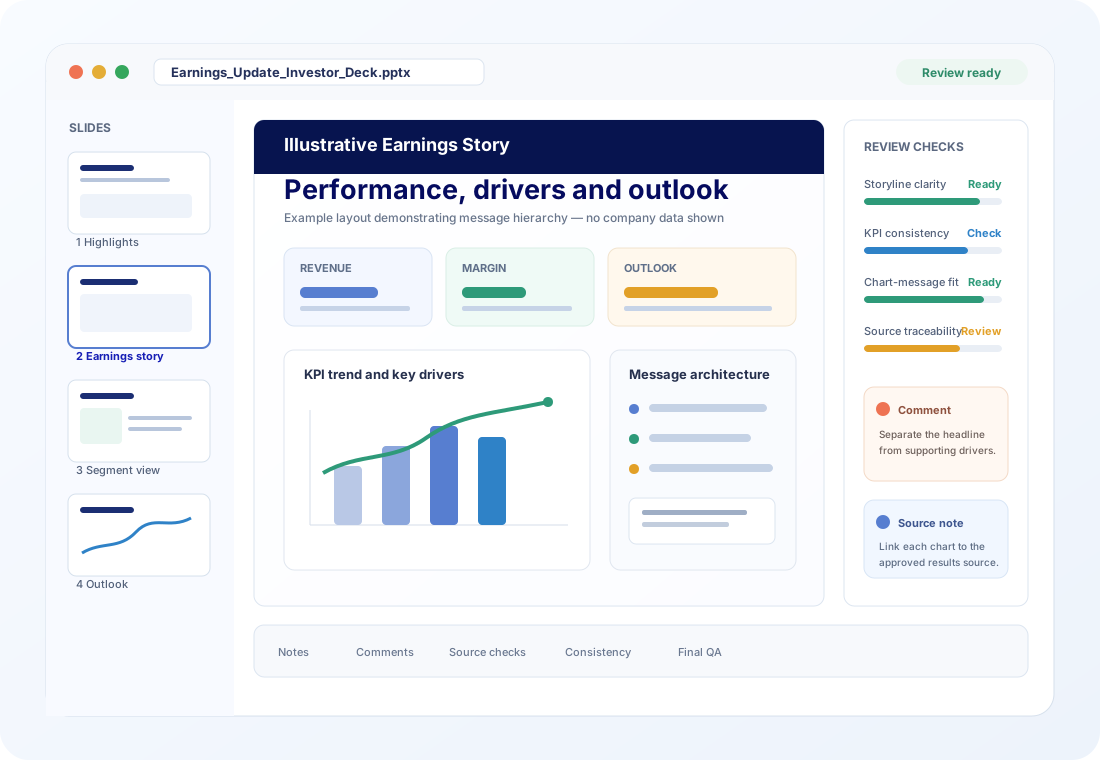
Performance, drivers and outlook arranged into a logical communication flow.
Unpublished materials handled within the project access process.
Charts, period labels, notes and message wording checked against supplied sources.
Annotated review version plus clean presentation-ready files in the agreed scope.
The starting price is based on a practical 15-slide results deck and separates the presentation workload from broader earnings-release or executive-messaging work.
Suitable for: Quarterly or annual results decks that need clearer KPI hierarchy, performance-driver sequencing, chart messaging, and shareholder-facing presentation structure.
Additional slides, complex financial visualisation, major deck redesign, or content development from raw source material will be quoted on the expanded scope.
Investor-facing presentations often need several information streams to agree at once: the headline, KPIs, charts, period comparisons, management commentary, footnotes and the final slide sequence.
The deck contains accurate information but does not make the performance story or key drivers easy to follow.
Labels, units, time periods or definitions differ across slides, charts, source tables or management notes.
Too many messages compete on the same slide, making the shareholder takeaway difficult to identify quickly.
Prior period, current period and outlook information are not framed consistently enough for a clean comparison.
Late management updates can create mismatches between headlines, charts, notes, speaker commentary and appendices.
Presentation language must stay aligned with approved source materials and authorised review rather than introducing new claims.
End-to-end presentation-development support can be tailored to the stage of your deck, from early storyline architecture through source-aware review and final presentation QA.
An illustrative example of how a dense earnings slide can be reworked into a clearer investor-facing message without adding new financial facts.
The service is designed around the communication logic of an earnings or shareholder deck, not only visual polish or sentence-level editing.
| Support Dimension | Presentation Formatting Review Layout & visual consistency | Language Editing Grammar & clarity improvement | Full Shareholder & Earnings Communication Support End-to-end investor presentation development |
|---|---|---|---|
| Investor storyline & message architecture | × | × | ✓ |
| KPI narrative and performance-driver framing | × | △ | ✓ |
| Chart-message and period alignment | △ | × | ✓ |
| Management commentary refinement | × | ✓ | ✓ |
| Cross-slide terminology and source consistency | △ | △ | ✓ |
| Footnotes, labels and source-note review | △ | × | ✓ |
| Slide hierarchy, formatting and visual polish | ✓ | △ | ✓ |
| Final presentation QA and revision notes | △ | △ | ✓ |
| Best for | Visual clean-up | Language polish | Complete earnings communication presentation support |
The same structured communication approach can be adapted to different shareholder and investor-facing presentation contexts, depending on your supplied materials and agreed scope.
Results highlights, drivers, KPIs, segments, outlook and supporting notes.
Year-end performance story, strategic progress, capital themes and shareholder takeaways.
Longer-form strategic narrative, segment stories, management themes and investor Q&A support.
Shareholder-facing performance, strategy, governance and meeting presentation flow.
Presentation sequencing that supports live commentary and audience comprehension.
Clearer commentary aligned to the supplied deck and approved earnings messages.
Companion communication that mirrors the approved presentation narrative and terminology.
Structured performance and strategy updates for formal stakeholder communication.
A staged workflow keeps the storyline, source information, design and review comments aligned as the presentation moves toward final delivery.
Current deck, approved results, source files, template and review requirements.
Confirm meeting context, audience, stage of draft and required communication depth.
Map supplied numbers, labels, definitions, notes and period references to the deck.
Build a logical sequence from headline performance through drivers and outlook.
Refine headlines, charts, commentary, hierarchy, layout and supporting notes.
Incorporate authorised feedback and flag changes that affect other slides or sources.
Review messages, periods, labels, terminology, sources, formatting and slide flow.
Provide the agreed clean deck and review notes or companion files included in scope.
The strongest workflow starts with approved source materials and ends with a clearly structured presentation that is easier for authorised reviewers to check and finalise.
A multi-stage review checks the communication structure as well as slide-level consistency before the presentation is returned for final authorised approval.
Check narrative sequence, slide purpose and headline hierarchy.
Check labels, units, periods and links to supplied source materials.
Verify chart-message alignment, legends, periods and visual comparisons.
Review management language, footnotes and disclosure-sensitive phrasing.
Check slide hierarchy, alignment, spacing, typography and visual consistency.
Final cross-slide check before the clean version is prepared for client review.
The service approach can be adapted to different investor-facing business contexts without changing or inventing the underlying company information.
Unpublished earnings materials and shareholder communications require controlled handling throughout drafting, review and delivery.
Project-specific confidentiality and file-handling requirements should be agreed before sensitive earnings materials are shared.
For the published starting scope, typical delivery is 3–5 business days. Timing is confirmed after scope review and depends on the source readiness, deck length, revisions and deadline.
A custom proposal can be prepared after the presentation materials and required support are reviewed.
Answers to common questions about source materials, investor-deck development, management commentary, chart consistency, confidential handling and final approval.
The service can cover presentation storyline, slide architecture, KPI and chart-message alignment, management commentary refinement, source-note consistency, visual hierarchy, review comments and final presentation QA according to the agreed scope.
Yes. Existing decks, approved templates, brand rules and prior-period materials can be used as the working foundation so the presentation remains consistent with the organisation's established communication style.
No. Financial results, guidance, KPIs and approved disclosures must come from the client-supplied source materials. The service focuses on how approved information is structured, explained and presented.
Yes. The review can check whether each chart supports the intended message, whether labels and periods are consistent, and whether the slide headline and commentary accurately reflect the supplied source information.
The same presentation-development approach can be adapted to investor days, annual or special shareholder meetings, capital-markets updates and other investor-facing presentation contexts when included in the project scope.
Management commentary, speaker notes or earnings-call language can be reviewed when supplied and included in the agreed scope, with emphasis on clarity, consistency and alignment with the presentation narrative.
Revisions are incorporated through a controlled review cycle. The practical approach depends on the number and timing of changes, their effect on charts or messages, and the final delivery deadline.
Yes. Source labels, period references, chart notes, footnotes and cross-slide terminology can be checked for consistency against the client-provided approved source materials.
No. The service provides communication and presentation support, not legal, regulatory, accounting or investor-relations approval. Final factual and disclosure approval remains with the client's authorised reviewers.
Useful inputs include the current deck or template, approved results materials, KPI definitions, prior-period presentation, management commentary, brand guidance, source spreadsheets or charts, disclosure instructions and the required deadline.
Pricing and turnaround are confirmed after scope review because they depend on deck length, data and source readiness, writing depth, chart rebuilding, companion materials, revision cycles and deadline requirements.
If the earnings materials are confidential, unpublished, or market-sensitive, state any access, transfer, retention, or NDA requirements during scoping so they can be reviewed before sensitive files are shared.
Share the deck stage, audience, source materials, slide count, management-review requirements and deadline so the presentation can be assessed for scope, feasibility and the appropriate level of support.
Share the meeting or announcement date, time zone, slide count and current draft stage.
Identify the approved results release, KPI files, prior-period deck, corporate template and supporting notes available.
Specify earnings call, shareholder meeting, investor day, board update or another stakeholder context.
Tell us whether you need storyline development, language refinement, chart review, slide redesign, source checks or full support.
Include any investor-relations, finance, legal, brand or management review instructions that affect the presentation.
Provide the high-level project details below. Sensitive files can be handled through the appropriate project process after initial scope discussion.
Share the current deck, source context and review requirements so we can discuss a clearer, more consistent investor communication workflow.