Course & Module Editing
Refine explanations, instructions, transitions, examples, headings, and learner-facing language across structured course modules.

Strengthen learner-facing content without losing subject-matter accuracy. We edit training modules, facilitator guides, e-learning scripts, assessments, presentations, workbooks, job aids, and related materials for clearer instructions, smoother flow, consistent terminology, and more polished delivery.
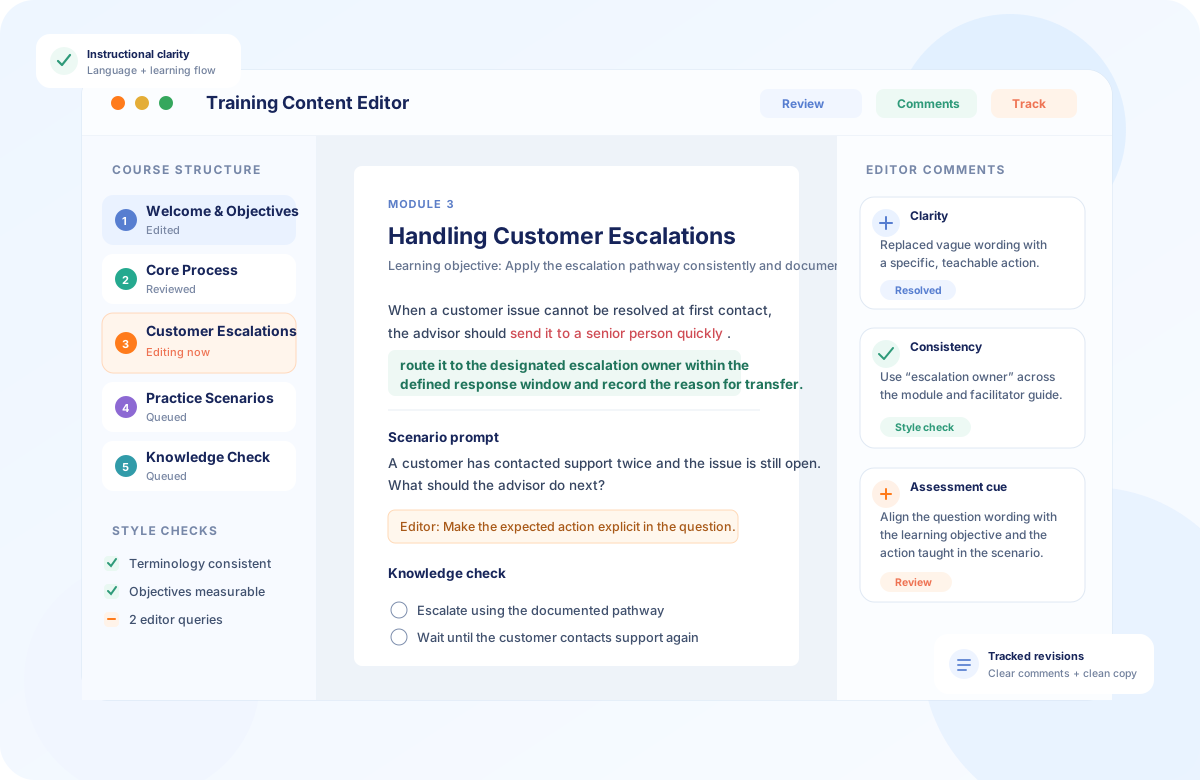
Training materials often repeat concepts across slides, guides, modules, scripts, and assessments. This starting scope focuses on making that connected set clearer and more consistent without rebuilding the programme.
Suitable for: One module or a compact training-content set that is already drafted and needs learner-focused editorial refinement.
Full training redesign, new module writing, subject-matter validation, visual redesign, authoring-tool production, and formal accessibility or technical QA are separate scope.
Editing support for the core materials that shape a training experience—from the first module introduction to facilitator notes, learner activities, assessments, and supporting job aids.
Refine explanations, instructions, transitions, examples, headings, and learner-facing language across structured course modules.
Clarify delivery notes, timing cues, activity instructions, discussion prompts, transitions, and facilitator-facing guidance.
Edit screen text, narration, interaction instructions, branching scenarios, feedback text, and microlearning copy for clarity and consistency.
Improve question wording, response options, feedback language, instructions, parallel structure, and consistency across knowledge checks.
Polish presentation decks, participant workbooks, checklists, quick-reference guides, worksheets, and printable support materials.
Apply supplied style guides, glossaries, brand voice rules, capitalization choices, recurring labels, and preferred terminology across assets.
A practical editing workflow that starts with context and ends with transparent revisions ready for your subject matter, L&D, or stakeholder review.
Review content type, audience, learning context, file format, style references, scope, and priority concerns.
Confirm the editorial depth, recurring terminology, style rules, content relationships, and items that need special attention.
Improve clarity, grammar, flow, instructions, consistency, learner-facing language, headings, examples, and assessment wording.
Check module-to-module consistency, editor queries, formatting presentation, repeated labels, and supplied style requirements.
Provide the agreed edited files, tracked revisions where applicable, clean copy, and comments or queries for client action.
Training content has to be correct, but it also has to be usable. Editorial review helps bridge subject-matter depth and learner-facing clarity without replacing the expertise behind the material.
The editing approach can be applied across live, digital, blended, video-led, mobile, and workshop-based training materials while respecting the conventions of each format.
Facilitator notes, decks, activities, participant materials, and delivery instructions.
Module copy, reading content, exercises, reflections, and knowledge checks.
Aligned language across live sessions, digital modules, worksheets, and follow-up resources.
Narration, scene directions, on-screen text, prompts, captions, and presenter copy.
Short-form lessons, cards, nudges, prompts, quick checks, and concise learner instructions.
Agendas, exercises, case studies, worksheets, group tasks, and post-session resources.
The same editorial principles can support many training domains while keeping the focus on the language, structure, consistency, and usability of the content supplied.
Examples of content areas where clear, consistent learner-facing communication matters.
Editorial improvements are aimed at making the supplied learning content easier to understand, review, and use.
Training content editing can support teams and professionals who create, review, deliver, or maintain learning materials for internal or external audiences.
A training content edit should do more than correct grammar. The revision should make the expected learner action clearer while preserving the intended process and meaning.
This example demonstrates the type of clarity intervention a training editor may make when an instruction is vague.
Instead of relying on generic proofreading alone, the review applies editorial judgment to recurring learning-content patterns and the relationships between course assets.
Clear explanations, directions, examples, and learner prompts.
Terminology, labels, headings, voice, and recurring language patterns.
Logical movement between concepts, steps, examples, and activities.
Question clarity, response-option consistency, feedback, and instructions.
Application of supplied brand voice, glossary, and editorial conventions.
These are service expectations rather than customer testimonials: practical editorial behaviours that support a transparent review process.
Tracked changes can make sentence-level revisions transparent and easier for reviewers to accept, reject, or discuss.
The editorial goal is to improve expression and usability without silently changing the intended subject-matter meaning.
Unclear meaning, inconsistent process language, or missing context can be flagged for an SME or stakeholder decision.
Where multiple files belong to one learning experience, recurring labels, terms, and instructions can be checked across the set.
Choose a scope that fits a single asset, a multi-module course, recurring content production, or a broader editorial consistency requirement.
For one module, guide, workbook, assessment, script, deck, or other standalone training asset.
Discuss scope →For related modules and supporting assets where terminology and language should remain consistent across the course.
Request assessment →For teams that produce learning materials regularly and need repeatable editorial conventions across new content.
Discuss workflow →For style, terminology, recurring labels, and cross-asset consistency when many contributors create training content.
Consult now →This service does not use a fixed catalogue price or turnaround on this page. The scope is reviewed first so the quote and delivery schedule can match the actual training content.
Module count, word count, slide count, script length, number of assets, and whether the project includes related learner and facilitator materials.
Required delivery date, file formats, number of stakeholders, amount of cross-file checking, and whether style or terminology references must be applied.
Whether the requirement is focused language correction, broader clarity and flow editing, assessment wording review, or multi-asset consistency support.
Answers to practical questions about editorial scope, training formats, tracked revisions, subject-matter ownership, style guides, assessments, pricing, and project inputs.
It is an editorial service focused on improving training and learning materials so instructions, explanations, examples, activities, assessments, terminology, and learner-facing language are clearer and more consistent while the intended subject matter is preserved.
Suitable materials can include course modules, training manuals, facilitator guides, participant workbooks, e-learning scripts, presentation decks, assessments, quizzes, job aids, SOP-based learning content, video scripts, and microlearning copy.
The service is designed to edit and clarify the supplied content rather than invent or replace the underlying subject matter. Where meaning is unclear or a content decision is needed, the editor can flag a query for the client or subject matter expert.
Yes. Subject matter expert drafts are often technically strong but may need clearer learner-facing explanations, consistent terminology, improved sequencing, and smoother instructional language.
Yes. The editorial review can check wording, clarity, consistency, parallel structure, and whether objectives and assessment items communicate the intended action clearly. Final instructional or compliance approval remains with the client.
Tracked revisions can be used for editable documents so changes are transparent. A clean copy and editor comments or queries can also be provided when they are part of the agreed scope.
Yes. Share your style guide, glossary, brand voice rules, approved terminology, capitalization preferences, and any instructional design conventions that the editor should follow.
Yes. The service can be applied to e-learning scripts, screen text, narration, interaction instructions, knowledge checks, scenario text, and short-form microlearning content.
Yes. For multi-module projects, the review can focus on consistent terminology, voice, headings, instruction patterns, activity labels, assessment wording, and recurring learner prompts across the course.
A fixed price and turnaround are not stated on this page. They are confirmed after reviewing the content volume, file types, level of editing required, number of modules or assets, deadline, and any style or subject-matter requirements.
Share the training content or a representative sample, content format, approximate volume, deadline, target audience, style guide or glossary if available, and the main issues you want the editor to address.
Yes. Audience information helps the editor judge vocabulary, explanation depth, tone, examples, instruction wording, and reading complexity while preserving the intended learning content.
Share enough information for the editing scope to be reviewed accurately. A representative sample is especially useful when the project includes multiple modules or different file types.
Clear project context helps determine the appropriate editing depth and whether the work requires cross-asset consistency checks, assessment review, or application of a supplied style guide.
Course module, e-learning script, facilitator guide, deck, workbook, assessment, job aid, or a combination.
Who the content is for and what the learner should understand or do after using it.
Approximate word count, slide count, module count, number of files, and your required delivery date.
Share a glossary, brand voice guide, capitalization rules, approved role names, or other editorial references if available.
Highlight clarity, flow, grammar, assessments, instructions, cross-module consistency, tone, or other focus areas.
Share your contact details and project requirements below. The information will be used to review the editing scope and respond about the next step.
Share your modules, scripts, guides, assessments, or supporting materials and describe the editing priorities. The next step is a scope review based on the actual content.