Curriculum Architecture
Programme purpose, learner profile, curriculum structure, levels, pathways, and the relationship between major learning components.

Turn a learning brief, syllabus, competency framework, or subject outline into a coherent curriculum with clear outcomes, logical sequencing, practical unit structures, assessment alignment, and implementation-ready documentation.
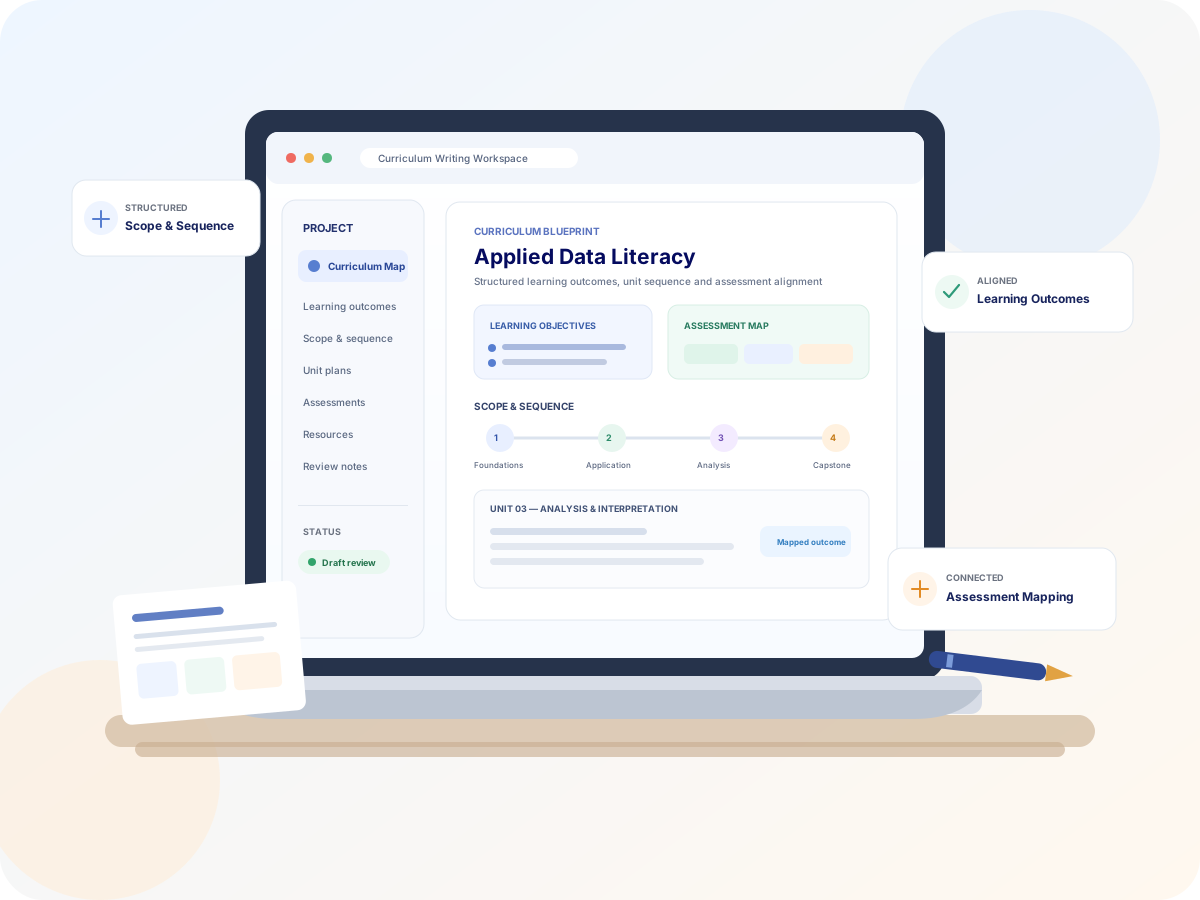
Curriculum writing combines architecture, outcomes, sequencing, assessment mapping, and implementation documentation, so it is better scoped as a defined project than priced like ordinary content writing.
Suitable for: A small programme, course pathway, or curriculum refresh that needs implementation-ready structure rather than full lesson-content production.
Full lesson manuscripts, learner workbooks, detailed assessment banks, standards research, accreditation submissions, and extensive subject-matter development are quoted separately.
Curriculum writing can cover the architecture, instructional sequence, assessment logic, and documentation needed to move from a learning idea to a usable curriculum.
Programme purpose, learner profile, curriculum structure, levels, pathways, and the relationship between major learning components.
Clear outcome statements that define what learners should know, understand, demonstrate, or produce by the end of a unit or programme.
Ordered topics, units, concepts, competencies, and prerequisite relationships that make progression visible across the learning journey.
Unit goals, topic order, learning activities, teaching notes, practice opportunities, time guidance, and links to assessment where required.
Formative and summative assessment points, evidence requirements, rubric criteria, and outcome-to-assessment mapping when included in scope.
Structured curriculum guides, implementation notes, resource references, templates, versioning information, and reviewer-ready handoff files.
A staged workflow keeps the curriculum aligned to the brief while creating clear checkpoints for structure, sample content, assessment, and final documentation.
Clarify learners, subject, objectives, delivery mode, duration, standards, source material, and required outputs.
Build the curriculum architecture, outcomes, scope and sequence, module logic, and key alignment decisions.
Develop unit or module content, learning activities, teaching guidance, assessment points, and documentation.
Check alignment, progression, coverage, consistency, usability, and feedback from client or subject reviewers.
Finalise the approved curriculum pack, clean formatting, version notes, and implementation-facing documentation.
A useful curriculum is more than a list of topics. Its outcomes, sequence, activities, assessments, and implementation notes need to work as one connected system.
The same subject can require a different curriculum structure depending on how learners access instruction, practice, feedback, and assessment.
Curriculum plans for facilitated virtual sessions, interaction, practice, and synchronous checkpoints.
Sequenced modules with independent instructions, knowledge checks, practice, and learner guidance.
Combined classroom, live, independent, and digital elements with defined transitions between learning modes.
Curriculum structures for recorded lessons, digital content, practice tasks, and asynchronous assessment.
Shorter learning segments, activity prompts, checks, and progression logic designed for compact digital access.
Facilitator-led curriculum with session plans, group activities, practice, reflection, and in-person assessment cues.
Curriculum architecture can be adapted across academic, professional, technical, creative, language, and organisational learning contexts.
Curriculum writing can support organisations that need consistent learning design, structured documentation, or scalable programme development.
Instead of relying on unsupported outcome statistics or testimonial claims, the service is explained through review stages, traceable decisions, and concrete curriculum deliverables.
Curriculum projects benefit from staged approval. Early review of the architecture prevents large-scale rewriting later, while sample-unit and assessment reviews help establish the pattern before full development.
A client may begin with subject notes, policy material, competency requirements, and a target learner profile. The writing workflow can convert those inputs into programme outcomes, a sequenced module map, consistent unit templates, practice activities, assessment checkpoints, and a documented review trail. The exact final pack depends on the confirmed brief.
A curriculum project can separate learning architecture, subject accuracy, writing, assessment, and final quality review so each layer receives appropriate attention.
Shapes goals, programme logic, level, progression, and the overall curriculum architecture.
Contributes technical terminology, source accuracy, examples, and discipline-specific review where needed.
Connects outcomes with activities, practice, learner interaction, assessment, and delivery format.
Develops learner-facing and instructor-facing curriculum content in the agreed template and tone.
Checks alignment, completeness, consistency, formatting, cross-references, and agreed handoff requirements.
Deliverables vary by project. The following are common curriculum components that can be included when they are part of the agreed scope.
Purpose, learner profile, programme goals, delivery assumptions, structure, and implementation context.
Programme, module, or unit outcomes with clear relationships to skills, competencies, or evidence.
Topic order, unit progression, prerequisite relationships, time allocation, and coverage overview.
Objectives, key content, activities, practice, resources, assessment points, and facilitator or learner guidance.
Assessment map, evidence requirements, checkpoints, rubrics, criteria, and alignment notes where requested.
Pricing and turnaround are confirmed after scope and deadline review. Share your brief so scope, review stages, deliverables, and schedule can be assessed for the specific project.
For a new programme, course, module set, or training pathway that needs curriculum architecture and writing.
Discuss scope →For an existing syllabus or curriculum that needs restructuring, alignment, clearer outcomes, or updated documentation.
Request review →For departments or programme teams coordinating multiple subject experts, reviewers, units, or curriculum streams.
Plan the workflow →For architecture, templates, learning alignment, assessment design, or curriculum QA without a full end-to-end build.
Consult now →Share the learner profile, subject, learning goals, source material, format, and required deliverables so the project can be assessed against your actual brief.
Key questions about scope, inputs, alignment, deliverables, revision, quality review, delivery formats, and project assessment.
A curriculum writing service helps turn a learning brief into structured curriculum documentation such as learning outcomes, scope and sequence, unit plans, assessment mapping, learning activities, resource guidance, and implementation notes. The exact deliverables depend on the agreed project scope.
A useful brief normally includes the learner profile, subject or topic, level, intended outcomes, delivery format, duration or schedule, existing standards or source material, assessment expectations, and any templates that must be followed.
Yes. An existing syllabus, outline, module list, training deck, policy document, competency framework, or previous curriculum can be used as source material for review, restructuring, expansion, or rewriting when it is provided as part of the brief.
Yes. The curriculum structure can be planned around the intended learning mode, including classroom, live online, blended, workshop-based, mobile-supported, or self-paced delivery, provided the delivery model is defined in the project brief.
Learning outcomes, assessment mapping, rubric criteria, checkpoints, and evidence requirements can be included when they are part of the agreed curriculum scope.
Alignment can be incorporated when the relevant standards, competencies, institutional requirements, qualification framework, or regulatory guidance is supplied or clearly identified for the project.
Curriculum writing can be scoped for school, college, university, coaching, training, professional-development, and organisational learning contexts. The depth and documentation format should match the learner level and institution's requirements.
Yes. Client subject experts can provide source material, technical review, required terminology, or approval checkpoints. The writing workflow can be structured so curriculum organisation and subject accuracy are reviewed separately.
Depending on scope, a final pack may contain a curriculum overview, learner profile, learning outcomes, scope and sequence, unit or module plans, assessment mapping, activity guidance, resource lists, rubrics, implementation notes, and revision history.
Revision expectations should be confirmed in the project scope. A practical workflow uses review checkpoints for the curriculum architecture, sample units, assessment approach, and final documentation so feedback is incorporated before handoff.
Quality review can check alignment between outcomes, content, learning activities and assessments; consistency of terminology and formatting; sequence and progression; coverage gaps; duplication; usability of instructions; and adherence to supplied templates or standards.
Pricing and turnaround are confirmed after scope and deadline review. Scope depends on the curriculum length, number of units, research or alignment requirements, source material, review stages, and required deliverables. Share your brief to request a project-specific assessment.
Share enough context to assess the curriculum scope without guessing: audience, level, subject, delivery mode, source material, standards, expected outputs, and desired timeline.
Describe the learner group, age or professional level, prerequisite knowledge, and learning context.
Explain what the curriculum covers and the outcomes, competencies, or performance expectations it should support.
Identify any syllabus, textbook, policy, competency framework, institutional template, or regulatory material that must guide the work.
Specify classroom, online, blended, self-paced, or workshop delivery and the documents you expect at handoff.
Share decision-makers, review checkpoints, dependencies, desired completion date, and any fixed milestones.
Send your contact information and curriculum brief. Pricing and turnaround are confirmed after scope and deadline review.