Assessment Blueprint Development
Plan coverage by learning objective, topic, skill, item type, or difficulty using the framework supplied for the project.

Develop structured assessment content around the knowledge, skills, learning outcomes, and decision points you need to measure—from individual items and quizzes to reusable question banks, rubrics, answer keys, and scoring guidance.
Start with a defined assessment set, then scale into larger banks, rubrics, scenarios, or recurring item-development work as the blueprint becomes more complex.
Suitable for: A focused quiz, test, or first question-bank batch that needs structured items, keys, and review-ready organisation.
Scenario-heavy items, open-response questions, complex rubrics, specialist subjects, large metadata sets, psychometric work, and accelerated deadlines are quoted separately. Final subject-matter and psychometric approval remains with the appropriate specialists.
Assessment content services for institutions, training teams, EdTech products, course creators, and organisations that need structured ways to measure learning and performance.
Plan coverage by learning objective, topic, skill, item type, or difficulty using the framework supplied for the project.
Create clear assessment items with appropriate stems, options, prompts, expected responses, and supporting metadata.
Structure performance criteria, levels, marking guidance, answer expectations, or scoring rules for open-response work.
Build reusable item sets organised by topic, objective, format, difficulty, or other tags defined in the brief.
Develop applied prompts that ask learners to interpret information, make decisions, or demonstrate reasoning in context.
Review existing content for alignment, clarity, answer logic, distractor quality, consistency, duplication, and presentation.
A structured path from learning requirements to review-ready assessment content.
Clarify learners, purpose, learning objectives, source content, item formats, and any standards or platform rules.
Map intended coverage so topics, skills, question types, and planned difficulty are visible before writing begins.
Create items, options, scenarios, keys, rationales, rubrics, or scoring guidance according to the agreed structure.
Check wording, alignment, answer logic, consistency, duplication, and the requested content or formatting rules.
Organise the completed assessment content in the requested editable format for stakeholder review or platform transfer.
Good assessment content is more than a list of questions. It connects what should be learned with what will be measured, how performance will be judged, and how reviewers can check the result.
Flexible formats for different learning goals, evidence types, and delivery environments.
Stems, options, keys, and rationales for objective-response assessment.
Prompts with expected response guidance or marking criteria.
Applied situations that assess interpretation, reasoning, or decision-making.
Criteria and performance levels for projects, responses, or practical work.
Low-stakes checks that reinforce content and reveal learner understanding.
Structured item libraries that can be tagged, reviewed, and reused across assessments.
Assessment content can support learning, training, qualification, and evaluation workflows across a range of education and professional contexts.
Assessment content works best when each item has a clear purpose, an answer or scoring basis, and a visible relationship to the intended learning evidence.
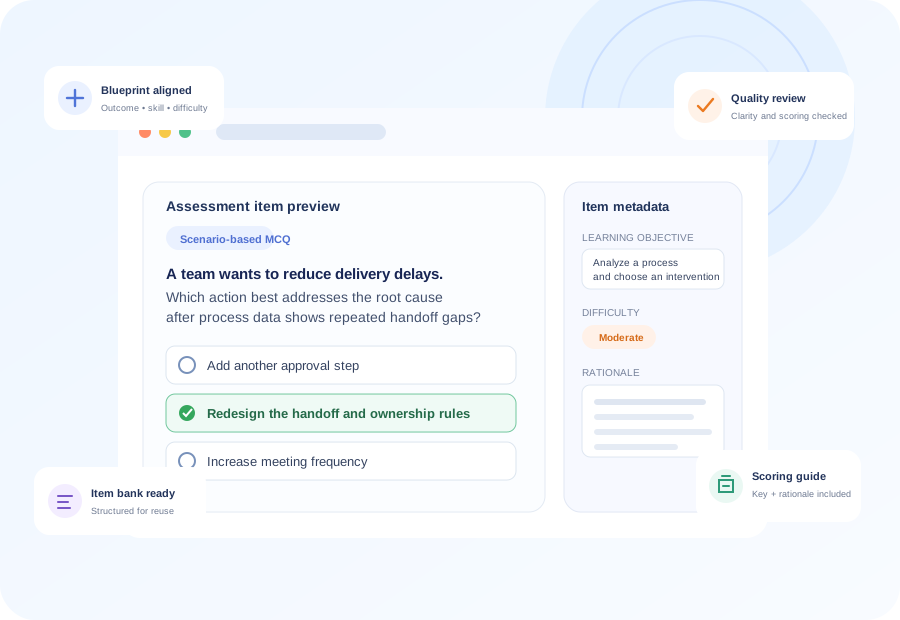
This example shows the kind of structured information that can accompany a developed assessment item.
Different roles can contribute to the content-development and review workflow depending on the scope and subject requirements.
Drafts items, prompts, options, keys, rationales, and related content.
Checks subject-specific meaning against the supplied source material and requirements.
Connects learning objectives, assessment evidence, and the planned item structure.
Improves clarity, consistency, grammar, instructions, and presentation.
Checks alignment, answer logic, duplicates, formatting, and review notes.
Role mix can be matched to the project brief.
Instead of relying on unsupported ratings or testimonial claims, this page highlights the checks that can be made visible in the deliverable and review process.
Items can be tagged or traced to supplied learning objectives, competencies, topics, or standards.
Keys and rationales can be reviewed for defensibility and consistency with the source material.
Wording, instructions, distractors, and prompts are checked for avoidable ambiguity and unnecessary complexity.
Rubrics and expected-response guidance can be structured so reviewers can follow the intended scoring approach.
Question numbers, metadata, keys, rationales, and review notes can be organised consistently for handoff.
Choose a working model based on whether you need a single assessment, a larger content bank, ongoing support, or review of existing material.
Develop a defined quiz, test, assignment, or assessment set around a project brief.
Discuss project →Build a larger reusable set of structured items with agreed tagging and review fields.
Discuss bank →Extend or refresh assessment content across modules, topics, products, or learning programs.
Discuss support →Audit and revise an existing item bank for alignment, clarity, logic, duplication, or structure.
Discuss review →Answers to common questions about scope, formats, alignment, review, delivery, and requirements.
It is a structured content-development service for creating assessment materials such as question banks, quizzes, tests, scenario-based items, answer keys, rubrics, scoring guidance, and supporting item metadata. The exact scope depends on the learning goals, audience, format, and platform requirements you provide.
The page supports development of multiple-choice questions, short-answer and open-response prompts, case- and scenario-based questions, formative quizzes, summative tests, rubric-based tasks, and reusable question banks where those formats fit the brief.
Yes. Learning objectives, competencies, syllabus outcomes, or other supplied standards can be used to guide the assessment blueprint and item mapping so the content measures the intended knowledge or skill.
Answer keys, expected responses, scoring guidance, and rationales can be included when they are part of the requested deliverables. For open-response tasks, the scoring approach can also be expressed through rubrics or marking criteria.
Difficulty can be planned at the blueprint stage using the levels or framework supplied for the project. Items can then be tagged and reviewed against that planned distribution rather than written as an unstructured collection.
Yes. Source materials such as curricula, course outlines, lesson content, learning objectives, reference documents, or existing assessment examples can be used as the basis for developing aligned assessment content.
The service can be structured for school, higher-education, professional-training, corporate learning, EdTech, coaching, and certification-style contexts when the required subject matter, audience, and assessment rules are provided.
We can structure deliverables with clear item numbering, options, keys, rationales, tags, and other requested fields so they are easier to transfer into an LMS, authoring tool, spreadsheet, document, or assessment platform. Platform-specific import requirements should be supplied with the brief.
A practical review workflow checks alignment to the blueprint, clarity of item wording, answer or scoring logic, consistency of format, avoidable ambiguity, and presentation. Subject-specific accuracy review depends on the source materials and expertise required for the project.
Useful inputs include the target learners, subject or topic, learning objectives, syllabus or source content, assessment purpose, required item types, approximate volume, difficulty expectations, scoring rules, platform format, and any review criteria.
Yes. Existing items can be reviewed and revised for clarity, consistency, alignment, duplication, distractor quality, answer logic, scoring guidance, or formatting, depending on the requested scope.
Pricing and delivery timing are not fixed on this page because no service-specific rate or turnaround has been supplied. They can be discussed after the assessment scope, item volume, subject complexity, review requirements, and delivery format are known.
Share the context needed to understand your assessment-development scope. The more detail you provide, the easier it is to define the right content structure and review approach.
Who will take the assessment and what decision or learning evidence should it support?
Provide course material, syllabus, learning objectives, standards, or reference documents.
Include item types, approximate volume, difficulty expectations, rubrics, rationales, or metadata needs.
Tell us the preferred document, spreadsheet, LMS, authoring-tool, or platform structure.
Use the form below to describe the assessment content you need developed or reviewed.
Turn your learning objectives, course content, or competency framework into structured assessment materials that are easier to review, score, and reuse.
Discuss Your Assessment Requirement