
Category Introductions
Edit above-the-fold copy for clearer intent, tighter language, stronger relevance, and a faster path into the product range.
Polish category and collection pages so shoppers understand what they are browsing, search engines can interpret the page clearly, and every line supports your brand, merchandising priorities, and conversion journey.
Edit above-the-fold copy for clearer intent, tighter language, stronger relevance, and a faster path into the product range.
Refine collection descriptions so each page feels distinct, shopper-focused, and consistent with your merchandising hierarchy.
Tighten SERP copy around search intent, page purpose, brand voice, and concise calls to action without keyword stuffing.
Edit H1, H2, and subcategory headings for scanability, semantic structure, consistency, and natural search relevance.
Improve taxonomy wording, filter names, helper text, and on-page labels so shoppers can understand and narrow choices quickly.
Edit anchor text and contextual links to support navigation, category discovery, crawl paths, and related collection journeys.
Polish seasonal messages, range highlights, promotional copy, best-for language, and supporting text around product grids.
Edit shopper questions, answer clarity, terminology, product-category guidance, and helpful supporting content.
Refine short explanatory text, buying prompts, range context, collection notes, and page-level content surrounding product cards.
Standardize wording patterns, page templates, terminology, editorial checklists, and reusable category-content guidance.
Review page purpose, current copy, duplication, hierarchy, and key content gaps.
Clarify shopper intent, category role, search terms, and desired page action.
Rewrite weak lines, reduce repetition, improve tone, structure, and shopper clarity.
Refine headings, metadata, internal links, search language, and semantic coverage.
Check accuracy, consistency, grammar, links, instructions, and brand-language rules.
Return clean copy in the agreed document, spreadsheet, CMS-ready, or URL format.
Incorporate feedback and refine reusable rules for the next category batch.
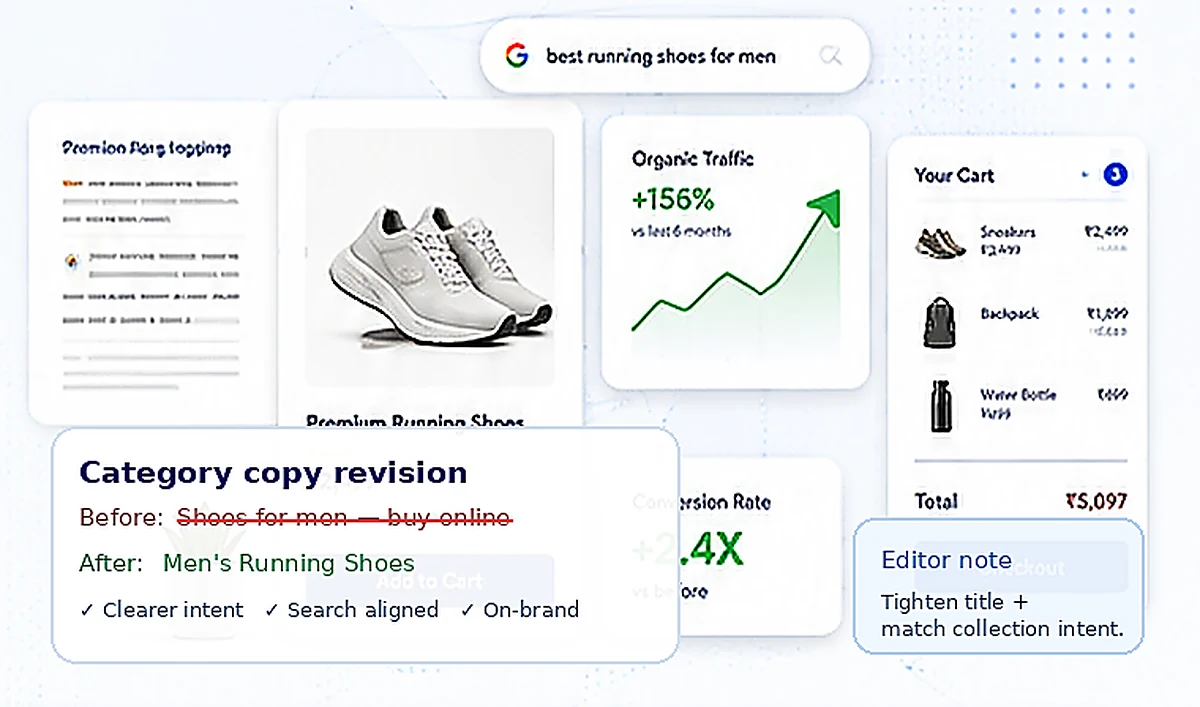
Explore our big selection of shoes for men available in many styles and choices.
After editingShop men’s running shoes for daily training, race day, trail routes, and everyday comfort.
Why it changed: clearer category intent, less generic wording, stronger shopper relevance, and a more useful product-range summary.
One-time category or collection editing with a defined scope, file set, and delivery plan.
Dedicated ongoing editing support for frequent category launches, refreshes, and optimization work.
Flexible editing for changing volumes, priority pages, and occasional campaign or merchandising needs.
Fixed monthly capacity for predictable content maintenance, QA, and collection-page updates.
| Day | Editing Task | Example Focus | Goal |
|---|---|---|---|
| Mon | Category refresh | Top running shoes | Traffic |
| Tue | Collection edit | Premium running shoes | Conversions |
| Wed | Metadata QA | Men’s running shoes | SEO |
| Thu | Buying copy edit | How to choose the right shoe | Trust |
| Fri | Merchandising copy | Weekend offer collection | Sales |
| Sat | FAQ & links | New arrivals | Engagement |
It is a focused ecommerce editing service for category, collection, department, and merchandising pages. The work improves clarity, search intent alignment, headings, introductions, metadata, internal-link wording, product-grid support copy, FAQs, and calls to action without changing the underlying products or commercial facts.
Typical scope can include the H1, opening paragraph, supporting copy above or below the product grid, subcategory text, filter or facet labels, promotional modules, internal-link anchors, meta title, meta description, FAQ blocks, and other visible category-page content supplied for review.
Yes. The service can preserve strong existing content and focus only on sections that need clearer wording, tighter structure, better consistency, stronger search alignment, or more persuasive merchandising language.
Yes, when SEO is part of the brief. Editing can align headings, keyword usage, search intent, metadata, internal links, content structure, and readability while avoiding unnecessary keyword repetition or changes that make the copy sound unnatural.
Yes. The editing work is platform-agnostic as long as you can provide the page copy, URLs, exports, spreadsheets, CMS access arrangements, or another workable content format. The final delivery can be structured for straightforward publishing in your store.
Only when you explicitly ask for a wording or consistency review and provide the authoritative product information. Product facts, prices, technical specifications, legal claims, and policy statements should not be altered without a reliable source supplied by your team.
Yes. A collection set can be edited as a group so each page has a distinct purpose, avoids duplicated phrasing, uses a consistent brand voice, and supports a logical internal-link and category hierarchy.
A review-friendly delivery can include clear before-and-after examples, tracked revisions, comments, or an edited spreadsheet or document depending on the format agreed for the project.
Yes. Share your tone-of-voice guide, terminology rules, capitalization standards, audience notes, prohibited claims, SEO requirements, and examples of approved copy so edits remain consistent with your brand.
Large inventories can be organized into batches using a repeatable editing checklist, agreed templates, priority tiers, naming conventions, and QA checkpoints. This makes it easier to maintain consistency across many pages.
Turnaround depends on the number of pages, the condition and length of the existing copy, SEO requirements, research or fact-checking needs, platform format, and the number of review rounds. Share your volume and deadline so the delivery plan can be confirmed.
Send the page URLs or content file, number of category or collection pages, target market, brand guidelines, SEO notes, preferred delivery format, priority pages, and your required deadline. Include any specific conversion, readability, or consistency issues you want the editor to address.
Give shoppers clearer reasons to browse, compare, trust, and buy. We can edit existing ecommerce content page by page or standardize an entire category set around a consistent voice and quality framework.
Share your store, page volume, priority collections, deadline, content format, brand rules, and SEO requirements. The scope can then be reviewed around the pages that need the most attention.
Send URLs, a spreadsheet, exported copy, document files, or another working content format.
Include target terms, page roles, search intent notes, campaign priorities, and any must-keep messaging.
Share tone-of-voice, terminology, legal wording, product fact sources, style guides, and prohibited claims.
State the number of pages, priority batches, launch dates, and any staged delivery requirements.
Provide enough detail for us to understand the category set, current content, goals, and delivery expectations.