Chatbot Flow Writing
End-to-end dialogue for defined user journeys, with questions, responses, choices, confirmations, and next steps connected logically.
- Welcome and discovery
- Decision-point copy
- Completion and confirmation

Turn product knowledge, support logic, onboarding steps, and user intents into clear conversations that sound human, stay on brand, and help people understand what to do next.
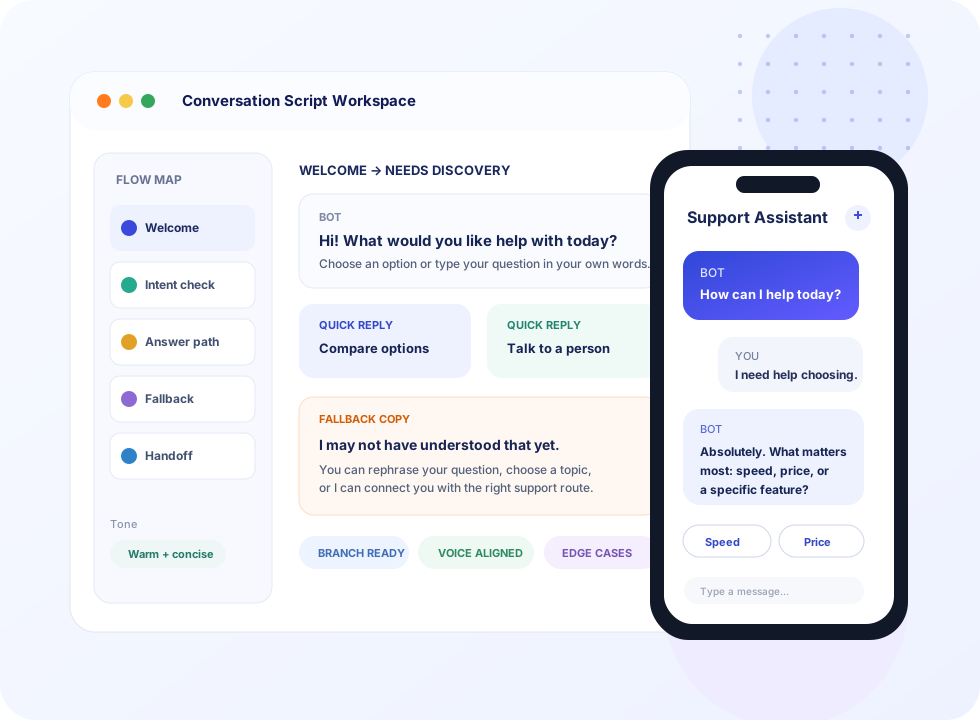
This starting scope is designed for a real end-to-end dialogue rather than a handful of disconnected messages, making it suitable for onboarding, support, qualification or other clearly bounded chatbot journeys.
Starting price
From ₹8,000
for one defined conversation flow of up to 30 bot/customer turns
Suitable for: One core conversation flow with supplied product, policy or campaign context.
Outside the starting scope: Conversation-platform setup, integrations and bot development are outside this writing price.
Faster delivery: A shorter deadline can be assessed when the flow map and approved source material are already available.
Contentxprtz chatbot conversation writing starts from ₹8,000 for one defined flow of up to 30 bot/customer turns and includes flow review, dialogue writing, fallback language and two revision rounds.
Conversation writing goes beyond isolated messages. The flow needs to connect user intent, business logic, interface choices, error handling, tone, and the next action into one coherent experience.
End-to-end dialogue for defined user journeys, with questions, responses, choices, confirmations, and next steps connected logically.
User-facing prompts and option labels written so people can recognise what the bot can help with and choose the right path quickly.
Structured questions that collect relevant information without making the interaction feel like a long form dropped into a chat window.
Conversational support content that explains steps clearly, asks for the information needed, and guides users toward a useful resolution or handoff.
Short, step-based copy that introduces a product, explains choices, or helps users complete a task without overwhelming them with too much text.
Existing help, FAQ, policy, or service information rewritten into smaller conversational turns while preserving the source meaning and required wording.
Chat copy has to work one turn at a time, but every turn also affects the flow around it. Good conversational writing makes choices clearer, reduces ambiguity, and helps the user recover when the conversation goes off the expected path.
These are illustrative content patterns, not client case studies. They show how the writing can change depending on the user goal and the type of conversation being designed.
Guide a user from first question to a specific setup path without turning the experience into a wall of instructions.
Ask only the questions needed to narrow the issue, then explain the next action in a calm, direct way.
Collect useful context through a sequence that feels like a conversation rather than a long qualification form.
Turn an unsuccessful recognition moment into a clear recovery path instead of repeating the same generic error.
The right scope depends on whether you are creating a new flow, improving existing copy, or building a reusable voice system for a larger conversational experience.
A focused journey such as onboarding, support, qualification, or service navigation.
Review and rewrite of multiple connected journeys, including shared prompts and fallbacks.
Conversation-specific tone guidance, terminology rules, and reusable writing patterns.
Iterative rewrites based on supplied product changes, review findings, or conversation insights.
The final format can be agreed around the review and implementation workflow supplied for the project.
Conversational content can support different user journeys. The writing approach should reflect the information sensitivity, user intent, decision complexity, and review requirements of each use case.
These principles shape the writing and review process. They are not performance guarantees; they are practical qualities the conversation should be designed to support.
Users should understand what the bot is asking, what the available choices mean, and what happens after they select or type a response.
Greetings, questions, confirmations, warnings, and handoffs should feel like they come from the same brand voice rather than a collection of disconnected messages.
Fallbacks should acknowledge the problem, avoid blaming the user, and present a useful route forward such as rephrasing, choosing a topic, or moving to support.
Answers to common questions about scope, source materials, brand voice, existing-flow rewrites, fallbacks, handoffs, regulated content, deliverables, pricing, and turnaround.
It is a writing service focused on the words users see and respond to inside chatbot, virtual-assistant, guided support, onboarding, qualification, and other conversational experiences. The work can cover prompts, responses, quick replies, fallback messages, transitions, confirmations, and handoff copy.
Yes. A conversation can be planned from the user goals, business objective, known intents, required information, decision points, and escalation paths supplied for the project. Where important process details are missing, those gaps should be clarified before the copy is treated as implementation-ready.
Yes. Existing flows can be reviewed for clarity, repetition, tone, confusing choices, missing transitions, weak fallbacks, and inconsistent calls to action, then rewritten into a cleaner conversation structure.
Yes. Fallback, no-match, validation, retry, unavailable, and recovery messages can be written so users understand what happened and what they can do next.
Yes. When brand, tone, terminology, product, and style guidance are supplied, the conversation can be aligned to those materials while staying concise enough for chat interfaces.
Yes. Handoff content can explain why a transfer is happening, what the user should expect, what information may be carried forward, and what to do if a live route is unavailable.
Yes. Short interaction labels can be written alongside the surrounding conversation so the options are distinct, scannable, and consistent with the next step in the flow.
Useful inputs include the target users, business objective, current flow or process, required intents, product or service facts, brand voice guidance, mandatory wording, escalation rules, and any platform constraints that affect character length or structure.
This page is for conversation writing and content design. Bot development, platform configuration, integrations, and technical implementation should be confirmed separately if required.
Conversation copy can be drafted around client-supplied approved information, mandatory wording, and review requirements. Final legal, compliance, clinical, financial, or policy approval remains with the responsible client reviewers.
The handoff can be structured as a flow-oriented document, spreadsheet, script map, or other agreed format that makes intents, messages, choices, fallbacks, and handoffs easy for product and implementation teams to review.
Pricing and turnaround depend on the number of flows, depth of branching, amount of existing content, review requirements, and the final scope. Share the project details so the work can be scoped before a price or delivery timeline is confirmed.
Tell us what the chatbot needs to help users do, where the current content comes from, and whether you need a new flow, a rewrite, or a broader conversational voice system.