Unclear Value Proposition
Visitors cannot quickly understand what the business offers, who it serves, or why the offer matters.
Turn your business information, rough notes, existing copy, or page brief into structured website content that explains what you offer, speaks to the right audience, and gives every page a clear purpose and next action.
Common content problems are usually structural, strategic, or audience-related—not just grammatical. Identifying the issue early makes it easier to define the right writing scope.
Visitors cannot quickly understand what the business offers, who it serves, or why the offer matters.
The copy speaks to “everyone,” so real buyers do not see their needs, context, or priorities reflected in the page.
Important information is buried, repeated, or presented in the wrong sequence for a web visitor scanning the page.
Different pages sound as if they were written by different companies, reducing coherence across the website.
Where SEO is part of the brief, the page may target a keyword without actually answering the visitor’s underlying intent.
The page provides information but does not clearly guide the visitor toward the next useful action.
The workflow can move from business inputs and page planning through original copy development, review, refinements, and final handoff. The exact stages used depend on your confirmed scope.
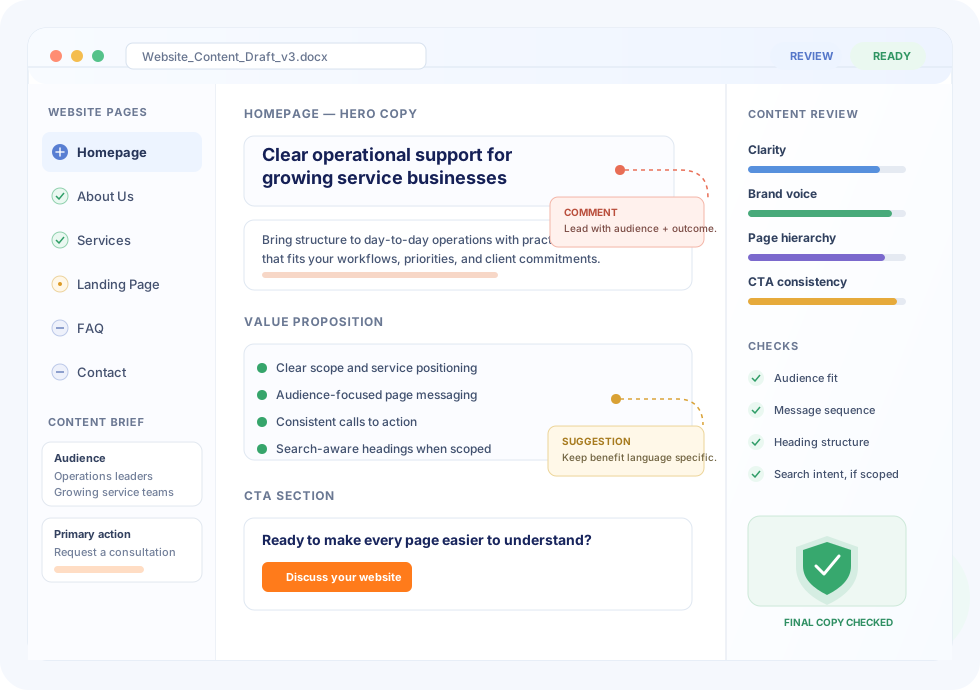
Content is planned around the page purpose, reader, message hierarchy, brand voice, and required action instead of being drafted as disconnected paragraphs.
Share a sitemap, page list, existing site, wireframes, keyword brief, business documents, or rough notes. Only the steps relevant to the agreed project need to be included.
Representative example showing how vague website copy can be developed into clearer page messaging. The wording below is illustrative and is not a client testimonial or performance claim.
“We are a leading company providing high-quality solutions for all kinds of businesses. Our experienced team offers the best service and is committed to customer satisfaction.”
“Make every website page easier to understand and easier to act on.”
Build clear, audience-focused website content around your services, page goals, brand voice, and customer questions—then guide visitors toward the next useful action.
Website content writing starts with the page objective and develops the message itself. Proofreading and editing are more suitable when usable copy already exists and mainly needs correction or refinement.
The final page list should follow your actual sitemap and project brief. These are common website-content formats that can be included when relevant.
A staged process keeps the writing connected to your brief, reduces avoidable rework, and makes page-level decisions easier to review.
Share the site, page list, offer details, audience, goals, and source material.
Confirm what needs to be written, rewritten, researched, or retained.
Match the project to a suitable writing approach and subject context.
Plan page purpose, hierarchy, message sequence, and CTA direction.
Write page-by-page content around the agreed brief and source material.
Check voice, clarity, duplication, page flow, and search intent where scoped.
Gather consolidated feedback and refine the copy within the agreed scope.
Provide clean, organised website copy ready for implementation.
Good website copy depends on good inputs. A clear brief helps the writing stay accurate, useful, and consistent with the business information you actually want visitors to see.
The review focuses on whether the copy works as website content—not only whether individual sentences are grammatically correct.
Check the agreed pages, audience, objectives, source material, and scope.
Improve readability, concision, terminology, and reader understanding.
Check whether the most important information appears in a logical order.
Review tone, vocabulary, and message consistency across included pages.
Review keyword intent when scoped and make CTA language consistent with page purpose.
Check page completeness, internal consistency, obvious errors, and handoff readiness.
Website content can serve very different audiences. The brief should therefore identify the business context and the information that must remain private during drafting and review.
Your business information should remain controlled throughout the writing and review workflow.
This service does not use an unsupported fixed price or turnaround on this page. Scope, quote, and delivery timing should be confirmed after the website requirements are reviewed.
Delivery timing depends on the confirmed workload rather than a generic promise.
A personalised quote can be based on the actual writing work required, without inventing a fixed package price for this page.
Jump to the full FAQ section for details about scope, inputs, rewrites, SEO, brand voice, delivery, and pricing logic.
Answers to common questions about website page scope, source materials, rewriting, SEO, brand voice, delivery structure, confidentiality, pricing logic, and project timelines.
The service can cover page-level planning and original website copy based on the agreed brief, including homepage, about, service, landing, FAQ, contact, and other core website pages. The final scope is confirmed from your page list, audience, brand information, objectives, and content requirements.
Yes. A rough brief, existing website, service notes, brochures, presentations, brand documents, or stakeholder inputs can be used as source material. The clearer the inputs, audience, and page goals are, the more precisely the copy can be structured.
Yes. Existing copy can be reviewed and rewritten for clearer positioning, stronger structure, improved readability, more consistent brand voice, and better alignment between the page purpose and its call to action.
SEO considerations can be incorporated when they are part of the agreed scope and you provide or approve the target keywords, search intent, page topics, or SEO brief. Keyword use should remain natural and should not weaken clarity or reader experience.
Common page types include homepages, about pages, service pages, landing pages, company or corporate pages, FAQ pages, contact or conversion pages, and rewrites of existing website copy. The exact page list is agreed before drafting.
Share examples of current brand copy, tone guidelines, preferred vocabulary, customer-facing materials, competitor references, and examples of wording you like or want to avoid. These inputs help establish a consistent voice across the website.
Useful inputs include your page list or sitemap, business and service information, audience, page objectives, key differentiators, preferred tone, calls to action, existing content, reference websites, keywords where relevant, and the required deadline.
A custom quote can be prepared after reviewing the number and type of pages, whether the project is new writing or rewriting, the depth of source research required, SEO requirements, content complexity, deadline, and the agreed review or revision scope.
The timeline depends on the number of pages, content depth, source-material readiness, research requirements, review stages, and deadline. A delivery schedule should be confirmed only after the scope and materials have been reviewed.
The delivery structure can follow your sitemap or page list so each page has a clear title, heading hierarchy, body copy, and call-to-action wording. Where useful and agreed, delivery can be organised in stages for review.
Yes. Website writing typically needs more than paragraphs alone, so the agreed scope can include page-level message hierarchy, headings, subheadings, supporting copy, benefit statements, and calls to action that work together as one page.
Project briefs, internal notes, unpublished materials, and client information should be handled as confidential service information through the designated submission and delivery process, consistent with the controlled handling approach used across ContentXprtz services.
Share the website, page list, audience, business information, writing scope, SEO requirements where relevant, and your deadline. The details help determine the appropriate scope, timeline, and custom quote.
You do not need a perfect brief. Share what you already have and identify what is missing or unclear.
Share your current URL, sitemap, wireframe, or pages that need new copy or rewriting.
Describe who the website is for, what you sell or provide, and the main decision you want visitors to make.
Include tone examples, brochures, decks, service notes, product information, research, or internal source documents.
Share target keywords, search-intent guidance, or an SEO brief only when that work is part of the project.
State the required delivery date and any internal approval or staged-review needs.
Provide enough detail for the team to assess page scope, writing depth, source material, search requirements, deadline, and the most useful next step.
Share your page list, audience, current website or source materials, and the outcome you want each page to support. We’ll use that information to assess the writing scope and prepare the next step.