Tracked Changes
Review every material language edit

Strengthen the language, structure, consistency, and presentation of market research and industry reports. We edit executive summaries, market narratives, competitor analysis, data commentary, tables, figures, source notes, references, and final report formatting while preserving your underlying research and intended meaning.
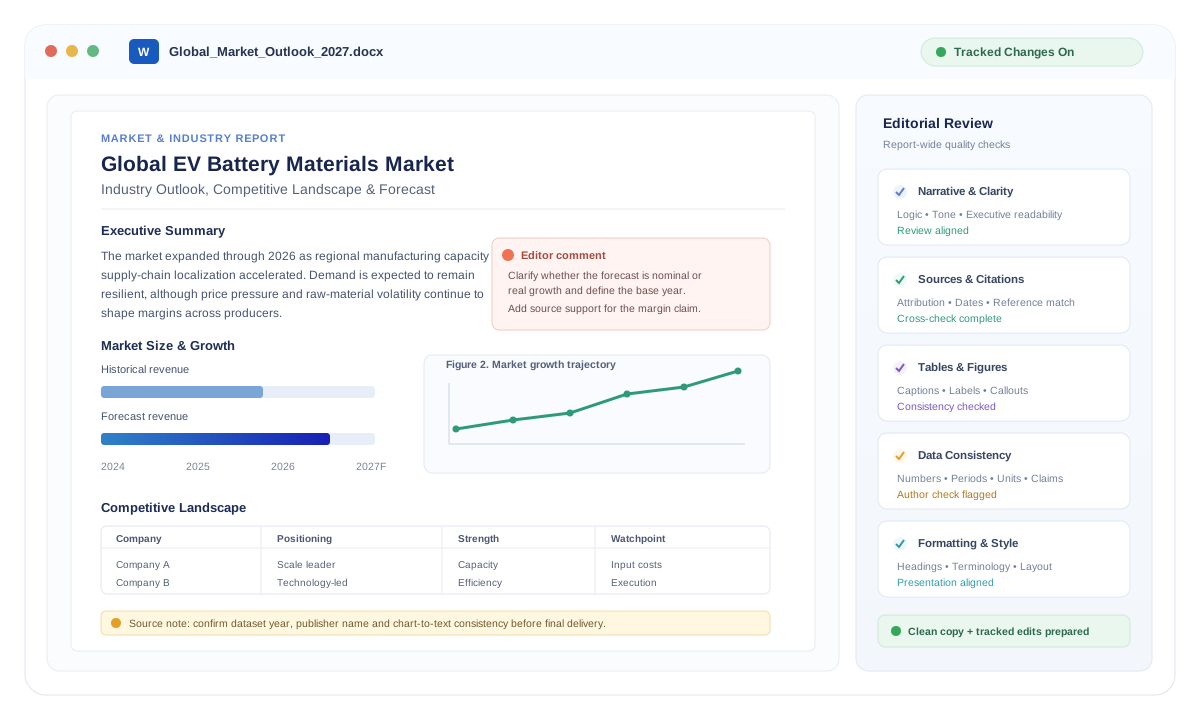
Review every material language edit
Check labels, units, periods, and claims
Captions, numbering, callouts, presentation
Presentation and cross-reference checks
Unpublished report sensitivity throughout
Select a plan according to report length and whether you need a final language pass or deeper decision-oriented editorial refinement.
Quick pricing answer: Contentxprtz Market Report Editing Service starts at ₹5,000 for up to 3,500 words.
For a compact market report with complete analysis that needs a polished professional finish.
For research reports that need stronger narrative flow between market evidence, findings and implications.
For long, data-heavy reports prepared for senior management, clients or external distribution.
Additional research, model building, source verification beyond supplied material, or rewriting incomplete analysis is priced as research or writing support.
Small editorial inconsistencies can make strong research harder to follow. Our review focuses on the points where readers, clients, and decision-makers are most likely to hesitate.
Key findings are buried, repetitive, overly technical, or disconnected from the decision the report is meant to support.
Numbers, growth rates, time periods, labels, or units differ between the prose, tables, and visualizations.
Claims are hard to verify because source notes, dates, reference entries, or cross-references are incomplete or inconsistent.
Captions, numbering, callouts, legend terms, units, and text references do not align consistently across the report.
Headings, terminology, capitalization, numbers, bullets, spacing, and report conventions change from section to section.
A report-wide editorial pass designed to improve language, logic, consistency, source presentation, visuals, and final readability without inventing research findings.
Grammar, clarity, concise business style
Logical progression from data to insight
Captions, numbering, labels, callouts
Attribution, dates, reference consistency
Periods, units, percentages, terminology
Sharper hierarchy and decision-maker clarity
Headings, lists, spacing, report style
Cross-section consistency and author flags
Tracked file, clean copy, editor notes
The examples below show how editorial intervention can strengthen a market report without changing the author's underlying evidence or conclusions.
The market is growing very fast and this is because companies are investing more and demand is also high. The growth is expected to continue and there are many opportunities.
Major players have made big improvements in capacity. This proves the market will definitely expand.
Source: Industry data, 2026.
The market expanded through 2026, supported by higher capacity investment and sustained demand across key end-use segments.
Major players have increased production capacity. The available evidence supports continued growth, subject to input-cost and execution risks.
The market expanded through 2026, supported by higher capacity investment and sustained demand across key end-use segments.
Major players increased production capacity. The available evidence supports continued growth, subject to input-cost and execution risks.
Source note: final source name, dataset year, and forecast basis aligned with the accompanying chart.
Choose the level of intervention based on how much your report needs: a final language check, an integrated report edit, or more extensive structural redevelopment.
| Service Level | Proofreading | Market Report Editing (Our Core Service) | Deeper Structural Editing |
|---|---|---|---|
| Focus | Typos, grammar, punctuation, light consistency | Language, executive readability, flow, terminology, data-to-text consistency, citations, tables, figures, and formatting | Major reorganisation, section redevelopment, argument hierarchy, and substantial rewriting where requested |
| Data & Figure Review | Limited — obvious presentation errors | Yes — labels, units, periods, captions, callouts, narrative consistency | Yes — plus deeper restructuring of how evidence is presented |
| Executive Summary | Light language polish | Yes — clarity, prioritisation, concise findings and implication wording | Yes — can include substantial redevelopment of summary logic |
| References & Sources | Basic presentation consistency | Cross-reference, source-note, date, naming, and reference-presentation checks where materials are supplied | Same checks plus deeper restructuring of source presentation if included in scope |
| Rewriting Depth | Minimal | Targeted rewriting for clarity and flow while preserving evidence and intended meaning | Higher, based on agreed structural scope |
| Best For | Near-final reports needing a last language pass | Most Market Reports preparing for client, stakeholder, publication, or internal decision use | Reports with major organisation, sequencing, or narrative-development issues |
The editorial pass can be applied across the full report or focused on selected sections, depending on your brief.
Priority findings, implications, concise narrative
Definitions, scope, segmentation, context
Sources, assumptions, periods, definitions
Units, growth statements, forecast wording
Logic, evidence, hierarchy, terminology
Company comparisons, positioning, consistency
Geography naming, comparison logic, periods
Segment definitions, tone, evidence connection
Balanced wording, evidence-based qualification
Alignment with findings and report scope
Captions, labels, legends, numbering, callouts
Source naming, citations, consistency, formatting
A clear, staged process keeps the review traceable—from scope assessment through tracked editing, consistency checks, and final delivery.
Latest editable file and brief
ReceivedLength, depth, visuals, sources
In ReviewRelevant editorial experience
Language, clarity, narrative flow
In ProgressText, tables, figures, periods
Headings, lists, report conventions
Consistency and author-action points
Quality CheckTracked file and clean copy
DeliveredClarify editorial comments
Final files are organised to make review easy for the author, analyst, research team, or stakeholder responsible for approval.
All material edits and editorial comments remain visible for review.
A clean copy with accepted editorial changes for final review.
Questions and flags for unclear claims, missing context, or author decisions.
Important source, table, figure, terminology, or reference issues identified.
Presentation edits to captions, labels, numbering, callouts, and terminology.
Report styling reviewed against supplied template or presentation requirements.
The report moves through several editorial checkpoints so language quality, consistency, visual presentation, and author-visible issues are reviewed before delivery.
Language, clarity, flow, executive readability, and report conventions.
Terminology, periods, units, percentages, headings, and repeated claims.
Captions, numbering, labels, legends, callouts, and narrative references.
Source notes, citations, references, style, headings, and supplied templates.
Cross-check tracked edits, clean copy, unresolved comments, and delivery files.
Multi-stage editorial review supports clearer, more consistent, and easier-to-audit final reports.
For balanced quality review with a normal project schedule.
For reports with a tighter review window, subject to scope assessment.
For urgent needs where report length and complexity allow faster delivery.
Exact turnaround is confirmed after reviewing word count, editorial depth, tables and figures, references, formatting, and delivery priority.
The published Market Report Editing Service plans above start at ₹5,000 for up to 3,500 words; larger or specialist requirements are confirmed after scope review. The report is reviewed first so the quote can reflect the actual editorial scope.
Share the report and requirements for a scope-based quote.
Request a QuotePractical questions about scope, files, data consistency, source checks, delivery, confidentiality, pricing, and turnaround.
The service can support market research reports, industry outlooks, competitor analyses, market-sizing reports, trend reports, investment or strategy-oriented reports, sector briefs, white papers, and related professional research documents.
Editing can include consistency checks between the narrative, tables, figures, periods, units, labels, and references. Where a number or claim needs author verification, it is flagged rather than silently changed.
The level of intervention depends on the requested scope. Editing can improve clarity, flow, structure, terminology, and presentation while preserving the underlying research and intended meaning. Material factual changes are not invented.
Yes. Executive summaries, key findings, implications, conclusions, and recommendations can be edited for concise wording, hierarchy, logical connection to evidence, and decision-maker readability.
Yes. The service can review titles, captions, labels, numbering, callouts, units, terminology, and text-to-figure consistency, while leaving the underlying source data under the author's control.
Yes. Editors can check citation and source-note presentation, obvious mismatches, dates, naming consistency, reference-list presentation, and cross-references where the necessary source information is supplied.
Send the latest editable report, relevant tables or figures, source or reference files where needed, house-style or client guidelines, and any instructions about audience, terminology, scope, or deadline.
The standard delivery can include a tracked-changes file, a clean edited copy, editorial comments, and a concise summary of important author-action points or consistency issues identified during review.
For requirements beyond the published scope, a custom quote is prepared after reviewing the report's length, editing depth, number and complexity of tables or figures, source and reference requirements, formatting needs, and requested delivery window.
Turnaround is confirmed after the report and requirements are reviewed because timing depends on length, editorial depth, tables and figures, reference work, formatting complexity, and delivery priority.
The service workflow is built around confidential file handling, limited access, unpublished-report sensitivity, and controlled delivery. An NDA can be requested where needed.
Yes. Provide the relevant style guide, terminology list, template, formatting rules, client requirements, or publication instructions so the editor can align the report presentation accordingly.
Tell us about the report, length, audience, deadline, tables and figures, source requirements, formatting needs, and the areas that need the most attention.
Share the report type, approximate word count, requested delivery date, and time zone.
Describe priorities such as executive clarity, flow, data commentary, sources, figures, or formatting.
Tell us whether the report is for clients, investors, management, publication, policy, or internal decision-making.
Provide the required reference style, source-note format, or client conventions.
Attach or mention house style, client template, terminology list, source files, tables, or figures.
Highlight sections that feel unclear, repetitive, inconsistent, or difficult for readers to navigate.
Share your contact details and editing requirements so the report can be reviewed for scope, editorial depth, delivery feasibility, and a custom quote.
Send the latest report and your editorial priorities for a scope-based review.