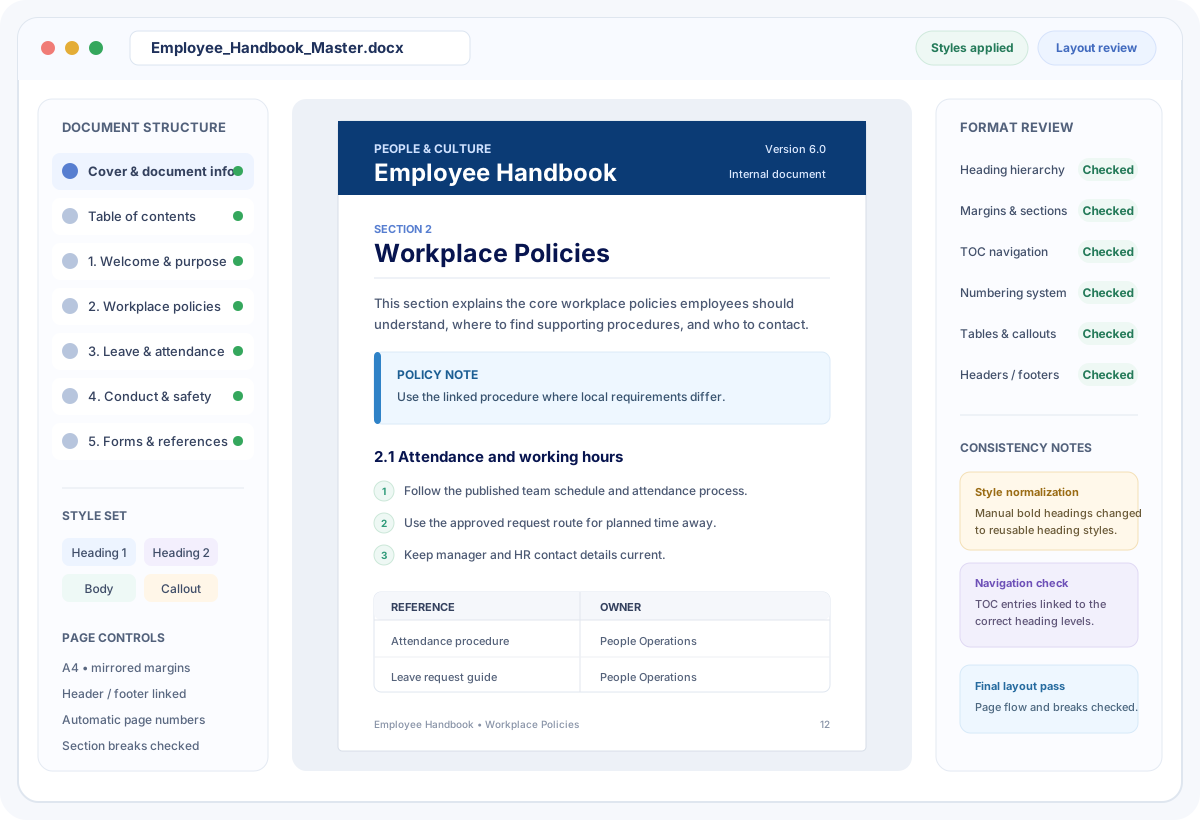
Manuals & Handbooks Formatting Service for Clear, Consistent Documents
★★★★★4.8 rating from Researchers, Authors, Students, and Scholars
Turn long, complex manuals and handbooks into structured, professional documents with consistent styles, navigation, numbering, tables, callouts, headers, footers, and page layouts built around your supplied content and formatting requirements.
Style-based heading, paragraph, list, and page formatting
Table of contents, numbering, section breaks, and navigation cleanup
Consistent treatment of tables, figures, callouts, policies, and procedures
Formatting aligned with the template, brand guide, or sample you provide
Structured formattingReusable styles and hierarchy
Controlled file handlingFor internal and unpublished documents
Document-wide reviewConsistency across recurring elements
Clear deliverablesScope agreed around your source files
Pricing & delivery
Manuals & Handbooks Formatting Service Pricing & Delivery
Instead of a vague 'contact us for price' message, Manuals & Handbooks Formatting Service begins with a defined deliverable for up to 25 pages. That entry scope is aimed at this use case: Existing manuals or handbooks with approved content that need a consistent, navigable and professional document layout.
Starting Scope
From ₹6,000
for up to 25 pages
Suitable for: Existing manuals or handbooks with approved content that need a consistent, navigable and professional document layout.
Heading hierarchy and page-style setup
Lists, tables, callouts and procedure formatting
Headers, footers, page numbering and section breaks
Table of contents setup where the source format supports it
Long operational documents often become harder to navigate when structure, spacing, numbering, and recurring design elements are handled manually or inconsistently.
Inconsistent heading hierarchy
Bold text, manual font changes, or mixed heading levels make navigation and maintenance harder.
Weak document navigation
Tables of contents and section structure can become unreliable when headings are not built consistently.
Broken numbering patterns
Manual list and section numbering can drift after insertions, deletions, or document restructuring.
Dense or uneven page layout
Spacing, page breaks, headers, footers, and section starts can make a manual look fragmented or crowded.
Tables and callouts vary
Repeated elements lose visual consistency when widths, labels, colors, borders, and spacing change from page to page.
Template mismatch
A document may not reflect the supplied brand, corporate template, page specification, or internal document standard.
2
What This Manuals & Handbooks Formatting Service Covers
The formatting scope can be built around the structure already present in your manual and the specific template, brand, navigation, or output requirements you provide.
1Page Setup & Margins
2Cover & Title Pages
3Heading Hierarchy
4Paragraph Styles
5Table of Contents
6Headers & Footers
7Page Numbering
8Lists & Multilevel Numbering
9Tables
10Figures & Captions
11Callouts & Warnings
12Cross-References
13Section Breaks
14Template / Brand Alignment
15Final Layout Check
3
See the Formatting Transformation
A representative example of how a manually formatted policy section can be converted into a reusable, structured document system without changing the approved meaning of the content.
Before — manual formatting
Policy section built with local fixes
Headings, bullets, tabs, spacing, and page breaks have been adjusted individually rather than through reusable styles.
×Bold text used instead of heading styles
×Numbering typed manually
×Mixed paragraph spacing
×Table formatting differs by section
×Page breaks shift during updates
→
During — structured formatting pass
Reusable styles and layout rules applied
Heading system: chapter, section, and subsection levels mapped consistently.
Numbering: lists and procedures normalized to a defined multilevel structure.
Navigation: heading structure aligned with the table of contents and cross-references.
What Makes This Different From Simple Proofreading or Document Cleanup
Formatting focuses on how a long document is structured and presented. It is different from language correction alone and from one-off visual adjustments that do not create a consistent document system.
Support dimension
Proofreading
Basic document cleanup
Full manuals & handbooks formatting
Grammar and typo correction
✓
~
×
Page size, margins and section setup
×
~
✓
Reusable heading and paragraph styles
×
~
✓
Table of contents structure
×
~
✓
Multilevel section and list numbering
×
~
✓
Headers, footers and page numbering
×
✓
✓
Tables, callouts, warnings and captions
×
~
✓
Template or brand alignment
×
~
✓
Document-wide formatting consistency review
×
~
✓
Best for
Final language correctness
Small visual fixes
Complete long-document formatting
5
Manual & Handbook Types Supported
The service can be scoped for structured internal, operational, training, policy, safety, and technical documents where consistent formatting is important.
Employee Handbooks
HR policies, workplace guidance, benefits, conduct and internal procedures.
Operations Manuals
Process guidance, roles, controls, escalation routes and recurring procedures.
SOP Manuals
Step-based procedures, responsibilities, inputs, controls, and reference material.
Policy Manuals
Governance, rules, policy statements, responsibilities, exceptions and approvals.
Training Manuals
Learning modules, instructions, activities, callouts, examples and reference sections.
Safety Manuals
Safety procedures, warnings, responsibilities, checklists and operational guidance.
Technical / User Manuals
Structured instructions, tables, figures, notes, procedures and navigation.
Quality / Compliance Manuals
Controlled sections, documented procedures, records, references and revision-ready structure.
Ready to move forward with Manuals & Handbooks Formatting?Purchase the service and continue with your project brief, files, and delivery requirements.
The workflow starts with the actual source file and formatting requirements, then moves through structure, recurring elements, navigation, and final presentation checks.
1
Submit Source & Brief
Share the editable file, instructions, samples, template and required outputs.
2
Scope Review
Identify document length, structure, recurring elements and formatting complexity.
3
Style Mapping
Define heading, paragraph, list, table, callout and caption treatments.
4
Layout Formatting
Apply page setup, section layout, spacing, breaks, headers and footers.
5
Navigation Build
Align TOC, numbering, section structure and cross-references where applicable.
6
Element Standardization
Normalize tables, figures, labels, notes, warnings and repeated components.
7
Consistency Check
Review recurring styles, page flow, numbering, spacing and document-level consistency.
8
Final Delivery
Deliver the agreed formatted files and any scope-specific notes or final checks.
7
What You Need to Share & What You Receive
Clear source files and formatting instructions help define the scope before work begins and keep the final document aligned with your intended use.
What you need to share with us
✓Editable source file whenever available
✓Required page size, margins, orientation, or template
✓Brand guide, sample pages, logos, colors, or font rules if applicable
✓Desired heading hierarchy, numbering logic, or TOC requirements
✓Tables, figures, diagrams, appendices, and supporting assets
✓Any output, review, confidentiality, or deadline requirements
Manuals and handbooks appear across many business functions. The formatting approach should reflect the document's operational purpose, structure, audience, and internal handling requirements.
Common document environments
HR & Employee
Operations & SOPs
Quality & Compliance
Safety & Field
Training & Onboarding
Technical & Product
Policy & Governance
Customer & Service
Confidentiality & file handling
✓Internal manuals and unpublished material are treated as confidential service information through the designated workflow.
✓Share only the files and supporting assets needed to define and complete the agreed formatting scope.
✓Include any specific access, handling, internal-use, or confidentiality requirements in the project brief.
✓Questions about file submission or handling can be included in the enquiry before work begins.
What does the Manuals & Handbooks Formatting Service include? +
The service focuses on document presentation and structural consistency. Depending on the file and brief, work can include page setup, margins, heading styles, paragraph styles, tables of contents, headers and footers, page numbering, list numbering, tables, captions, callouts, section breaks, cross-references, and overall layout consistency.
Can you format an existing manual without rewriting the content? +
Yes. Formatting can be scoped around the existing approved content so the main work is visual structure, consistency, navigation, and layout. If wording changes are also required, mention that separately in the enquiry so the scope can be assessed correctly.
What files should I provide for handbook formatting? +
Share the most editable source file available, together with any template, brand guide, sample pages, logos, diagrams, table files, required page size, and document instructions. If only a PDF or scan is available, mention that because the preparation work may differ.
Can you create a consistent heading and numbering system? +
A formatting brief can include reusable heading levels, multilevel numbering, consistent paragraph styles, list treatment, section numbering, and related navigation elements. The exact system should follow your source structure and any template or organizational rules you provide.
Can the table of contents be formatted and updated? +
Where the editable source supports it, the scope can include table-of-contents styling and alignment with the document heading structure. Share any specific TOC layout or navigation requirements with the source file.
Do you format tables, callouts, warnings, and procedure steps? +
These elements can be included in the formatting scope when they are present in the source material. They can be standardized for spacing, hierarchy, labels, alignment, borders, emphasis, and consistency with the wider document design.
Can you match an existing company template or brand style? +
Yes, when you provide the relevant template, sample document, brand guide, font rules, colors, logo assets, or page specifications. The formatting plan can then be built around those supplied requirements rather than introducing an unrelated visual style.
How is manuals and handbooks formatting priced? +
A custom quote can be based on factors such as page count, source-file condition, layout complexity, number of tables or figures, style and numbering requirements, template or brand rules, cross-references, and required output preparation. The published Manuals & Handbooks Formatting Service starting price above is ₹6,000 for up to 25 pages; larger or specialist requirements are confirmed after scope review.
How long will the formatting take? +
Turnaround is confirmed after the source file and requirements are reviewed. Page count, complexity, source-file quality, number of structured elements, and the amount of cleanup needed can all affect the schedule.
How are confidential manuals and internal handbooks handled? +
Files and unpublished business material are handled through the designated Contentxprtz submission and delivery process. Include any specific confidentiality, access, or internal-document handling requirements in your brief so they can be considered before work begins.
Ready to move forward with Manuals & Handbooks Formatting?Purchase the service and continue with your project brief, files, and delivery requirements.
Tell us what you are formatting, how the source file is structured, what template or brand rules apply, and what needs to be delivered. The document can then be reviewed for scope, complexity, and deadline feasibility.
Helpful details for an accurate scope
Include enough information to understand the document, the current formatting condition, and the final presentation requirements.
Document type & size
Manual, handbook, SOP, policy, training guide, or technical document; include approximate pages.
Source-file condition
Editable source, template-based file, PDF-only source, or mixed files and assets.
Share supplied templates, sample pages, colors, logos, font rules, or internal formatting instructions.
Final outputs
Describe the editable master and any other final formats that need to be considered in the quote.
Deadline
Provide the required date and time zone, especially when the request is deadline-sensitive.
Formatting Service Enquiry
Request a Formatting Assessment
Share your contact details and project requirements below so the scope can be reviewed before a quote or schedule is confirmed.
Ready to Standardize Your Manuals & Handbooks?
Share the source file and formatting requirements. We can review the document structure, recurring elements, template rules, and delivery needs before confirming the final scope.